Articles from:January 2018

  • Brock researchers create groundbreaking DNA reader for disease detection

    MONDAY, JANUARY 22, 2018 | by

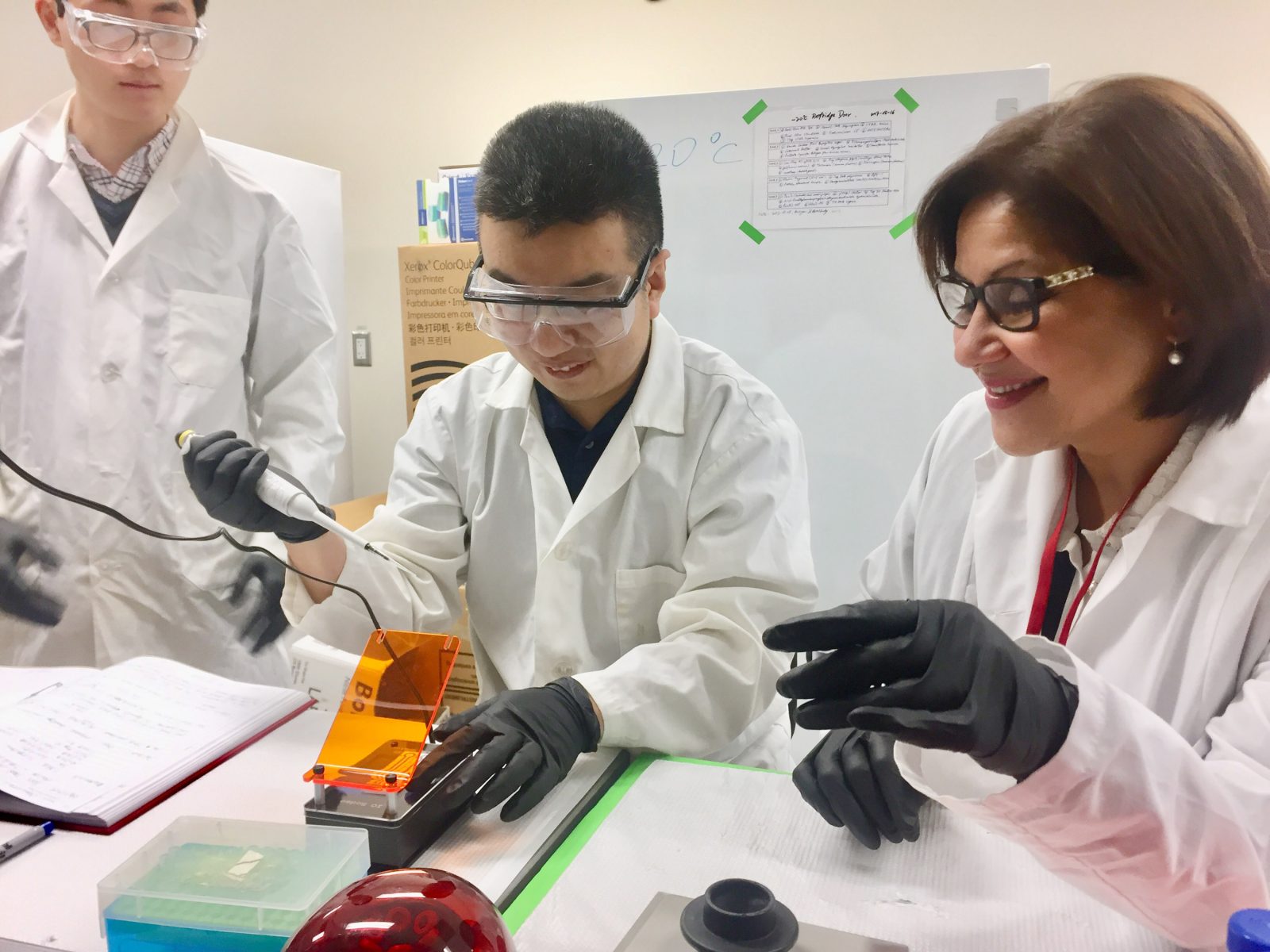
    A chemist and a parasite expert at Brock University have teamed up to produce and test out a simple device that can detect diseases from DNA samples. It’s a scaled-down version of what is normally an expensive and complicated DNA laboratory technique, yet it’s fast, inexpensive and accurate, making it ideal for use in developing countries.

    Brock University Assistant Professor of Chemistry Feng Li’s device consists of a strip of paper attached onto a glass slide. The paper contains several rows of what look like thermometers, lines with markings projecting out of bulb-like circles.

    DNA samples are loaded onto the circles and move up the lines, much like mercury rises in a thermometer.

    “Different concentrations of the genetic disease biomarkers in the samples would migrate different distances,” says Li. “So, all you need to do is read the distance they penetrate, just like you’d read a ruler.”

    Known as the quantitative paper-based DNA reader, each device costs only about 10 cents. They work with a scaled-down version of a traditionally expensive and complex DNA laboratory technique.

    While testing for the presence of disease markers, health-care workers use a technique called polymerase chain reaction (PCR), which makes millions of copies of a particular section of DNA.

    The PCR technique normally requires highly specialized equipment and expensive molecular probes. But Li’s device is able to read DNA samples through a PCR technique using simple technology and low-cost chemicals.

    “This is going to be extremely useful in resource-limited settings where you don’t have a lot of facilities to interpret the results,” says Li.

    One such setting is the National Autonomous University of Honduras, where Brock University Professor of Health Sciences Ana Sanchez runs an internationally-renowned research program focusing on parasites.

    She and her research team collected worms that had been expelled by children suspected of having soil-transmitted helminth infection, a disease affecting about 1.5 billion people worldwide and a major cause of childhood malnutrition and physical impairment.

    The researchers used the quantitative paper-based DNA reader to test the worms for helminth infection.

    “The results are beautiful; there’s no doubt that the system works,” says Sanchez.

    She applauds the speed and sensitivity of the device, saying that diagnostic techniques in developing countries are traditional, basic and rely on the expertise of the person observing the sample.

    Sanchez says the device goes beyond just a yes or no result by measuring the amount of genetic disease biomarkers in the DNA sample.

    “How many parasites is this child harbouring?” she says. “That tells you maybe their immune response and nutrition are impaired, that we’d need to consider if treatment needs to be ramped up, even if there could be a possibility of parasitic resistance.

    “The knowledge of parasitic burden of individuals and community will directly lead to public health interventions. What Feng has proven is that his invention works. We’re ready to bring it to the field.”

    Both Sanchez and Li say they are happy with their research partnership, which evolved from casual conversations as they worked next to one another in their labs in Brock’s Cairns Family Health and Bioscience Research Complex.

    “I think it’s a really nice thing that we talked and realized we could collaborate. There’s a lot of mutual interest between us,” says Li. “It’s a very fruitful collaboration. We match perfectly in the research field.”

    The research team’s results are in their study “Paper-Based DNA Reader for Visualized Quantification of Soil-Transmitted Helminth Infections,” published Tuesday, Jan. 16 in the journal ACS Sensors. PhD student Alex Guan Wang and master’s student Tianyu Dong are the study’s first authors.

    Li says he is working with Brock’s business incubation facility BioLinc to create a plastic container that will house the paper-based DNA reader.

    Story from The Brock News
  • First female Associate Dean for Math and Science

    Cheryl McCormick is no stranger to the road less travelled.

    Her passion for STEM research (science, technology, engineering and math) has driven her forward in the once male-dominated field, and recently led her to a new position at Brock after more than two years as Director of the University’s Centre of Neuroscience.

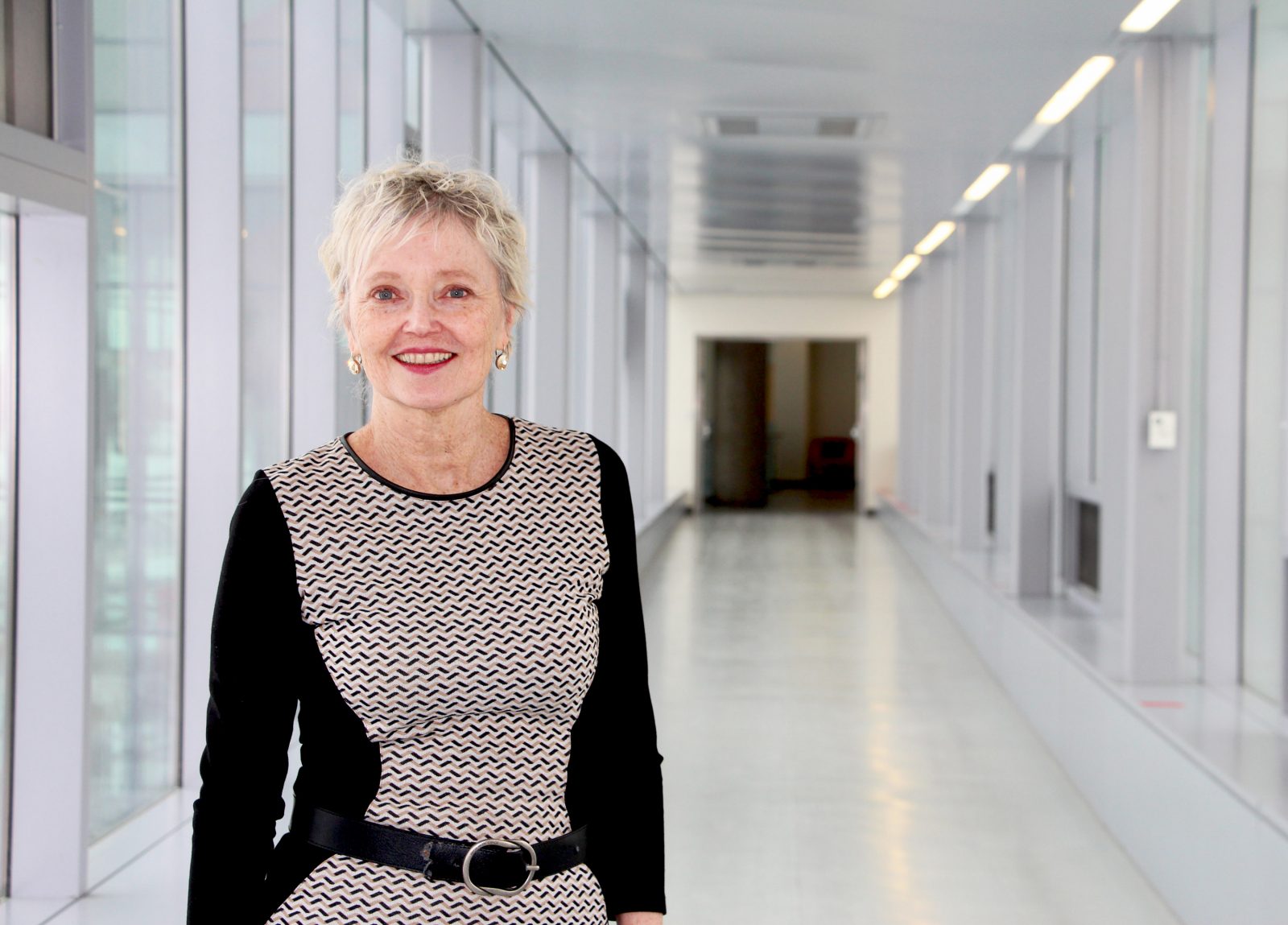
    McCormick began her three-year term as Associate Dean, Research and Graduate Studies for the Faculty of Mathematics and Science on Jan. 1, becoming the first female appointed to the role.

    In her new position, she hopes to inspire other women to pursue a career in STEM research, particularly at Brock.

    McCormick’s main goal is to help promote the success of research at the University.

    Along with primary thesis supervision, she has supervised the research training of 13 graduate students and more than 70 undergraduates. Passionate about helping and recognizing the research of students, McCormick works with Science Without Borders research interns, participates in the Faculty’s Science Mentorship Program and assists with Natural Sciences and Engineering Research Council-funded (NSERC) research.

    She has been with Brock’s Department of Psychology and Centre for Neuroscience since 2004, participating in various Department committees and speaker series. She also remains part of the Behavioural Neuroscience Committee, which she has served on for the past 14 years.

    McCormick is an associate member of the Department of Biology and has been a member of the Environmental Sustainability Research Centre since 2013.

    Along with departmental, faculty and University committees, McCormick has also served on numerous national and international research committees during her time at Brock. Most recently, she was a presenter for an NSERC grant workshop through the Office of Research Services and helped complete an internal review of graduate student scholarships for the Dean of Graduate Studies.

    She is the recipient of several awards, scholarships, internal and external grants and has been an invited symposia and colloquia speaker across Canada, the U.S. and abroad.

    Story from The Brock News 

  • Welcome to the ESRC’s Sustainability Blog!

    SSAS Student Scholarship Recipients

    By: Lydia Collas

    I’m delighted to write the first post for the new Brock Sustainability Blog. I’m currently a student in the Sustainability Science and Society (SSAS) graduate program and, since beginning my time at Brock in September 2016, I have fulfilled the role of Communications Assistant to the Environmental Sustainability Research Centre (ESRC).

    Over the past few months, the communications team has been developing and preparing for the launch of this blog. In this post, I hope to shed some light on what we hope this blog can be used to achieve, and encourage you to contribute material.

    Sustainability is an interdisciplinary subject by nature, and consequently sustainability research and initiatives are extremely diverse. The ESRC features researchers from many backgrounds, including Biological Sciences, Economics, Geography, Psychology, Health Sciences, and more.

    This diversity, in turn, leads to great variety in the research subjects of students in the SSAS program who are each supervised by members of the ESRC. In my year alone, topics of student projects includes climate change perception; public transport usage; perceptions and mitigation of flooding; and the impacts of the Green Belt in Niagara.

    Sustainability is becoming a hot topic at Brock University:

    • Undergraduate students are now able to study a Minor in Sustainability following the launch of online courses in September 2017 (ENSU 2P01 and 2P02).
    • The ESRC has entered into a partnership with the Town of Lincoln known as a “Living Lab” to allow research at Brock to guide policy development and decision-making.
    • Efforts are being taken to make the community live more sustainably with the opening of new cycle lanes to promote the use of active transportation to reach Brock.
    • Theal House is currently being developed into the ESRC offices and the building will showcase sustainability.

    With sustainability giving rise to such varied research areas and initiatives, it is highly interesting to share knowledge and ideas amongst one another. We hope that this blog will create a platform for doing just that. We hope to publish wide-ranging content: we are interested in hearing about your latest research projects, research partnerships, and conference presentations. We want to hear about sustainability efforts at Brock University and about your personal reflections on topical sustainability issues.

    We are accepting content from students (past and present), faculty, and others connected with Brock University. Send us your stories, and any suitable accompanying pictures, to the Communications team at [email protected]. You can read a full version of the guidelines for the Sustainability Blog at Sustainability Blog Guidelines.

    Categories: Blog, SSAS Student Contributor