SSAS Program

  • SSAS Field Journals: Cairns Tour with Facilities Management

    Blog Contributor: Ruth Horn

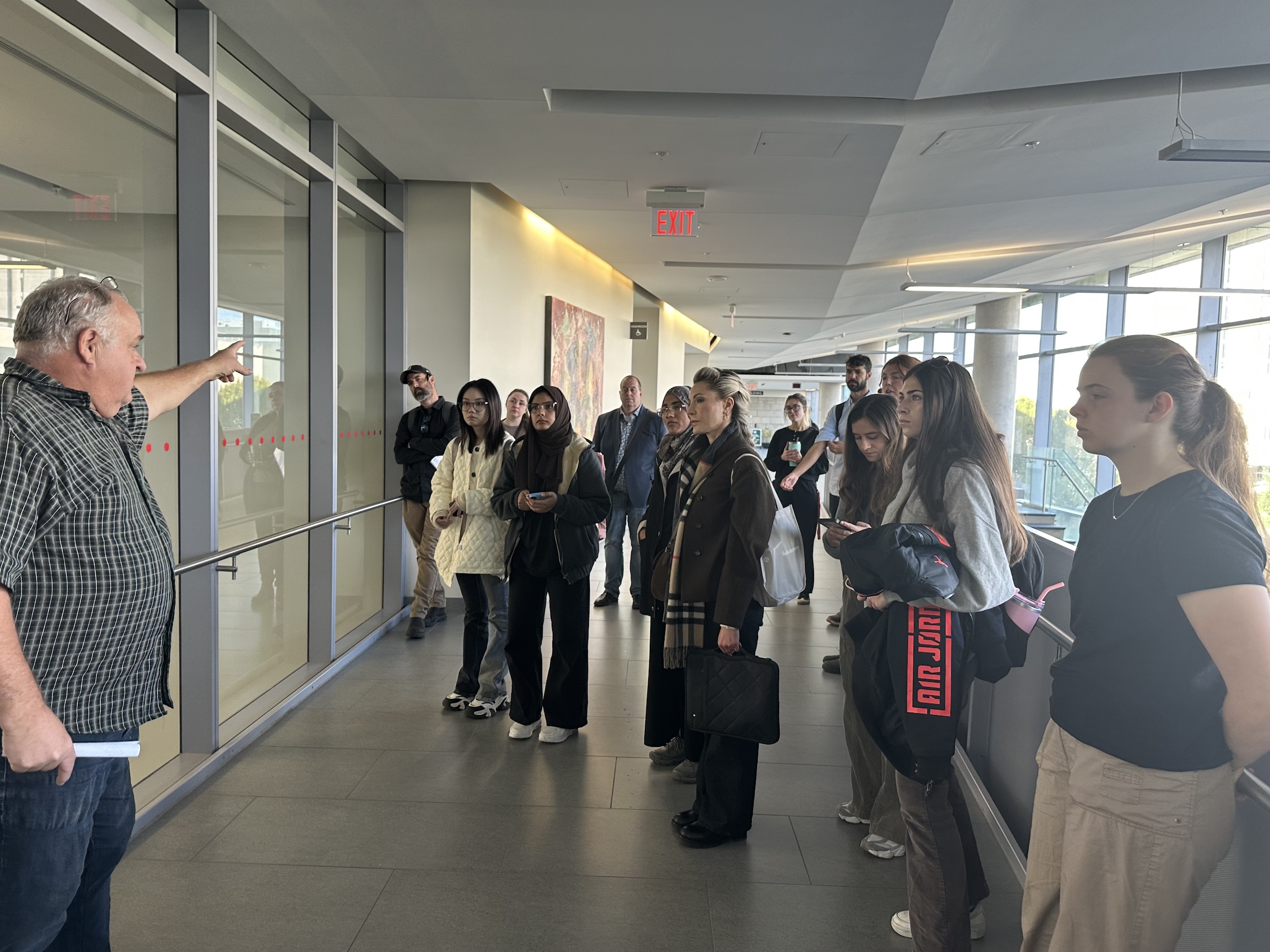
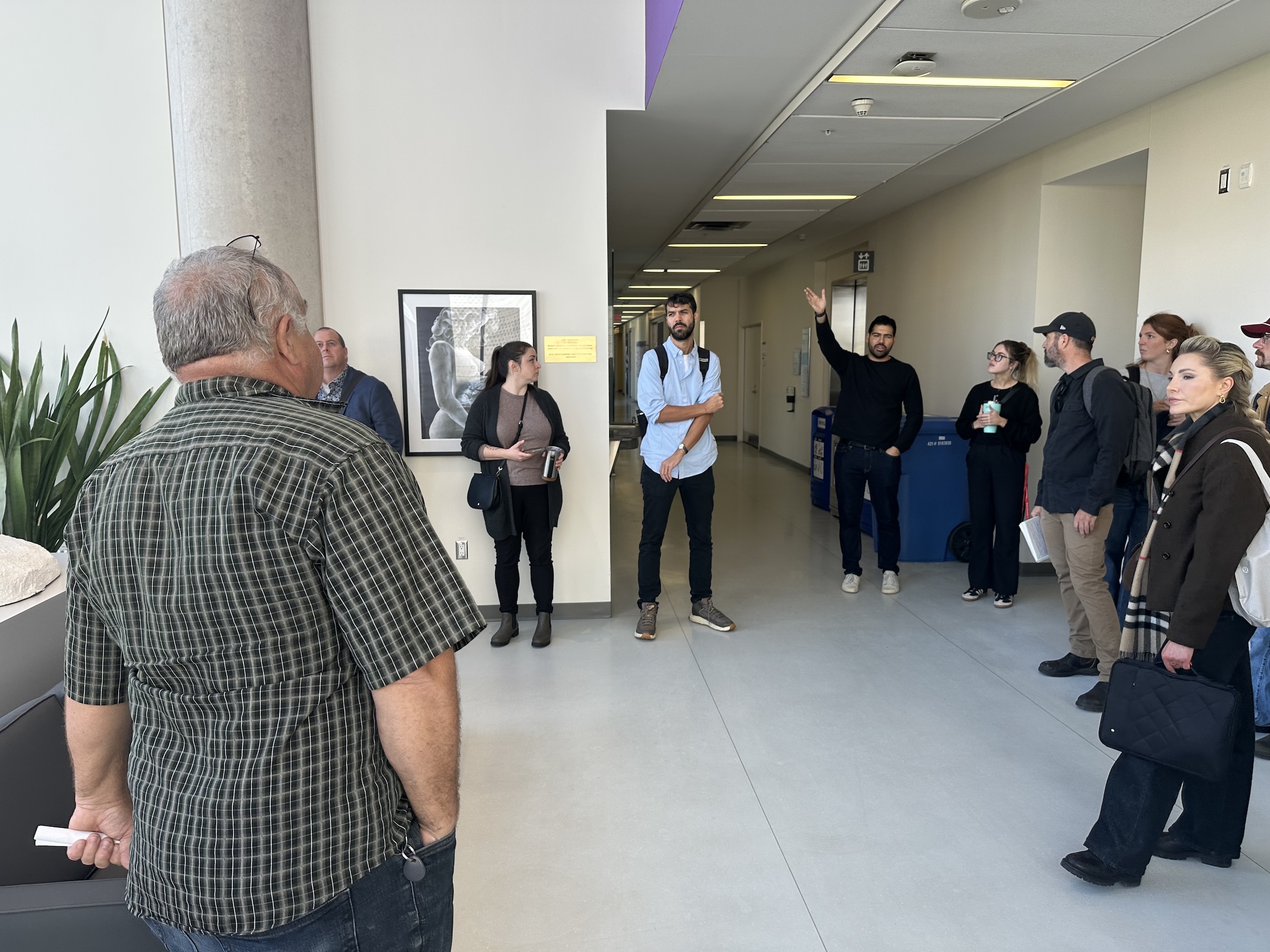
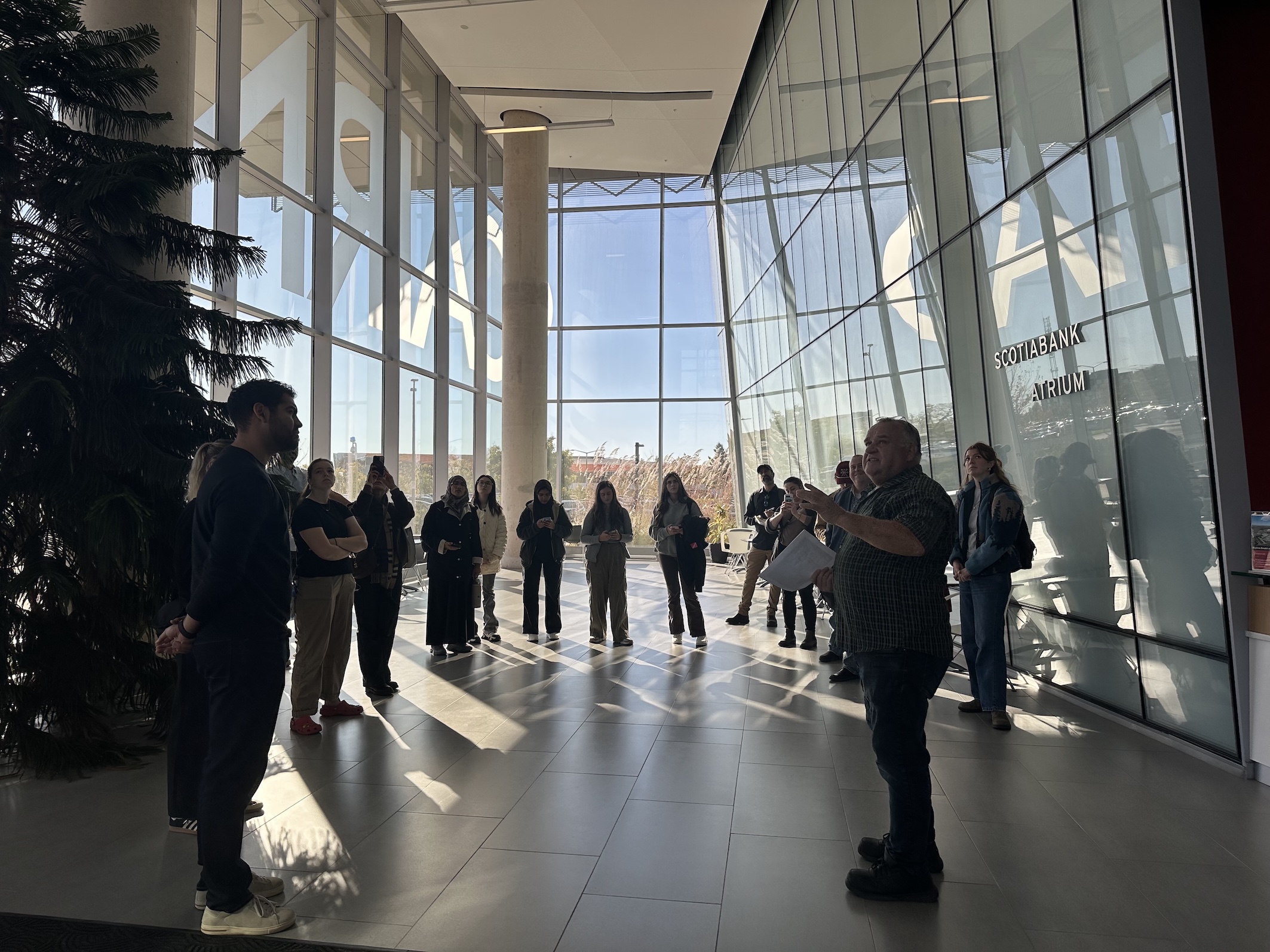
    Before touring the Cairns building, I’ll admit that I didn’t know what LEED certification really meant. I had heard the term before, but I couldn’t have explained what made a building “green” beyond maybe using less energy or recycling more. Walking through Cairns completely shifted that understanding. I realized that sustainability in architecture is far more complex and intentional than I ever imagined. It’s about designing every detail to serve a purpose for people, the planet, and even long-term economics.

    What impressed me right away was how the building integrates environmental and social sustainability together. For example, the overhangs and angled glass walls aren’t just aesthetic, they’re also designed to control light and heat, reducing the need for extra cooling while still making the space bright and inviting. Even something as simple as the main staircase was planned to encourage active living by drawing people to use it instead of the elevator. I’d never considered that architecture could influence behavior like that, but it made me see sustainability as something that connects to daily life, not just big systems.

    The technical parts of the tour were really interesting as well. The system that circulates air through the concrete floors to regulate temperature was something I never would have thought existed. It made me realize that sustainability can be incredibly innovative. It’s also about using the structure itself as a living system to save energy. I also found the huge fresh-air intake cool. I hadn’t thought about how buildings that include labs need 100% fresh air, or how that can be balanced with energy efficiency. The solutions built into Cairns showed that sustainability doesn’t mean sacrificing safety or performance. It’s about finding smart ways to meet both needs.

    The containment labs were another example of that balance. Hearing about the specialized materials, the hydrogen chloride-resistant caulking, and the acid-neutralizing glass pipes showed me how seriously safety and long-term durability are considered. It was also surprising to learn that the building uses a central steam plant and reverse osmosis water for temperature and humidity control. Every system seemed to be part of a bigger, connected network.

    One of the most unexpected things I learned was how much behaviour matters. The example of fume hoods left open wasting energy really stuck with me. It made me think about how even the most advanced sustainable building still relies on people making conscious choices.

    Overall, this tour turned sustainability from an abstract idea into something tangible and exciting. I came away seeing it as both an art and a science. It’s something that requires creativity, collaboration, and constant problem-solving. It also made me curious to keep learning, because I can now see how sustainability connects to almost everything: design, technology, health, and the way we live every day. 
    Categories: Blog, Experiential Education, SSAS Program, SSAS Student Contributor

  • SSAS Field Journals: Trails Tour with Facilities Management

    Blog Contributor: Ruth Horn

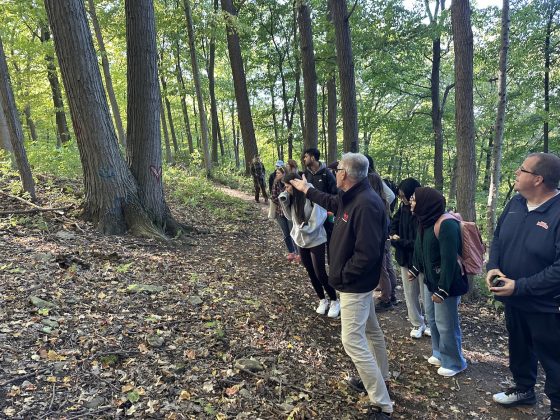
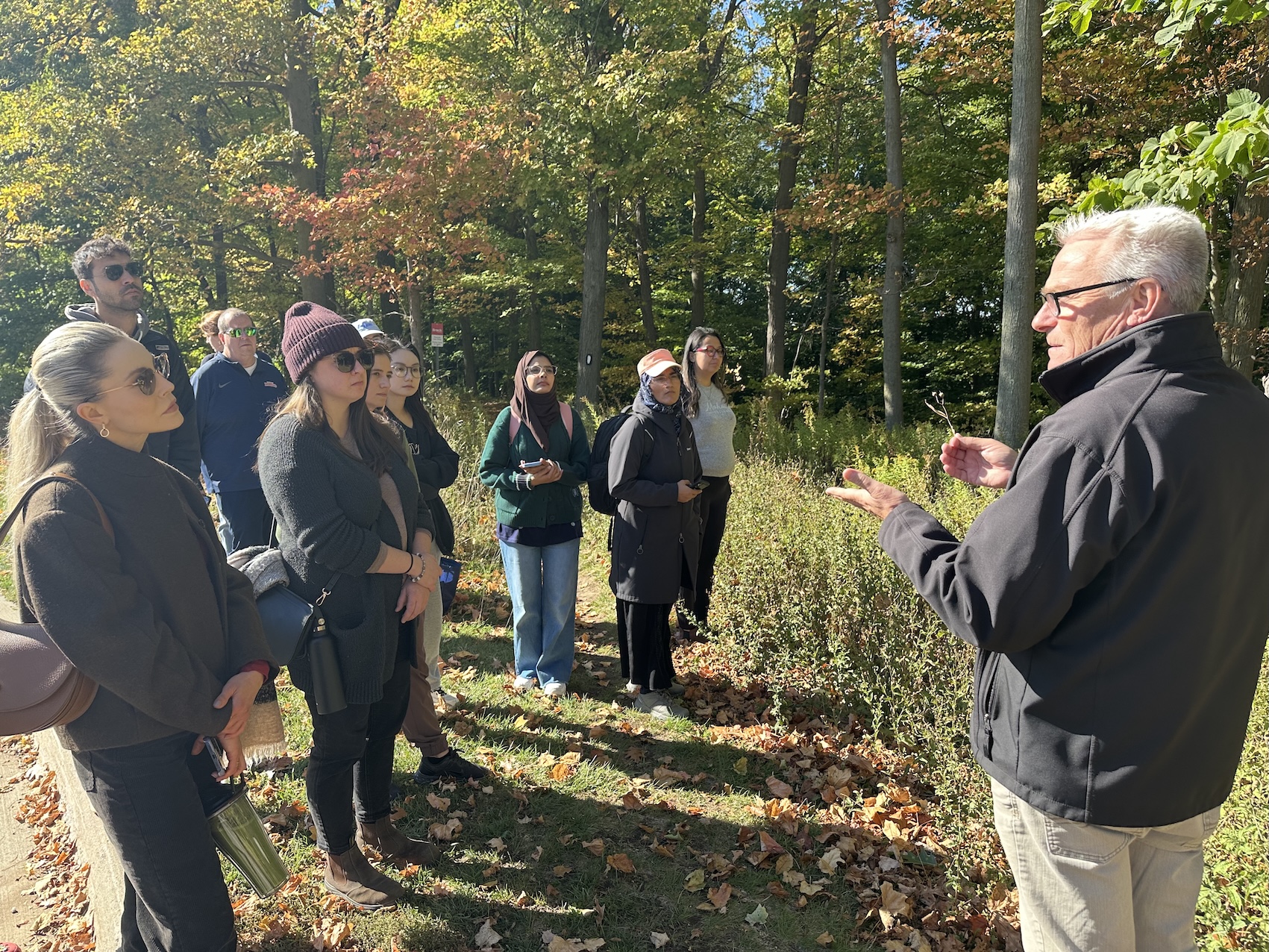
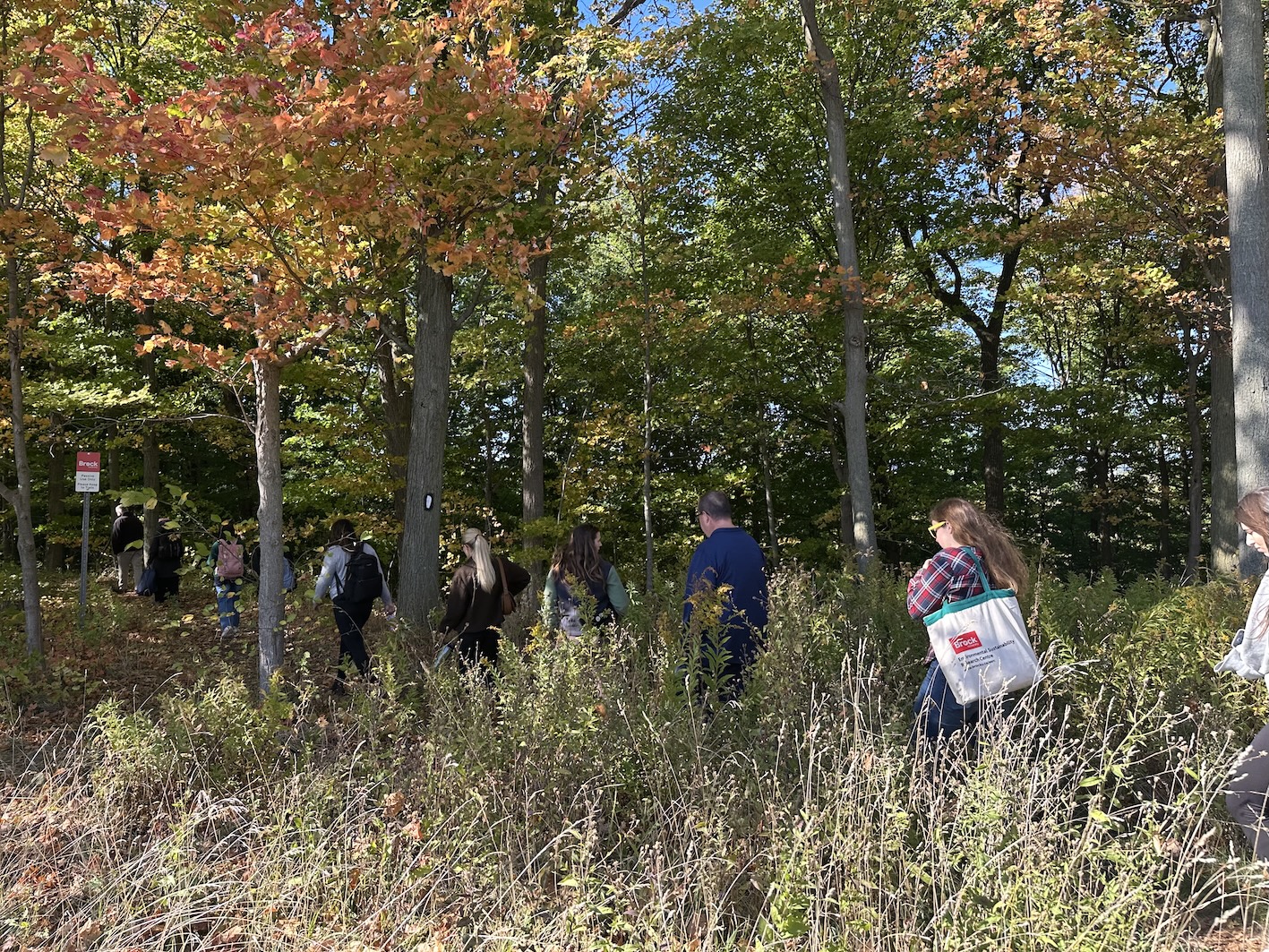
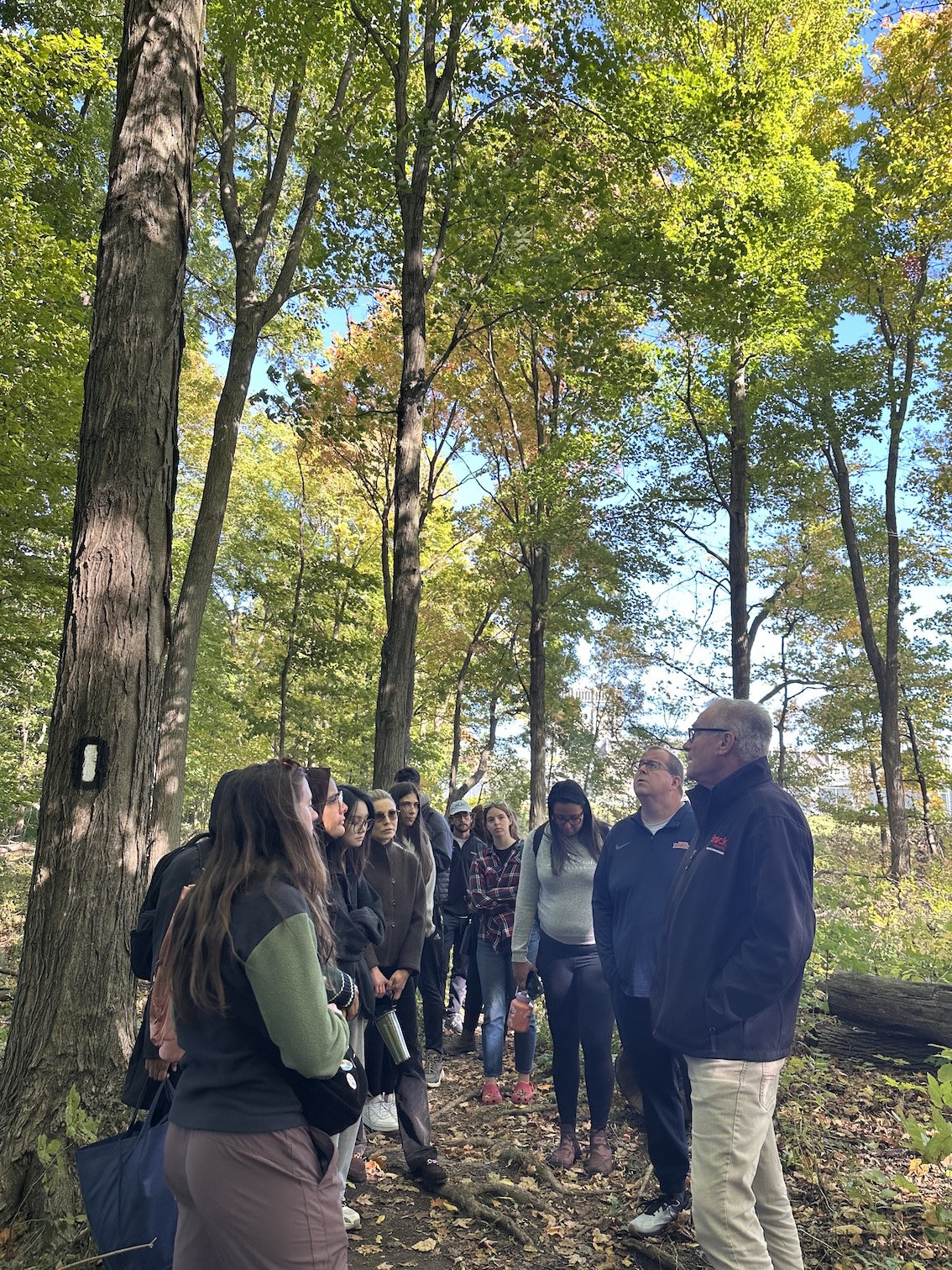
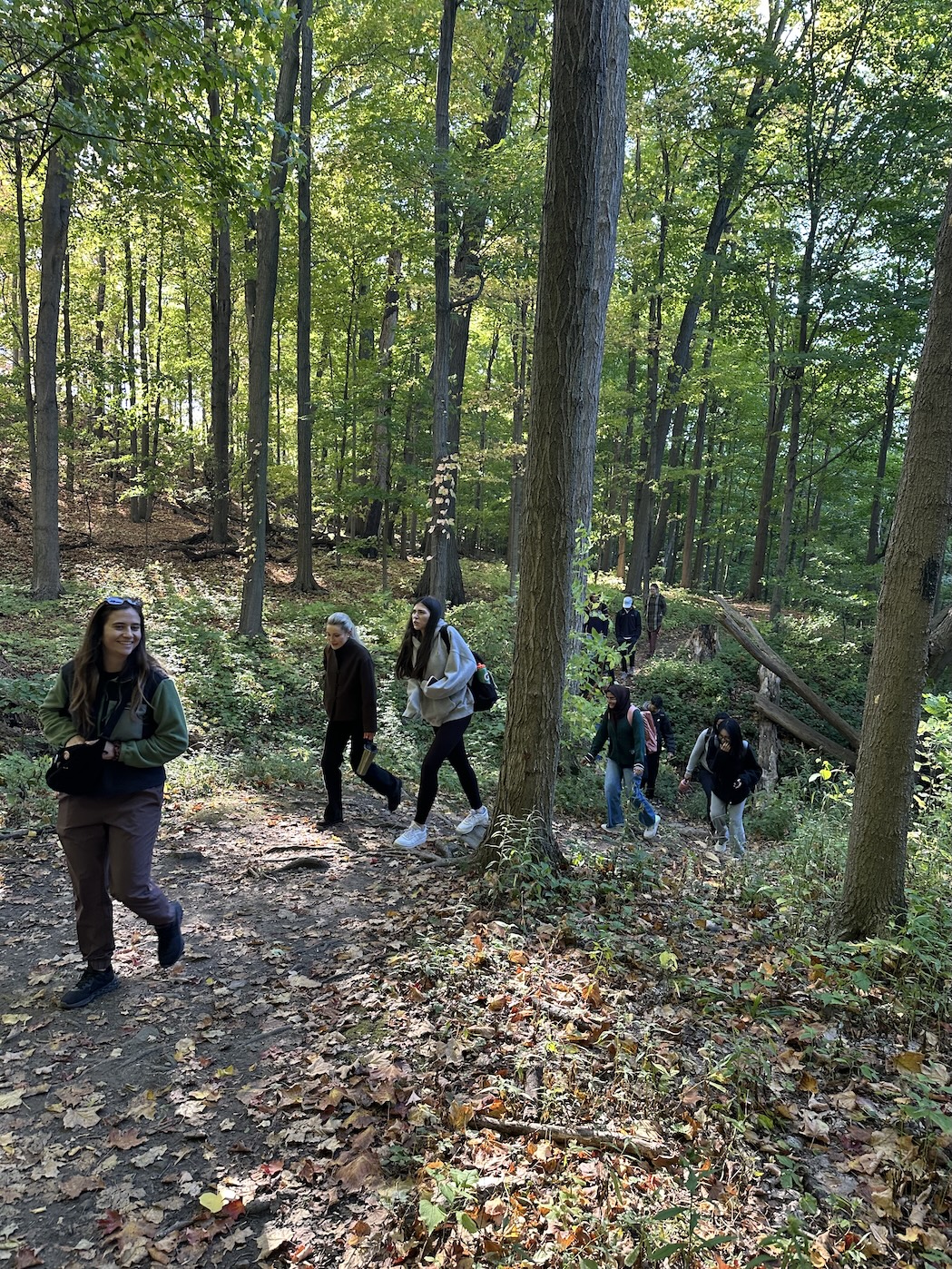
    The trails tour with Facilities Management was a completely different kind of sustainability experience from the other site visits and significantly more in my wheelhouse. Instead of high-tech systems and machinery, this one was all about observing how nature, infrastructure, and human use interact in real time. The tour opened my eyes to the small, often invisible ways that sustainability plays out in everyday landscapes.

    One of the first things I learned was about hedgerows and “utility mulch”. I’d never really thought about the idea of a hedgerow before. It’s such a simple feature, but it serves multiple purposes like providing habitat, acting as a buffer, and supporting biodiversity. The conversation about “no fire breaks” also got me thinking about how management decisions balance ecological value and safety. I realized that even what looks like an untouched natural area can actually be a carefully managed space shaped by both ecological and practical concerns.

    Hearing about the infrastructure beneath the trails was also fascinating. I was surprised to learn that three major water mains run underneath, carrying all the drinking water for St. Catharines and that the system will soon supply Niagara-on-the-Lake too. The idea that the forested area I was walking through was quietly sitting on top of a vital water system made me think about how much infrastructure is hidden in plain sight. It connected to the broader sustainability concept of systems thinking: how different networks (natural and human-made) overlap and rely on one another.

    One of the most memorable parts of the tour for me was learning about the effects of something as simple as mountain bike ruts. I had no idea that when people ride the trails in the rain, the tire tracks can change how water runs off, increasing erosion and even redirecting runoff. It was such a small detail, but it really stuck with me, especially as someone who bikes along those trails. It showed how small actions by individuals can have physical, lasting impacts on an ecosystem. It also made me think about shared outdoor spaces and how fragile they can be if not cared for properly.

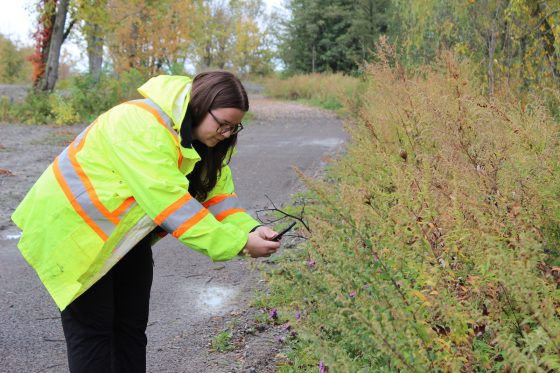
    I found it interesting to watch our guide point out plants and trees as we walked. Seeing him notice trees and plants he hadn’t seen before and identify species in real time was helpful as this is something I would like to do in the future and it reminded me that I don’t need to know everything before sharing the information I do have. It gave me a better appreciation for the kind of ongoing observation and maintenance that goes into managing natural areas.

    Overall, the trails tour reminded me that sustainability isn’t just about new technologies or large-scale systems. It’s also about awareness, observation, and care for the environments we walk through every day. It made me notice how many layers of life and infrastructure coexist on campus, and how much we depend on both human effort and natural balance to keep them thriving.
    Categories: Blog, Experiential Education, SSAS Program, SSAS Student Contributor

  • SSAS Field Journals: Escarpment Renewables

    Blog Contributor: Ruth Horn

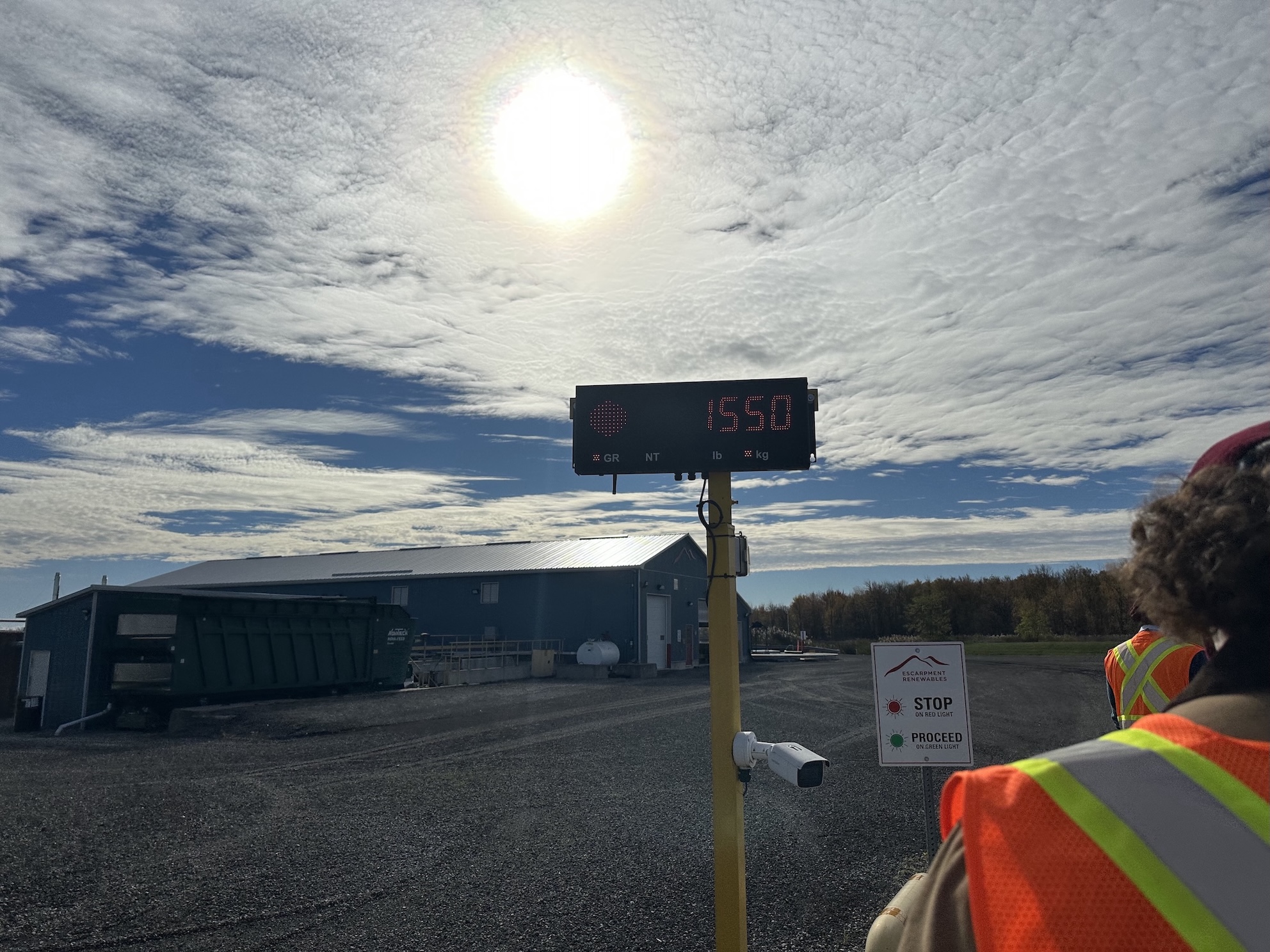
    When I arrived at Escarpment Renewables, I honestly thought we were visiting a coffee cup recycling plant. It was not at all what I was expecting which ended up being really neat. I learned a lot. I learned that the facility is part of a much larger, interconnected system that transforms organic waste into energy and that discovery completely changed the way I think about “waste” and what can be done with it.

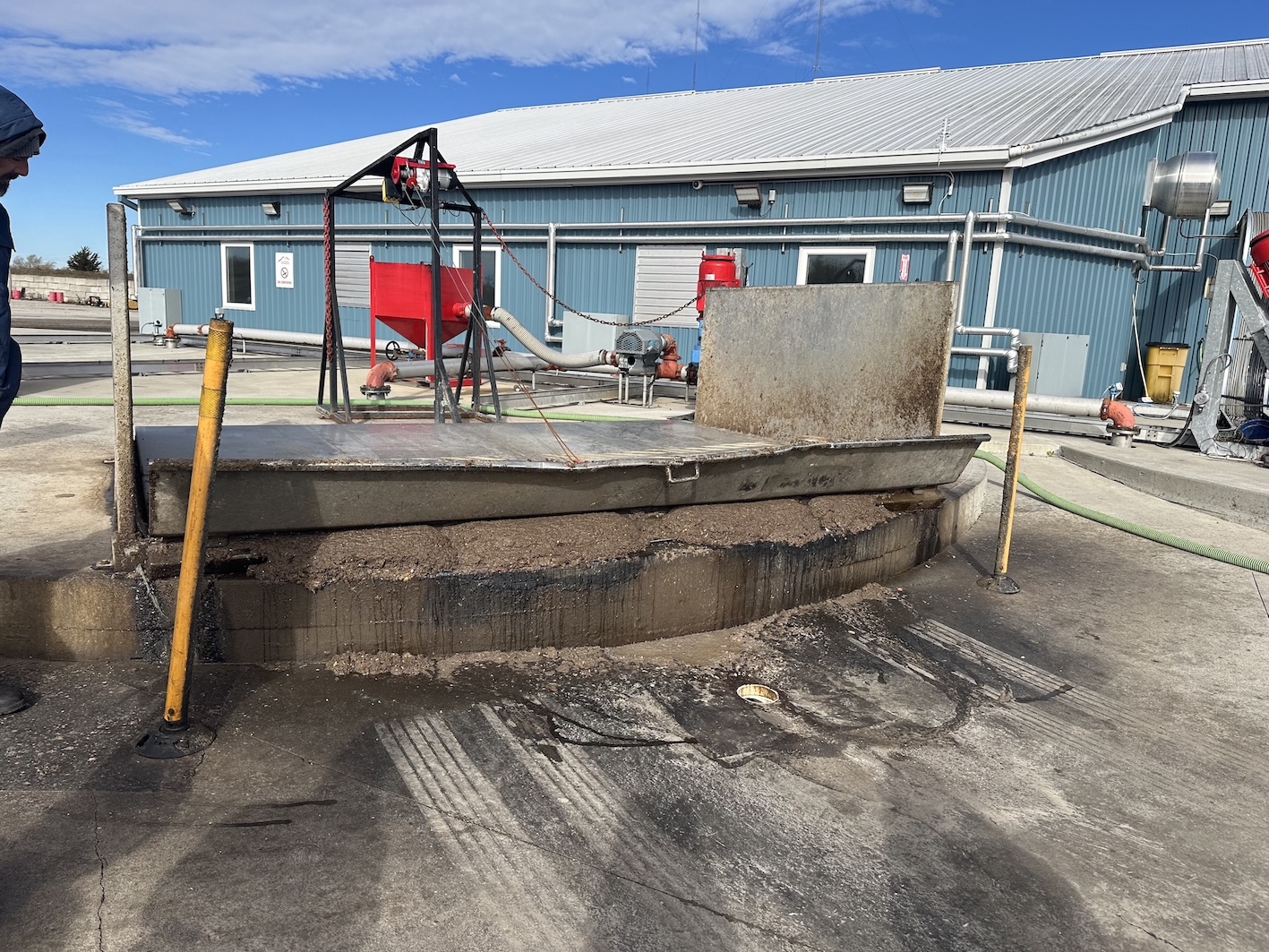
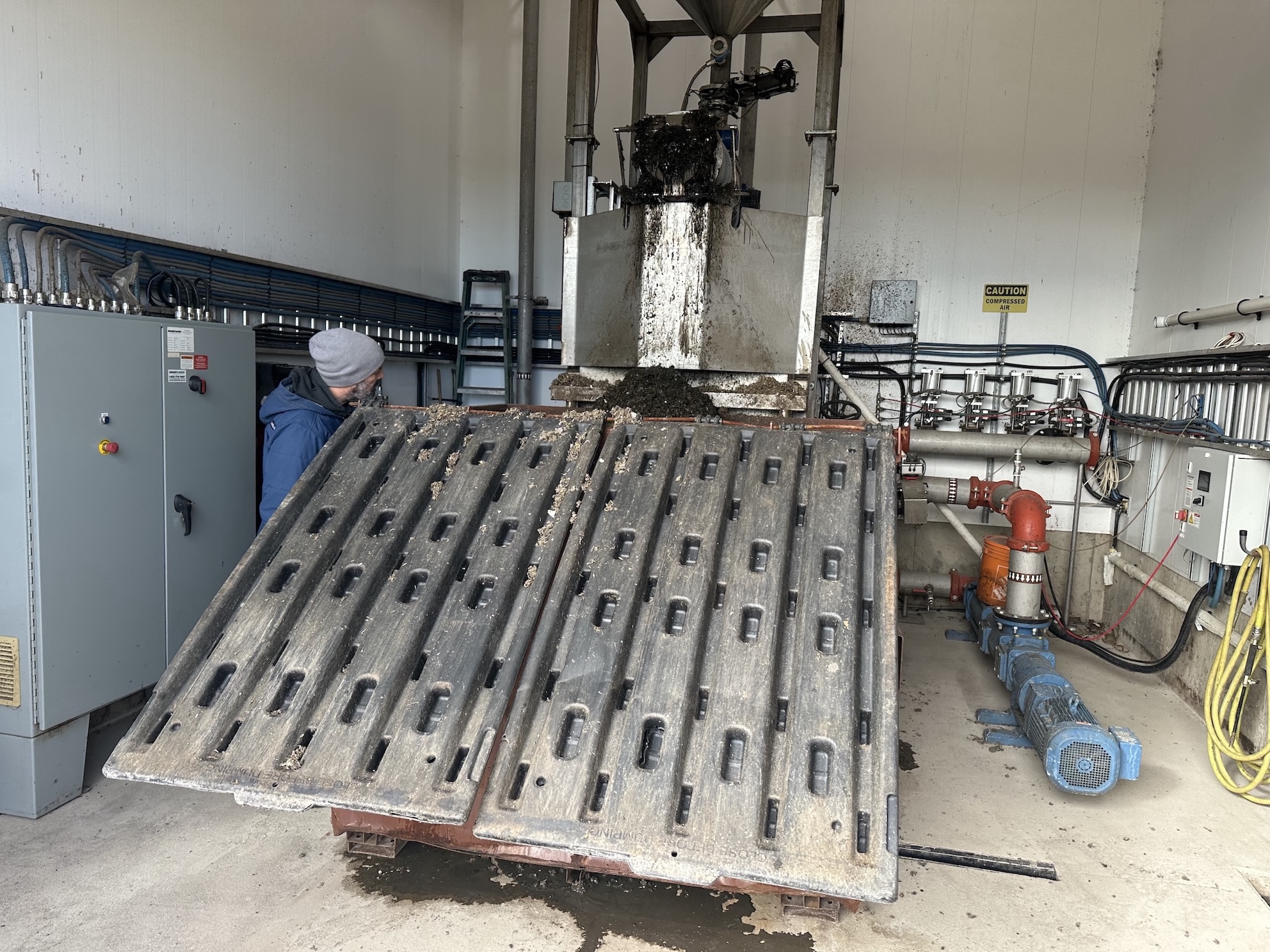
    The process starts before the waste even arrives. I learned that Davidson, and other companies like it handle the first step by separating the organic and inorganic parts of things like coffee cups. The organic sludge from that process is then sent to Escarpment Renewables, which is owned by Miller Waste. I found it fascinating to realize how many different players are involved in making one system of waste diversion work. Each part is specialized, yet dependent on the others. It made me appreciate the scale and coordination needed to make sustainability happen beyond the individual level.

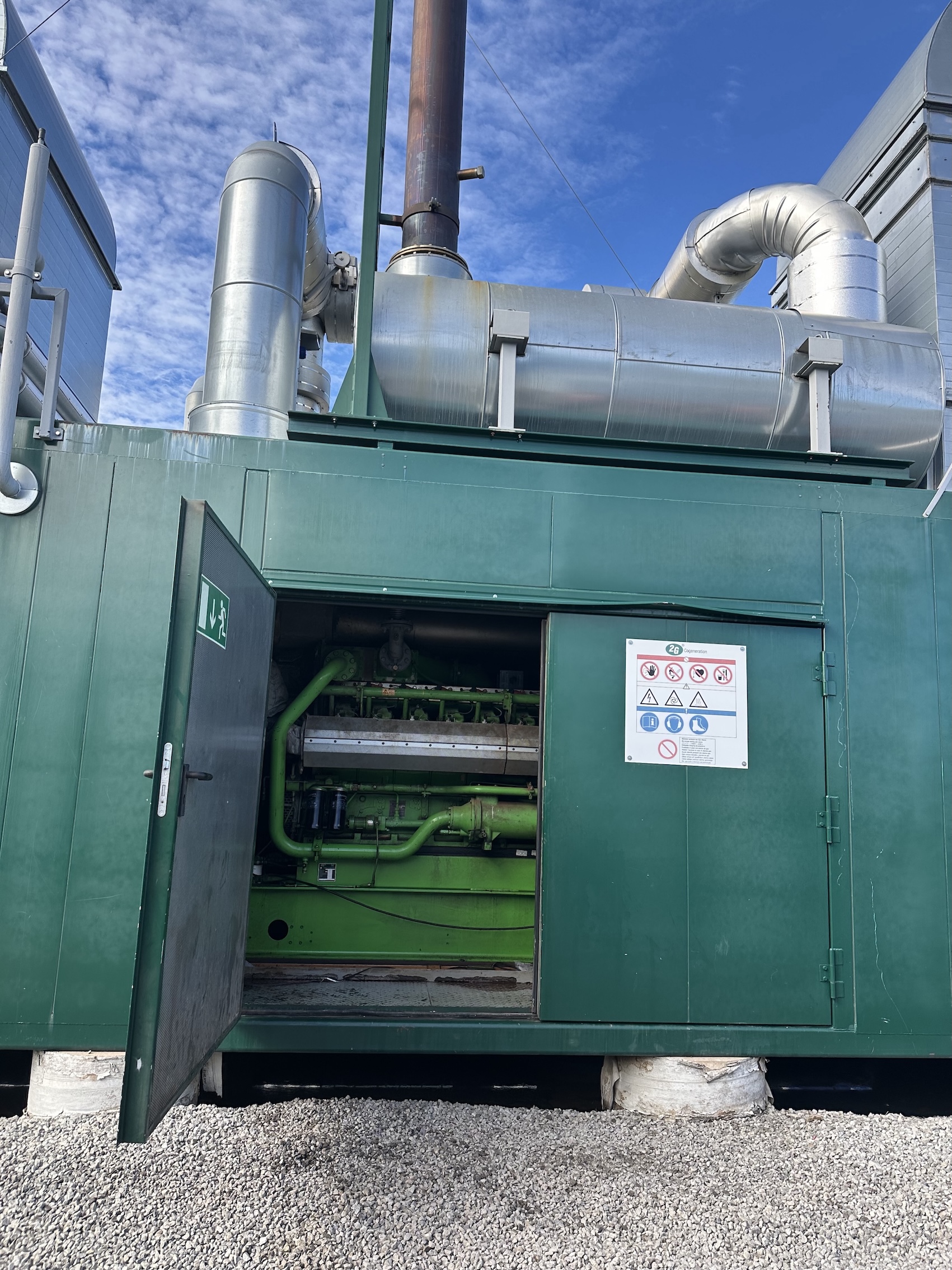
    The anaerobic digestion system itself was unlike anything I had seen before. The waste is heated to about 70°C with glycol to pasteurize it before spending around 40 days in massive digesters that are 20 feet deep. Inside, the material breaks down without oxygen, producing methane gas that’s collected in rubber bladders. That biogas is then used to generate about one megawatt of power per hour. That energy is used to power their own machines and then the extra energy is sold back to the grid. Learning that the heat used to maintain the system actually comes from the generator itself showed me how circular the process is. Nothing is wasted, not even the energy used to keep things running.

    I was also surprised to learn how carefully the system is maintained. There are weekly, biweekly, and monthly checkups for pumps, choppers, and pneumatic bulbs, and the digesters are fully cleaned every four to five years. It takes a whole month just to prepare for that process. That level of planning and care gave me a new respect for the people running these systems. The fact that there are just three operators, one engineer, and a manager is surprising. It’s a small team managing a massive operation that quietly supports sustainability for the entire region.

    What struck me most during this visit was how much of the waste process happens out of sight. When we throw things “away,” we rarely think about where “away” actually is. Seeing how 90 tonnes of waste a day can become biogas and organic fertilizer made me realize that sustainability isn’t just about recycling, but that it’s about innovation, chemistry, and constant problem-solving. Even the leftover solids that can’t be used are carefully handled and sent to landfill, while the liquid is turned into organic manure that goes back into farms.

    Leaving the tour, I felt like I understood the word “renewable” in a much deeper way. Escarpment Renewables isn’t just a waste facility. It’s also a reminder that with the right systems, waste can become a resource, and sustainability can literally power our communities, even if it started out as a failed project by the municipal government. 
    Categories: Blog, Experiential Education, SSAS Program, SSAS Student Contributor

  • First Year Experience Blog: Kinza Qureshi

    Blog Contributor: Madelaine Legault

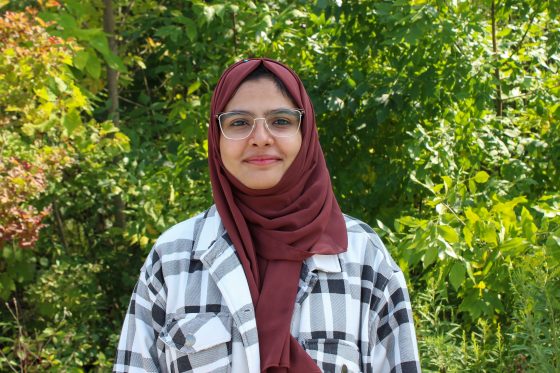
    Kinza Qureshi standing in front of trees.

    Kinza Qureshi is a first year student in the thesis pathway of the Master of Sustainability program at Brock University. She is working under the supervision of Dr. Marilyne Carrey and her research interests are in community resilience to climate change through nature-based solutions, sustainable development, and planning. She recently spoke to PhD in Sustainability Science student and graduate ambassador Madelaine Legault about her experience in her first term of the SSAS program.

    What inspired you to pursue graduate studies in environmental sustainability?  

     I decided to go into the field of environmental sciences for my undergrad, because in my country, I had seen a lot of issues regarding the environment, like flooding. There were not manyagencies in my country focused on the environment. There were a few that were working, but they were not getting the funding for that, so I decided to choose this pathway to help my people and to learn. I was studying environmental sciences broadly, and now I’m narrowing down to sustainability, because that’s the future. 

    How would you describe your typical day in the program? 

    Lately, I have been super busy with assignments, coursework, and TA work, so my days are honestly packed. I am also starting to work on planning my thesis with my supervisor. Right now, we are working on a topic. My focus is on the climate crisis and the communities that are directly affected by it. I want to build an empathy element by understanding their experiences, and I’musing geospatial data, remote sensing, and augmented reality to collect and present the impacts.  

    How do you think your research will contribute to sustainability science? 

    I had not previously considered the part that empathy plays in sustainability science. But now I realize that if we look at empathy and the way people have emotional connections with the subject, it could be an opportunity to engage with large audiences to let them know what the future would look like if we were all on the same page. It can shift people’s thinking towards sustainability and to work for the environment. Whenever we want to change something, we as a person need to change ourselves. And one thing that we all need to change is our empathy for nature and for the next generation. We are the last generation that has a chance to think about the future. We have to think about it. So, I think that empathy element in my research would look at the psychological connections to nature. And it could help bring a change in how we think of our future. 

    What program experiences have had the most impact on you? 

    Oh, I would say the field trips and like the “talking tree” project we are working on right now in SSAS 5V82 have really opened my mind. In my undergrad, I always wanted some practical experience, rather than just theory. So, these are opportunities for a different kind of learning rather than just pure theory. It’s a lesson that always stays in your mind. Like the tunnel tour we did, you can see that there’s a whole system underground that you didn’t know about before. 

    How has the program faculty and your peer group supported your academic journey? 

    My supervisor, Dr. Marilyne Carrey, has helped me a lot. She always encourages me to go to conferences and seminars, and she shares different opportunities inside and outside the university. She sees me and listens to what I want for my research. That’s really helped me because I’m from a different background, I have a different language, and I have to think before I speak. So, it’s really difficult for me, but she helps. Other than that, I would say my classmates are so friendly and help me whenever I need help. I just go and ask someone, and they’re always there to help.  

    How do you stay motivated when facing or when thinking about these complex and often very overwhelming crises? 

    One thing that motivates me is the idea that what I am facing today, I don’t want my future people to face. I have a connection with them. I don’t want my child to grow up in a world where they have no clean air to breathe, where they have issues like flooding and climate crisis or food insecurity issues. I think of future generations.  

    What advice would you give to someone considering graduate studies in sustainability science?  

    Oh, I always tell people to join this field because it’s growing and it’s the future. There are doctors that specialize in human beings, and people specialized in engineering, but students of the environment specialize in both nature and humans. I think this is an opportunity that is growing, and I would suggest that people come and explore. They would love this field! 

    Categories: Blog, Program Reflections, SSAS Program, SSAS Student Contributor, SSCI Student Contributor

  • ESRC Co-op Students Work Across Niagara Region

    Another Spring/Summer term is ending, and another cohort of Master of Sustainability (SSAS) students in the major research paper and co-op pathway are approaching the end of their work placements. We caught up with Rebecca Anderson and Allegra Caballero and they shared with us the work they’ve been doing and how it’s inspired them to become sustainability professionals.

    Allegra Caballero

    Allegra Caballero is working with the Niagara Peninsula Conservation Authority (NPCA) as a Land Planning Associate. In this role, she supports the NPCA’s full-time Land Planning staff in their implementation of key land planning, acquisition, and public engagement activities, and has also been helping her team plan for the development of management plans for priority conservation areas. This is done through research, policy writing, and drafting text to populate the NPCA’s main webpage.

    When asked how her first year in the SSAS program prepared her for success in her co-op role, Allegra responded that “the coursework in the SSAS program has helped me gain valuable experience working on various management plans and working with others to reach a shared goal.

    Rebecca Anderson

    Rebecca Anderson is working for Brock University as the Sustainability Coordinator in the Facilities Management department. She described her role as being based significantly in sustainability education, “right now we are working on increasing the waste diversion rates on campus, so I am in the process of creating content like posters and online resources that will help educate staff and students on different waste streams”. Brock University is also preparing to submit for the 2025 THE Impact Rankings, and Rebecca has written a Brock News article highlighting Brock’s most recent submission.

    Like Allegra, Rebecca shared that her first year in the SSAS program helped to prepare her for her co-op position, “[my courses] familiarized me with concepts like the 17 Sustainable Development Goals (SDGs) and technical skills like preparing and responding to requests for proposals (RFPs). These were areas I was previously unfamiliar with, but that are now core elements that we use almost daily in my current workplace”.

    Allegra and Rebecca both shared how their co-op roles enriched their understanding of sustainability science and prepared them for careers in the sustainability field. “In just three short months, I have learned a tremendous amount” said Rebecca, adding “it has opened my eyes to other career options, as prior to this I had never considered working within an [academic] institution. I am appreciative of the administrative and legal concepts I have learned on the job that are crucial for tasks such as securing contracts or mandated reporting of our recycling data to the Resource Productivity and Recovery Authority.” Allegra echoed this sentiment, sharing that “working with a conservation authority has helped me reimagine sustainability, the value of nature, and where an individual with my skills and abilities can contribute to its protection – I have gained new skills and abilities that I hope to bring with me into a career at a conservation authority or environmental agency”.

    We are thrilled to see these students thriving in their workplaces, and look forward to hearing more from them when they return to begin their second year in the SSAS program!


    Categories: Blog, Co-Op, SSAS Program, Sustainability at Brock

  • Seen & Heard at the ESRC: Convocation Day!

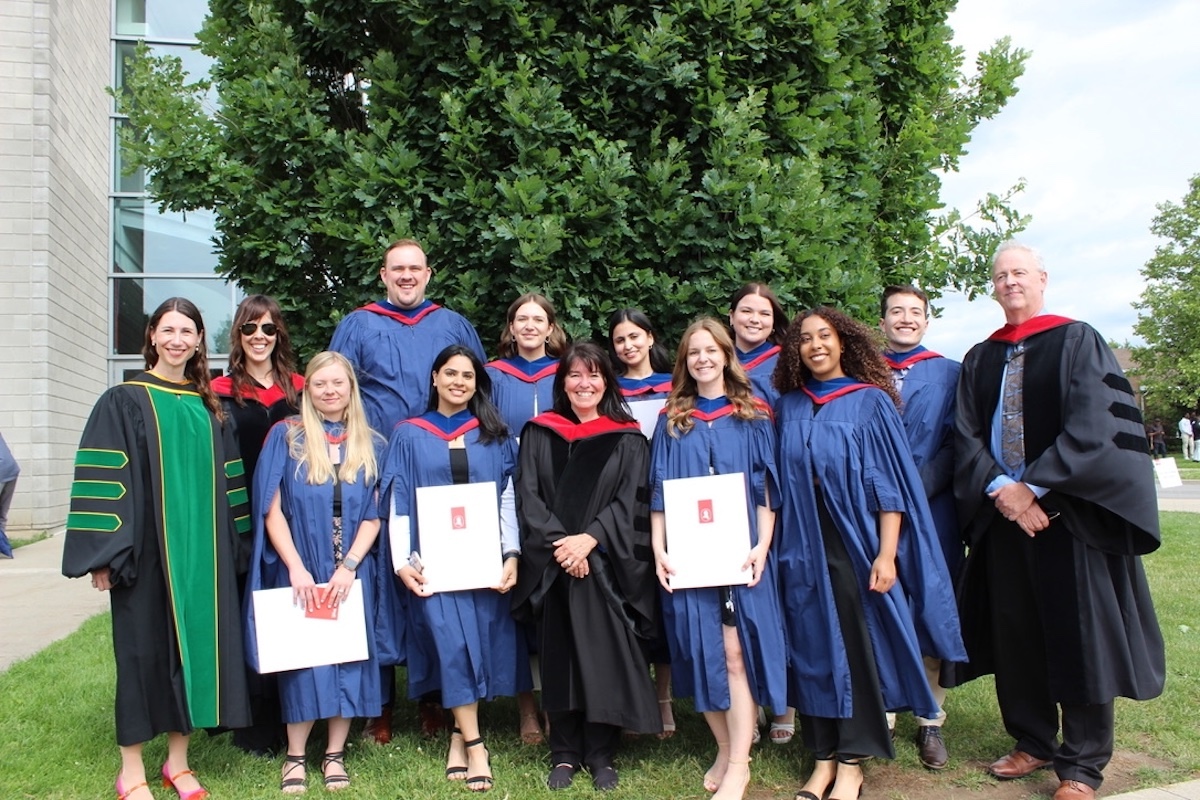
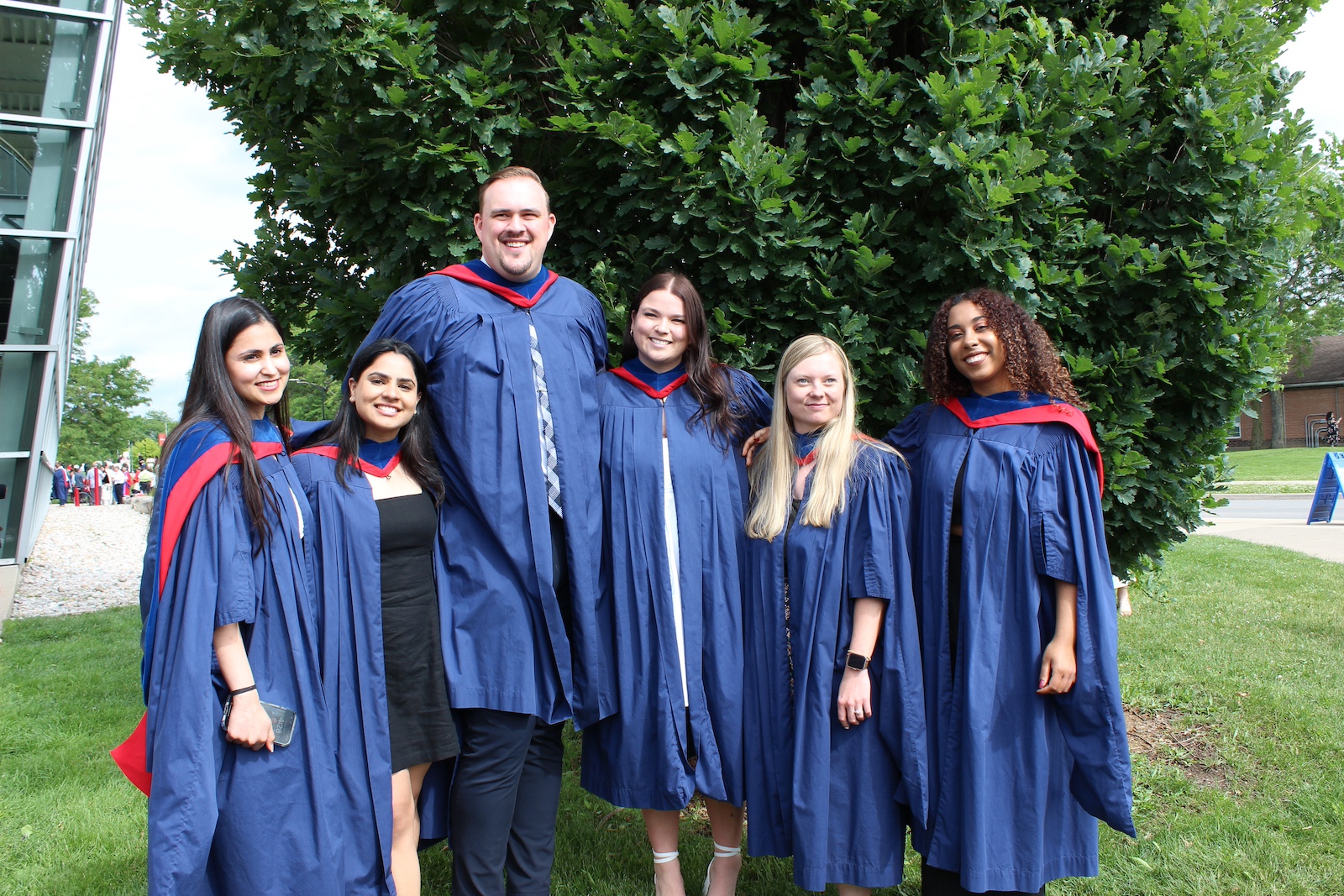
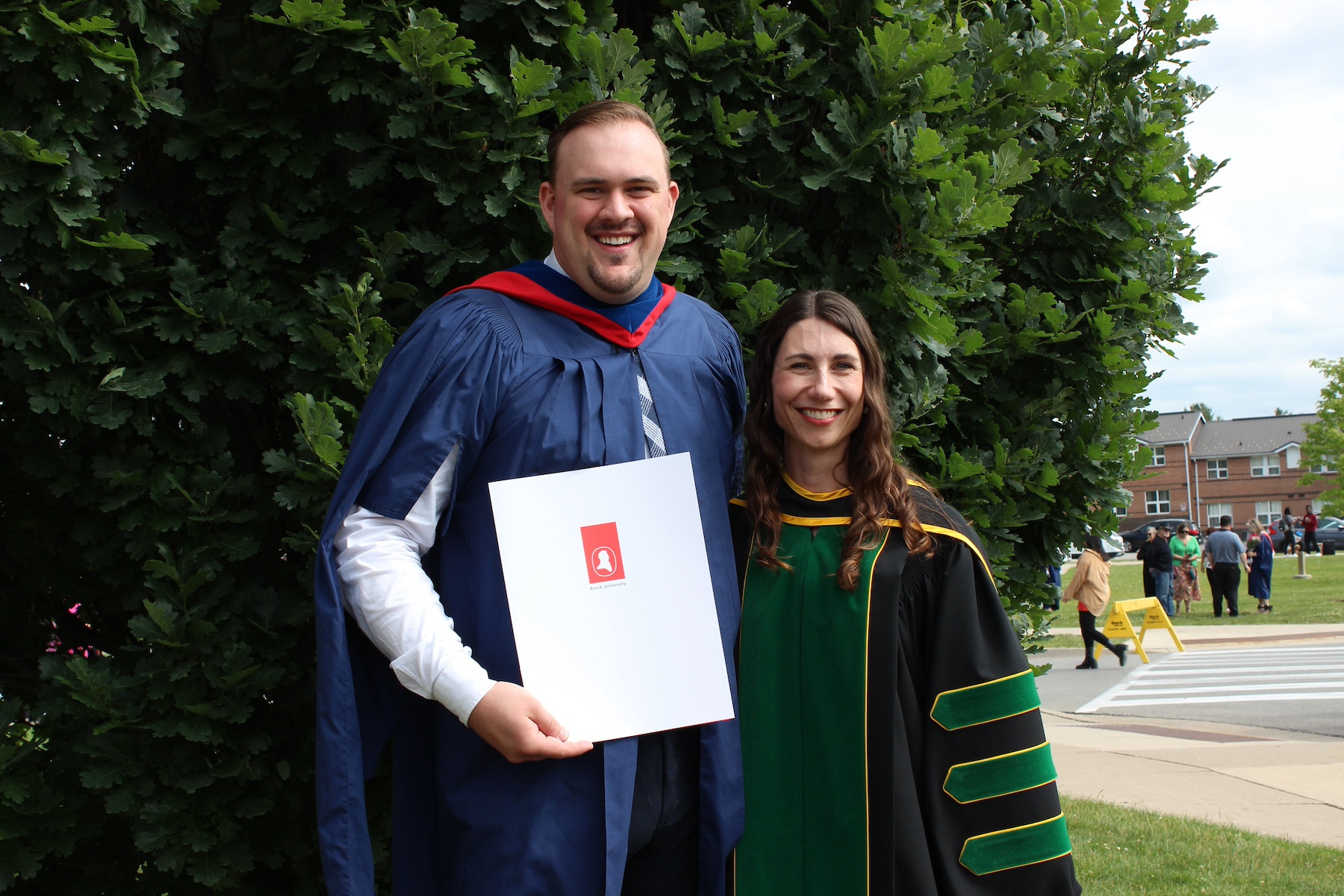
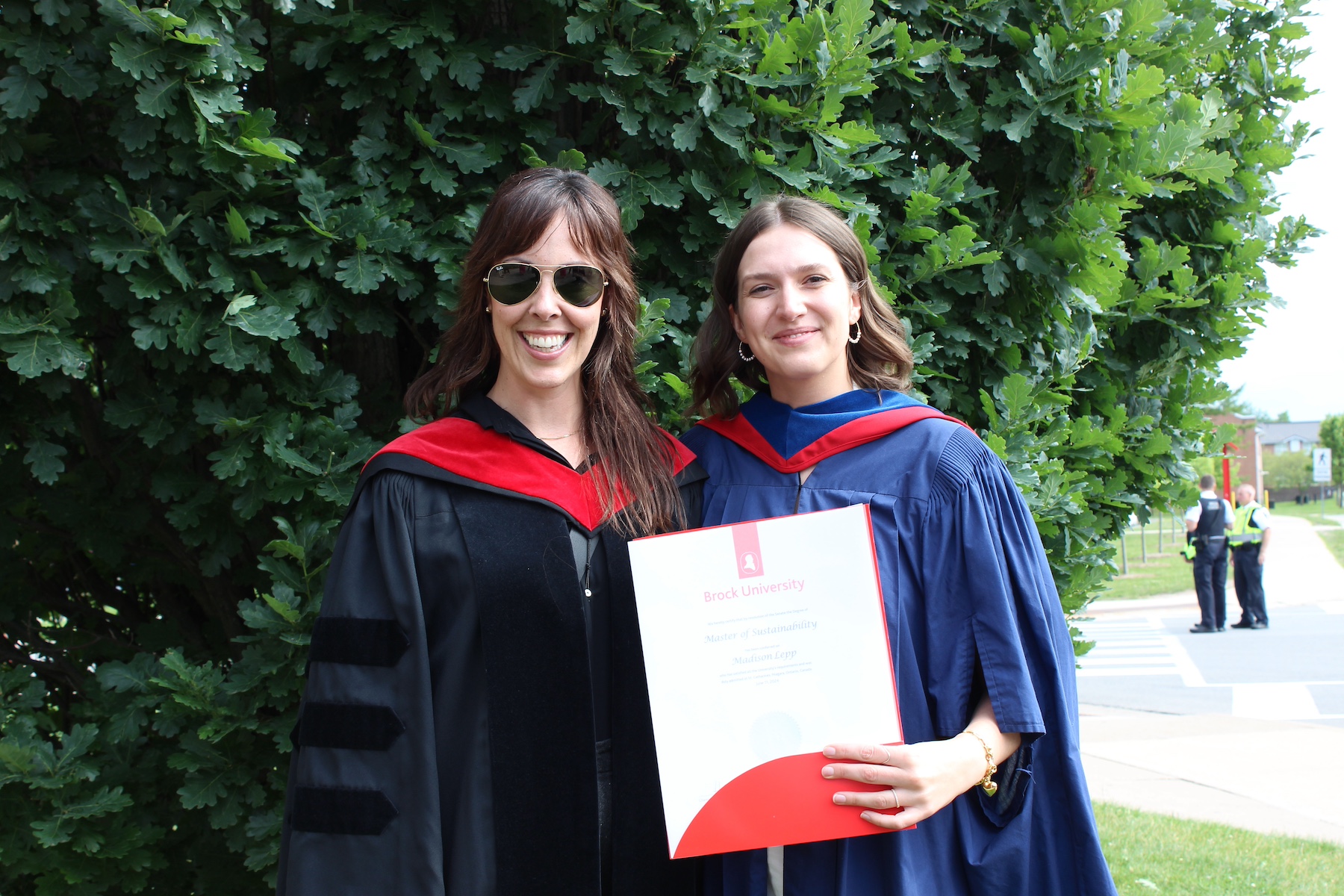
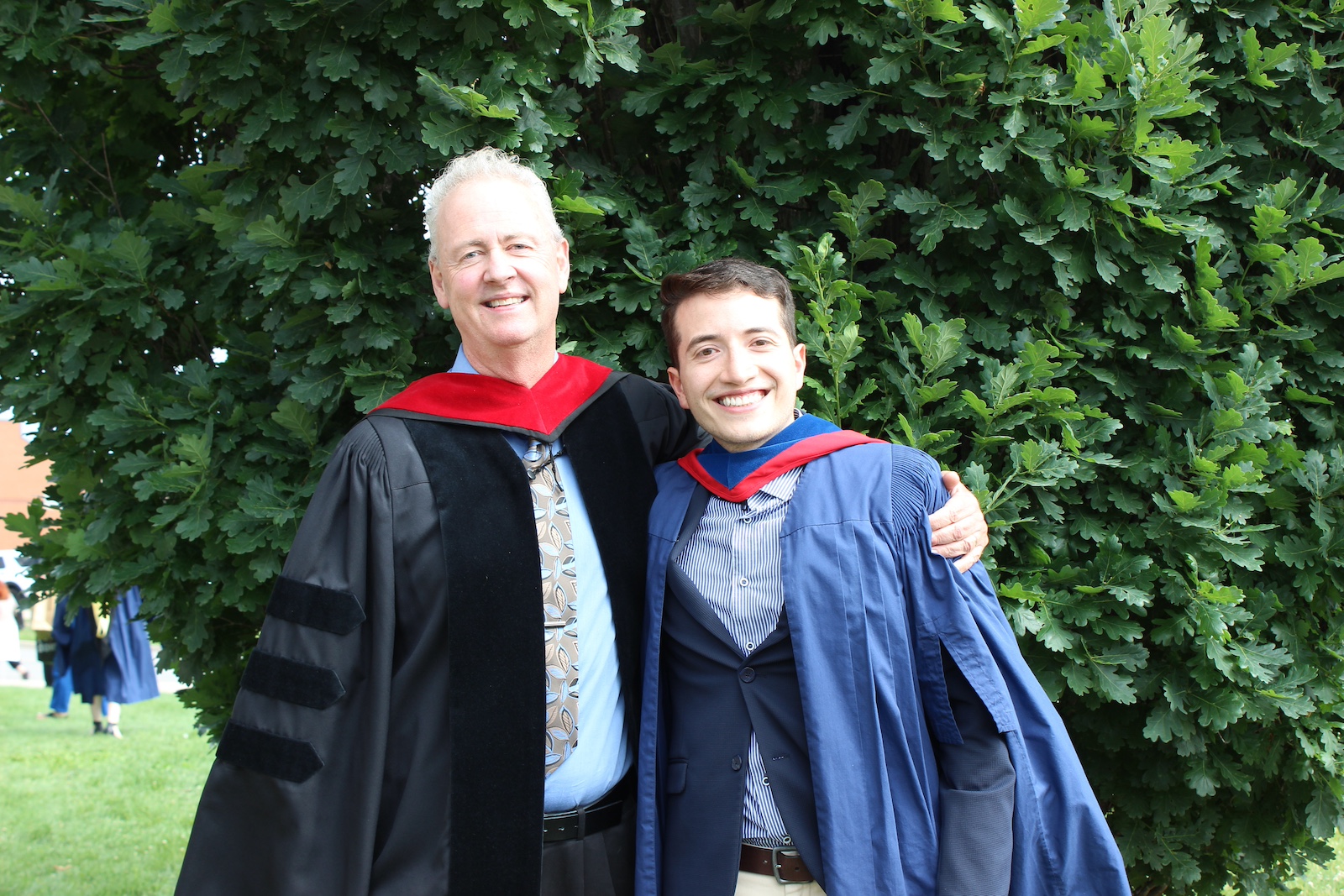
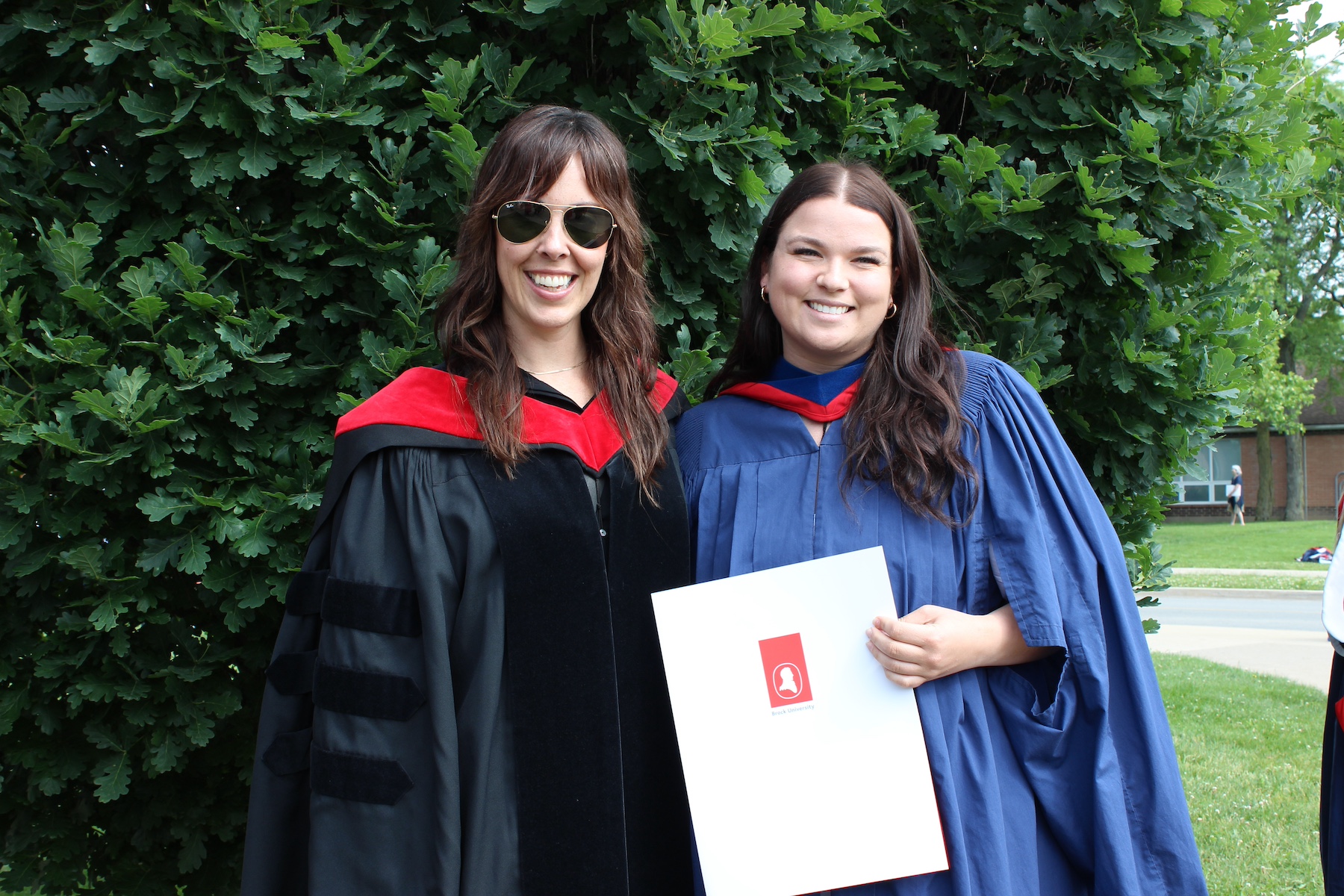
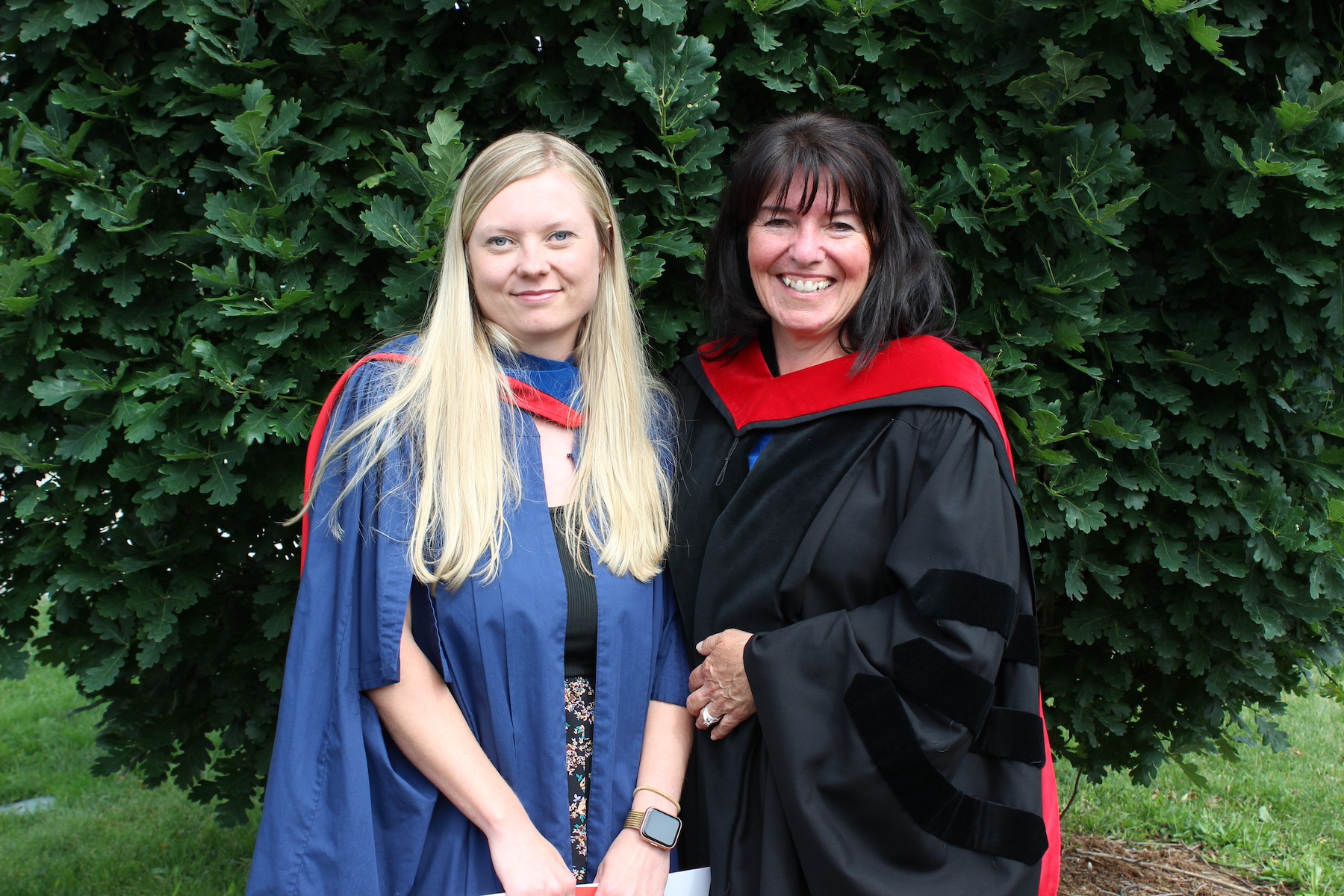
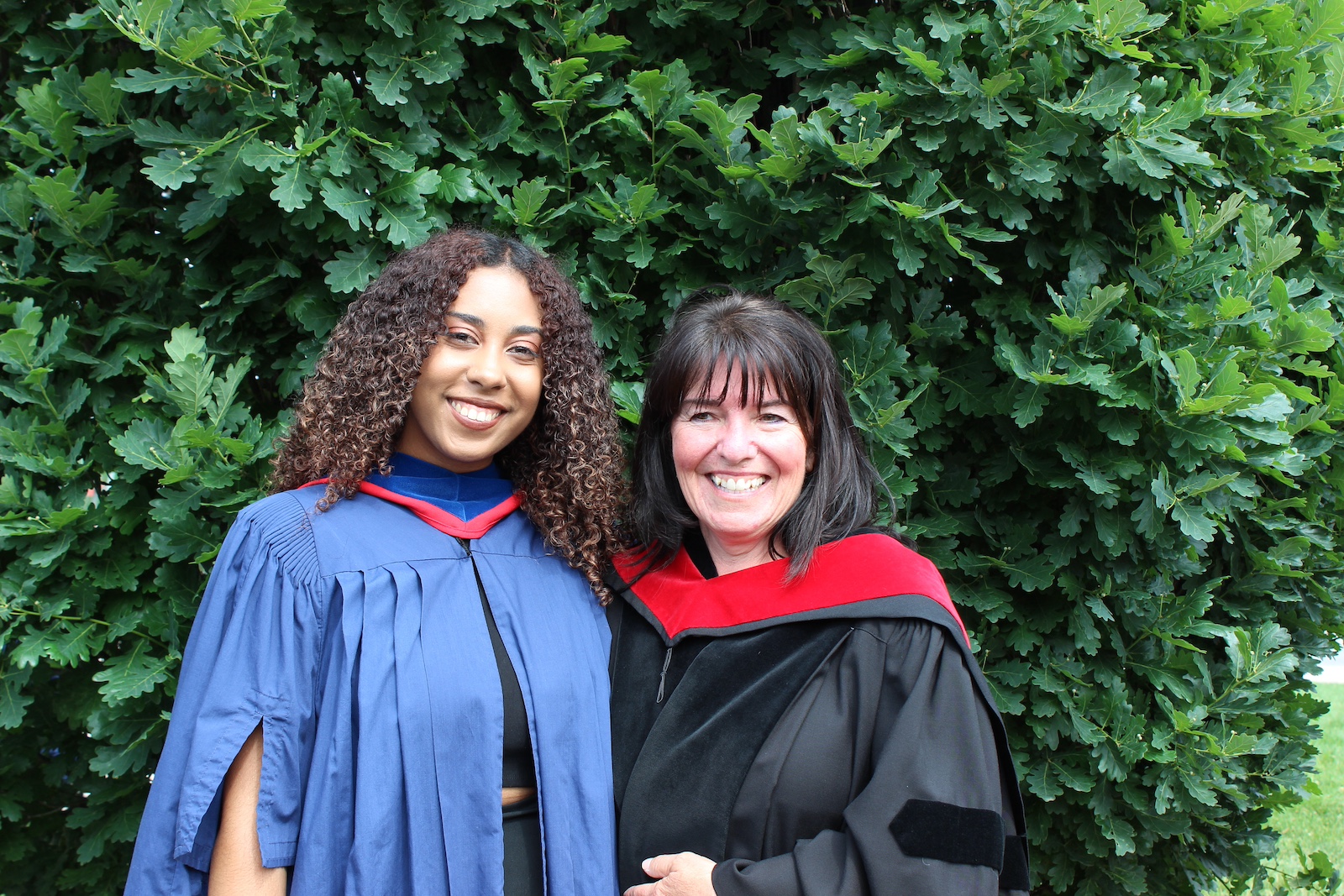
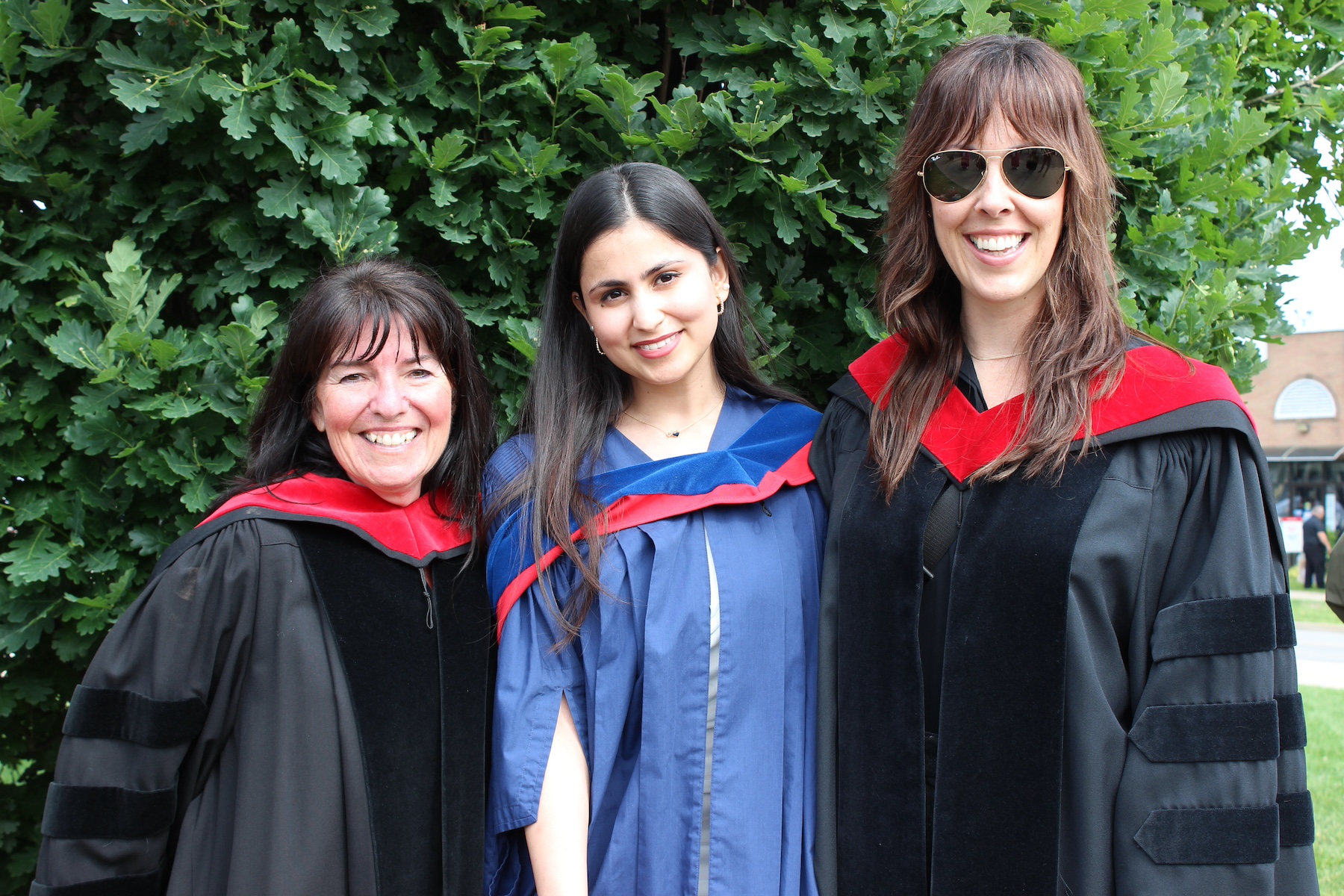
    This year’s Spring convocation ceremony saw 11 students graduate from the Master of Sustainability program, and we were thrilled to celebrate with these nine students in person. Congratulations to everyone who celebrated this week!

    To learn more about each of these graduates, check out our blog post and alumni webpage!

    Categories: Blog, SSAS Program

  • Congratulations to the Spring Class of 2024!

    Top Row L-R: Kassie Burns, Anmol Burmy, Alexa Dolsky, Dana Harris Middle Row L-R: Shannon Heaney, Erin Isaac, Madison Lepp, Sydney McIntyre Bottom Row L-R: Zeal Pandya, Sebastian Roa, Evan Rodenburg

    On June 11, 2024, 11 students will graduate from the Master of Sustainability program at Brock University! These students have worked incredibly hard throughout their studies and have participated and thrived in various Environmental Sustainability Research Centre (ESRC) initiatives and programs. On behalf of the ESRC, we are honoured to have been a part of each of their academic journeys and cannot wait to hear more from these students in the future!

    Kassie Burns joined the SSAS program in 2022 after completing her undergraduate degree at Brock. Kassie was in Scheme A of the program and completed her MRP research under the supervision of Dr. Marilyne Carrey, titled “Strategies for Enhancing Community Science: A Sustainability Science Narrative”. Kassie also completed a co-op position as a summer student with the Niagara Parks Commission and worked as a Research Assistant with the now-complete Charter with Facilities Management partnership. In addition to her studies, Kassie participated in the Mapping New Knowledges Conference at Brock, and was a co-recipient of the Rotary Club of St. Catharines Environmental Sustainability Graduate Scholarship.

    Anmol Burmy joined the SSAS program in 2022 from Toronto Metropolitan University. Her MRP research focused on flood resilience and was titled “A Flood Tale of Two Cities: St. Catharines and London, ON” and was supervised by Dr. Diane Dupont. During her time as a SSAS student, Anmol took on the role of Project Manager for a consulting project with her fellow students for the Niagara Peninsula Conservation Authority. The results of this project will continue to be used by the NPCA for years to come. Anmol also completed a co-op position as a Planning Employment Surveyor with the Halton Region and was recently hired by the Township of North Stormont as a Junior Development Planner after successfully completing AMTCO’s Prime on Planning course with honours.

    Alexa Dolsky joined the SSAS program, virtually, from Alberta in 2020 and was one of the first students to join Scheme C of the SSAS program! Her MRP research was supervised by Dr. Ryan Plummer and titled “Applying an adapted sustainability framework to three government hydrogen roadmaps”. Throughout her time in the SSAS program, Alexa maintained a role with the Government of Alberta and is currently working there as a Senior Policy Advisor.

    Dana Harris joined the SSAS program as part of our third cohort in 2016. Her thesis research, titled “Characterizing intra-annual xylem cell formation and circadian cycle dynamics of Jack Pine (Pinus Banksiana) in the Northern Boreal Forest, Yellowknife, Northwest Territories” was supervised by Dr. Michael Pisaric and successfully defended by Dana on October 5, 2023. While completing her studies, Dana won the NSERC Science Exposed competition in 2018 and participated in several international conferences, including AAG in Boston, MA and the Le Studium conference on wood formation in Orleans, France. Dana also worked as an environmental officer at the Gahcho diamond mine in the Northwest Territories and currently works as a Fish and Fish Habitat Biologist with the Government of Canada. She currently lives in Yellowknife with her family.

    Shannon Heaney joined the program, virtually, from Alberta in 2021 and completed her thesis research under the supervision of Dr. Ryan Plummer. Shannon’s thesis was titled “Tactics to Engender Participation in Collaborative Environmental Management” and was successfully defended on October 20, 2023. During her studies, Shannon worked as a research assistant on the now-complete Excellence in Environmental Stewardship Initiative partnership with the Niagara Parks Commission. Shannon was also a recipient of the Ontario Graduate Scholarship and the Joan P. Nicks Sustainability Scholarship. She was recently hired by the University of Alberta’s Sustainability Council as a Project Planner – Special Projects.

    Erin Isaac joined the program in 2022 and completed her MRP, titled “Spotting Potential Threats: A Tool to Inform the Proactive Management of Invasive Insects on a Regional Scale” under the supervision of Dr. Marilyne Carrey. Erin completed a co-op work placement as a Climate Change Intern with the Niagara Peninsula Conservation Authority (NPCA) and also worked as a Research Assistant with the now-complete Brock-Lincoln Living Lab partnership. Erin was also a recipient of the Rovinelli Family Bursary and the Brock Horizon Scholarship. She is now working as a Project Assistant in Natural Asset Management with Niagara Peninsula Conservation Authority (NPCA).

    Madison Lepp joined the program in 2021 and completed her thesis research under the supervision of Dr. Jessica Blythe. Her thesis, titled “Advancing Resilience and Equity in Canadian Municipal Climate Adaptation” was successfully defended on January 25, 2024. During her time in the SSAS program, Madison worked as a Research Assistant with the now-complete Charter with Facilities Management partnership and participated in the Mapping New Knowledges conference. Madison was also the successful co-recipient of a WWF Go Wild Grant with fellow SSAS alum Alexandra Cotrufo. They used these funds to start the Brock University Seed Library, which has been an incredibly successful initiative for the university.

    Sydney McIntyre joined the program in 2022 and completed her MRP research, titled “Paper Parks or Protection: Evaluating Atlantic Canada’s Marine Protected Areas” under the supervision of Dr. Jessica Blythe. Sydney completed a co-op work placement with the Niagara Parks Commission as an Environmental Education and Stewardship Student and continued working in this role while completing her research. She also worked as a Research Assistant with the now-complete Excellence in Environmental Stewardship Initiative partnership and was a co-recipient of the Rotary Club Environmental Sustainability Graduate Scholarship. Sydney is now working for the NPCA as the Coordinator for the Niagara River Remedial Action Plan. 

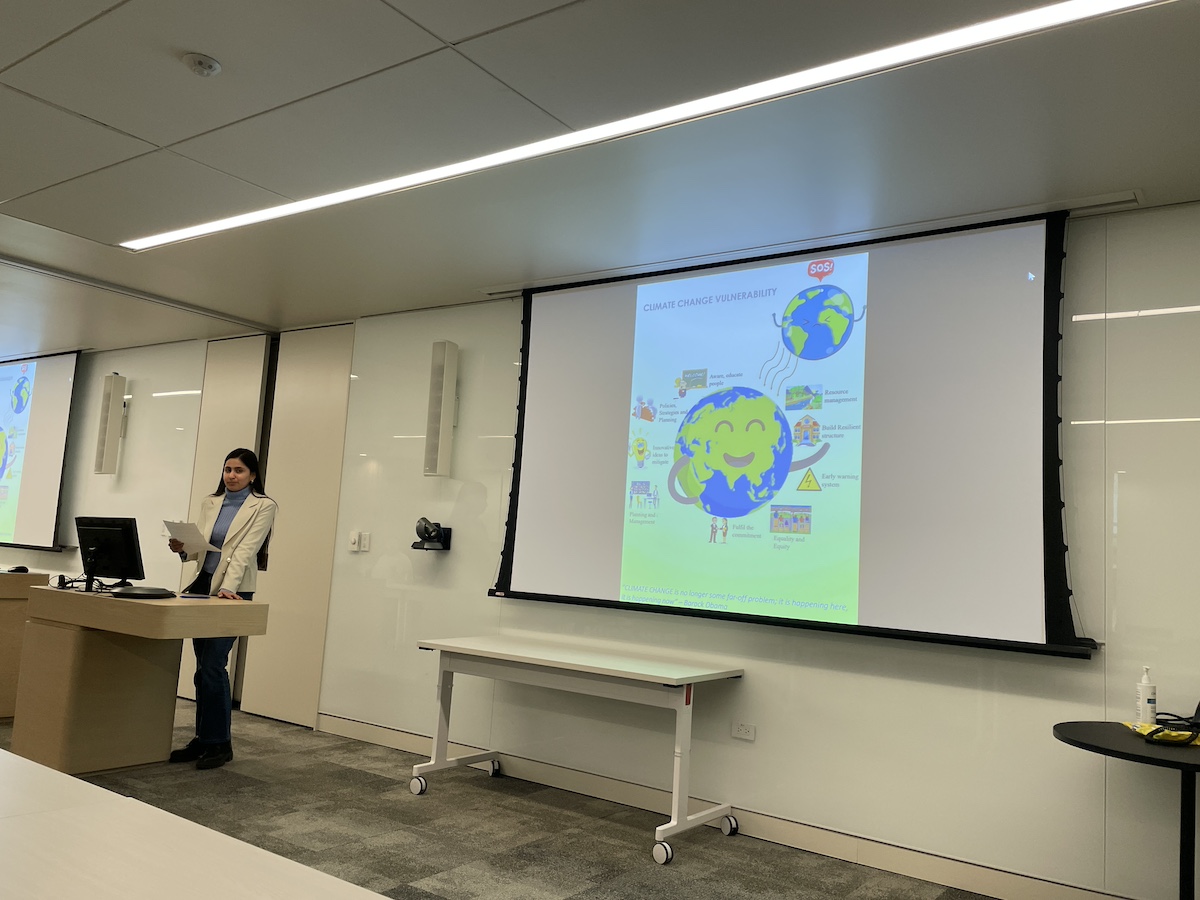
    Zeal Pandya travelled from Ahmedabad, India to join the SSAS program in 2022. She completed an MRP titled “Climate Change Vulnerability Analysis: A Case Study of the Town of Lincoln, Ontario, Canada” under the supervision of Dr. Marilyne Carrey. During her time in the program, Zeal completed a co-op work placement with the Ontario Department of Environment, Conservation, and Parks as an Environmental Officer. Her position was extended, and she completed her placement over the course of two terms. Zeal was also a successful recipient of the Ontario Paper-Thorold Foundation Graduate Award.

    Sebastian Roa travelled from Bogota, Colombia to join the SSAS program in 2021. His thesis research, titled “Understanding youth attitudes, preferences, and the role of cultural values on intention to use carbon labels on food products: a case study of Argentinian and Canadian consumers” was supervised by Dr. Gary Pickering and successfully defended on September 12, 2023. Sebastian later published his thesis research in the journal Sustainable Production and Consumption and worked for Liberty Utilities, where he was tasked with supporting their ESG strategy. During his time as a SSAS student, Sebastian presented his research at the Mapping New Knowledges conference, served as a Brock International Student Ambassador, and was a successful recipient of the 2022 Spring Fellowship award.

    Evan Rodenburg joined the program in 2022 and became a member of Dr. Julia Baird’s Water Resilience Lab to complete his MRP research under her supervision. His MRP was titled “Understanding the Dimensions of Climate Change Misinformation”. As a Scheme A student, Evan completed a co-op work placement and was hired by Brock’s Facilities Management department as a Sustainability Data Analyst working on Brock University’s STARS submission.

    In addition to our 11 SSAS graduates, we’d also like to offer our sincere congratulations to the 11 undergraduate students who will be graduating with a Minor in Environmental Sustainability, several of whom were successful recipients of the TD Bank Group Scholarship in Environmental Sustainability: Cameron Burgess, Kiara Calder (scholarship recipient), Ruth Elysee, Lea Formicuccia (scholarship recipient), Julia Gardner, William L’Ecuyer, Taylor Partel, Vikki Rossiter, Suel Sakha, Aryan Tiwari, and Naomi Tufts (scholarship recipient).

    Congratulations to all of you, and best wishes in your future endeavours!

    Categories: Awards, Blog, Conferences, Event, SSAS Program

  • ESRC Graduate Students Complete First Year of Studies

    Another academic year has gone by, and two more cohorts of Environmental Sustainability Research Centre (ESRC) graduate students have successfully completed the first year of their respective programs. This year marked a significant milestone for the Master of Sustainability  (SSAS) program, as this year’s cohort is the 10th to join the ESRC! We were also excited to welcome our second cohort of PhD in Sustainability Science (SSCI) students to the program and have greatly enjoyed working with them as they transition into  sustainability scientists! We ended the year on a positive note with a variety of student presentations and several different course-based experiential education learning opportunities.

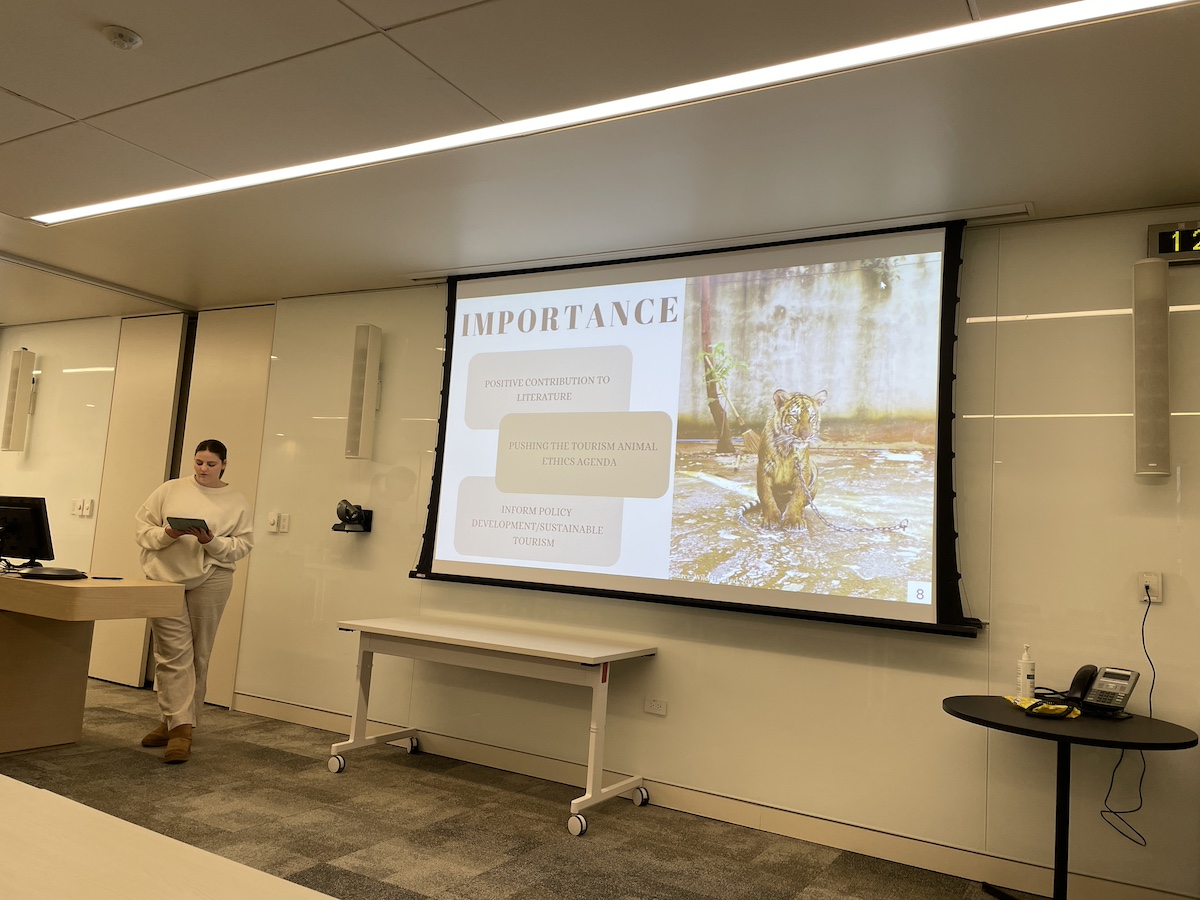
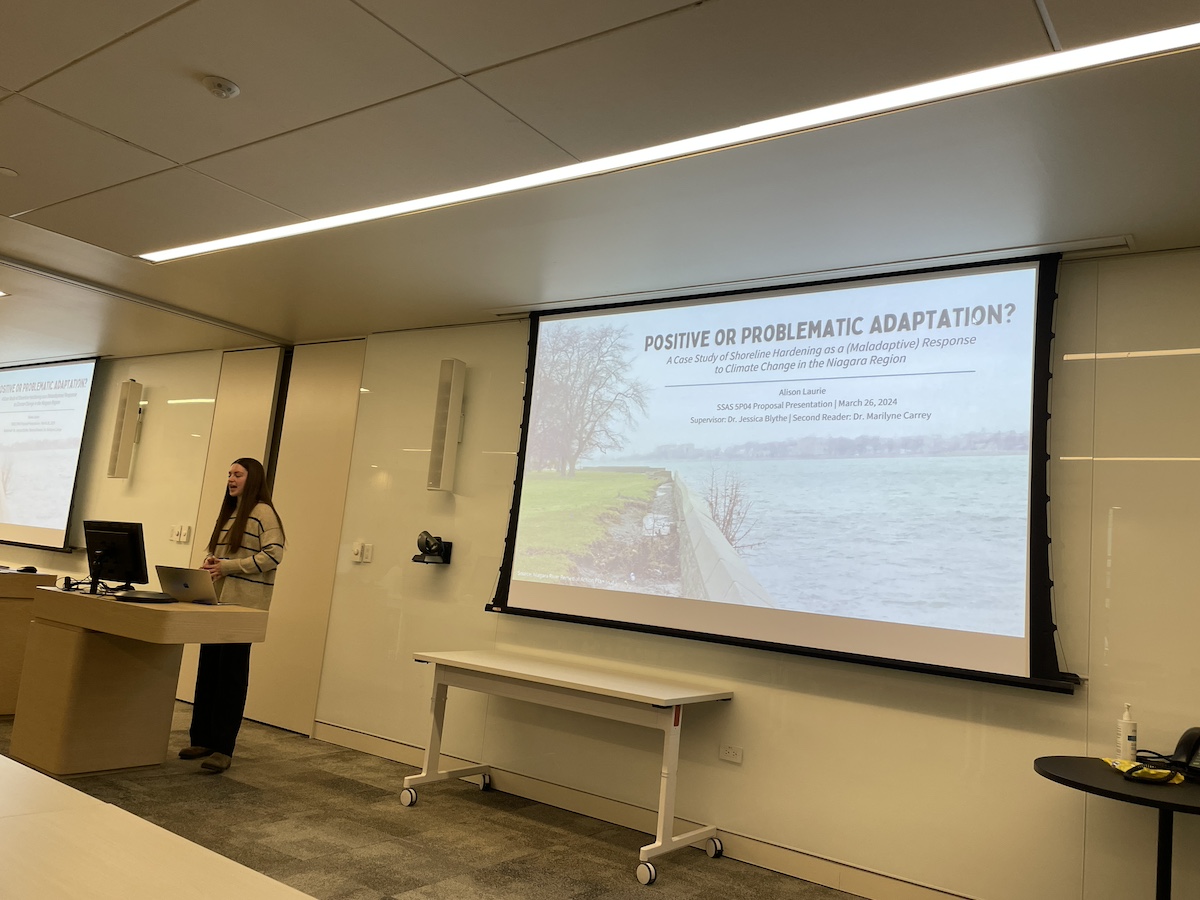
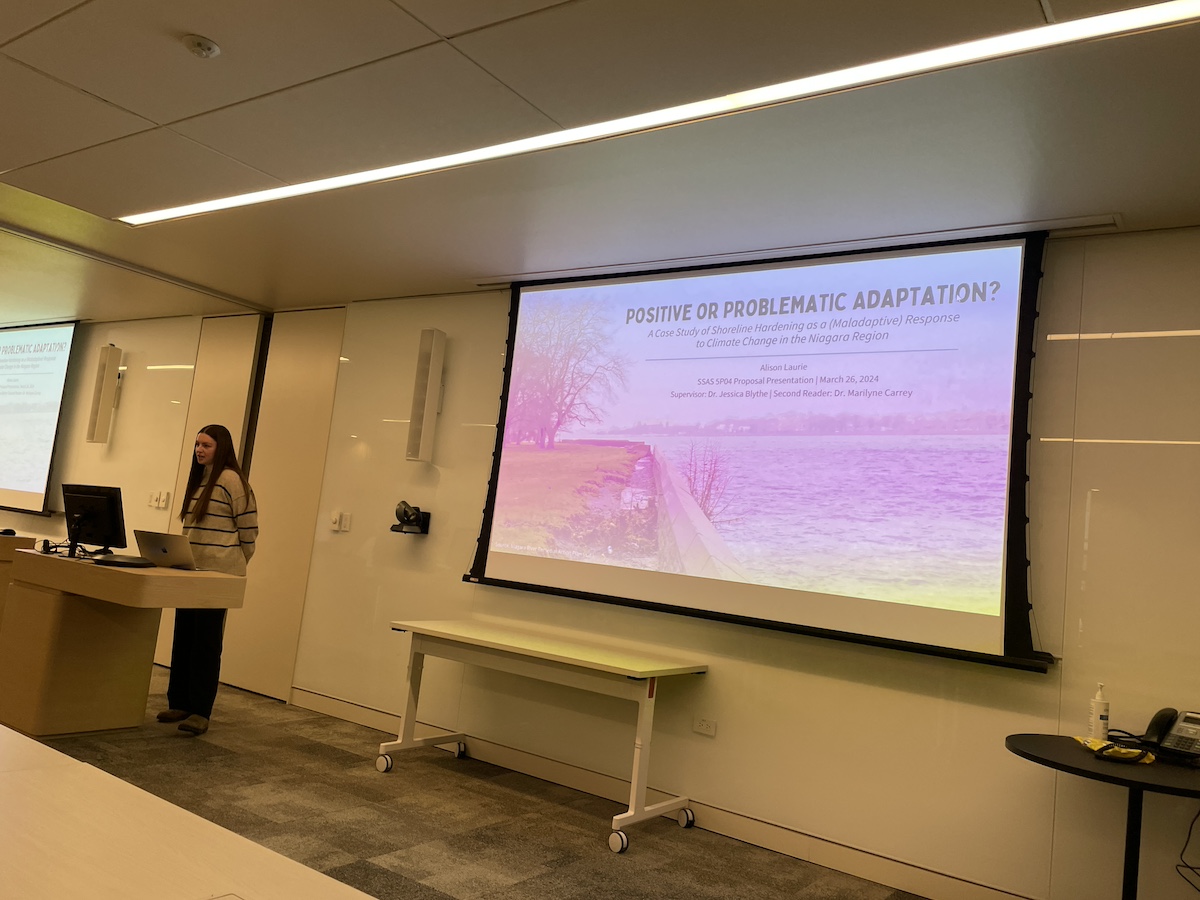
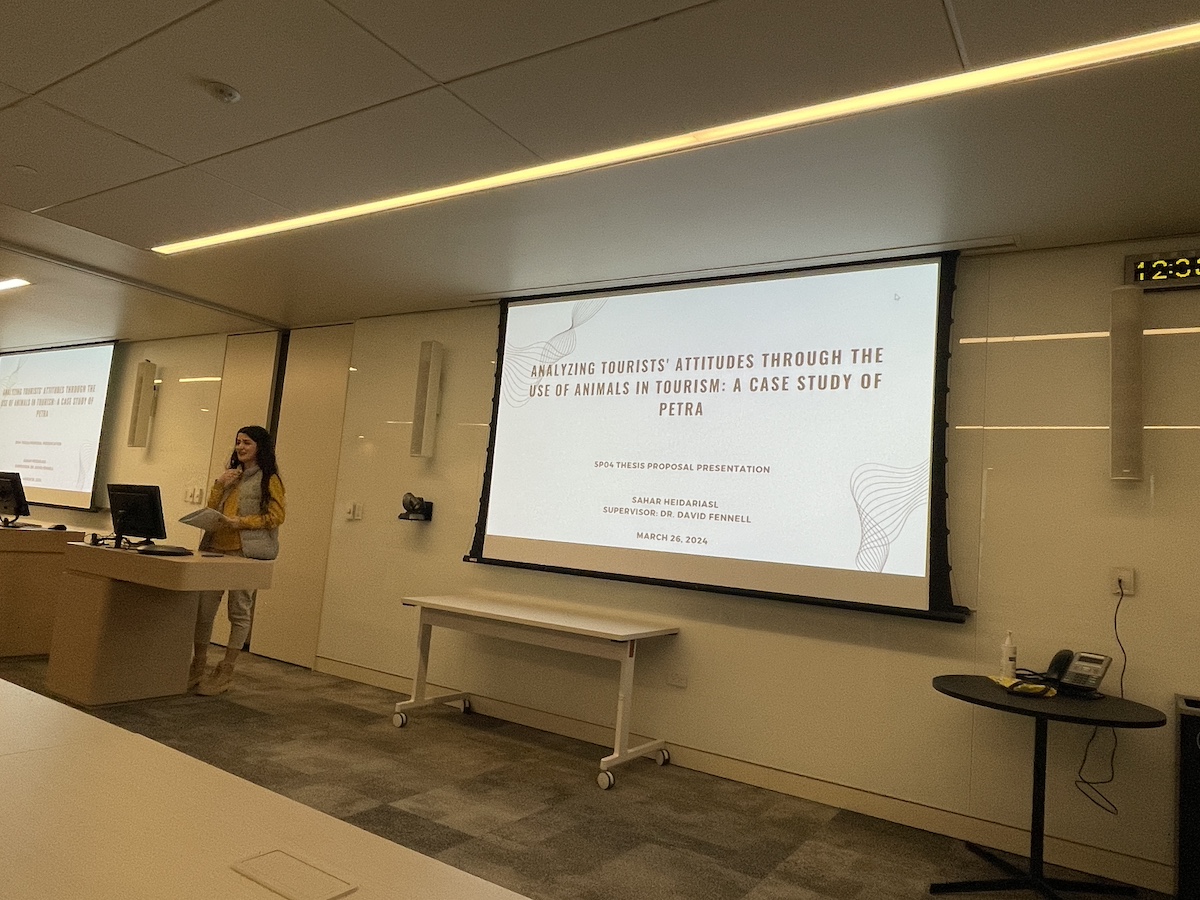
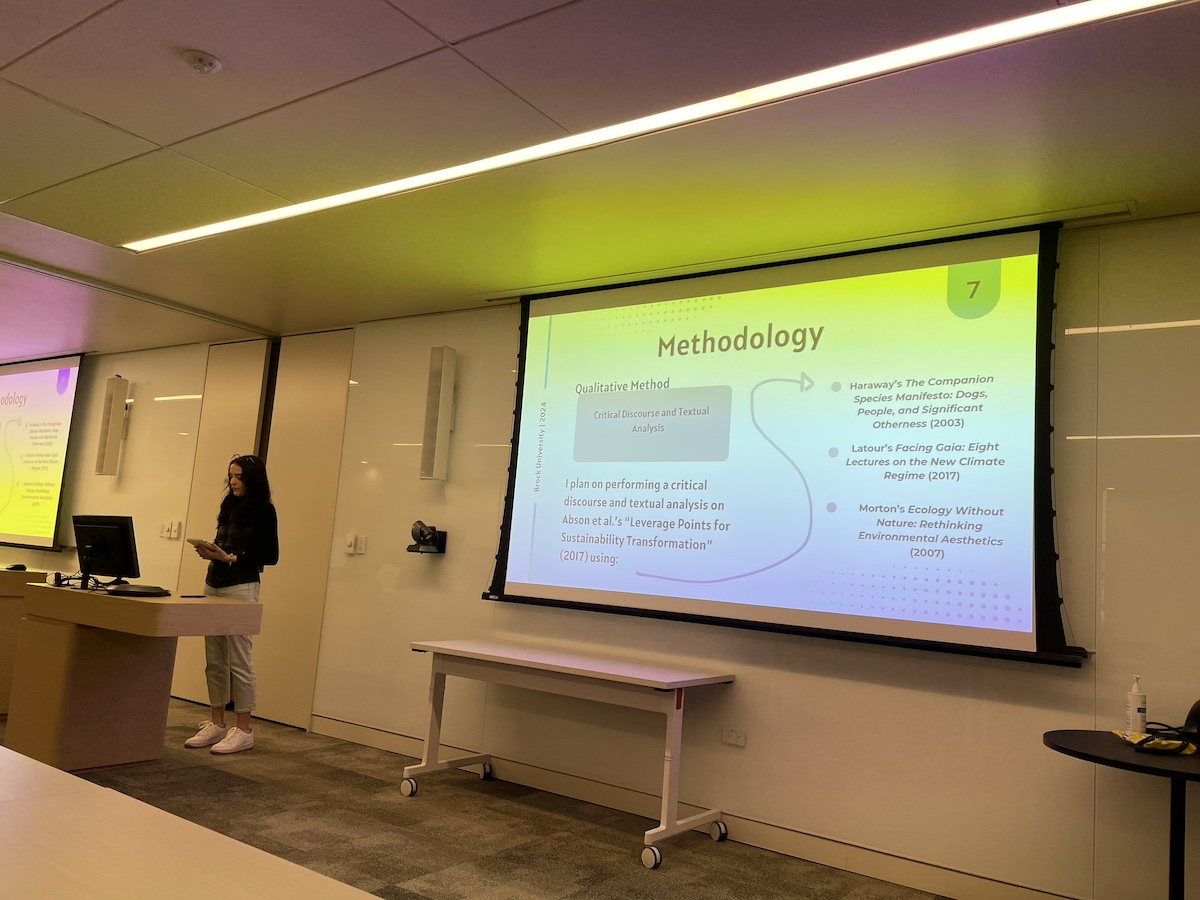
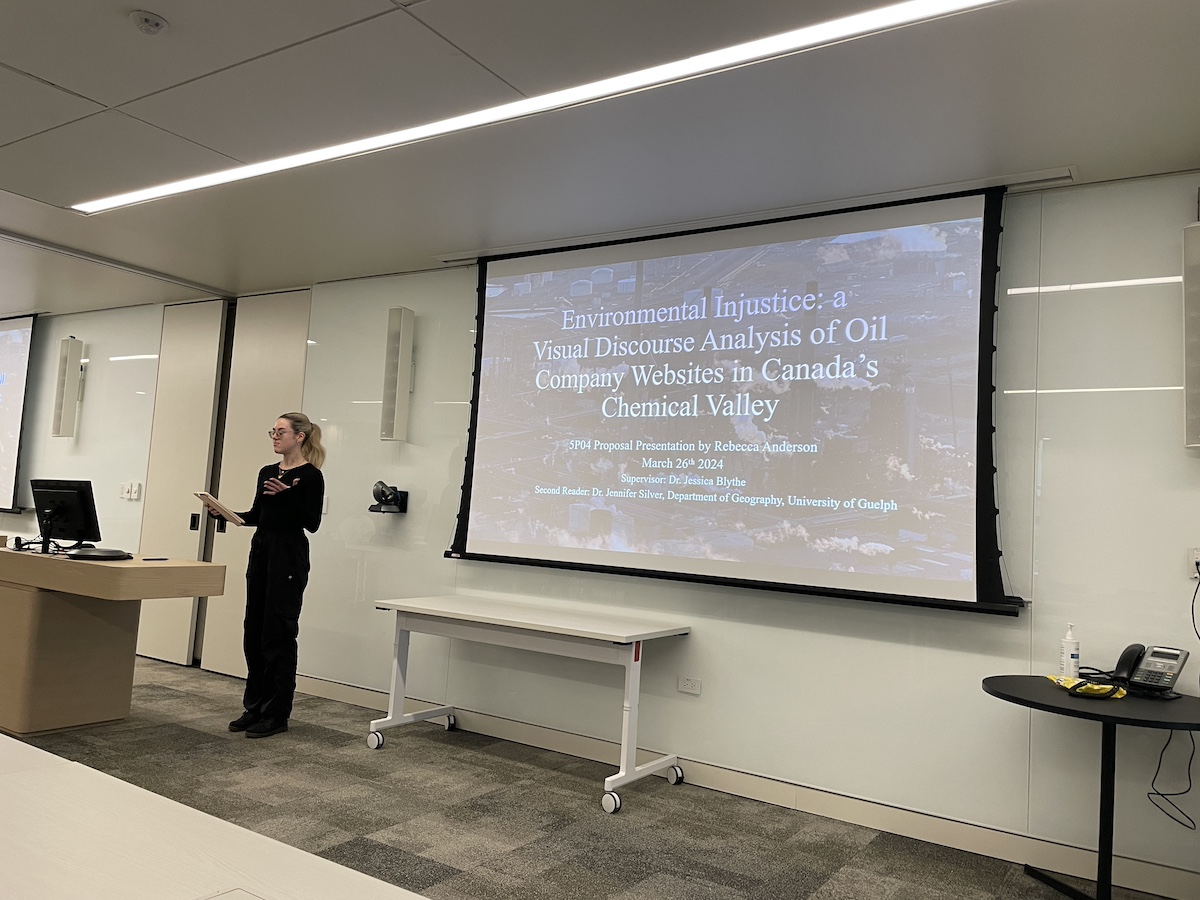
    On Tuesday, March 26th, the SSAS students presented their MRP and Thesis research proposals to a group of their student peers and ESRC faculty and staff. This group has been working towards their research proposals since the beginning of the year and all did a wonderful job describing their research topics. ESRC Graduate Program Director Dr. Jessica Blythe shared that the presentation topics ranged from environmental injustice in Canada’s cancer valley to Anthropocene narratives and guidelines for animal welfare, and that “it was a wonderful day that provided an opportunity to celebrate this significant milestone!”

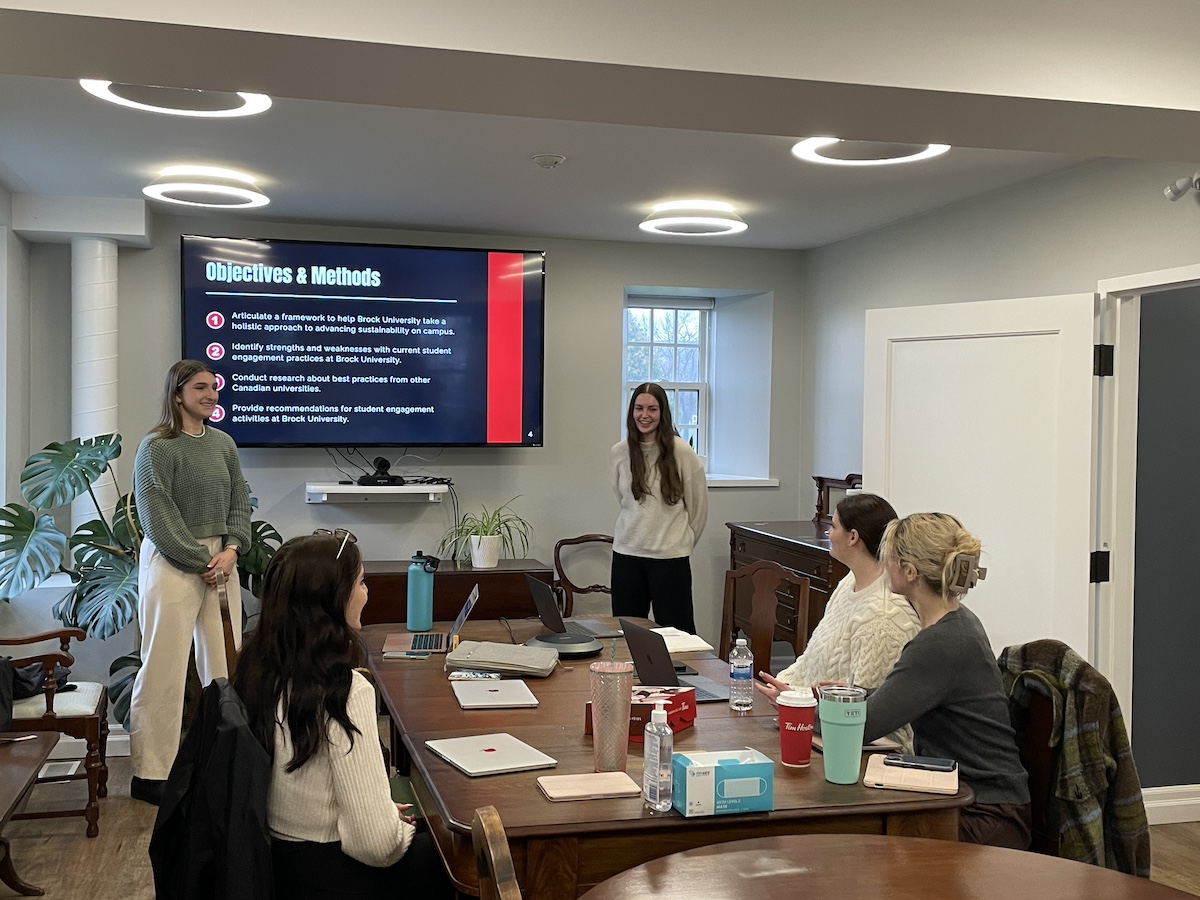
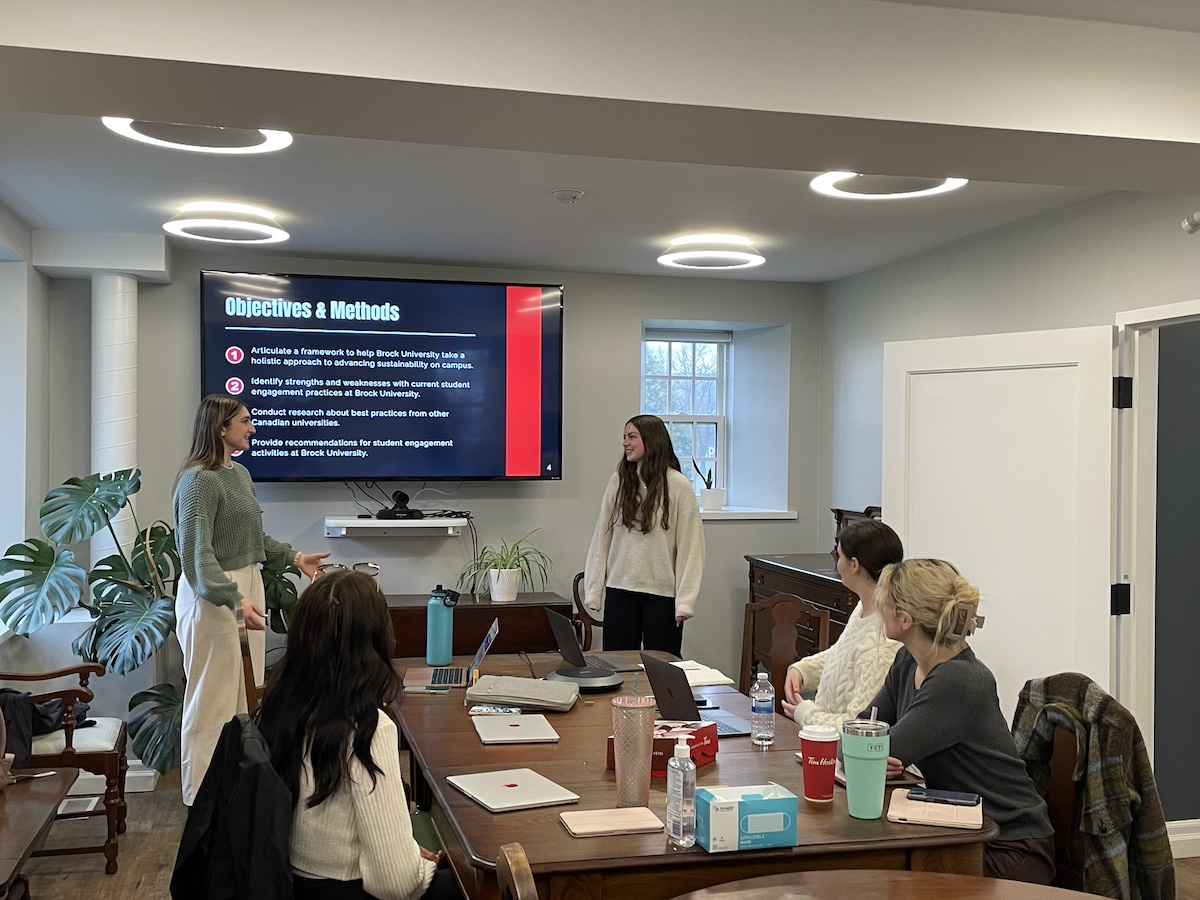
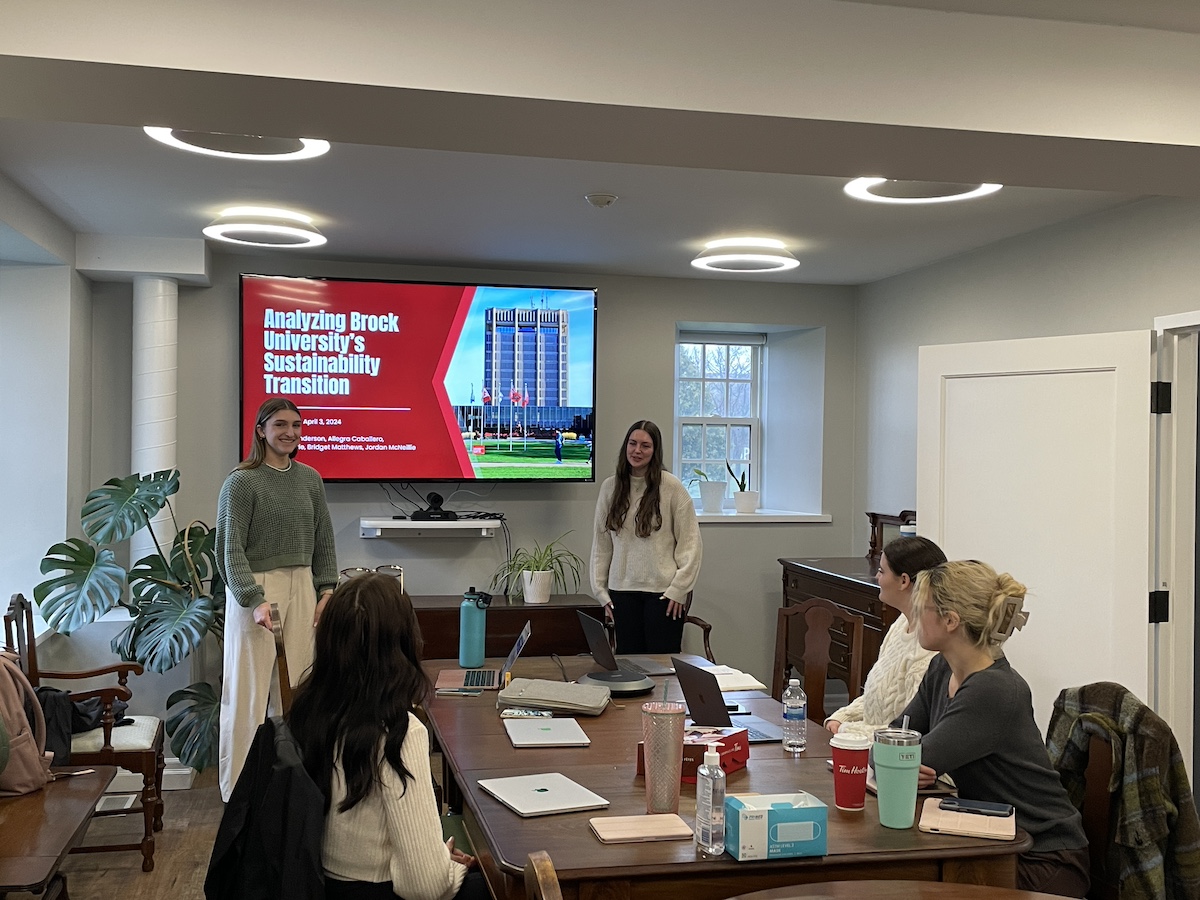
    Next, on April 3rd, the Master of Sustainability students were tasked with delivering their final presentation on Brock University’s transition towards sustainable practices for their elective course SSAS 5V83: Just Transitions in Sustainability. The course instructor, Dr. Jen Holzer said of the presentation, “their work and insights were met with great enthusiasm and a desire to share their report with Brock administrators and stakeholders this summer. This project showed that there is a hearty appetite for student leadership on campus sustainability at Brock!”. With this presentation successfully behind them, the students had just one more final project to complete!

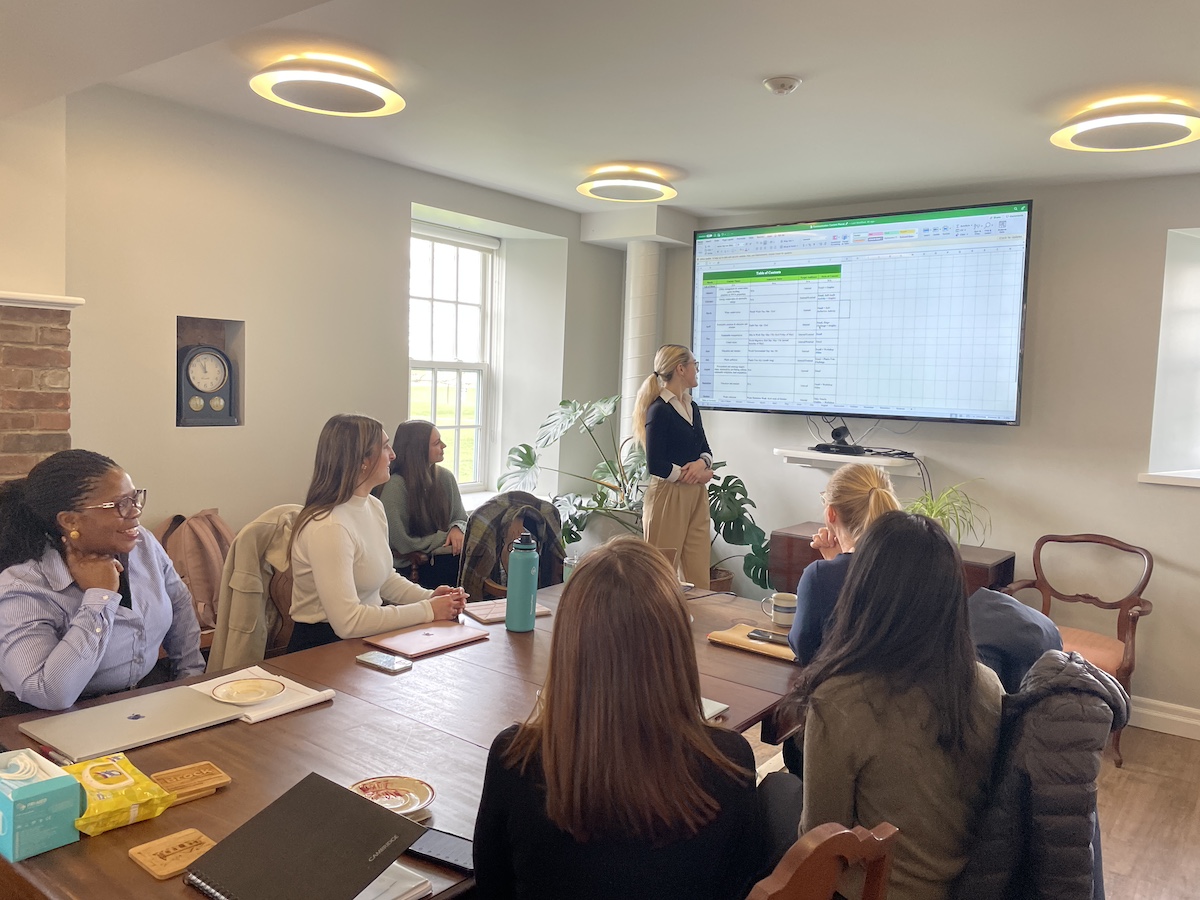
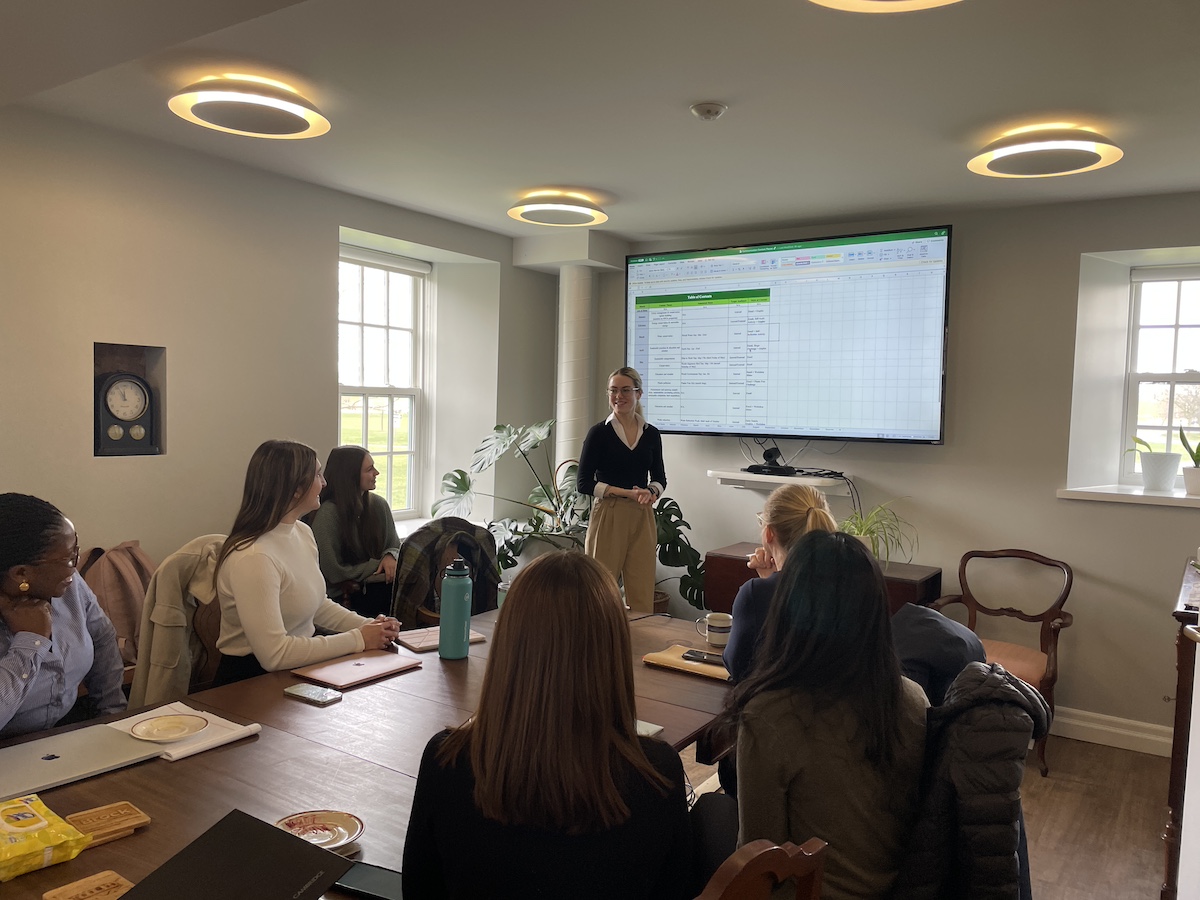
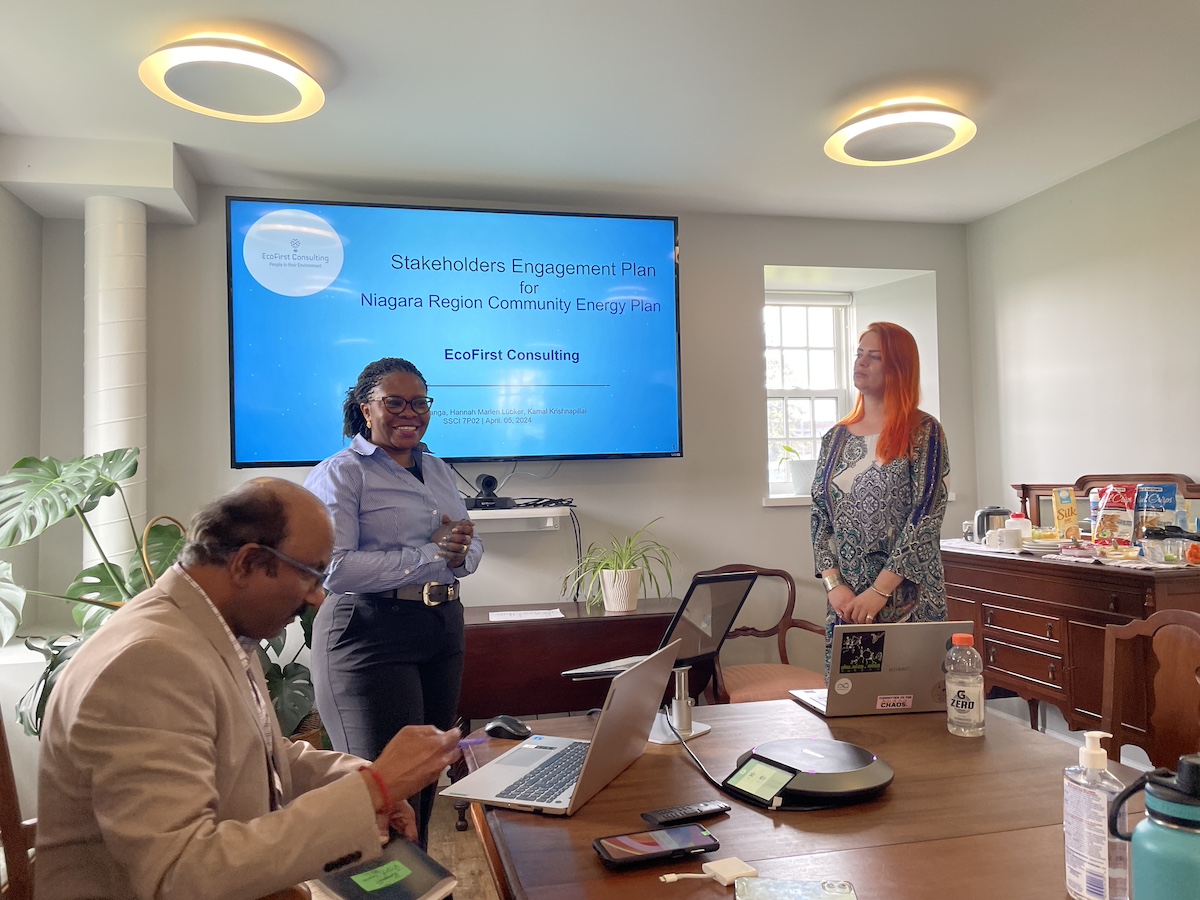
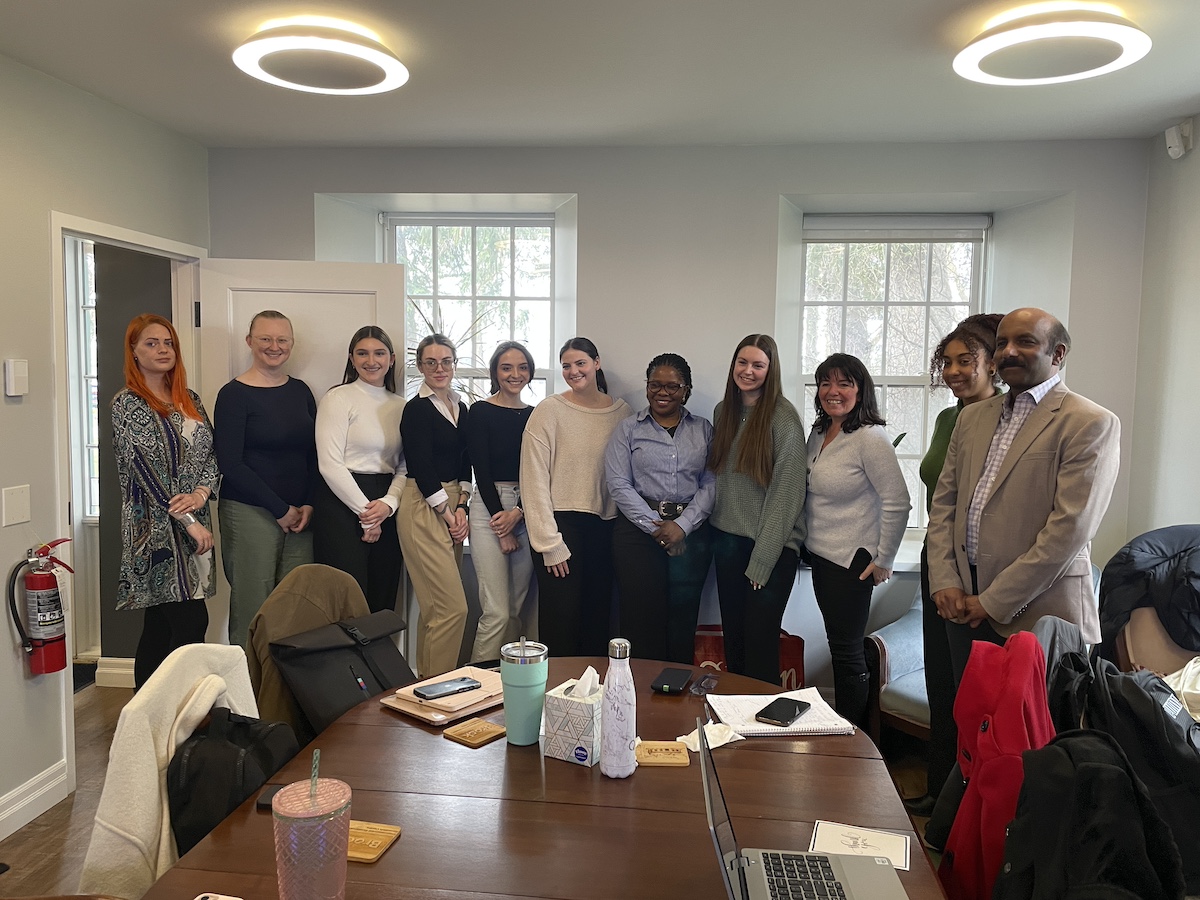
    On Friday, April 5th, the SSAS students were joined by their peers in the SSCI program to present their final projects in SSAS 5P03/SSCI 7P02: Problem Solving in the Environment/Engaging with Community in Sustainability Science. Since January, the SSAS students have been working closely with the Niagara Peninsula Conservation Authority (NPCA) to develop what course instructor Dr. Marilyne Carrey described as a “comprehensive month-by-month information repository that can be used for internal communications to educate and engage staff on key sustainability topics, organizational practices, and individual staff behaviours.” Meanwhile, their colleagues in the SSCI program collaborated with members of the Niagara Climate Change Action Network (NCCAN) to create, as Dr. Carrey explained, “a stakeholder engagement plan that will facilitate participation in the development of the Niagara Region Community Energy Plan.” Dr. Carrey added that the results of both projects will be of great value to their respective stakeholders and community organizations.

    It’s been a busy year for these graduate students, and we are very proud of them for all the great work that they have completed and the milestones accomplished! We wish this group all the best as they head into the Spring and Summer terms to begin comprehensive exams, co-op work terms, and data collection for their thesis research projects!

    Categories: Blog, SSAS Program

  • Fall Term Provides Experiential Education Opportunities for ESRC Students

    This Fall, students studying Environmental Sustainability at both the graduate and undergraduate level had multiple opportunities to learn in their community and engage with sustainability initiatives across the Niagara Region. Experiential education is an important aspect of both graduate and undergraduate-level education at Brock, and particularly within the ESRC. Amanda Smits, Centre Administrator at the ESRC, states “Providing experiential opportunities for students to get out into the field and create real-world connections with the content they are learning in the classroom is really foundational to our academic program offerings.”

    Below we’ve outlined the different types of experiences our students have taken part in over the course of this semester.

    SSAS 5P01: Foundations in Sustainability Science

    This is a core course for students in their first year of the Master of Sustainability program, but often includes Masters students from other programs at Brock and PhD students in the Sustainability Science program. This term, students enrolled in the course participated in three experiential education excursions. Their first excursion took them on a tour of various areas of Brock’s campus to learn about the university’s commitment to low carbon energy. First, the students hiked on the Bruce Trail through the Niagara Escarpment Biosphere Network, both of which border Brock’s campus. They were then taken to Brock’s Central Utilities Building (CUB) where Mary Quintana, Director, Asset Management & Utilities, and Drew Cullen, Manager, District Energy provided the students with a tour of Brock’s District Energy System and the tunnels that support the delivery of low-carbon utilities across Brock’s main campus. To learn more about the District Energy Efficiency Project please visit here or check out this Youtube Video.

    On their second excursion, the students learned about climate action in Niagara. They met with Beatrice Perna, Climate Change Specialist with the Niagara Region’s Corporate Strategy Services, and Alexandra Cotrufo, Climate Change Intern at Niagara Region and recent Master of Sustainability graduate. The students once again visited the Bruce Trail and utilized the fire pit area at Brock to have an informal conversation with both Beatrice and Alexandra about the climate change work being undertaken by Niagara Region and their career evolution. The students also got to learn more about the Niagara Climate Change Action Network, on whose steering committee Brock participates.

    For their final course excursion, the students left Brock’s campus and were taken on a tour of ecological restoration sites that are managed by the Niagara Parks Commission. NPC’s Project Manager of Forest Health, Corey Burant, and Master of Sustainability student Sydney McIntyre led the students around the various sites and explained how stewardship and biodiversity preservation is being prioritized in each, including the Chippawa Grassland Restoration Project, the Ussher’s Creek Coastal Wetland Restoration Project, and the Gonder’s Flats Wetland Restoration Project.

    SSAS 5V82: Nature Based Solutions in Sustainability

    In another graduate-level course, students got to witness a unique form of invasive species management. The students traveled to Niagara Falls to visit one of Ontario Power Generation’s (OPG) properties to see how they are utilizing goats to manage the spread of invasive phragmites. Here they met with Nancy Laser, Environmental, Chemical and Safety Tech with OPG to tour the site and learn more about how the goats are helping to clear OPG lands surrounding hydro stations and other areas. Clearing these lands allow staff to safely obtain readings of water flow rates, water quality, and water level readings at their sites while managing the spread of these invasive species. Fascinated by this innovative project, the course instructor, Marilyne Carrey, noted that it is “through these experiential education opportunities that graduate students gain the essential knowledge and practical skills needed to cultivate a deeper understanding and enthusiasm for developing impactful solutions to complex environmental challenges. Dealing with invasive plant species demands innovative approaches, such as those being implemented by the OPG.”

    You can learn more about the work being undertaken by OPG here.

    ENSU 3P90: Contemporary Environmental Issues

    ESRC graduate students weren’t the only ones to participate in experiential education this term, our undergraduate students also took part. This group of students took a trip out to Gonder’s Flats Wetland Restoration Project in late October 2023. There, they met up with Master of Sustainability student Sydney McIntyre, who introduced them to the iNaturalist app and demonstrated how Niagara Parks is encouraging members of the Niagara community to use the app to catalogue different plant and animal species in the region. The students used the app to participate in a mini bio-blitz, where they took photos and logged various species around Gonder’s Flats, which assists in growing NPC’s species database. The students then participated in a tree planting initiative in the area to increase biodiversity in the wetland.

    Dr. Jessica Blythe reflected “We often hear from students that these experiential education opportunities are some of the most memorable experiences of their program. Being able to connect directly with people in the fields that many of our students go on to work in provides an unrivalled opportunities for learning and networking”.

    Categories: Blog, Experiential Education, Minor in Sustainability, SSAS Program

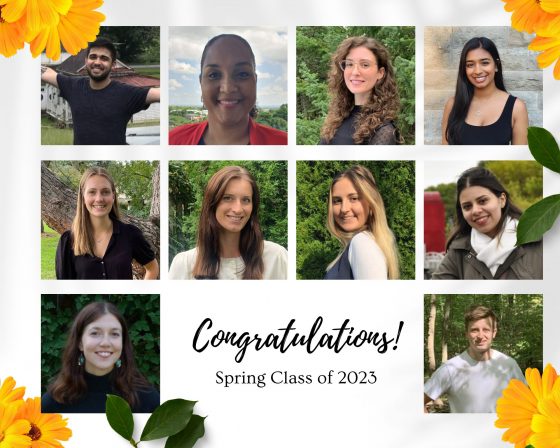
  • Congratulations to the Spring Class of 2023!

    Top row L-R: Kamran Abbasov, Kelly Bute-Seaton, Alexandra Cotrufo, Tasha Gunasinghe Middle row L-R: Kristin Palilionis, Lauren Patterson, Shannon Ruzgys, Tannaz Sattar Bottom row L-R: Savannah Stuart, Tyler Thomson

    On June 12, 2023, 10 students will officially graduate from the Master of Sustainability program at Brock University! Each of these students joined the program at various points throughout the COVID-19 pandemic and have shown incredible resilience and tenacity throughout their studies. On behalf of the ESRC, we are thrilled to have been a part of each of their academic journeys and cannot wait to see all that these students accomplish in their careers!

    Kamran Abbasov joined the SSAS program, virtually, from Ganja, Azerbaijan in Fall 2020. He later relocated to St. Catharines in Winter 2021 to continue his thesis research under the supervision of Dr. David Fennell. Kamran’s research was titled Income “Inequality, Distributive Justice, and Sustainable Development: Implications for Niagara Peninsula Aspiring Global Geopark”. He successfully defended his research on January 24, 2023, and later presented his findings alongside Niagara Aspiring Geopark Founder Darren Platakis at the Government of Canada’s International Development Week in February.

    Kelly Bute-Seaton joined the program from Trinidad & Tobago in 2021. Prior to joining the program, Kelly received degrees in Biological Sciences and Business Administration, both of which informed her Master’s research. Kelly’s major research paper was supervised by Dr. Todd Green and was titled “An Assessment of Best Practices of Corporate Sustainability Strategies in Canadian SMEs [Small Medium Enterprises]”.

    Alexandra Cotrufo joined the program in 2021 and worked as a research assistant with the Charter with Facilities Management partnership. During her time as an RA, Alexandra was the successful co-recipient of a WWF Go Wild Grant with fellow SSAS student Madison Lepp. Alexandra and Madison used these funds to start the Brock University Seed Library, which was an incredibly successful initiative for the university. Alexandra’s research was also supervised by Dr. Todd Green and was titled “The Risk of Greenwashing in Corporate Social Responsibility Communications”.

    Tasha Gunasinghe joined the program in 2021 with a background in Biology. Her knowledge in the field served her well as she completed her major research paper under the supervision of Dr. Liette Vasseur. Tasha’s MRP was titled “Exploring Collaborative Frameworks to Assess and Monitor Conservation Outcomes of Indigenous Protected and Conserved Areas”. During her time in the program, Tasha also completed a co-op placement as a research assistant with Plenty Canada, and now works for Plenty full-time as a Conservation Governance Researcher.

    Kristin Palilionis joined the program in 2021 and worked as an RA with Dr. Julia Baird on a project about Niagara Irrigation Governance. Dr. Baird supervised Kristin’s major research paper, which was titled “Assessment of Water Resilience Principles in Water Policies and Plans: Niagara Region”. During her time in the program, Kristin worked for the Regional Municipality of Halton as a Summer Sustainability Student and was named a co-recipient of the Geoffrey F. Bruce Fellowship in Canadian Freshwater Policy from Ryerson University. The fellowship is designed to support the next generation of freshwater leaders, policy researchers and practitioners to ensure the sustainability of Canada’s freshwater resources.

    Lauren Patterson joined the program in 2021 with a background in Anthropology and Environmental Studies. This knowledge was helpful during her time as a research assistant for the Excellence in Environmental Stewardship Initiative. Lauren’s research was supervised by Dr. Jessica Blythe and was titled “Evaluating Public Participation in Canadian Municipal Climate Change Adaptation Plans”. Lauren’s research informed her co-op position as a Sustainability Student with the Town of Lincoln, and later her full-time position with the Halton Region as the Climate Change Response and Sustainability Intern.

    Shannon Ruzgys joined the program in 2020 after completing her undergraduate degree in Psychology at Brock. Dr. Gary Pickering supervised Shannon’s undergraduate thesis and continued to supervise her at the master’s level. Her thesis was titled “Gen Z and Sustainable Diets: A Holistic Perspective. Understanding Perceptions of and Engagement with the Social, Economic and Environmental Dimensions of a Sustainable Diet”. In 2022, Shannon was the recipient of the Best Poster award at the New Zealand and Australian Sensory & Consumer Science Symposium for a poster based on her thesis research, which was later successfully defended by Shannon on October 24, 2022.

    Tannaz Sattar joined the program in 2021 from Esfahan, Iran with a BSc. and an MSc. In Architecture. Her academic background was helpful in securing a co-op position with Agile Construction Inc. as a Drafter/Designer, and informed her major research paper, which was titled “Examining Types and Performance of Urban Green Space: Case Studies of Toronto, Milan, and Isfahan” and supervised by Dr. Ryan Plummer. In 2022, Tannaz was named a recipient of the Faculty of Social Sciences Student Research Award and presented her MRP at the annual FOSS Research Colloquium in December 2022.

    Savannah Stuart joined the program in 2020 with a background in Environmental Science and Ecology. Like fellow graduate Lauren Patterson, Savannah worked as a Research Assistant with the Excellence in Environmental Stewardship Initiative and this partnership became the basis of her thesis research. Savannah’s thesis was supervised by Dr. Ryan Plummer and was titled “Exploring people-place relationships through place attachment and wellbeing in the context of the abrupt social and ecological change associated with the COVID-19 pandemic”. She successfully defended this research on August 31, 2022 and has since began her PhD studies at the University of Waterloo.

    Tyler Thomson joined the program in 2021 from Western University with a background in Business Management. He worked as a research assistant for the ESRC’s partnership with the Town of Lincoln, the Brock-Lincoln Living Lab and later took on a co-op position with the Regional Municipality of Niagara. Tyler’s MRP research was supervised by Dr. Marilyne Carrey and was titled “Urban forest management planning: A case study of municipalities in Southern Ontario”.

    In addition to our 10 SSAS graduates, we’d also like to offer our sincere congratulations to the 10 undergraduate students who will be graduating with a Minor in Environmental Sustainability: Jared Boles, Allegra Caballero, Olivia Davies, Joseph Evans, Lily Piccolo, Meghan Rados, Emma Smith, Claire Taller, Easton Thibeault, and Holly Warren.

    Congratulations to all of these students, and best wishes to all of you in your future academic endeavours!

    Categories: Blog, Minor in Sustainability, SSAS Program