Articles from:November 2017

  • Master of Sustainability Student Selected “Editor’s Choice” in Journal of Applied Ecology

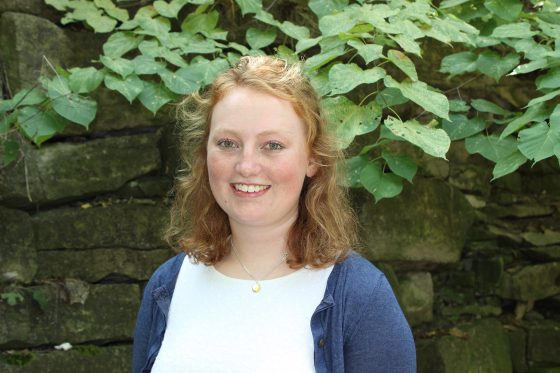
    Lydia Collas

    The undergraduate research of Lydia Collas, second year student in the Sustainability Science and Society (SSAS) graduate program, is to appear as the Editor’s Choice in the December issue of the Journal of Applied Ecology.

    Before moving to Canada last year, Lydia studied a B.A. (Hons.) degree in Natural Sciences at the University of Cambridge. It was during this time that Lydia completed the project entitled “Land sharing, land sparing and urban development: the importance of considering restoration” that would eventually see publication this December.

    The research considers how best to reconcile biodiversity conservation with urban development. “Worldwide, human populations in cities are growing rapidly and so urban centres are expanding with more houses being built,” Lydia explained. “We wanted to look at what effect this has on nature to find out how nature could be conserved.” The study applies the land sharing/sparing framework to answer this question.

    “There are typically two schools of thought of how we should seek to maintain biodiversity in a landscape whilst also meeting human needs. In the context of urban development, land sharing would see low-density housing, with large gardens, built in an attempt to support wild populations alongside humans. Under land sparing, high density housing would be built such that the human population could be supported in a smaller area, enabling the ‘sparing’ of large areas of green space for nature. In this case, the land for humans and the land for nature are spatially explicit.”

    This research investigated how native tree populations in the city of Cambridge fared under different development strategies, on a gradient from land sharing to land sparing, whilst meeting the housing demand of the population forecasted for the year 2031. The authors also considered the implications of restoring woodland on areas of green space, which are largely maintained with little vegetation at present.

    The results show that land-sharing development would see the native tree population slightly increase in size owing to the relatively higher density of trees in low-density housing which is accompanied by large gardens. However, if areas of green space within the city could be restored to woodland, the optimal strategy becomes one of land-sparing which could see tree populations increase 12-fold. Indeed, land sparing becomes the favourable strategy after just 2% of the city’s green space is restored to woodland.

    Having submitted this work to the Journal of Applied Ecology in September 2016, Lydia is very much looking forward to seeing this work in print next month.

    “To be first author on a publication at this stage of my career is so exciting. I am hugely grateful for the support of my supervisors, Professors Andrew Balmford and Rhys Green, whom this would not have been possible without, as well as my talented colleagues Alex Ross and Josie Wastell.”

    Dr. Ryan Plummer, Professor and Director of the Environmental Sustainability Research Centre, which hosts the SSAS program put this publication into perspective and expressed his pride at this achievement.

    “The Journal of Applied Ecology is a Q1 (2.869 SJR) journal in which established Faculty researchers aspire to publish. Editor’s Choice recognition in such a high-quality journal is a tremendous accomplishment, and nod to the scientific calibre of Lydia’s research. I am tremendously proud of Lydia! This accomplishment exemplifies the high calibre of scholarship to which graduate students at Brock should aspire and the importance of scholarships to enable exceptional international students to study at Brock.”

    As Lydia nears the end of her time in the SSAS program, she is looking to remain in academia and is currently putting together PhD applications. We wish her every success.
    Associate editor, Joseph Bennett, has written a commentary on the paper.
    To read the full paper, please visit here.
  • Brock University gains new Canada Research Chair in water resilience

    Water is all around us, and it’s something many Canadians take for granted. But water quality and quantity is increasingly threatened by climate change, pollution and other human-driven impacts.

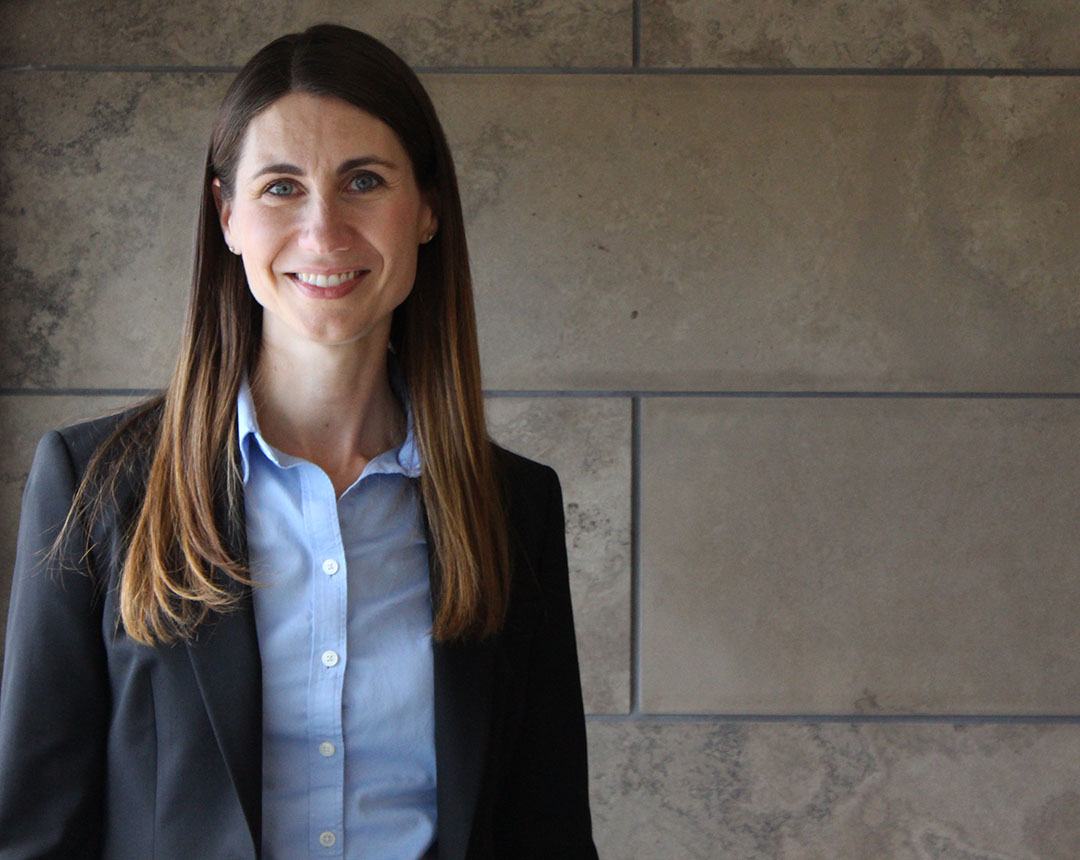
    Brock University Assistant Professor Julia Baird researches how we can foster resilience of freshwater resources through management and governance in an era of rapid change and uncertainty.

    “Water is vital; everybody knows it. Water is an incredibly critical resource and it’s under pressure,” says Baird, who was named Brock’s newest Canada Research Chair last week by the Canadian government.

    As Canada Research Chair in Human Dimensions of Water Resources and Water Resilience, Baird is studying a “new water paradigm,” a view that recognizes the complex interactions between freshwater social and ecological systems that are constantly being influenced by internal and external forces.

    Because of this complexity, uncertainty and dynamic nature of these systems, the old “command-and-control” approach to making decisions about water “is not going to sustain ecosystems or humans in the future,” says Baird.

    The foundation of her work is the concept of resilience: the capacity to retain structure and function during times of change; learn, adapt and transform when faced with that change; and organize itself to meet the challenges.

    “I’m interested in management and governance approaches that incorporate ideas of resilience: the ability to adapt and change to support human and ecosystem well-being,” says Baird, Assistant Professor in Brock’s Environmental Sustainability Research Centre (ESRC) and the Department of Geography and Tourism Studies.

    Underlying Baird’s work is the belief that humans are impacting the earth and that a new time period — the Anthropocene — should be added to the planet’s official geologic timeline.

    “We are in an era where humans are the driving force of change,” she says. “We need to really think about how we’re managing our actions. The social dimension is critical.”

    Baird’s research will focus on how freshwater resilience can be fostered by society and what needs to be done to respond to increasing challenges and complexities.

    She will also examine how individual actions aimed at restoring the ecosystem contribute to building resilience, and understand how social networks and other factors influence decision-making at that individual level.

    Baird says she “couldn’t be happier” with her Canada Research Chair appointment.

    “It’s a really great opportunity,” she says. “It provides tremendous support for my program of research and acknowledgement of the importance of water resilience as a priority research area here at Brock and for Canada.

    “This also provides opportunities to engage in national and international collaborations. It gives me that boost at the beginning of my career to really excel in my field.”

    Baird, who has a background in agricultural sciences and environment and sustainability, joined Brock in 2011 as a post-doctoral fellow, earning her PhD from the University of Saskatchewan in 2012. She became an adjunct professor in the ESRC in 2015, and an assistant professor in the ESRC and the Department of Geography and Tourism Studies earlier this year. She says the ESRC, Faculty of Social Sciences and Office of Research Services have all played a big role in supporting both her work and the CRC nomination process.

    Baird has a history of international research partnerships. In a 2016 study involving research partners from across Europe, Australia and Canada, Baird and her colleagues found there are a wide range of perceptions about water resilience and how water resources should be governed across multiple international cases.

    “Baird is an outstanding researcher whose work has national and international impact. This award recognizes her outstanding accomplishments, and it will help further her career as a scholar,” says Joffre Mercier, Brock’s Interim Vice-President, Research.

    With Baird’s award, Brock now has a total of 11 Canada Research Chairs.


     Story from The Brock News
  • Life after the Sustainability Science and Society graduate program with Brodie Hague

    Interview conducted by Lydia Collas 

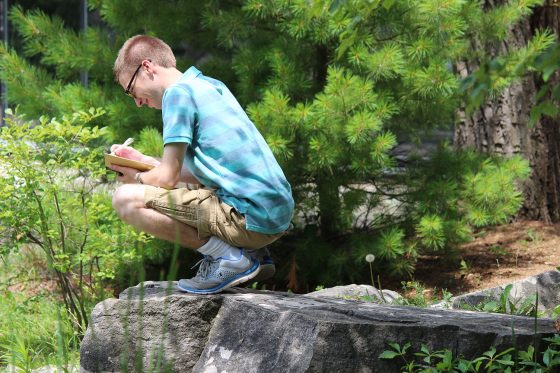
    Brodie Hague

    Photo: Brodie Hague graduated from the SSAS program in 2016

    Brodie Hague was amongst the first cohort of students to embark on Brock’s Sustainability Science and Society (SSAS) program. Having graduated in 2016, Brodie is now writing course material for Brock’s recently launched undergraduate minor in Environmental Sustainability. I recently caught up with Brodie to find out a bit more about where the SSAS program had led him.

    Q. Brodie, first of all, can you tell me what attracted you to the SSAS program?
    A. My eventual thesis supervisor, Dr. Marilyne Jollineau, first introduced me to the SSAS program when I was considering graduate studies. During the completion of my undergraduate degree at Brock University, I became increasingly aware of the University’s respected (and growing) reputation for scholarship, teaching, and learning. In addition, Brock’s unique location within a UNESCO Biosphere Reserve, the ESRC’s transdisciplinary approach to sustainability research and education, and the generous graduate funding package made Brock University the ideal location to pursue my graduate degree in Sustainability.

    Q. You were in the thesis stream which requires students to do an in-depth primary research project, what was your research on?
    A. My research was on the use of remote sensing technologies to map and monitor coastal dune ecosystems in Southampton, Ontario. In particular, I was interested in the health of the dune system and the spatial and temporal patterns of change in vegetation cover within the dune system.

    Q. What is your favourite memory from your time in the program?
    A. While I have many fond memories from my time in the program, my favourite memory was when the Lieutenant-Governor Elizabeth Dowdeswell visited Brock and invited us to participate in a roundtable discussion on “Social Aspects of Environmental Sustainability” in December 2014. As part of the roundtable, our graduate cohort presented a graduate project and engaged in a discussion with fellow ESRC Faculty, colleagues, and the Lieutenant-Governor.

    Q. What are you up to now? How do you think the SSAS program prepared you for doing that?
    A. I’m currently employed within the ESRC as both a Research Assistant and as a Co-instructor for the new online course, ENSU 2P01 (Introduction to Environmental Sustainability). In my capacity as a Research Assistant, I assisted in the development of the ESRC’s proposal and budget for eCampus Ontario’s Open Content Initiative. In addition, I’m also the co-project leader for the ESRC’s eCampus Ontario Project, which involves the development and writing of online open module content. This content will also help form the basis for the new online course, ENSU 2P02, Environmental Sustainability in Practice. I am also employed as an Instructor in the Department of Geography and Tourism Studies teaching GEOG 2P07 (Introduction to Geospatial Technologies) and GEOG 3P07 (Remote Sensing).

    Q. How do you think the SSAS program has prepared you for the next step?
    A. The SSAS program provided me with the knowledge and skills required to develop and teach these courses. In addition, the program provided me with the opportunity to develop networks and collegial relationships among Faculty members which has been imperative in the co-ordinating and implementation of our eCampus Ontario project.

    In recognition of Brodie’s excellence as a Teaching Assistant, he was awarded the Novice Teaching Assistant Award in April 2015. Brodie also received generous financial support from the Department of Geography and Tourism Studies for his research. The ESRC is delighted that Brodie has continued on at Brock University following his completion of the SSAS program and looks forward to seeing what the future holds for this very talented alumnus!

    Learn more about the Sustainability and Science Program