Taking urgent action to combat climate change and its impacts.
This goal works to improve adaptation models and impact reduction to the increasingly changing climate. It looks to educate and bring awareness on the issue and then promote solutions to elevate the stress the current environment is facing due to human influence. Without action towards this goal, temperatures are expected to continue rising risking massive wildfires, hurricanes, droughts, and other natural disaster impacts.
Taking Action
Our Impact
Brock University is advancing climate action through targeted emissions reduction planning, sustainability education, and campus-wide engagement. These efforts reflect a holistic approach that connects operational decisions with research, learning, and community impact.
Carbon Reduction and Climate Action
Brock has committed to reducing institutional greenhouse gas emissions by 75% by 2030 and achieving net-zero emissions by 2050. This goal will be pursued through energy efficiency projects, system optimization, and sustainable infrastructure upgrades across campus. The University’s projected emissions pathway highlights its long-term commitment to creating a low-carbon and climate-resilient campus.
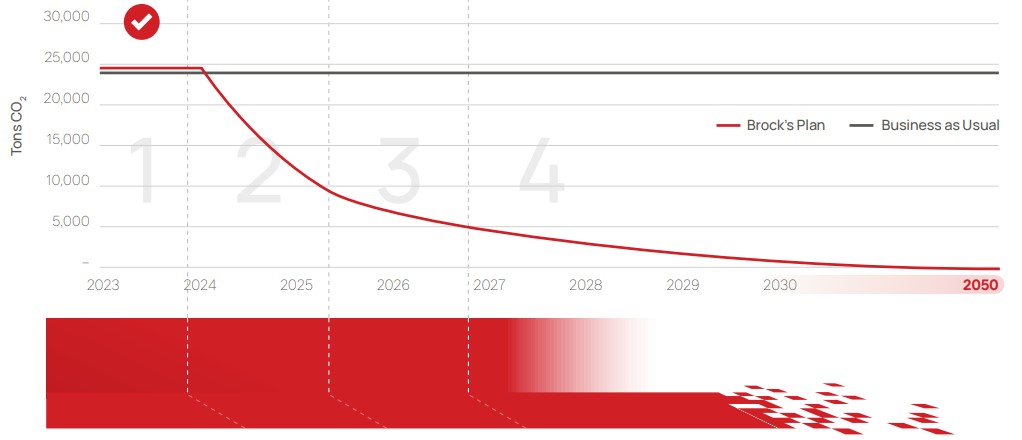
Brock’s projected pathway toward institutional greenhouse gas reductions
Education and Engagement
Climate action is deeply embedded in Brock’s academic mission and campus culture. Students, staff, and faculty take part in sustainability tours, campus events, and experiential learning opportunities that connect theory to practice and foster climate awareness across disciplines.
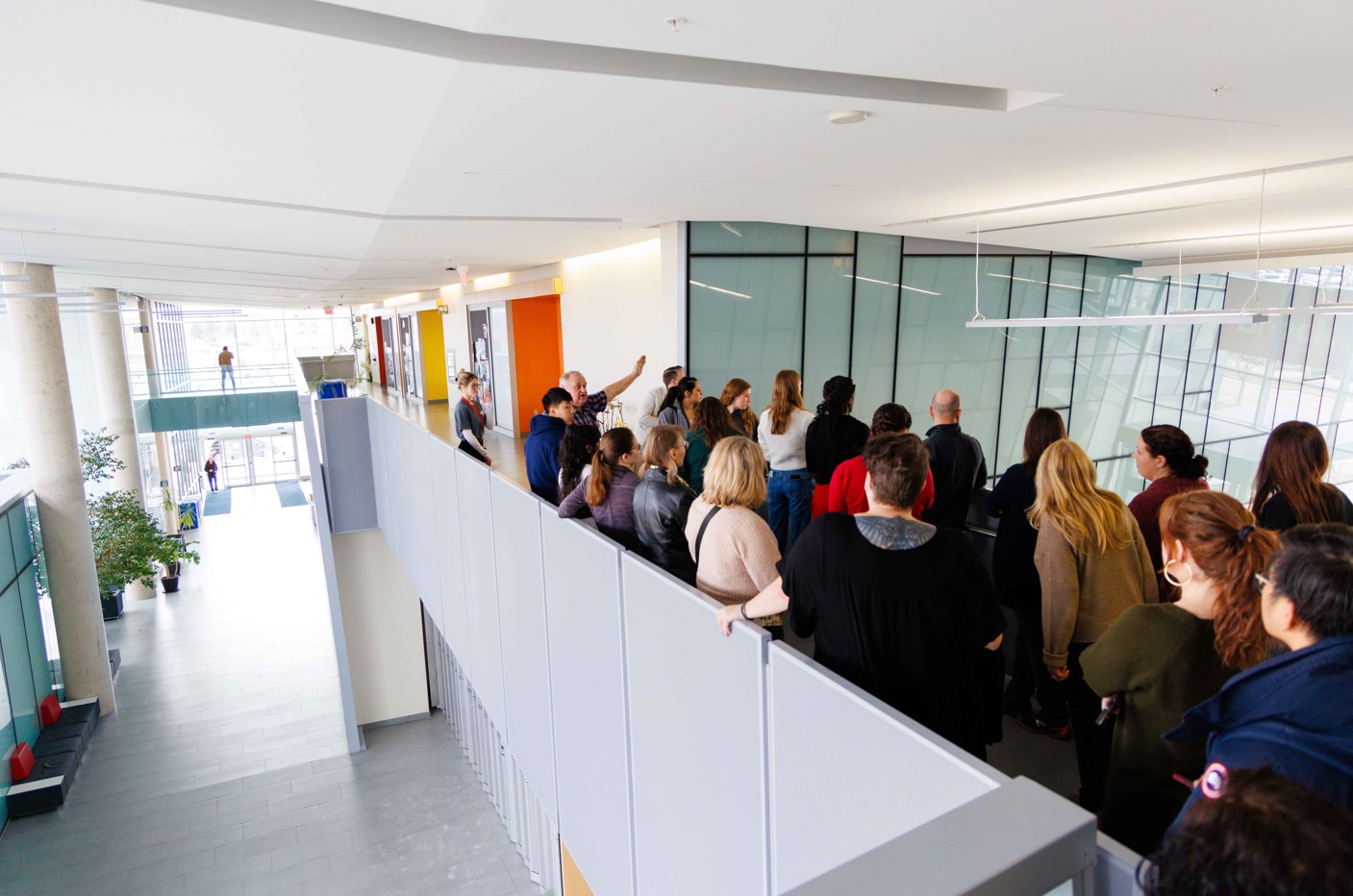
Staff tour of the Cairns building highlighting energy systems and sustainable design features.
Climate-Focused Learning Opportunities
Courses across disciplines integrate sustainability and climate-related content, empowering students to understand and respond to global environmental challenges. Examples include:
- ERSC 2P08 – Climate Crisis
- GEOG 1P12 – Our Changing Environment: Human Impacts
- BIOL 3P85 – Ecology of a Changing Planet
- ENSU 2P02 – Environmental Sustainability in Practice
- ERSC 2P61 – Environmental Geoscience
Initiatives In Niagara
Corporate Climate Change Action Plan
The Niagara Region has completed their Climate Change Action Plan, which includes reduction targets, net-zero strategies, and ideas for increasing corporate awareness of sustainability concepts. This plan is a step in the right direction for the greater Niagara Region to fight climate change.
Niagara Climate Change Action Network (NCCAN)
The Niagara Climate Change Action Network (NCCAN) was established in 2022 to support and accelerate a progressive, collaborative, and equitable approach to addressing the effects of climate change in the Niagara Region.
THE Evidence
Brock University’s electrification project was a campus-wide infrastructure upgrade designed to address both climate change mitigation and adaptation by diversifying heat sources. By transitioning from natural gas cogeneration engines to electric boilers, chillers, and heat pumps, the project enables Brock University to reduce annual emissions by approximately 18,500 tCO₂e while sourcing cleaner energy from Ontario’s electricity grid.
In 2024, Brock University purchased 15,714,874 kWh of electricity, contributing to a lower-carbon energy mix across campus operations. Campus energy is meticulously tracked using the University’s Supervisory Control and Data Acquisition (SCADA) system, which monitors building-by-building energy data covering both thermal and electrical consumption. This granular approach enables precise measurement and optimization of energy use across all campus facilities.
Did you know? Most of Ontario’s electricity is generated from nuclear and hydroelectric sources — both of which are low-carbon and highly reliable. This means, the majority of electricity consumed at Brock is already part of a provincial low-carbon grid, helping reduce indirect (Scope 2) emissions.
Brock University organizes educational events for the public about climate change, environmental sustainability and climate solutions. The Environmental Sustainability Research Centre (ESRC) hosts an ongoing Sustainability Seminar Series open to the public. This series connects students, staff, and community members to learn together about diverse sustainability issues, from the social and economic impacts of climate change to the role of technology and innovation in addressing global environmental challenges.
The Office of Sustainability runs campus sustainability challenges throughout the year to encourage the adoption of climate-positive behaviours in daily life. Participants track actions such as energy conservation, waste reduction, and sustainable commuting using Blackstone Energy’s EcoBoss app. The app quantifies collective progress by displaying associated CO₂ reductions, waste diversion, and water savings, and highlights the UN Sustainable Development Goals aligned with each action. To date, these challenges have achieved measurable outcomes, including:
- 405,000 kg of CO₂ saved
- 21,000 kg of waste diverted
- 6.1 million litres of water saved
Finally, Facilities Management offers guided tours of Brock’s buildings and District Energy System for classes, staff teams, and community events. These tours provide hands-on education about climate change impacts, energy efficiency, resiliency planning, and sustainable architectural design, demonstrating the practical measures Brock is taking to reduce emissions and adapt to a changing climate.
Brock University actively participates in co-operative planning for climate change disasters through collaborative partnerships with local and regional government entities.
Through the Environmental Sustainability Research Centre (ESRC), Brock has partnered with municipalities across the region to form Niagara Adapts – a partnership to pool resources and develop climate adaptation plans. Climate change adaptation planning enables communities to understand their vulnerabilities, manage the impacts, risks and opportunities posed by a changing climate. Niagara Adapts cultivates collective action, community engagement, and resilience in a time of changing climate.
Brock’s position as a Coordinating Committee Member within the Niagara Climate Change Action Network (NCCAN) further strengthens our commitment to addressing the effects of climate change in the Region. The NCCAN aims to support a progressive, collaborative and equitable approach to addressing the effects of climate change through pathways to net zero, climate resilience, and biodiversity.
Brock University actively informs and supports local and regional government in climate change disaster risk early warning and monitoring through strategic partnerships and collaborative initiatives.
The Niagara Adapts (NA) partnership is designed to build innovative climate solutions in Niagara, helping to manage the impacts, risks and opportunities posed by a changing climate. Brock uses this approach to work alongside staff, politicians, and residents in the Region, to help municipalities move towards the adoption of a climate change plan. The plans include and highlight ways to build climate resilience as a community.
Brock University is also heavily involved with the Niagara Climate Change Action Network (NCCAN) a network which includes members from across the Niagara Region including municipalities, local utility companies, businesses, industries and education institutions, among others. NCCAN’s main focus area include net-zero emissions infrastructure and transportation, biodiversity, and climate resilient communities.
Brock’s advocacy for climate change action was showcased in its hosting of the Climate Change Summit in June 2022 in partnership with the Niagara Region and the NPCA, bringing together diverse stakeholders to advance regional climate action.
Through collaborative platforms like these, Brock leverages its on-campus experience in energy efficiency, low-carbon infrastructure, and carbon reduction planning to provide guidance and technical insight to its government and community partners.
Brock University collaborates with non-governmental organizations (NGOs) to support climate adaptation and sustainability initiatives. Through the WWF-Canada Living Planet @ Campus partnership, students have opportunities to earn the nationally recognized Living Planet Leader certificate, gaining hands-on experience in environmental stewardship, conservation, and climate adaptation strategies. This initiative ensures that climate knowledge and practical skills are transferred to the next generation of environmental leaders. Additionally, Brock partners with Textbooks for Change, a social enterprise promoting reuseable resources and education access, which indirectly supports sustainability and community resilience worldwide.
Through its Carbon Reduction Plan adopted in 2023, Brock has set ambitious carbon reduction target: a 75% reduction by 2030 and achieving net-zero emissions by the end of the 2049-50 academic year. Brock University, understanding that reducing energy demand inherently impacts multiple emission categories, prioritizes Scope 1 direct operational emissions while simultaneously pursuing energy reduction initiatives that decrease both thermal and electrical consumption campus-wide, helping address Scope 2 emissions. Brock’s carbon neutrality commitment aligns with Greenhouse Gas Protocol standards and reflects the University’s dedication to pursuing aggressive reduction timelines while maintaining operational integrity. This comprehensive approach positions Brock as a leader in post-secondary climate action, with clear milestones, accountability measures, and an institutional culture that values continuous improvement.