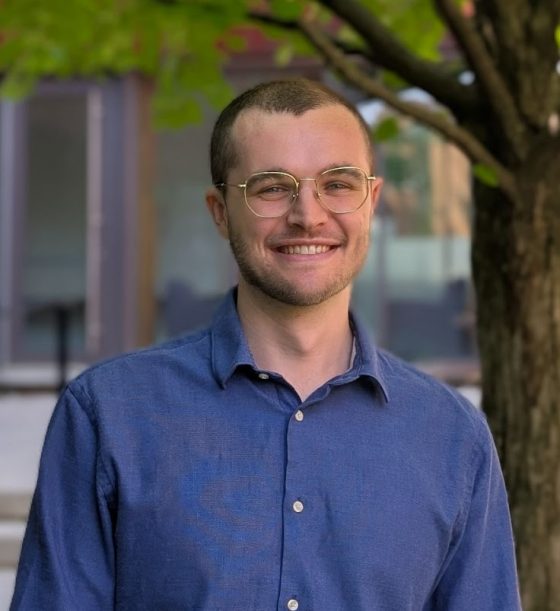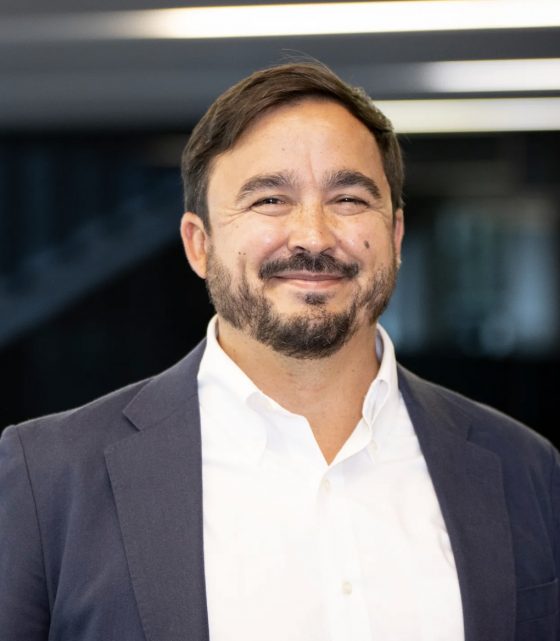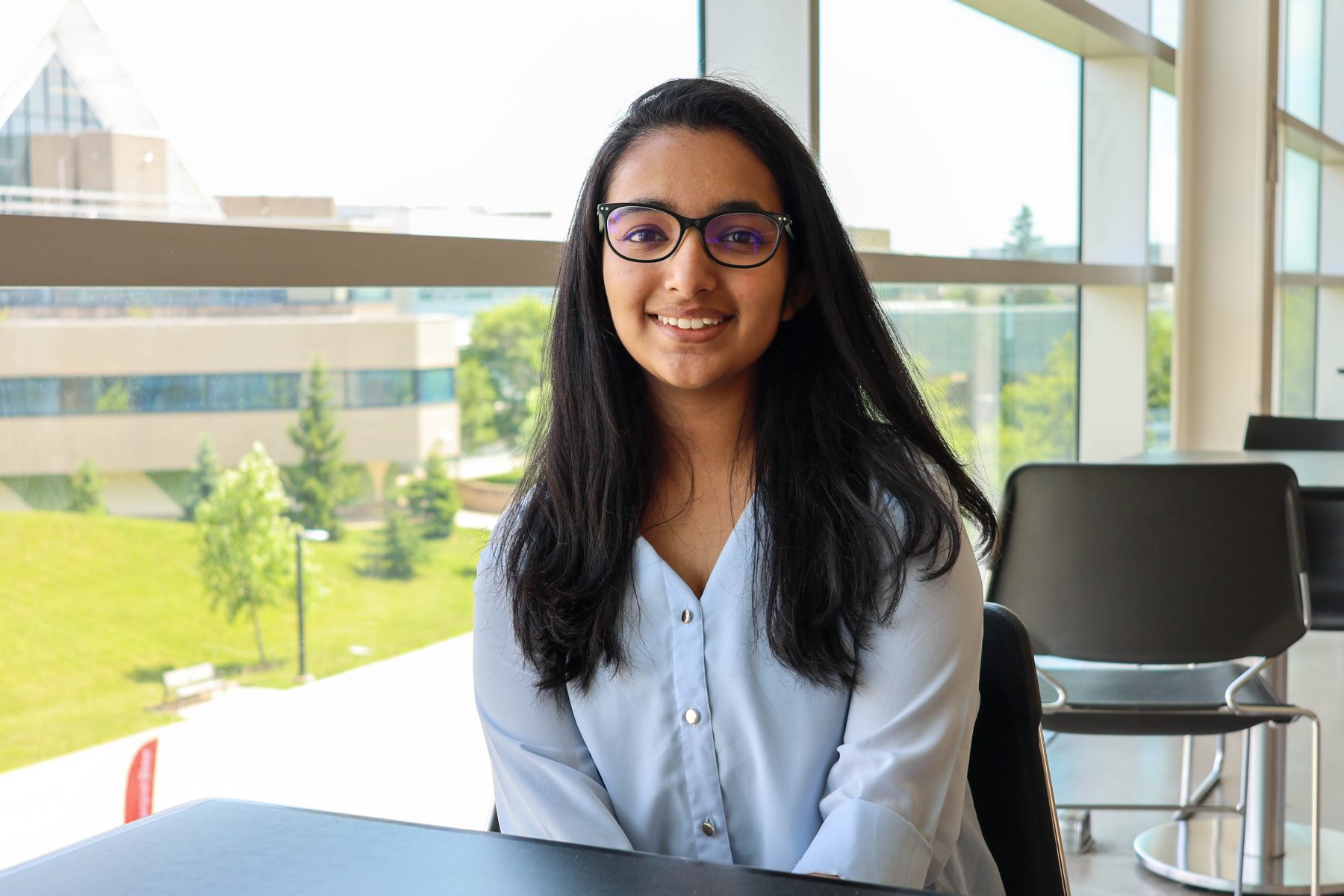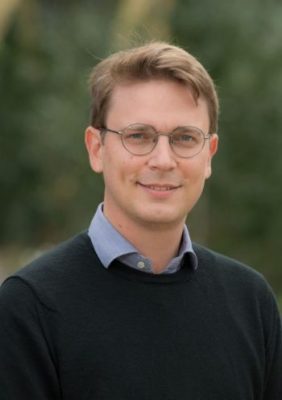
Dr. Halis Murat Yildiz from TMU will be presenting his paper: On the Design of a Carbon Border Adjustment Mechanism (with Martin Richardson and Frank Stahler) on Tuesday, April 1st from 2:00pm to 3:30pm in GSB 306. Please join us!

Thursday, March 27, 2025 | By kkoka
Dr. Halis Murat Yildiz from TMU will be presenting his paper: On the Design of a Carbon Border Adjustment Mechanism (with Martin Richardson and Frank Stahler) on Tuesday, April 1st from 2:00pm to 3:30pm in GSB 306. Please join us!

Monday, March 24, 2025 | By kkoka

Dr. Christine Neill from Wilfrid Laurier University will be presenting her paper: Intergenerational Education Transmission: Patterns in Indigenous and Non-Indigenous People in Canada on Tuesday, March 25th, from 2:00pm to 3:30pm in GSB 306. Please join us!
Thursday, March 13, 2025 | By kkoka

Dr. Tilman Börgers from the University of Michigan will be presenting his paper, Diversity, Disagreement, and Information Aggregation on Tuesday, March 18, from 2:00 p.m. to 3:30 p.m. in GSB 306. Please join us!
Thursday, February 27, 2025 | By Janine Duff
Whether you want to jump on the fast track to graduation, reduce next year’s course load, satisfy a program requirement or pick up an elective, Brock’s Department of Economics is offering a wide array of Spring courses to help you advance your area of study and explore topics of interest.
ASY – ASYNCHRONOUS ONLINE
Do you have an interest in global affairs and a desire to pursue development work in emerging markets? In this course, you’ll examine issues of income inequality, poverty, trade and economic growth from a developing world perspective.
Prerequisite(s): ECON 1P91 and 1P92 but these can be waived. Please send override requests to Indra Hardeen at [email protected]
This course may also be of interest to students in Political Science, LawPlus and Business.
If you’re thinking about switching to ECON, get a head start this spring! All the required second year courses are being offered including ECON 2P21, 2P22, 2P30 and 2P90.
Learn more about our Spring courses.
For more information or to register for Brock’s Spring/Summer courses, visit brocku.ca/springsummer
Thursday, February 06, 2025 | By Janine Duff

Dr. Derek Messacar from Memorial University will be presenting his paper, “Telework and Firm Productivity: Evidence from Canada,” co-authored with Tahsin Mehdi and René Morissette, on Tuesday, March 11, from 2:00 p.m. to 3:30 p.m. in GSB 306. Please join us!
Friday, January 31, 2025 | By Janine Duff

Professor of Economics David Ong from Jinan University-University of Birmingham Joint Institute will be presenting his paper, “Gender differences in the mating and cross-productivity effects of competitiveness on partner income,” co-authored with Ga Hye (Rosalyn) Jeon, on Tuesday, Feb. 4 from 2 to 3:30 p.m. in GSB 206. Please join us!
Friday, January 24, 2025 | By abishop
Assistant Professor Taylor Wright was recently cited in the Economic Report of the President, transmitted to the United States Congress in January 2025 by President Joe Biden before he left office.
When the COVID-19 pandemic first hit, Wright was curious about possible indirect effects of policy changes related to lockdowns. In 2021, with co-authors Abel Brodeur and Nik Cook, he published “On the Effects of COVID-19 Safer-at-Home Policies on Social Distancing, Car Crashes and Pollution,” in the Journal of Environmental Economics and Management.
In the paper, the authors contrasted counties in the U.S. that used different approaches to public health measures implemented due to the COVID-19 pandemic, studying rates of air pollution and car collisions in different locations both during the policy and after measures such as lockdowns were lifted.
“We saw a 25 per cent reduction in car crashes and a 25 per cent reduction in pollution levels, with both pollution and collisions were lower in places that had more remote work,” says Wright. “We also saw that pollution stayed persistently lower than it was before in those areas after lockdowns were lifted, but car collision rebounded a bit after mobility was reintroduced.”
Four years later, the findings were used by The White House to inform future discussions on the shifting labour landscape.
Tuesday, November 19, 2024 | By jlamarche
This paper studies the use of mobile crisis teams—a non- uniformed pair consisting of a mental health worker and a medic—as either a substitute or complement to traditional police units responding to 911 calls involving mental illness, homelessness, addiction, and other non-dangerous situations. We evaluate the longest-running mobile crisis response program in the U.S., Crisis Assistance Helping Out on the Streets (CAHOOTS) in Eugene, Oregon. We find that a series of expansions of CAHOOTS into new areas and times reduced the likelihood that a 911 call resulted in an arrest, and had the long-term benefit of reducing the number of follow-up 911 calls from the same address. However, CAHOOTS often responds to the same calls as the police, acting as complement rather than a substitute. The reduction in arrests likely reflects CAHOOTS’ role in de-escalating tense situations and resolving incidents without coercive measures. After the initial expansions, additional CAHOOTS capacity is used mostly for calls that would otherwise go unanswered. We conclude that crisis response teams play an important role as a complement to the police, rather than only acting as substitutes. Further expansions are likely to have only limited effects on reducing police responses
Friday, November 15, 2024 | By jlamarche
Friday, November 01, 2024 | By jlamarche
Marco Cozzi from the University of Victoria will be presenting his paper, “Optimal Capital Taxation with Incomplete Markets and Schumpeterian Growth”, next Monday, November 4th, from 2:00 PM to 3:30 PM in PLZ410. Please find the abstract below. Join us!
Abstract
In this paper, I characterize quantitatively the optimal capital income tax rate in an OLG economy with uninsurable income risk, incomplete markets and endogenous Schumpeterian growth. Contrary to the most recent literature, I find that it is virtually never optimal to tax capital. Under the optimal scheme, the highest proportional tax rate on capital is found to be less than 0.2%. The reason for this result lies in the reduced GDP (and wage) growth rate stemming from a higher capital tax rate. In General Equilibrium, the interest rate rises, and the increased cost of capital reduces the endogenous rate of innovation, leading to a negative response of the growth rate. Although the equilibrium effect on the growth rate is found to be quantitatively modest (approximately half a percentage point), it still has a first order consequence on welfare. The results show that moving to the optimal income tax schedule entails large welfare gains, approximately 5% in consumption equivalent. These large effects are also explained by a large reduction in the monopolistic distortions: in the intermediate goods sector, the mark-up over the marginal costs falls by more than 10 percentage points. The results are robust along a number of dimensions, including the specification of preferences.
Copyright © 2026
Brock University
Non-discrimination Policy
University policies
Privacy Accessibility
Niagara Region
1812 Sir Isaac Brock Way
St. Catharines, ON
L2S 3A1 Canada
+1 905-688-5550
We acknowledge the land on which Brock University was built is the traditional territory of the Haudenosaunee (ho-din-anish-shonee) and Anishinaabe (A-nish-shin-aaabee) people, many of whom continue to live and work here today. This territory is covered by the Upper Canada Treaties and is within the land protected by the Dish with One Spoon Wampum agreement. Today, this gathering place is home to many First Nations, Métis and Inuit, and acknowledging reminds us that our great standard of living is directly related to the resources and friendship of Indigenous people.
We use cookies to improve your overall web experience. By using our website you consent to our use of cookies in accordance with our Privacy Policy