Department News

  • Dr. Casey Petroff examines how military technology shaped state formation in Europe

    The Department of Economics recently welcomed Dr. Casey Petroff, Assistant Professor in the Department of Political Science at the University of Rochester, for a research seminar on the political and economic forces behind the formation of centralized states in medieval Europe.

    Dr. Petroff’s research focuses on political economy and economic history. She holds a PhD in Political Economy and Government from Harvard University, an MSc in Economic History from the London School of Economics and Political Science, and a BS in Mathematics and Economics from American University.

    In her seminar, Dr. Petroff examined how the gunpowder revolution changed the organization of political power in Europe. Advances in military technology made existing fortifications obsolete and substantially increased the cost of defending territory. Smaller polities often lacked the fiscal capacity to make the necessary investments, creating incentives to form alliances or consolidate into larger centralized states.

    Using a new dataset of more than 6,000 European fortifications, the research shows that defensive investments were concentrated in contested areas, closer to borders and farther from sources of raw building materials. The findings support the argument that changes in military technology contributed to the emergence of larger centralized states by creating geographic and fiscal economies of scale.


  • Economics Professor Marcel Oestreich explores what influences generosity in experimental games

    New research by Brock Economics Professor Marcel Oestreich examines why people often choose to share money with others even when they are under no obligation to do so.

    Co-authored with Dirk Betz and Claudia Biniossek, the paper, “Dictator Game Variations and Their Influence on Transfers,“ is forthcoming in Homo Oeconomicus: Journal of Behavioral and Institutional Economics.

    The study uses the Dictator Game, a widely used experiment in behavioral economics in which one participant decides how to divide a sum of money between themselves and another person. While the “dictator” can keep the entire amount, participants frequently choose to give some of it away.

    The researchers find that transfers increased when recipients suggested how the money should be divided, up to an equal split. Transfers also increased when the suggestion came from a computer, indicating that interpersonal communication is not the only factor influencing generosity.

    Follow-up requests led to even higher transfers, with average total giving exceeding 50 per cent of the initial amount. The findings show how the design of an interaction can influence decisions about sharing and generosity.

    Categories: News

  • New Economics Courses Explore AI, Data Analytics and Crime

    The Department of Economics is expanding its D3 course offerings with three courses that connect economic analysis to some of today’s most important technological, social and policy issues.

    Economics of Artificial Intelligence examines the economics behind technological change and the growing role of artificial intelligence in the economy. Students will explore how AI affects economic growth, productivity, employment, earnings and inequality, as well as the fiscal consequences of AI, barriers to adoption and approaches to regulation.

    Python for Data and Analytics II builds on students’ existing Python skills with advanced applications in data analysis. Topics include data modelling, machine learning, complex visualization, and  simulation methods. Students will work with real-world datasets and practical analytical tools used in economics and business.

    Economics of Crime applies the tools of economics and empirical analysis to crime and the criminal justice system. Topics may include the effects of incarceration, policies designed to deter crime or reduce recidivism, racial disparities in the criminal justice system, and the causes and consequences of domestic violence.

    Together, these courses give students new opportunities to apply economic thinking and quantitative methods to rapidly evolving areas of technology, public policy and society.

  • Economics Professor Andrew Dickens Examines How Local TV News Shapes Political Engagement

    New research by Brock Economics Professor Andrew Dickens examines how the type of television news people receive can affect both voter participation and the behaviour of elected officials.

    Co-authored with Mathias Bühler of LMU Munich and published in the Journal of Public Economics, the study uses the rollout of television across Canada in the early 1950s to isolate the effect of different types of news content. At the time, local markets were restricted to either a public or private television station. Both carried the public broadcaster’s national programming, but private stations also provided local news.

    The researchers find that exposure to public television reduced voter turnout relative to districts without television, while turnout in areas served by private stations remained largely unchanged. The result points to the importance of locally relevant information in keeping voters politically engaged.

    Read the full paper here.

    Categories: News

  • Economics Professors T. Zeida and T. Ogwang Introduce New Measures of Population Aging

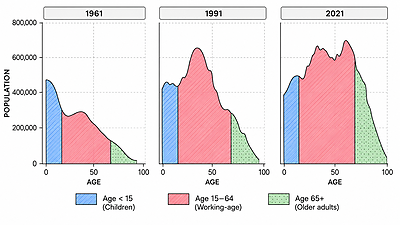
    A new study by Economics professors Teegawende Zeida and Tomson Ogwang, together with Germano Mwabu of the University of Nairobi, offers a new way to measure and compare population aging.

    Published in the Journal of Population Economics in June 2026, the research introduces a family of measures that capture not only how many people are considered old, but also how far beyond the aging threshold they are and how aging varies within the older population.

    The authors also develop a new graphical tool that allows researchers and policymakers to compare patterns of aging across countries, population groups and over time.

    Read the full paper here.

    Categories: News

  • MBE Student Charles-Étienne Tabet Wins Gold at World Rowing Championships

    Incoming Master of Business Economics student Charles-Étienne Tabet (BBE ’26, pictured right) is heading into the MBE program as a world champion in university rowing.

    Charles-Étienne and Brock teammate Keithan Woodhouse captured gold for Canada in the men’s double at the 2026 FISU World University Rowing Championships, held August 13 to 15 in London, Ontario. The pair won the 2,000-metre race finishing ahead of 11 crews from around the world. Charles-Étienne recently completed Brock’s Business Economics program and will begin the MBE program this fall.

    Read the full story here.

    Categories: News

  • Professor Ivan Medovikov Discusses AI Investment

    Brock Economics Professor Ivan Medovikov was recently featured in RBC Direct Investing’s Inspired Investor, sharing his perspective on how the growth of artificial intelligence is creating investment opportunities beyond technology and semiconductor companies.

    The article looks at industries supporting the rapid expansion of AI infrastructure. Dr. Medovikov points to the energy sector as a particularly interesting example: AI and data centres are adding significantly to electricity demand, but broader trends such as electrification and growing pressure on power infrastructure were already increasing demand before the current AI boom.

    For Dr. Medovikov, this distinction is important when assessing potential investment opportunities.

    Read the full article here: “Not Just Chips: AI Investing Beyond Semiconductors,” in RBC Direct Investing’s Inspired Investor”


    Categories: News

  • Economics Graduate Liam Henson Begins Pre-Doctoral Fellowship at the University of Toronto

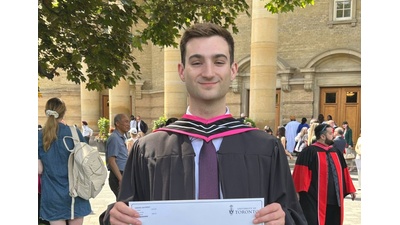
    Brock University graduate Liam Henson has joined the Forward Society (FOS) Lab in the Department of Economics at the University of Toronto as a Pre-Doctoral Fellow.

    Liam graduated from Brock with a Bachelor of Science in Mathematics and Economics, a combined major offered by the Department of Economics and the Department of Mathematics and Statistics. He recently completed his Master of Arts in Economics at the University of Toronto.

    The FOS Lab partners with governments and community organizations to address social and economic challenges affecting marginalized communities. Its work focuses on turning economic research into practical, evidence-based solutions.

    In his new position, Liam will contribute to the lab’s research projects while continuing to develop his skills in applied economics.

    Categories: News

  • Professor Cornelius Christian Discusses Canada’s Economic Challenges

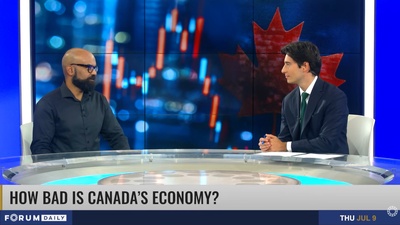
    Associate Professor of Economics Dr. Cornelius Christian recently appeared on Forum Daily News to discuss the state of Canada’s economy and the factors contributing to sluggish growth.

    During the interview, Dr. Christian identified weak productivity as one of the country’s central economic challenges, pointing to low business investment, limited competition and regulatory barriers. He also discussed inflation, household debt, housing affordability and the challenges facing younger Canadians in the labour market.

    Watch the full interview here: How Much Trouble Is Canada’s Economy In?

    Categories: News

  • MBE Student Emilia Zamfir Represents Brock at Oxford

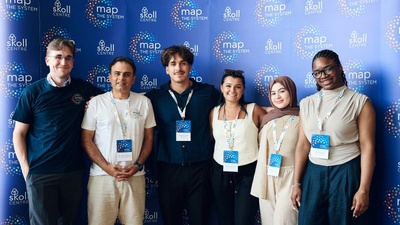
    Master of Business Economics student Emilia Zamfir recently took her research to the international stage, representing Brock University at the 2026 Map the System global competition at the University of Oxford’s Saïd Business School.

    Emilia was a member of the first Brock team in the University’s history to compete at the global event, held from July 9 to 12. The team presented its project, The Unintended Consequences of Social Media Overuse Among Adolescents: Health, Educational, Economic, Environmental and Policy Implications in Canada.

    Hosted by the Skoll Centre for Social Entrepreneurship, Map the System brings together students from around the world to investigate the root causes of complex social and environmental issues.

    For Emilia, the experience provided an opportunity to share important research with an international audience, connect with students and policy makers from around the world, and gain new perspectives on addressing social challenges.

    Categories: News