News

  • A greener Brock taking shape

    You may have noticed them buzzing about campus over the past few months.

    Two new Brock-branded electric Smart cars have been added to the Facilities Management fleet, contributing to the University’s efforts to reduce carbon emissions.

    Brock has a number of initiatives on the go as work continues to achieve a goal of reducing carbon emissions by 20 per cent between 2013 and 2023.

    Scott Johnstone

    Scott Johnstone, Interim Associate Vice-President of Facilities Management, stands in front of Brock’s cooling system.


    The Smart cars replaced supervisor vehicles — one van and one SUV — previously driven around campus. The two-year-old electric cars, each with minimal kilometres, were purchased for $10,000 each. In comparison, vans previously added to the fleet were each more than double that cost.

    “We get about a week and a half on one charge just moving around campus, avoiding fill-ups at the gas pumps,” said Scott Johnstone, Interim Associate Vice-President of Facilities Management.

    “It means significant carbon savings.”

    The University sought out green options when replacing the fleet vehicles and the cars have proven to be a benefit since their introduction two months ago.

    “Our goal is to work toward carbon neutrality over time,” Johnstone said, calling the Smart vehicles a step in the right direction. “We’re trying to cut down on burning fossil fuels as much as we can.”

    The University is also midway through its $10.8-million District Energy Efficiency Project (DEEP), which is scheduled for completion by the end of April 2018.

    The project is funded by the federal and provincial governments, through the Strategic Investment Fund and Facilities Renewal Program respectively.

    The DEEP project includes an upgrade to Brock’s co-generation plant and satellite utility areas that will allow the University to reduce its carbon emissions by 15 per cent. The plant produces electricity, heating and cooling for main campus research laboratories, teaching spaces and supporting infrastructure.

    That reduction is a “huge step” toward Brock’s 20 per cent reduction goal, Johnstone said.

    The DEEP project will replace more than 50 per cent of the natural gas power co-generation engines and controls with state-of-the-art, high efficiency, electronically controlled units.

    Also replaced with a high-efficiency model will be the University’s 25-year-old absorption chiller, which will increase cooling capacity and save more energy.

    The new technology will significantly reduce Brock’s greenhouse gas emissions, while saving utility costs and reducing maintenance costs.

    It’s also expected to free up funds that can be put toward other energy saving initiatives and deferred maintenance projects.

    Brock is currently exploring solar and wind power options for the future.

  • Media Release: Brock launches new minor in environmental sustainability

    Brodie Hague

    Brodie Hague is a graduate of Brock University’s Sustainability Science and Society graduate program, which launched in 2014. Now, the University is offering a minor in environmental sustainability through its Environmental Sustainability Research Centre.

    With ice shelves cracking, green energy options expanding and the international political debate over climate change heating up, the environment is making headlines more than ever before. Coupled with that is the discussion around environmental sustainability, which impacts nearly all aspects of life.

    Starting this fall, Brock University undergraduate students will have the option of minoring in environmental sustainability through a new offering by the Environmental Sustainability Research Centre (ERSC).

    Combining economics with social and environmental sciences, environmental sustainability explores how to protect the natural environment and ecological health while maintaining or improving the quality of human life.

    The transdisciplinary ESRC at Brock has been home to a graduate program in Sustainability Science and Society since 2014, the new minor will give Brock undergraduates their first opportunity to take dedicated courses in the field.

    The minor is open to Brock students in any program and will focus on the problem-solving skills needed as businesses and governments adhere to new environmental legislation and society adapts to a changing world.

    Two new online courses will be offered this September: Introduction to Environmental Sustainability (ENSU 2P01) and Environmental Sustainability in Practice (ENSU 2P02). Third year classes will be added to the calendar in the coming years. While the ENSU courses are open to everyone, non-environmental sustainability minors will have to wait until July 20 to register.

    To complete the minor, students will be required to take 1.5 ENSU credits, and 2.5 additional credits from a list of approved courses from 15 departments and centres across campus.

    “Searching through the undergraduate calendar, we realized that many departments and centres integrate environmental sustainability concepts into their courses,” said ESRC Director Ryan Plummer. “As environmental sustainability is a transdisciplinary field of study, it was obvious that we should collaborate with these units across campus.”

    “We’re hoping to continue adding courses from our own research centre and other units across Brock,” Plummer said.

    The creation of the minor coincides with the fifth anniversary of the ESRC this year.

  • Job Alert: Coordinator, Projects & Programs

    We are hiring.

    The ESRC is currently looking to fill the job of Coordinator, Projects & Programs.

    Job posting AP 54/2017 for the Coordinator, Projects & Programs position is currently posted on the Brock University Career Opportunities page. The application process closes on July 19, 2017.


  • Congratulations to Marcie Jacklin on her retirement

    By: Samantha Morris

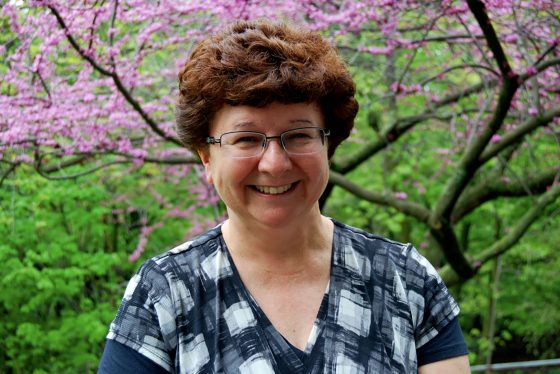
    Marcie Jacklin

    The Environmental Sustainability Research Centre (ESRC) is delighted and saddened to say farewell to Marcie Jacklin as she retires from Brock today. Marcie has worked in Brock’s James A. Gibson Library for 25 years, and has been a member of the ESRC since it’s establishment.

    “Marcie joined the ESRC as a Core Member in 2011 and has been extensively involved, serving on numerous committees and actively contributing to our activities. She played an essential role in developing our Sustainability Science and Society graduate program (Master of Sustainability) and has cultivated important connections with the Library,” says Ryan Plummer, Director of the ESRC.

    Throughout her years of involvement with the ESRC, Marcie has always served with an abundance of passion, joy, and positivity. From presenting seminar talks to graduate students, to speaking at or attending research cafes, to working on ESRC research projects, Marcie has been an active member of the ESRC from day one.

    A common theme across all of her involvement in the ESRC: birds, of course.

    Marcie is an internationally recognized birder. Her interest in studying nature, and specifically birds, started in the 1980s. Since then she has been a strong advocate for the environment, participated and coordinated several bird surveys and counts, volunteered as a birding guide, contributed to birding scholarship, and shares her knowledge about birds with everyone she meets.

    “Marcie has the rare ability to combine her personal passion for nature, especially birding, with her professional drive to engage people in meaningful ways with information about science and the environment. Marcie’s commitment to bettering our relationship with nature is extraordinary. She is a wonderful person who has greatly enriched the ESRC – I can’t thank her enough for all of her contributions,” adds Plummer.

    We wish Marcie all the best in her retirement and look forward to seeing her at future ESRC events!


  • Brock experts want you to ‘leave no trace’ when exploring Canada’s national parks

    While Canadians are visiting national parks, historic sites and marine conservation areas for free this summer, Brock experts want them to be mindful of their potential impact on these protected areas.

    As part of Canada’s 150th birthday celebrations, Parks Canada has opened its sites at no cost through use of a Discovery Pass. The gesture is expected to increase traffic at the national sites, and Brock experts are encouraging visitors to be mindful of leaving no environmental trace during their trip.

    “Healthy parks help to create healthy people and communities and can continue to do so for generations through actions of care,” says Recreation and Leisure Studies Associate Professor Garrett Hutson.

    Visiting Canada’s National Parks is a wonderful way to promote sustainable relationships with the natural world. By using Leave No Trace principles, Hutson believes Canadians can practise ways of recognizing and minimizing recreational impacts to natural areas.

    “Many visitors don’t realize the impacts they cause, which is why all park visitors should familiarize themselves with the seven Leave No Trace principles,” says Hutson, who has done considerable research on the topics of outdoor recreation management, outdoor leadership and person-place relationships.

    These principles include:

    • Plan ahead and prepare: Park visitors should do research about a site before visiting to find out what they’ll need for a safe and enjoyable experience. Considerations include but are not limited to planning for food, water, first aid, proper footwear such as hiking boots, and clothing such as rain gear, as well as maps that might be needed.
    • Travel and camp on durable surfaces: Visitors should stay on trails and not trample fragile vegetation. Additionally, camping at established campsites concentrates impacts as opposed to camping in pristine settings.
    • Dispose of waste properly: Whatever is packed in to a park should get packed out. This includes all trash and garbage.
    • Leave what you find: Artifacts discovered should be left for other people to enjoy. These could include archeological items, antlers, fossils and wildflowers. This principle also stresses the importance of not bringing non-native species into areas visited. Leave only footprints, take only pictures.
    • Minimize campfire impacts: Campfires are a privilege and should be enjoyed at established fire rings where permitted. Many people don’t realize that fire rings damage soils that may never fully recover. Instead of cooking over a fire, cook over a camp stove. Enjoy the glow of a small candle lantern instead of a fire.
    • Respect wildlife: Observe wildlife from a distance. Do not startle, harass or disturb wildlife in any way. Never feed animals. Feeding wildlife damages their health, alters natural behaviours and exposes them to predators and other dangers. Respect wildlife by storing food in a secure way away from tenting areas.
    • Be considerate of other visitors: Be nice to other visitors and respect their experience. Be courteous and help others in need.

    Students enrolled in Brock’s Outdoor Recreation courses often explore a variety of Ontario’s most stunning landscapes such as Algonquin, Killarney and Frontenac parks, where they practise and learn outdoor leadership while ensuring they leave a minimal impact on the environment.

    “We regularly use the Niagara Glen and other escarpment areas as outdoor classrooms,” says Hutson. “As part of our commitment to recreation management, our students earn a Leave No Trace trainer certification, which prepares them to teach minimum impact practices to others.”

    Integrating these basic Leave No Trace ideas into outdoor recreation programs has become commonplace, as more and more people are active outside, explains Recreation and Leisure Studies Professor Tim O’Connell.

    “This has led to heightened awareness of the need to educate outdoor recreationists about the magnitude and variety of impacts they create,” he says.

    Watch this video to learn more from Tim O’Connell about how to leave no trace this summer when visiting Parks Canada sites.

    Story from The Brock News


  • Stockholm Resilience Centre: Is adaptive co-management delivering?

    The following was recently posted by the Stockholm Resilience Centre website, which you can visit for the full article and links to additional publications.

    The answer: Possibly. Assessment of four UNESCO biosphere reserves reveals “myriad” of positive results.

    Kristianstads Vattenrike Biosphere Reserve is a cultural landscape in the southern part of Sweden. It stretches some 105,000 hectares within a densely populated area of the Skåne region. So much for the facts. As for value, it is hailed by the UN as an outstanding example of how biodiversity conservation and sustainable development can go hand in hand. That is why UNESCO in 2005 included it their ”Man and Biosphere Programme”, recognizing it as one of the world’s best examples of how relationships between people and nature can work.

    It doesn’t stop there.

    Kristianstads Vattenrike is also praised for its collaborative management approach and has consequently become a point of reference for a number of researchers studying adaptive co-management.

    Could there be more of these places?

    According to a study recent study published in Ecological Economics, the answer is yes, and they are thriving. Senior research fellow Ryan Plummer has together with centre colleagues Örjan Bodin, Lisen Schultz and other colleagues from University of Waterloo and Brock University analysed four UNESCO biosphere reserves in Sweden and Canada and whether their focus on adaptive co-management has led to positive results.

    “We identified a myriad of positive results both from an ecological perspective as well as from a livelihood perspective” Ryan Plummer, lead author

    The research team analysed feedback from 52 individuals involved in the management of the four biosphere reserves. The result of the analysis showed that a majority of them reported an increase in new collaborative undertakings with partners connected to the reserves.

    The analysis also revealed that this had led to a more sustainable resource use within the reserves.

    Visit the Stockholm Resilience Centre for the full story and links to additional publications.

  • Congratulations to the Master of Sustainability Class of 2017

    SSAS Graduates 2017

    Pictured from left to right: Amanda Palumbo, Rebecca White, Kelly Gibson, Katie Perrin, Natalie Gillis, Kelsey Scarfone. Absent from the photo: Katrina Kreivins and Brittany Friesman.

    On Monday, June 5, 2017, the Sustainability Science and Society (SSAS) graduate program celebrated the graduation of eight students.

    The Environmental Sustainability Research Centre (ESRC) would like to extend congratulations to our newest Master of Sustainability graduates. The 2017 graduating class included: Brittany Friesman, Kelly Gibson, Natalie Gillis, Katrina Kreivins, Amanda Palumbo, Katie Perrin, Kelsey Scarfone, and Rebecca White.

    The ESRC would also like to congratulate Katrina Krievins, who was named the 2017 recipient of the Distinguished Graduate Student Award – Sustainability Science and Society for achieving the highest overall average in the program.

    “Graduating is the culmination of years of hard work and acknowledges that these students have successfully fulfilled the expectations associated with conferring the degree Master of Sustainability,” says Ryan Plummer, Director of the ESRC and Graduate Program Director of SSAS.

    “This is an important achievement and I very proud of each of them. I am confident these vibrant individuals will go forward to positively influence our society and the relationship with the environment.”

    We wish you all the best in your future endeavours!


  • Marilyne Jollineau recognised with Award for Service to the Profession of Geography 

    By: Lydia Collas

    Jollineau Award

    Dan Shrubsole (left), President of the Canadian Association of Geographers, presents Marilyne Jollineau with the CAG 2017 Award for Service to the Profession of Geography. Photo by Patrick Brouder.

    Brock University’s Dr. Marilyne Jollineau has been named as the 2017 recipient of the Canadian Association of Geographers’ (CAG) Award for Service to the Profession of Geography. This award recognises Jollineau’s outstanding contribution to the development of Geography in Canada as a supporter and mentor of many graduate and undergraduate students.

    Jollineau was presented with this award at the Annual General Meeting of the CAG at York University on May 29th. President of the CAG, Dan Shrubsole, said “I have seen first-hand the impact of some of your contributions to the CAG, and wholeheartedly concur with their observations and the CAG Awards Committees decision. My warmest congratulations on this well-deserved honour, which recognises your outstanding contribution to the development of the discipline in Canada.”

    A Professor in the Department of Geography and Tourism studies at Brock University, Jollineau has been a positive force in the education of many students. She says of the award, “I am delighted and honoured to be named recipient of the Award for Service to the Profession of Geography. Being a member of the CAG and having the opportunity to work with so many talented geographers has been a tremendously rewarding experience!”

    Additionally, Jollineau is a member of the Environmental Sustainability Research Centre (ESRC) owing to the environmental theme that runs through much of her research. The ESRC’s Director, Dr. Ryan Plummer, expresses his congratulations to Jollineau on behalf of the Centre,

    “Dr. Jollineau is dedicated to many subjects within Geography and is in great demand by transdisciplinary research teams due to her expertise as well as capacity to forge meaningful conceptual and applied connections across traditional disciplinary boundaries. Her commitment to pedagogy, teaching, student mentorship and program development is unparalleled.”

    Plummer also pays tribute to Jollineau’s contributions to the Sustainability Science and Society (SSAS) graduate program, “She is a founding architect of the SSAS program here at Brock and is the present Graduate Program Director. Her service contributions are unprecedented, both at Brock University and beyond. The CAG Award for Service to the Profession of Geography is a most deserved national recognition of the significant and sustained record of excellence by Dr. Jollineau”.

    Jollineau has held a number of positions with the CAG, including serving as the President of the Canadian Association of Geographers, Ontario Division (CAGONT) from 2013-2014 and as President of the Association from October 2010 to October 2013. Since 2014, Jollineau has focused on promoting Geography amongst the broader community by being an active board member with Geospatial Niagara. This not-for-profit organisation promotes geoliteracy, geographic research and education in the Niagara Region.

    The ESRC wishes their warmest congratulation to Dr. Jollineau on receiving this extremely well-deserved award.


  • Master of Sustainability students present research at the American Association of Geographers 2017 Annual Meeting in Boston

    By: Lydia Collas

    SSAS students attend the AAG 2017 Annual Meeting in Boston to present their research. From left to right, Tyler Prince, Cait Garner, Zach Harmer, Dan Hughes (Earth Sciences) and Dana Harris.

    Four students from Brock’s Master of Sustainability (SSAS) program travelled to Boston last month to attend the American Association of Geographers (AAG) 2017 Annual Meeting. I spoke to Cait Garner, Zach Harmer, Dana Harris and Tyler Prince to get their perspectives on presenting their research at the five-day conference which hosted more than 7,000 geographers from around the world.

    Attending a conference of this size had clearly left its mark on all of them. SSAS student Tyler Prince said, “It was a great experience all around. AAG is a great place to showcase your own research as well as learn about other innovative research being done in your field of study.”

    Prince’s research involves postglacial reconstruction of the fire history from a small lake in southwest Yukon Territory. “In a time of uncertainty with climate change, lake sediment records are extremely useful to help predict future conditions. Increasing temperatures are leading to more fires and larger fires. This record provides a look into the past 12,000 years for southwest Yukon, providing insight on how fire responds to changes in climate.” Prince’s presentation won him the award for the Best Master’s student presentation from the Biogeography specialty group!

    Cait Garner said of the trip “AAG was great. I met a lot of amazing researchers at the conference. Some presentations inspired me to explore areas of my own research that I had previously not committed much thought to.”

    Garner’s research is concerned with the impacts of wildfires on northern stream ecosystems. “My presentation was a summary of impacts of recent wildfires (2014-2016) on stream water chemistry and benthic invertebrates within the North Slave, South Slave, and Dehcho regions of the Northwest Territories. Preliminary results suggest that large perturbations in water chemistry occur following periods of higher precipitation in recently burned areas. In addition, burned streams tended to be dominated by invertebrate taxa that reflect large amounts of finer material moving into the water column from the surrounding catchment.”

    Similarly impressed with the event was Zach Harmer, “The AAG Annual Meeting was spectacular! The opportunities are endless while attending this conference as a graduate student; discussing your research and sharing ideas with academics, meeting fellow graduate students, creating contacts from other institutions.”

    Harmer’s research looks at identifying spatial patterns of landscape changes and its influence on water chemistry in the northern Niagara Region, Canada, “My research takes aim at evaluating the relationships between land use/land cover change and water chemistry in small catchments. The northern reaches of the Niagara Region have witnessed transitions in agricultural types, specifically from orchards to vineyards since mid-2000s. Identifying how this transition influences water chemistry at downstream sample locations are key for stakeholders as more potential development occurs.”

    Whilst her colleagues are approaching the end of their time in the SSAS program, Dana Harris began a year later, in September 2016. Harris said of the event, “The conference was

    massive! It was a really great opportunity to present the basic skeleton of my project at an event like this.”

    Harris’ research looks to assess the factors influencing the growth and cellular development of jack pine in Yellowknife, Northwest Territories, “My research aims to identify the climate-growth relationship of the jack pine tree species within its northern species limit in the Yellowknife, NT region. This will be assessed through quantifying growth through the analysis of cellular development that occurs over the course of the presumed growing season.”

    When I asked the students about the highlight of their trip, it seems that there were too many to single out just one. Academically, they all mentioned the excitement of watching each other excel in their presentations, as well as being able to showcase and talk to others about their own research. Outside of the conference, highlights included watching a baseball game at Fenway Park, becoming New England clam chowder connoisseurs and even “running statistical analyses on the different types of waffle fries offered by Boston restaurants…”.

    Cait, Zach, Dana and Tyler’s research is supervised and supported by Drs. Michael Pisaric and Kevin Turner. All four SSAS students are members of the Water and Environmental Laboratory (WEL) at Brock University. The ESRC is delighted to congratulate the students on a very successful trip.

  • Focus on: Dr. Micaela Trimble, Postdoctoral Fellow of the ESRC

    By: Lydia Collas

    From left to right: Ryan Plummer, Mica Trimble and Sheila Young (Associate Director, International Support Director and ILO)

    This March saw the Environmental Sustainability Research Centre’s (ESRC) postdoctoral fellow, Dr. Micaela Trimble, visit Brock University following the recent publication of her research.

    Trimble spends most of her time at the University of Uruguay (UDELAR) but collaborates closely with members of the ESRC where she holds a postdoctoral fellowship. The Centre’s Director, Dr. Ryan Plummer, explains,

    “The Postdoctoral Fellowship in Sustainability Science is an important element of our Transdisciplinary Hub initiative to engage emerging scholars of excellence as well as leverage research funding. The support enabled Dr. Trimble to undertake some illuminating research. Her involvement at Brock serves as an excellent example of our commitment to internationalisation as well as enhancing the vibrancy of our research culture”.

    Trimble first came into contact with Plummer when he was the external examiner on her PhD thesis at the Natural Resource Institute, University of Manitoba. Trimble was awarded the Postdoctoral Fellowship in Sustainability Science by the ESRC in 2015 and agrees that the partnership has been hugely rewarding,

    “The collaboration with the ESRC has benefited my work in multiple ways. The interaction with Ryan throughout the project has particularly furthered my professional development. I have also made close connections with Drs. Marilyne Jollineau and Julia Baird; we share some research interests and we are planning new collaborations. In addition, I have been involved in a few classes and events of the Sustainability Science and Society (SSAS) graduate program when visiting Brock, which provided me with the opportunity to share and discuss findings of my research with eager graduate students.”

    During her visit, Trimble presented a seminar reporting the findings of her recently published research which investigated ways to evaluate collaborative approaches to governance.

    “My postdoctoral research is about evaluation of adaptive co-management, a management approach which combines the learning characteristic of adaptive management with the linking characteristic of co-management, bringing together resource users, government and non-government stakeholders.”

    This led Trimble to study a council for small-scale fisheries in coastal Uruguay in addition to the council of a marine protected area in Parana, Brazil.

    “Through interviews and participatory workshops, among other methods, the multiple stakeholders involved identified strengths and weaknesses of the councils, as well as ways for improving the operation of these boards.

    One of my findings showed that the participatory evaluation initiative helped improve the relationships between the fishers and the government, and it also fostered learning among them. A series of operational agreements for the council, proposed and discussed by participants at the workshops, are among the outputs of the participatory evaluation.”

    In the future, Trimble plans to delve further into this area of research,

    “In Uruguay, the number of multi-stakeholder councils for small-scale fisheries co-management has been growing (there are eight right now), but they are facing several limitations. These are related to the limited (or no) experience that the government and the fishers have in multi-stakeholder collaborations. Future research can explore how the councils can learn from one another.”

    “I look forward to continuing the collaboration with the ESRC once my postdoctoral fellowship ends since the Centre develops cutting-edge transdisciplinary research on social-ecological systems and sustainability science.”