Articles from:March 2020

  • Researchers Investigate the High Seas with the help of Virtual Reality

    If you walked through the newly opened Rankin Family Pavilion on March 10th and 11th, you likely noticed Virtual Reality stations that were set up in the atrium. What you may not have realized is that these stations were part of an ongoing research project led by Brock professors Dr. Jessica Blythe, Dr. Gary Pickering and Dr. Julia Baird.  Their research is enabled by a Social Sciences and Humanities Research Council (SSHRC) Insight Development Grant they received in 2019 worth $74,970.

    With colleagues from around the world, Drs. Blythe, Pickering and Baird are exploring whether virtual reality can shape knowledge of and attitudes towards the high seas (which refers to the open ocean beyond national boundaries). The idea, Dr. Blythe mentioned, is to see whether being immersed in a future scenario, that shows what the ocean might look like in the year 2050, changes how people feel about the issues that are currently affecting the high seas, including overfishing, pollution and inequitable access to marine resources (including genetic material and oil).  Ultimately, they aim to understand if virtual reality can boost public support for oceans that are normally “out of sight and out of mind”, which might encourage better protection of what has been called Earth’s final frontier.

    As virtual reality becomes increasingly popular for a wide variety of purposes, the ESRC is honoured to have home unit faculty members Drs. Blythe, Baird, along with ESRC Faculty Affiliate, Dr. Gary Pickering, leading this cutting edge research!

    Categories: Applied Research, Blog, Collaborations

  • Affirming Stewardship in Niagara Parks

    Blog Contributor: Bridget McGlynn

    This past week on March 12th, 2020, the Niagara Parks Commission (NPC) ratified the stewardship plan “Nurturing environmental stewardship in the Niagara Parks: Strategic plan 2020-2030”. The ratification of the stewardship plan at the recent Commission meeting marks another accomplishment for the Excellence in Environmental Stewardship Initiative (EESI), a 5-year partnership between the NPC and Brock University. The co-creation of the stewardship plan by NPC and Brock University’s Environmental Sustainability Research Centre (ESRC) began in April 2018 when the Memorandum of Understanding creating the EESI was signed. The goals and objectives in the 2020-2030 Stewardship Action Plan dovetail with the overarching NPC Strategic Plan. The stewardship action plan also incorporates operationalizing monitoring and evaluation strategies and will continue to push forward efforts for the co-creation and mobilization of knowledge.  

    At the commission meeting, both NPC’s Steve Barnhart, Senior Director, Parks, Environment & Culture, and the ESRC’s Dr. Ryan Plummer spoke to the ongoing success of the partnership. To date, the partnership has been invaluable for furthering quality environmental stewardship research and for closing the research to action gap. Multiple Master of Sustainability students have completed thesis research within the partnership and a SSHRC Insight Development Grant (Drs. Julia Baird, Marilyne Jollineau, Ryan Plummer) was secured to investigate approaches in monitoring and evaluating and the effectiveness of environmental stewardship initiatives in Niagara Parks. The partnership is committed to ensuring academic research is transformed into action, as demonstrated by the inaugural EESI partnership round table in Fall 2019, where Angela Mallette, a Master of Sustainability graduate, discussed her research findings with NPC staff and leadership. The partnership also seeks to broaden engagement with stewardship initiatives through continuing to enhance student learning through experiential education opportunities and increasing community participation and learning opportunities.  

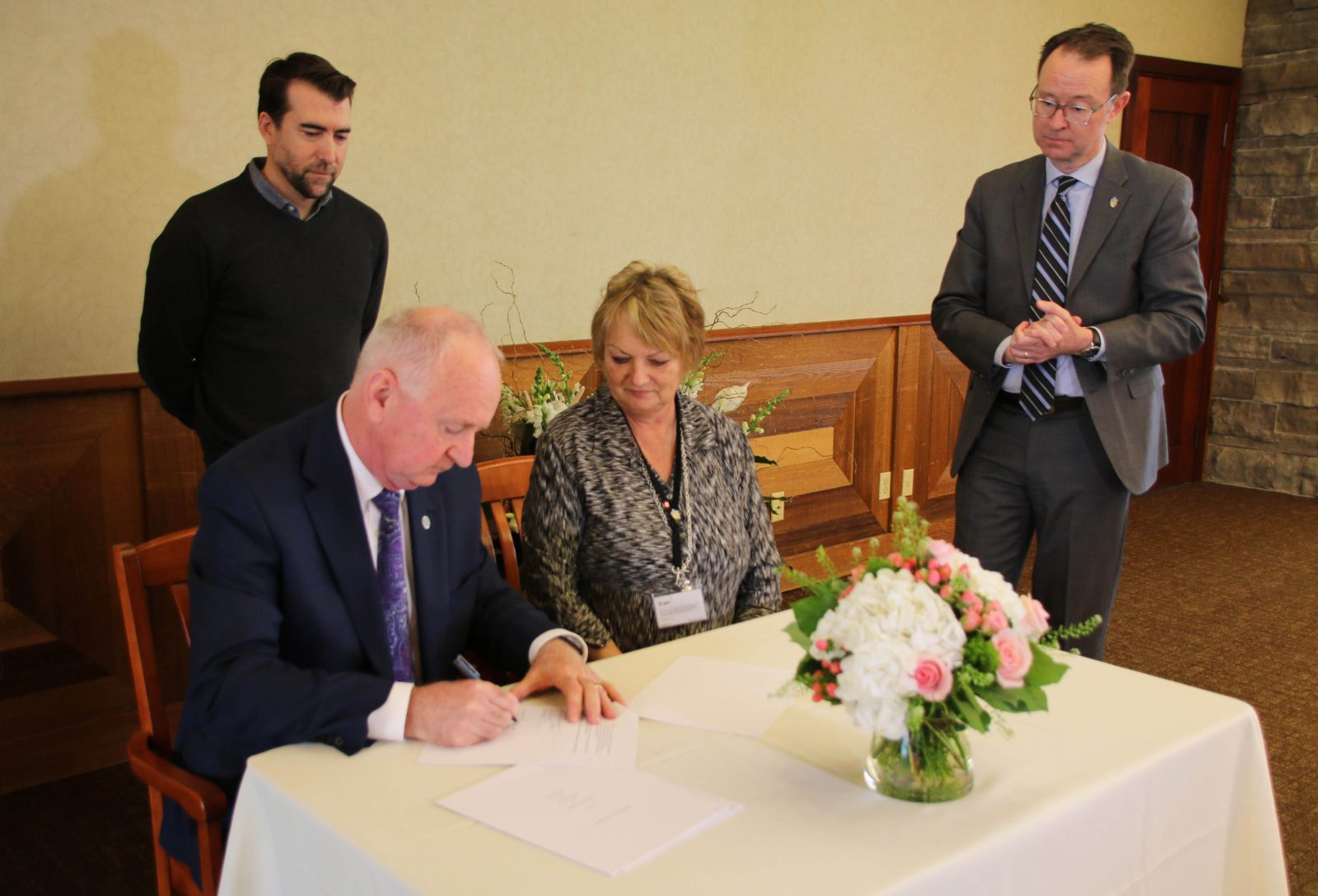
    This commission meeting also included the signing Memorandum of Understanding between NPC, Brock University and Ontario Trails Council, demonstrating a continued commitment to innovative partnerships.  

    Categories: Collaborations, Environmental Stewardship Initiative, Innovative Partnership, SSAS Student Contributor

  • Student Research Highlight: Participation in Trail Monitoring & Evaluation

    Blog Contributor: Bridget McGlynn

    On March 5th Samantha Witkowski, a current Master of Sustainability student at Brock, led a workshop in partnership with the Niagara Parks Commission (NPC) to continue her research on participatory monitoring and evaluating processes. This workshop was made possible by the Excellence in Environmental Stewardship Initiative (EESI), a partnership between the NPC and Brock University. Hosted at the beautiful Niagara Glen Nature Centre, the workshop included a variety of stakeholders, such as community members, Niagara Parks staff, and ecology experts, who discussed management possibilities for the trails in the Niagara Glen. 

    The day began with coffee and a guided walk though trails in the Niagara Gorge for participants to enjoy and observe the trails prior to considering management practices. Our Niagara Parks guide spoke about the history of the Glen, current management practices, recent site improvements, and usage patterns. Upon completion of the hike, participants returned to the Nature Centre and the exciting discussions began! The Niagara Glen received an unprecedented number of visitors in Summer 2019, and as such much of the discussion revolved around ways in which Niagara Parks can manage the trails in the Niagara Glen while upholding their mandate of “Preserving and promoting the natural and cultural heritage along the Niagara River corridor”. Through their vision, Niagara Parks also aims to be an “innovative example of sustainability” and a “welcoming, accessible and inspiring place”. Consequently, brainstorming regarding management practices revolved around maintaining and improving current trail quality, encouraging visitor stewardship through education, and promoting alternative Niagara Parks trails. The varied backgrounds of the participants presented multiple perspectives on the current needs of the Glen, management priorities, and relevant key performance indicators. The workshop provided an excellent example of the transdisciplinary research being conducted at the Environmental Sustainability Research Centre (ESRC) as it brought together diverse stakeholders to address a local, solution-based research question.

    Categories: Applied Research, Environmental Stewardship Initiative, Innovative Partnership, SSAS Student Contributor

  • Brock and Niagara Parks expand partnership to study trail network

    A partnership built on the mutual goal of environmental stewardship is taking another step forward.

    Two years after signing an initial Memorandum of Understanding (MOU), the Niagara Parks Commission and Brock University signed an additional collaboration agreement on Thursday, March 12 at Niagara Parks’ public Commission Meeting that will help the Parks assess and sustainably grow its extensive trail network.

    To be known as the Trails Assets and Tourism Initiative, the new partnership involves Brock and Niagara Parks, along with the Ontario Trails Council.

    Trails are an important natural asset of Niagara Parks. From the world-renowned Niagara Glen, which houses some of the province’s most sensitive plant and animal species, to the Niagara River Recreation Trail, which provides 53 kilometres of paved trails along the Niagara River from Niagara-on-the-Lake to Fort Erie, trail networks allow guests to connect with nature, learn about the unique environment here in Niagara and embrace healthy physical activities.

    “Over the past few years, we have seen a huge growth in trail use and demand for trail and cycle tourism in Niagara Parks,” said Niagara Parks Chair Sandie Bellows. “This initiative will allow us to work together with our community partners to respond to that growth and demand while respecting our shared commitment to the environment.”

    The agreement will include a needs assessment to help Niagara Parks with the trails master planning process, as well as experiential education opportunities for Brock students and initiatives led by Brock faculty members and grad students. Annual public events are also being planned to help pass along the results of the partnership to the community.

    Ontario Trails Council (OTC), a not-for-profit organization that promotes the development, preservation, management and use of recreational trails in Ontario, will bring its expertise in managing and operating recreational trails to the project.

    “The Ontario Trails Council is very excited to be working with the Niagara Parks Commission and Brock University, two national leaders in outdoor recreation and conservation,” said Wayne Terryberry, President of the Ontario Trails Council. “These organizations have a very successful history of cooperation, and the OTC can add it’s trail management expertise in a joint effort to enhance and develop the trail economy and healthy active living in Niagara Parks and the Niagara Peninsula.”

    The Trails Assets and Tourism Initiative builds on both the current MOU between Niagara Parks and Brock University, as well as the recent initiative to establish a binational trail network within the Niagara River corridor. In an MOU signed in August 2019, Niagara Parks joined the Niagara River Greenway Commission and the Buffalo Fort Erie Public Bridge Authority to officially connect the recreational trail networks on both sides of the border.

    This second MOU between Niagara Parks and Brock University is also part of Brock’s ongoing commitment to being a good community partner. In the past two years, it has signed similar collaborative agreements with Niagara Health, the Town of Lincoln, Community Care of St. Catharines and Thorold, Niagara Folk Arts, Pathstone Mental Health and others.

    Brock Vice-President, Academic Greg Finn said the partnerships meet Brock’s Strategic Plan priorities of expanding research capacity, offering a transformational academic experience for students and enhancing the life and vitality of the local region and beyond.

    “These collaborations are not just photo opportunities — they make a difference to people and the planet every day,” said Finn. “We are particularly pleased that Brock and Niagara Parks are working together in an area that is crucial to us all — the sustainability of our environment.”

    The 2018 MOU between Brock and Niagara Parks has been an unquestionable success, with highlights noted in the infographic attached to this media release.

    Known as the Excellence in Environmental Stewardship Initiative, the partnership has allowed Niagara Parks to access Brock researchers to further improve its sustainability and environmental stewardship goals, while giving Brock faculty and students an iconic landscape to actively engage in sustainability science.

    “We had high hopes when entering into the MOU with Niagara Parks two years ago and those expectations have continually been exceeded,” said Ryan Plummer, Director and Professor of the Environmental Sustainability Research Centre. “We’ve had a vibrant and engaging partnership with meaningful impacts for both parties. It is exciting to see this second collaboration taking shape with a broader constellation of partners and I have every confidence it will be equally successful.”


    READ MORE STORIES IN: Featured, News, People
    TAGGED WITH: , , ,

    Categories: Collaborations, Environmental Stewardship Initiative, Innovative Partnership

  • Green Infrastructure/Low Impact Development in the Town of Lincoln

    Blog Contributor: April Sorenson

    Increased rainfall in the Town of Lincoln is stressing existing infrastructure 

    Due to climate change, increasing storm severity is causing more frequent flooding in Ontario. The traditional infrastructure designed to handle rainwater is unable to handle the increasing volumes. As a result, municipalities are looking for new and sustainable ways to handle the excess water and prevent flooding. A type of Green Infrastructure, called Low Impact Development (LID), is one solution. Green Infrastructure includes all of the natural vegetative systems and innovative development practices that restore natural processes. LID is a development strategy that strives to mimic the natural hydrologic cycle. In contrast to conventional infrastructure such as curbs, gutters and sewers that move stormwater out of the city as soon as possible, LID works to mimic the natural hydrologic cycle by allowing stormwater to infiltrate on site. This allows for increased groundwater recharge, reduced flooding and reduced pollutants in the water supply. Types of LID include: rain gardens, bioswales, green roofs, permeable pavement and rainwater harvesting. LID is one way to increase social and ecological resiliency because it decreases vulnerability to climate change and contributes to human and ecological health by reducing flooding, improving water quality and providing greenspace for people and wildlife. 

     The Town of Lincoln plans to develop a Green Infrastructure/Low Impact Development Design Standard with funds awarded from the Great Lakes Emerging Champions Mini-Grant. The Emerging Champions Mini-Grants are part of the Great Lakes Green Infrastructure Champions Program being undertaken by the Great Lakes Commission with financial support from the Erb Family Foundation. The grants help mid-sized communities develop strategies to overcome barriers and increase LID implementation in the Great Lakes Basin by providing mentorship and financial support. In addition to this grant, the Town will be hiring a consultant and working with Brock University’s Environmental Sustainability Research Centre to create the Design Standard. This Standard will provide staff, developers, residents, and property owners with direction on landscape-based LID stormwater management planning and design. It will encourage the installation, operation, and maintenance of LID in the town. The Design Standard will be a big step towards a more resilient and sustainable future for the Town of Lincoln. 

    Categories: Blog, Brock Lincoln Living Lab, Innovative Partnership, SSAS Student Contributor

  • Climate Vulnerability Fact Sheets

    Blog Contributor: Michaela Jennings

    In the fall of 2019, Niagara Adapts conducted a baseline survey to understand the vulnerability of municipalities in the Niagara Region to the effects of climate change. Climate change affects communities in a variety of ways; some can be extreme and cause harm to individuals and their property, others may create emergency circumstances.  

    The vulnerability assessment that was completed with the 7 Niagara Adapts partners was an opportunity to assess how the community was being impacted, and their perception of climate change in their municipality. The survey resulted in Climate Vulnerability Fact Sheets, which outline the results that were collected in the study. There is a general assessment of the Niagara Region, followed by an assessment of each of the participating municipalities. The fact sheets outline the results using infographics to highlight the key findings.   

    The infographics highlight the experiences of the respondents, presenting the percentages of those who have experienced flooding, extreme heat events, extreme cold events, and severe weather events in their community. These weather events are examples of how climate change is impacting communities in the Niagara Region. The percentages draw attention to the wide range of experiences being had in the region, as well as in each municipality independently. 

    As flooding is an important and potentially damaging impact of climate change, there is a section of the fact sheet that highlights flood preparedness in households. The infographic shows what households have done to prepare for flooding in their homes (rain barrels, sump pump, flood insurance, etc.). This section presents what respondents can do to prepare for sudden flooding in their homes, as well as the percentage of respondents who are already seeking those solutions.  

    The fact sheets also address the perspectives of the respondents on climate change in their community, and their perceived community preparedness. For example, in the Niagara Region, 74% of the respondents stated that climate change is impacting their community, with only 21% feeling that their community is prepared for the impacts of climate change. This is an important finding throughout the fact sheets, as it highlights where there is room for improvement in preparing for the impacts of climate change, as well as becoming more adaptable 

    Overall, the fact sheets highlight the key significant findings. It offers an overview of climate change in the Niagara Region, and the 7 municipalities partnering with Brock University through Niagara Adapts. The fact sheets will be used to inform decisions in the community, and to assist in creating a climate-ready Niagara Region.  

    Categories: Blog, Innovative Partnership, Niagara Adapts