Articles from:April 2017

  • Wine grapes can be early predictor of climate change impacts

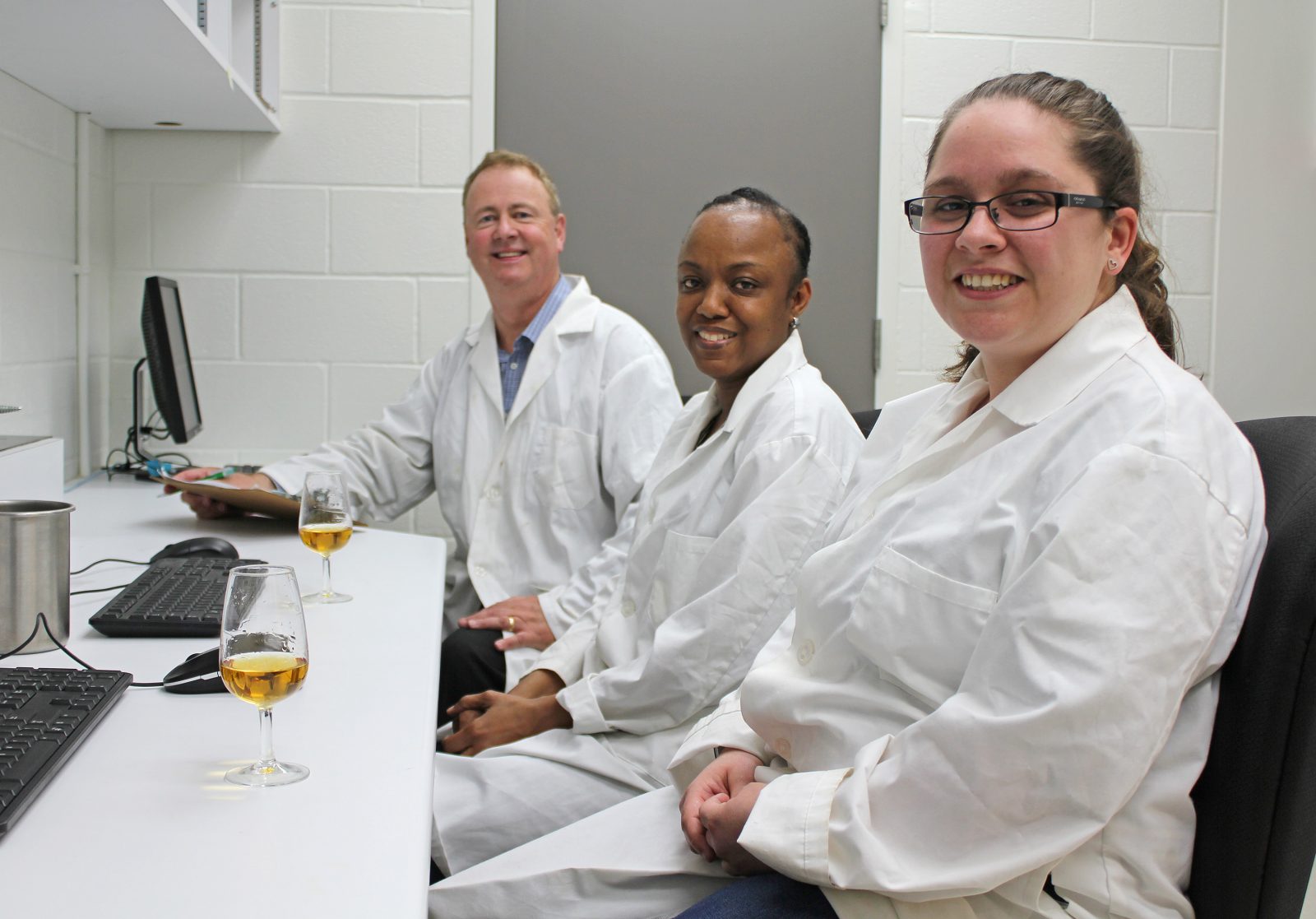
    A Brock University scientist says wine grapes are a “canary in the coal mine” for climate change’s impact on agriculture.

    New data from NASA shows Earth has just experienced the second-hottest March in the 137 years records have been kept. As climate change slowly moves the temperature higher, the agriculture sector is keeping a close watch.

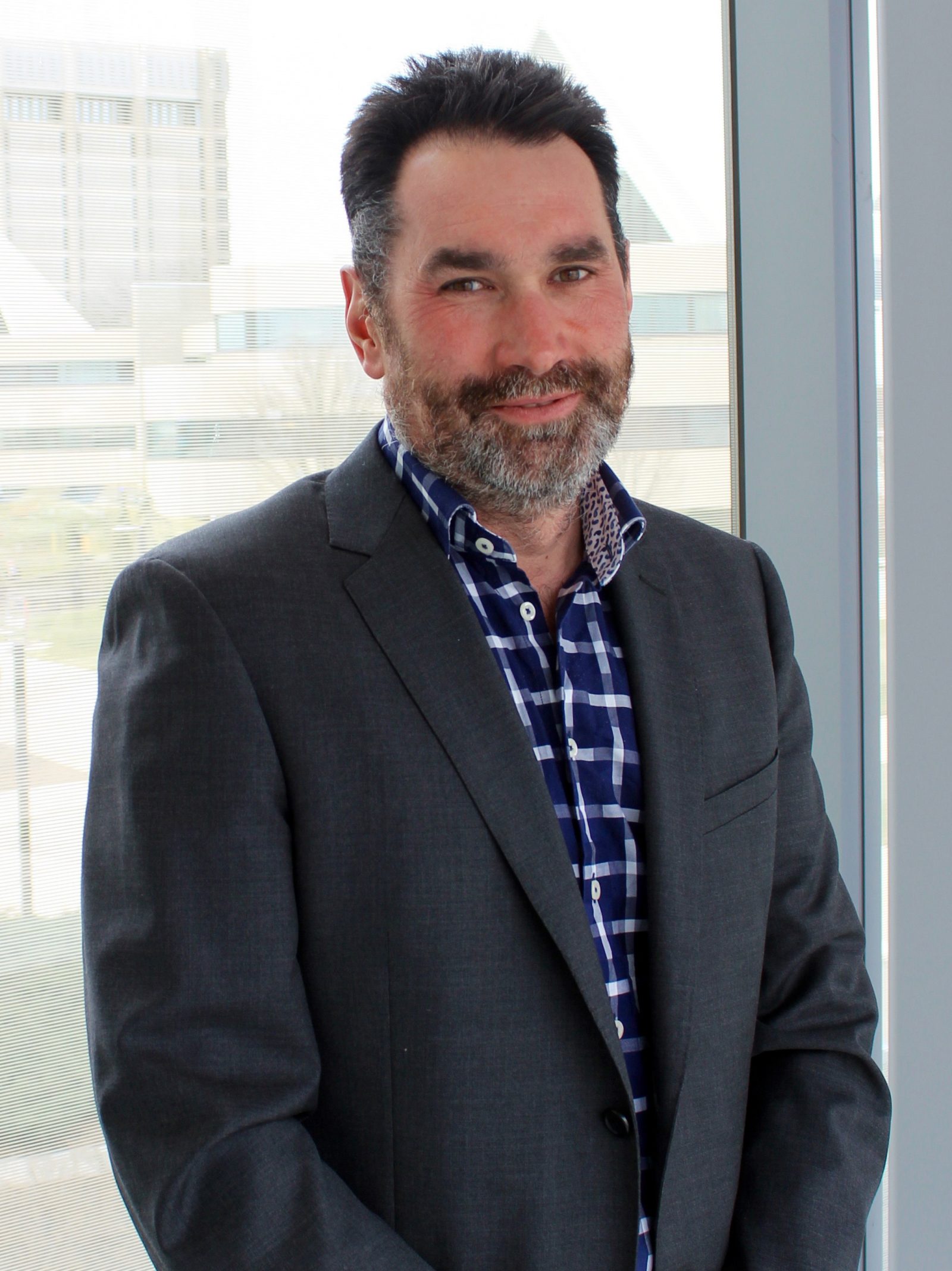
    Gary Pickering says the vineyards sprawling across Niagara can serve as an early warning system for how increasing warmth is affecting agriculture. Wine grapes are good monitors of climate change impacts because of the “narrow geographic and climatic range required by most wine grape varieties,” Pickering says.

    Gary Pickering

    Gary Pickering

    “Within these bands, baseline changes to any one of the key weather factors — such as heat units during the ripening season, absolute temperatures or rainfall patterns — can significantly affect grape and wine quality and sustainability,” says Pickering, a Biological Sciences professor who is also a researcher at Brock’s Cool Climate Oenology and Viticulture Institute (CCOVI) and member of the Environmental Sustainability Research Centre at Brock.

    Extreme weather events and dramatic temperature swings during the growing season can harm fruit quality, while extreme cold snaps during warmer-than-normal winters threaten the very survival of grapevines. Increased levels of CO2 in the air have the capacity to attract new strains of disease-carrying insects.

    By working closely with the research community, innovative Canadian grape growers and wine makers are identifying and working on solutions to these challenges.

    CCOVI researchers are pleased the federal government has allotted $70 million in its 2017 budget for discovery science aimed at tackling climate change challenges. That builds on the $30 million that was earmarked for similar research in 2016.

    “I’m very excited by the news,” said Pickering, who has been part of a diverse team of experts that researches early warning systems to combat damaging cold weather events, off-vine grape ripening to overcome variability in growing seasons, new types of wine and production methods, and better clone and rootstock combinations of varieties that will thrive in future conditions.

    “Increased frequency of extreme weather events looks to be one of the biggest challenges to the industry and it’s important that this fund be used to help support, maintain and even grow our grape and wine industry.”

    CCOVI director Debbie Inglis said the institute’s team of scientists are well-suited to lead and partner on projects that mitigate the effects of climate change on local vineyards and capitalize on new opportunities through innovate grape growing and wine making strategies.

    “CCOVI has long established itself as an innovator in the grape and wine industry, including research into climate change adaptiveness,” she said. “Our VineAlert program is a key example of this innovation, saving growers millions of dollars a year from the damaging impact of extreme cold weather events, and helping to ensure a stable grape supply.”

    CCOVI’s senior staff viticulturist Jim Willwerth, whose research focuses predominantly on freeze protection and improving grapevine cold hardiness, is one of the primary investigators, along with Inglis and CCOVI Professional Affiliate Kevin Ker, from the Institute’s innovative VineAlert program.

    It operates like an early warning system for grape growers, offering real-time temperature information about their grape buds’ ability to survive cold temperatures over the dormant season from October to April. This crucial information helps growers determine when protective actions such as wind machines are needed to prevent cold injury to the grapevines.

    The system was lauded by the Council of Ontario University’s Research Matters campaign as one of the top 50 most ‘game-changing’ research partnerships across the province.

    CCOVI also had climate change opportunities and challenges at front of mind in its annual lecture series, where fellows such as climatologist Tony Shaw discussed the evolution of Canada’s wine appellations as we undergo significant shifts in climate patterns.

    With more than 18,000 acres of planted grapes across the province and an economic impact of more than $4 billion, Willwerth said it makes sense to funnel research dollars into projects that help the grape and wine industry tackle challenges associated with a warming planet.

    “Environmental changes are going to impact not only grapevines, but winemaking production — the style, quality and everything that goes into that,” he said. “Understanding short-term weather events’ impact on plants will lead to innovative solutions for the future.”

    Story from The Brock News

  • Earth Day: Brock experts emphasize the importance of getting outside

    From school playgrounds to parks to hockey in the streets, there are plenty of ways for kids to get outside, but the pull of technology often keeps them indoors.

    Earth Day 2017 will be held Saturday, April 22, and the focus in Canada this year is EarthPLAY, a program designed to bring outdoor, unstructured play back into children’s lives.

    Earth Day Canada says around 70 per cent of all Canadian children spend less than an hour a day outside, and their EarthPLAY initiative is both a fundraiser to build more outdoor adventure playgrounds, and an awareness campaign to get more young people outside.

    Debra Harwood, an Associate Professor in the Faculty of Education, is leading a research team examining the experiences of children and educators in an outdoor learning and teaching environment.

    Launched last year, the Forest School, run through the Rosalind Blauer Centre for Child Care, is a program for junior kindergarten-aged children that immerses them in nature. They learn the basics of phonics, math, science and art while taking trips through the forests around Brock, and by learning in an outdoor classroom on campus.

    Harwood says it’s “fundamentally important” for kids to be spending time in nature.

    “In Niagara we have an ideal context for kids to be outside. It’s absolutely beautiful here and we have an abundance of nature,” she says. “The outdoors provokes their interest. It sets the foundations for formalized learning later in life.”

    Harwood says the Forest School program is one small step to counter-balance the pressure society puts on children that leads to them spending so much time inside.

    “I think we’ve organized children’s lives a bit too much and that’s kind of the idea of making the outdoors a bit more available,” she says. “If we look at children at this young age, they’re in formal learning settings for six or eight hours a day and that’s a long time to be closed off from nature.”

    Ryan Plummer, a professor at Brock and Director of the University’s Environmental Sustainability Research Centre (ESRC), says “going outside and cultivating a personal connection with the environment is an enriching opportunity, and offers a chance to enhance environmental consciousness.”

     “We need to be mindful of our relationship with the environment every day; and Earth Day serves as a powerful and widespread reminder of this crucial connection,” he says.

    Based at Brock University, the ESRC pursues innovative and transdisciplinary research concerning the environment, sustainability and social-ecological resilience.

    Story from The Brock News

  • Brock, Swedish research finds social networks influential in climate change decisions

    A joint project between Brock and Stockholm University has found social networks play a major role in decision-making about climate change adaptation.

    The project team, including faculty from Brock’s Environmental Sustainability Research Centre (ESRC), analyzed where private forest owners in Sweden received information on climate change and with whom they made forest management decisions.

    More than 900 forest owners answered a questionnaire asking them to identify who they communicate with, and how often, about forestry and forest management decisions.

    They were asked to rank their frequency of communication — from daily to less than annually — with people in 14 categories that included peers, associations, government agencies, banks and researchers, among others.

    The top four categories were family members and co-owners, neighbours, other forest owners and forest owner associations. Near the bottom of the list were researchers and government departments.

    “We found there’s a bit of a mismatch between who they have in their network that they rely on and trust the most or communicate with the most often, and who is most likely to actually hold that knowledge about climate change risks and adaptation options for them,” said Julia Baird, Research Associate and Adjunct Professor in Brock’s ESRC.

    Baird participated in the project alongside Ryan Plummer, Professor and Director of the ESRC.

    The research notes that family members, friends, neighbours and others close to private forest owners were considered most important by forest owners in making decisions about forest management, including climate change adaptation practices.

    Respondents reported that almost half of their information on climate change came from news media reports, but they said the most important sources of forestry knowledge came from advice given by people close to them, forestry magazines and newsletters, field trips, and meetings or courses.

    Baird says these findings help researchers determine where to direct information and other resources to raise forest owners’ understanding of climate change and to help them change their practices.

    The team’s study identifies the impacts of climate change on forests that forestry officials worldwide have to deal with, including increased risks of storm felling, greater presence of pests and plant pathogens, and greater risk of forest fires.

    Forest management changes in light of climate change could include different selections of tree species and regeneration initiatives.

    Private forestry makes up almost half of all forest land in Sweden, according to the Confederation of European Forest Owners. It says about 150,000 forest owners are members of one of Sweden’s four forest owners associations.

    In contrast, only six per cent of Canada’s forests are privately owned, according to Natural Resources Canada.

    “However, there are 450,000 private forest owners in Canada that produce 18 per cent of Canada’s timber supply on 25 million hectares, so they also represent a significant group within Canadian forestry,” Baird said.

    She believes Canadian policy-makers and researchers can benefit from the study by finding mechanisms to connect people with knowledge of current research on climate change risks and adaptation to people who manage natural resources.

    Those mechanisms could include workshops or other activities that bring a variety of people together.

    “I think it’s a good lesson for those who are trying to ensure that the research we’ve been doing over a long period of time is actually reaching those it needs to be reaching,” Baird said. “How do we effectively support communication for climate change adaptation?”

    The team’s study, “Analysis of Swedish Forest Owners’ Information and Knowledge-Sharing Networks for Decision-Making: Insights for Climate Change Communication and Adaptation,” was published last month in the journal Environmental Management.

    The research collaboration was made possible through a longstanding Letter of Agreement between the ESRC and the Stockholm Environment Institute.

    Story from The Brock News

  • Plummer to deliver keynote address at MNK conference

    As a sea of graduate students looks on, award-winning researcher Ryan Plummer will share the story of his work and details of the people and events that have helped to shape his life and career.

    The professor and director of Brock’s Environmental Sustainability Research Centre will deliver the keynote address at the Mapping the New Knowledges (MNK) Graduate Research Conference on Tuesday, April 11.

    Plummer, known internationally for his work in the area of governance of social – ecological systems, is a Senior Research Fellow at the Stockholm Resilience Centre in Sweden and a past Science Director at the Canadian Rivers Institute.

    His address will kick off the daylong conference at 8:30 a.m. in Plaza 400 Level Mezzanine.

    The 12th annual event will feature research presentations by graduate students — and, for the first time, undergraduate students — from across a wide range of fields in Brock’s six Academic Faculties.

    Over the course of the day a total of 38 graduate poster presentations, 83 graduate oral presentations and 20 undergraduate presentations will take place, making the 2017 MNK conference one of the largest to date.

    “As a truly transdisciplinary event, the conference shows the scope of how the doctoral and master’s students at Brock are operating at the cutting-edge of thought, progress and development across all subjects and disciplines,” says Jens Coorssen, Dean, Faculty of Graduate Studies.

    “We are extremely pleased to extend to undergraduate students the experience of participating in a friendly and collegial graduate-level conference. They will find the conference a truly inspiring atmosphere and they will come away with ideas and thoughts on how to refine their research interests and build collaborations.”

    The conference will celebrate the graduate studies community with the MNK Awards ceremony from 11:30 a.m. to 12:15 p.m. The ceremony will include the presentation of the 2017 Marilyn Rose Graduate Leadership Award and Graduate Mentorship Awards, and special recognition of graduate students who have been selected to receive the 2017 Jack M. Miller Excellence in Research Awards.

    Visit the MNK website for a detailed conference schedule of sessions.

    Follow the conference at #BrockMNK

    MNK schedule at a glance:

    8 to 8:30 a.m.

    Registration and breakfast — Plaza 400 Level Mezzanine

    8:30 to 9 a.m.

    Opening remarks — Plaza 400 Level Mezzanine

    Welcome — Jens Coorssen, Dean, Faculty of Graduate Studies

    Keynote address — Ryan Plummer, Professor and Director, Environmental Sustainability Research Centre, Faculty of Social Sciences

    9 to 10:40 a.m.

    Concurrent Oral Session 1

    Graduate student sessions 1A to 1F — Plaza Levels 300 and 400

    Undergraduate student sessions 1G and 1H — Cairns 207, 336 (CHYS meeting room)

    10:40 to 11:30 a.m.

    Coffee break and poster viewing, morning session — Cairns Complex Level 300

    11:30 a.m. to 12:15 p.m.

    MNK Awards — Plaza 400 Level Mezzanine

    Presentation of the 2017 Marilyn Rose Graduate Leadership Award and Graduate Mentorship Awards

    Recognition of recipients of the 2017 Jack M. Miller Excellence in Research Awards and finalists of the 2017 3MT Challenge

    12:15 to 1:20 p.m.

    Lunch — Plaza 400 Level Mezzanine  

    1:20 to 3 p.m.

    Concurrent Oral Session 2?

    Graduate student sessions 2A to 2F — Plaza Levels 300 and 400?

    Undergraduate student sessions 2G and 2H — Cairns 207, 336 (CHYS meeting room)

    3 to 3:50 p.m.

    Coffee break and poster viewing, afternoon session — Cairns Complex Level 300

    3:50 to 5:10 p.m.

    Concurrent Oral Session 3?

    Graduate student sessions 3A to 3G — Plaza Levels 300 and 400

    5:15 p.m.

    Graduate Students’ Association social — Cairns Atrium

    Story from The Brock News

  • Forum crosses disciplines to talk about planet’s future

    Changes to the environment and what it means for the future prompted discussion between scholars from several Brock University disciplines during a recent forum.

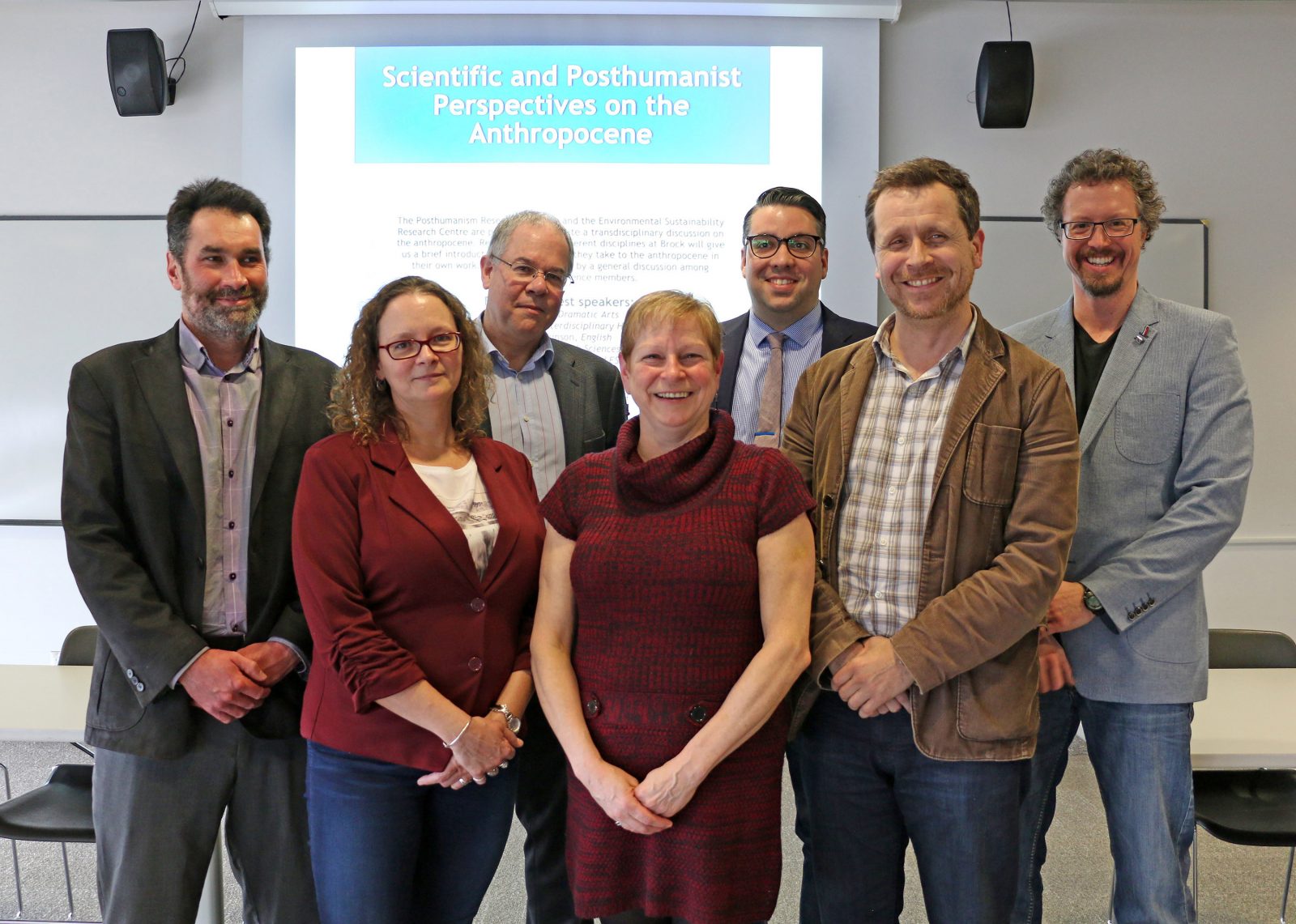
    Scientific and Posthumanist Perspectives on the Anthropocene invited five Brock speakers together for an afternoon of transdisciplinary discussion on Monday, March 27.

    The term anthropocene was unveiled in 2000 to represent a new unit of geological time in which human activities have finally overwhelmed the planet as an operating system.

    The forum “started a conversation among researchers at Brock interested in this seminal time period and the myriad of ways it is being studied,” said Ryan Plummer, Director of Brock’s Environmental Sustainability Research Centre (ESRC), who co-hosted the event alongside Christine Daigle, Director of Brock’s Posthumanism Research Institute (PRI).

    The event, which focused on how changes to the planet impact humans and other beings, was the first collaboration between the ESRC and PRI. The two research centres signed a memorandum of understanding in February, committing to pursuing joint research projects, workshops and conferences.

    Scholarly discourse across disciplines is “where exciting breakthroughs occur,” Plummer said. “With respect to our planetary future, there can be no more important issue for engagement.”

    The event featured professors David Fancy (Dramatic Arts), Terrance McDonald (Interdisciplinary Humanities), Adam Dickinson (English Language and Literature), Martin Head (Earth Sciences), and Liette Vasseur (Biological Sciences).

    It was an opportunity to not only engage in discussion with scholars from three of Brock’s academic Faculties, but to also take in a diverse range of perspectives on the topic, Plummer said.

    Fancy was intrigued by how people from different backgrounds at the University approached the question of how humans are affecting the environment and what can be done to develop different relationships with the planet.

    Vasseur felt the discussion helped with efforts to try and define what anthropocene means for different disciplines and how it can be interpreted.

    With a successful first discussion on the topic, there’s potential the group will return to the table in the future to continue its dialogue.

    Story from The Brock News

  • Collaboration planned between Environmental Sustainability and Posthumanism research centres

    Two research centres at Brock have signed an agreement to improve their collaborative efforts.

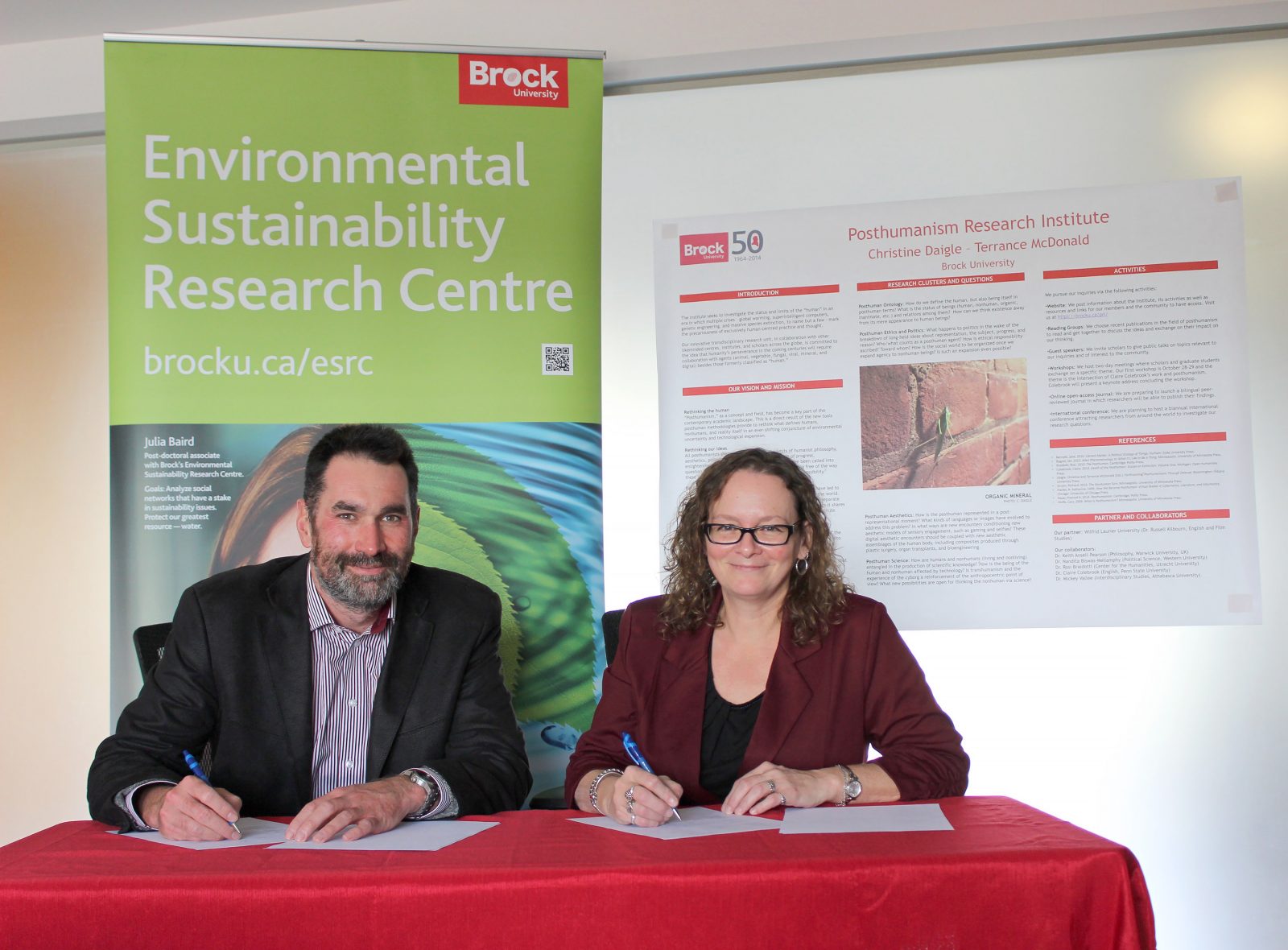
    The Environmental Sustainability Research Centre (ESRC) and the Posthumanism Research Institute (PRI)signed a Memorandum of Understanding (MOU) recently that will lead to the two centres pursuing joint research projects, workshops and conferences over the coming year.

    “These two research collectives at Brock ask ‘How do we relate to the world around us? And, how is this relationship changing now and into the future?’ These are fertile areas of research often requiring transdisciplinary approaches to scholarship,” says Interim Vice-President Joffre Mercier. “The ESRC and PRI complement each other and this initiative to co-operate more formally highlights the transdisciplinary strengths and openness of Brock’s researchers. We look forward to the fruits of this co-operation.” 

    The ESRC undertakes research investigating the challenges that arise from the interaction between humans and the environment, and opportunities to shift society to a more sustainable way of life.

    Posthumanist research explores what being ‘human’ means and questions the notions of progress, enlightenment, human nature, truth and happiness. In a world facing major crisis owing to humanity’s impact on the environment, Posthumanist thinking intersects with the research of the ESRC.

    Ryan Plummer, ESRC Director, is excited about the added dimension this collaboration will give to the Centre’s research.

    “Our ongoing dialogue revealed research questions of mutual interest, especially pertaining to the Anthropocene. Given our shared commitment to transdisciplinary research and scholarly excellence, the agreement provides a good basis for moving collaboration forward,” he said.

    Christine Daigle, PRI Director, added “Many posthumanist thinkers tackle issues related to sustainability and the environment as part of their inquiries into the human being as entangled in the natural world. It is imperative to engage in dialogues and exchanges with researchers that examine the scientific aspect of such issues in order to push the reflection forward.”

    The two centres have already made plans for their first joint venture.

    “A short term goal is to hold a joint event in which we discuss the Anthropocene and what it means to be posthuman in this epoch,” Daigle said.

    Story from The Brock News

  • New funding helps Brock add new online alternatives

    Brock University is getting nearly $430,000 from the Ontario government to help develop content for new online courses.

    A $330,000 eCampus Ontario grant will let the University create an online four-year bachelor’s degree program in Adult Education, while a separate grant of nearly $100,000 supports development of open course modules associated with the University’s Environmental Sustainability in Practice course in the Environment Sustainability Research Centre.

    The Adult Education expansion builds on the success of Brock’s existing three-year bachelor’s degree program — the first fully online degree program introduced by the Faculty of Education in 1999.

    “It makes a direct contribution to the University’s strategic goals when it comes to online learning,” said Associate Professor Camille Rutherford in the Department of Teacher Education.

    New courses will be developed over the coming year in partnership with Niagara College as a supporting institution.

    The program’s fourth-year option is expected to launch in September 2018.

    Work will be done in conjunction with Brock’s Centre for Pedagogical Innovation to look at best practices for online learning and how to incorporate them into the program’s technical design.

    “Most highly engaging online courses aren’t just text,” Rutherford said, adding there’s an opportunity to include the effective use of audio, video and various digital activities.

    With the grant money, Brock can work with videographers, digital editors and multimedia specialists to develop a stimulating online experience.

    “The Ministry (Advanced Education and Skills Development) has given us the resources to be able to do this and to do it in a high-impact way,” Rutherford said.

    The intent is to develop strategies and templates for online courses that can be used across the University.

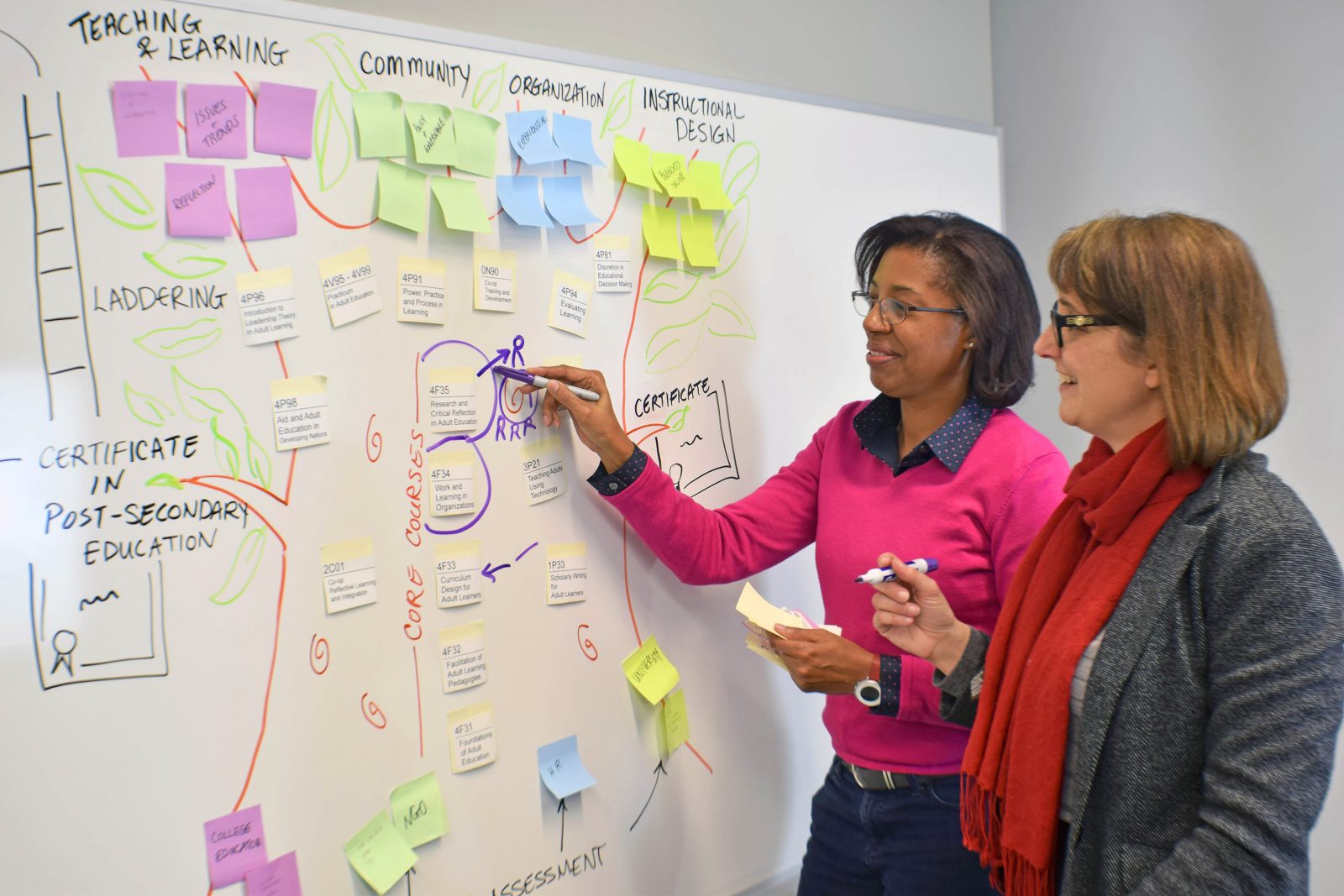
    Rutherford said online learning is crucial for people who require a flexible approach to post-secondary education. For instance, most students in the Adult Education program have day jobs, and need a work-around as they endeavour to improve their teaching skills.

    “We have a large number of learners that teach within the college system, people in social services, health care, in instructional roles in the military and a large cohort at the Bruce Nuclear Plant,” Rutherford said, adding those students enrol from across the province.

    “This gives them an opportunity to engage in those learning experiences regardless of their location. It fits into their work life.”

    The expansion, she said, will allow Brock to “continue to distinguish ourselves as a desired place to be, a leader in e-learning and supporter of future-ready skills.

    “This will be an exemplary program, not just here at Brock, but across the province.”

    The Environmental Sustainability Research Centre (ESRC), one of Brock’s five transdisciplinary hubs, also has plans to share its grant-funded work once its new Environmental Sustainability in Practice course is created.

    The course, set to launch in September, will be available to students in various undergraduate programs looking to take a minor in Environmental Sustainability.

    Once the modules are completed, they will be made available to institutions across the province for incorporation into various undergraduate programs.

    “This is a chance to create something that is special to Brock,” said ESRC Director and Professor Ryan Plummer.

    “The fact that our proposal was successful is a real nod to what we have in terms of talent and expertise here at Brock. We’re creating materials that can be used throughout Ontario.”

    The project shows the University is “making it a priority to respond to learners of the 21st century and rethinking how we do some things in terms of our innovative pedagogy,” Plummer said.

    “This is allowing us to realize some of the dreams that we have of how we ideally want to engage learners. It allows us to push the boundaries of what we can actually do online.”

    The funding will allow for content development using multimedia professionals, advanced audio and video techniques.

    “The University is absolutely delighted to see these successful eCampus Ontario grant proposals in online course module, program development and research and innovation categories,” said Vice-Provost Anna Lathrop.

    These projects, she said, will add to Brock University’s reputation as an institution that prioritizes 21st century learning in forums that integrate technological fluencies and personalized learning.

    Brock University offers 72 online courses across all Faculties, including 27 within Adult Education.

    While Adult Education was once the University’s only fully online undergraduate program, that recently changed with the introduction of the Masters of Public Health program.

    Brock has previously succeeded in obtaining eCampus Ontario funding for development of online courses in human geography, diversities in actor training and history.

    The non-profit collaborative centre of excellence in technology-enabled learning acts as administrator for a web portal that houses more than 13,000 online courses from post-secondary institutions across the province.

    eCampus Ontario sustainability

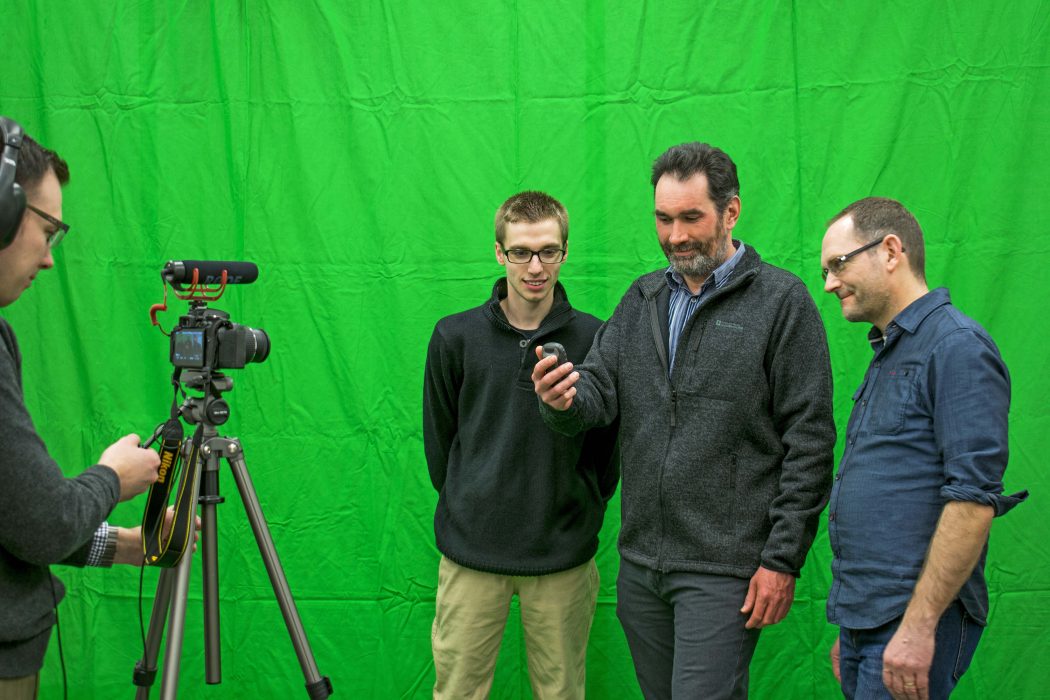
    Brock University graduate Brodie Hague joined Ryan Plummer, Professor and Director of the Environmental Sustainability Research Centre, and Christopher Fullerton, Professor and Chair of Geography and Tourism Studies, to discuss various ways technology can be used to enhance the new Environmental Sustainability in Practice course to be developed through an eCampus Ontario grant.

    Story from The Brock News

  • Sustainability Doctoral Scholarship awarded for first time by Brock and University of the Sunshine Coast

    Brock University alumna and PhD candidate, Kerrie Pickering, has been awarded the first-ever Sustainability Doctoral Scholarship through a partnership between Brock University and The University of the Sunshine Coast (USC), Australia.

    Pickering will be researching the impacts of climate change on Indigenous health with the supervision of both Prof. Ryan Plummer at Brock and Prof. Tristan Pearce at USC.

    “Winning this prestigious scholarship is a testament to Kerrie’s strong academic record, outstanding scholarly accomplishments and impactful contributions of her planned research,” said Plummer, Director of the Environmental Sustainability Research Centre (ESRC). “She will be catalyzing exciting new avenues of inquiry within the ESRC and will ultimately enhance our capacity for research excellence.”

    Pickering is currently working on her PhD in Sustainability and she holds a BSc in Environment and a MA in Geography from Brock University. She is also a former registered nurse.

    “Climate change is the greatest threat to human health for present and future generations,” said Pickering. “Remote Indigenous people in Canada and Australia are especially vulnerable as they are experiencing rapid environmental change and currently have the poorest health outcomes within each country. To reverse these health disparities and support adaptation for Indigenous people, we need to understand what health means to them, what their health concerns are and what adaptive measures they are already utilizing.”

    Collaboration between Brock University and USC has been underway since 2012 and was formally consolidated in a Memorandum of Understanding signed last year.

    This collaboration has seen the ESRC at Brock and the Sustainability Research Centre (SRC) at USC work together on a major international initiative on climate change and water governance.

    The sustainability doctoral scholarship covers tuition, living and travel expenses and was created to strengthen the partnership between Brock University and USC under the Memorandum of Understanding.

    “The Environmental Sustainability Research Centre at Brock and the Sustainability Research Centre at USC are a perfect match to enhance the critical mass required to understand some of the most pressing issues of our time,” said Prof. Tim Smith, Director to the SRC.

    Story from The Brock News