Articles from:March 2023

  • Collective action among Indigenous peoples in Latin America the focus of new book

    Pascal Lupien was about to wrap up a three-year, Social Sciences and Humanities Research Council-funded project on Indigenous activists’ use of digital media in Ecuador, Chile and Bolivia when a wave of large-scale protests broke out in 2019.

    The Assistant Professor in the Department of Political Science, along with a team of local and Indigenous research assistants, seized the opportunity to see how the uprisings, which rivalled in scale historic decolonization protests in the 1990s and early 2000s, might fit in with findings on how Indigenous groups were using new technologies, existing technologies and the structures and foundations of their civil society to assert land rights and political autonomy.

    The last-minute extension of the research program helped inform Lupien’s latest book, Indigenous Civil Society in Latin America: Collective Action in the Digital Age, published by the University of North Carolina Press this week.
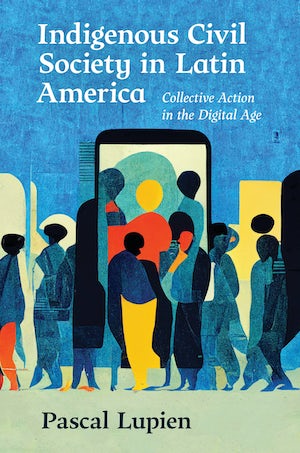
    book cover for Indigenous Civil Society in Latin America: Collective Action in the Digital Age features a stylized illustration of people gathering in front of a large smartphone

    Indigenous Civil Society in Latin America: Collective Action in the Digital Age was published by the University of North Carolina Press.

    “In the 1990s and early 2000s, Indigenous civil society in these countries really managed to have a significant impact on policy and legislation, even some constitutional reform,” says Lupien. “In the years after that, there was a lot still going on, but instead of visible, disruptive types of protest movements, the organizations and leaders were involved in the policy process and putting pressure on the government by building on the experience and the concessions gained in the previous period.”

    Lupien, who looked at participatory democracy in some of the same communities for his 2018 book, Citizens’ Power in Latin America: Theory and Practice, became curious about how the digital age was coming into play through the 2010s.

    “Because so much of the attention to Indigenous social movements in Latin America focused on that late 20th-century and very early 21st-century period, we didn’t know a whole lot about the impact of digital technologies and particularly social media,” he says. “But a lot of the literature tells us that protest and collective action is increasingly moving online.”

    However, the notion that social media could be an ideal site for resistance did not necessarily line up with what Lupien and his team observed in the communities they were engaged with.

    As the broad general optimism around the potential of social media for marginalized groups began to fade, the researchers were already finding that governments and corporations could limit the effectiveness of what some had believed might be a field-levelling technology.

    “We found that social media is not particularly helpful for Indigenous organizations, and that it can and is often used against them,” Lupien says. “Most of the Indigenous organizations don’t have the resources to hire the kinds of specialists that extractive industry companies or the government can, or spend a lot of money to circulate misinformation all day.”

    In fact, as Lupien outlines in the book, the reliance of Indigenous civil societies on the complex and robust mechanisms already in place in their communities — rather than on an ever-shifting landscape of digital technologies — is likely beneficial.

    “Indigenous civil society has so many complex, structured and very deliberate elements — social movement organizations that engage in protests, co-ops that sell products in order to raise revenue to fund engagement in politics, service-providing organizations offering services that the state fails to provide and other Indigenous participatory democracy governance mechanisms,” says Lupien. “In the book, I argue that the fact that Indigenous civil society doesn’t really have to rely on social media or new technologies is actually a strength. They can and do use it, but their success in advancing their goals doesn’t rely on it.”

    To learn more about Lupien’s new book, visit the University of North Carolina Press website.

    Categories: News

  • PoliSci student returns from United Nations Commission on the Status of Women

    Muskaan Waraich returned from the 67th annual United Nations Commission on the Status of Women (CSW67), which took place in New York City from March 6 to 17.

    The second-year student, who is studying a double-major in Political Science and Women’s and Gender Studies, travelled as part of a delegation for Canadian Voice of Women for Peace (VOW), a non-profit organization for which she volunteers, with financial support from the Faculty of Social Sciences.

    But Waraich says her journey to the United Nations (UN) headquarters last week actually began last September when she attended Camp 2030, a global gathering of youth leaders hosted by UNITE 2030 to innovate around the UN’s Sustainable Development Goals (SDGs).

    “Through Camp 2030, I had the chance to learn about the United Nations International Organization, including the CSW and how it could be helpful in developing my current projects working toward the SDG 2030 Agenda,” she says.

    Waraich began researching organizations that might be sending delegations and made a strong connection with VOW back in the fall.

    “Their goals aligned with mine because they’re Canada’s oldest national feminist peace group,” she says. “They’re nonpartisan and nonprofit, working towards women’s equal opportunity and having women’s voices heard on a local, national and international level on issues concerning peace.”

    Waraich’s experience at CSW67 began with a session held by a panel of Canadians including Senator Marilou McPhedran to help prepare young participants to best engage in the conference by offering advice and tips.

    Then followed several days of conference sessions on topics related to the theme of “Innovation and technological change, and education in the digital age for achieving gender equality and the empowerment of all women and girls.”

    Waraich, who works as a Gender-Based Violence (GBV) Peer Mentor in Human Rights and Equity at Brock, was particularly interested in many of the connections between technology, education and GBV.

    But her commitment to the SDGs came into full view during the event, as well.  

    “I’m very passionate about gender equality and the empowerment of all women and girls, and it is important to understand barriers such as lack of access to education, poverty, gender-based violence, climate change and discrimination — these are all factors working against gender equality,” she says. “Through the whole CSW, one of the biggest lessons I’ve learned is the importance of how each SDG intersects with another and all must work together in order to achieve gender equality for all women and girls.”

    Dean Ingrid Makus in the Faculty of Social Sciences was thrilled to hear that Waraich would attend CSW67.

    “We in the Faculty were delighted to learn that Muskaan had taken the initiative and found an opportunity to attend such a significant event with global impact,” says Makus. “We are now excited to have her bring this experience and learning back to our community here at Brock.”

    Waraich says that her experience has left her with strong hopes that others will seek out opportunities to get involved in working toward change, be it in their own communities, mobilizing on behalf of marginalized groups or taking part in global efforts.

    “I don’t think I’m special — anyone can get involved, and everyone needs to be involved with the Sustainable Development Goals, because they aren’t just one individual effort,” she says. “We can all take steps, develop projects, receive grants and find opportunities for youth. This is our world, our planet, and many scary things are happening around the world but this conference reminded me that there is still change possible.”


    Categories: News