MEDIA RELEASE — November 26, 2025 — R0138
With the flip of a switch, Brock officially embarked on a more than $100-million journey that will reimagine campus sustainability and position the University as a leader in climate action.
A celebration was held Tuesday, Nov. 25 to mark the launch of the SPARK (sustainability, performance, adaptation, renewal and knowledge) initiative, which will drastically reduce Brock’s carbon footprint and accelerate achievement of its sustainability goals.
“SPARK is exactly what its name suggests: a catalyst — for ideas, for collaboration, for change,” says Brock University President and Vice-Chancellor Lesley Rigg. “It brings together our people, our partners and our priorities in a way that ignites this transformative new chapter of Brock’s unwavering commitment to shaping a resilient, sustainable future for generations to come.”
The three-year clean infrastructure program was brought to life through an innovative partnership between Brock, the Canadian Infrastructure Bank (CIB) and Enbridge Sustain.
SPARK will see campus greenhouse gas emissions reduced by 83 per cent by 2028, surpassing the University’s initial target of a 75 per cent reduction by 2030 (compared to a 2013 baseline). The initiative will also cut energy usage by 60 per cent.
“That’s worth repeating: an 83 per cent reduction, two years ahead of schedule — something no other university is Canada is currently positioned to do,” Rigg says. “This is the scale of bold transformation we’re driving.”
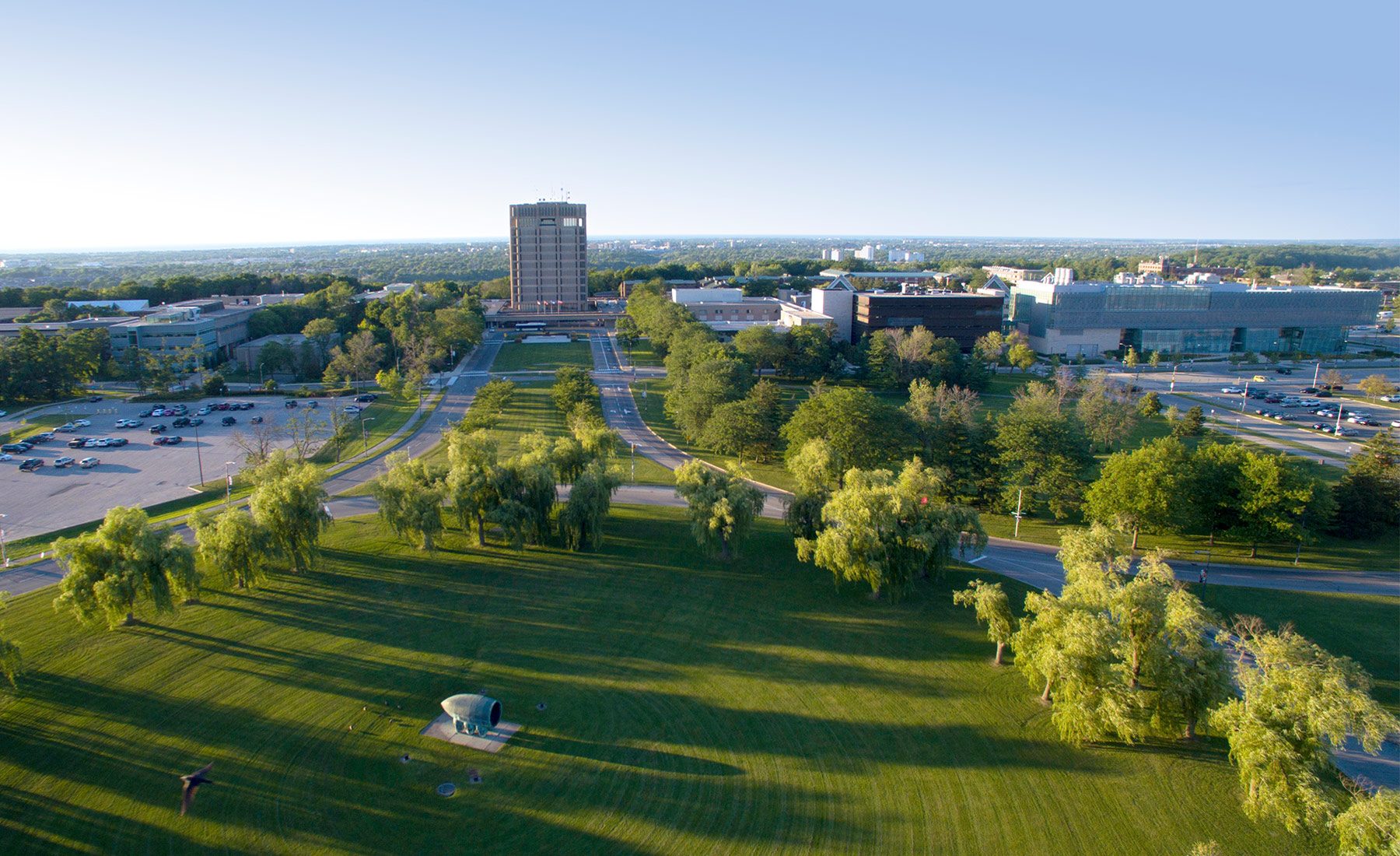
SPARK will revitalize Brock’s main campus, modernizing its core systems through a more than $100-million investment in critical infrastructure. By leveraging the Canadian Infrastructure Bank’s low-interest carbon fund and Enbridge Sustain’s technical expertise, the retrofit will move forward without upfront capital costs to the University.
Facility renewal will take place in buildings across campus, with lights converted to LED, new efficient hot water heat pumps installed and building automation system controls optimized, among other upgrades. New air handling units and fume hoods will also be installed in select campus buildings.
Looking ahead to 2034, the initiative is projected to reduce Brock’s deferred capital renewal by more than $225 million, improving the long-term health of campus infrastructure.
“SPARK will set Brock up for continued success, ensuring that both now and into the future we’re meeting the needs of students, staff, faculty and community members who rely on our campus facilities each day,” says Scott Johnstone, Vice-President, Administration and Services. “This initiative will fuel sustainable change in an innovative way, building on Brock’s legacy of climate action and emphasizing the critical role universities play in leading the way to a sustainable future.”
SPARK will also create opportunities for knowledge transfer by using the campus as a living lab for teaching and research through case studies, class projects and site visits.
The initiative demonstrates all that can be accomplished when organizations work together towards the common goal of driving meaningful environmental change.
“Kudos to Brock University and the SPARK team for upgrading campus infrastructure with deep energy retrofits,” says Dima Zreik, Director, Investments, Canada Infrastructure Bank. “At CIB, we’re pleased to work with the experts at Enbridge Sustain — a resource Brock University has tapped into — to advance projects across Canada which cut building emissions and reduce energy consumption.”
“At Enbridge Sustain, our objective is clear: to advance decarbonization while ensuring energy remains affordable and reliable,” said Mark Irvine, Vice President, Enbridge Sustain. “Through collaboration with Brock and CIB, SPARK is a living example of what we can accomplish when we work together — translating goals into reality, with tangible outcomes that will benefit students, faculty and staff for years to come.”
Several Brock projects aimed at reducing Brock’s carbon footprint and better positioning the institution for future success have been made possible in recent years with government support, including the District Energy Efficiency Project and Co-generation Plant upgrade, both which have significantly enhanced Brock’s ability to operate sustainability.
“We’re proud to be a part of this transformative initiative that will not only reduce Brock’s environmental impact and improve the campus for the next generation of learners but also serve as an example for post-secondary institutions across Canada,” says Chris Bittle, Member of Parliament for St. Catharines. “The future is bright at Brock.”
To learn more, visit brocku.ca/spark
For more information or for assistance arranging interviews:
*Maryanne St. Denis, Associate Director, Strategic Communications, Brock University, [email protected]or 905-246-0256
– 30 –
Recent Comments