Blog Contributor: Hannah Marlen Lübker

Photo credit: Narayan Silva
(Hannah Marlen Lübker is a PhD candidate in her third year, whose work explores empathy in more-than-human worlds using arts-based research methods.)
Last week, I attended the Art of Hosting and Harvesting Conversations that Matter (AoH) training in Karlskrona, Sweden, which took place at the Blekinge Institute of Technology. This four-day training on group facilitation and leadership invited us to learn and reflect on how we lead and participate in the transition toward sustainability, guided by two core questions: How can we work from trust in a turbulent world? and What brave spaces of collaboration are needed now? I began the training on a sentimental and nostalgic note. I was surprised by how emotional it felt to be back in Sweden – a country I lived in during my master’s degree and had not returned to since.
What’s AoH?
We live in a time of rapid change and uncertainty, and many of the challenges we face – especially in regard to sustainability – are complex, messy, and multi-faceted. These are exactly the challenges AoH seeks to address. Rather than looking for fixed solutions to wicked problems, it offers simple but powerful participatory practices for hosting generative conversations, gathering diverse perspectives, making sense of what emerges, and designing actions as safe-to-fail experiments. Over the four-day training, we explored a body of methods and practices for working with complexity: how to come together around a shared purpose, design meaningful processes, and move the harvest of a conversation out of the room and into the world.
There is no central organising body or accreditation (so I did not get an official looking certificate to add to my LinkedIn). Instead, AoH is a self-organising global network held together by shared principles and practices, a co-created and co-owned community of practice. Their approaches have been used in settings ranging from the European Commission to local governments in Canada and NGOs such as WWF, helping to harness collective wisdom, strengthen relationships, and encourage more compassionate forms of leadership. AoH also comes with its own language. It speaks of hosting rather than facilitating or leading: creating and holding the space in which meaningful conversations can happen, and groups can do their best work together. It also speaks of harvesting rather than simply collecting data or producing outcomes. Harvesting is about capturing the learning that unfolds throughout a conversation – not just the final result, but the ongoing sense-making that helps to ideas actionable.
AoH’s Philosophy
Personal growth
As much as this training was about learning new methods and design processes, it was also about self-discovery and personal growth: building our capacity to connect with one another and with ourselves. As an introvert who is not naturally inclined to open up quickly to strangers or lead with trust, I found this to be quite challenging – but it was exactly the challenge I had chosen for myself. One of the underlying beliefs of AoH is that we are never experts, but learners and practitioners: practicing humility, curiosity, compassion, and not-knowing, a practice that is constantly evolving and never finished. During the training, we were not just being hosted, but also hosted processes ourselves, moving between the roles of facilitator and participant, learning by doing. To me, an especially valuable insight was that to host others, we have to host ourselves first: providing ourselves with what we need to show up fully present, whether that be a good breakfast, a call with a friend, or stepping outside for some fresh air. And while I have to admit that I was not quite prepared for the number of people attending the training barefoot – or the number of times I was invited to express my thoughts and feelings through sound or an interpretive dance move – I was committed to being fully present in the moment, whatever that moment might bring.
Questions
If we are living and working in complexity, then curiosity, openness to new information, and a willingness to invite different perspectives are essential – especially when we acknowledge that our own perspectives are always partial. This is where the art of inquiry comes in. Asking open, thoughtful questions can invite exploration, deepen reflection, and avoid certainty and fixed positions, which may lead to division or polarization. Inquiry is a powerful practice: answers can close a conversation, but good questions open it up. To practice the art of inquiry, we played a question game. Each of us came up with a question that was on our mind, then walked around the room and – whenever we met another person – asked them that question. The only rule: the other person was allowed to respond only with more questions. The aim here was to transform the original question, deepen it, shift perspectives, and uncover new layers of meaning. One question from a fellow participant that stayed with me was: How can I let go of my fear? Through the exercise, it shifted to: How can I use my fear for a better purpose? That small change opened up entirely different possibilities for thinking about emotions we often label as negative. It also helped clarify the ‘quest behind the question’ – the deeper intention or purpose underneath what we ask.
How we engage with one another
Underlying AoH is a particular way of thinking about how we engage with one another: people, groups, and organisations are seen as living systems – intelligent, adaptive, creative, self-organising, and meaning-seeking. To allow these systems to unfold their potential, we need to walk what AoH calls the chaordic path – the path between chaos and order – and resisting the urge to control the situation or rush toward a solution. Instead, the invitation is to slow down and leave room for emergence. Another key idea is that the quality of what we create together depends on the quality of attention and awareness we bring into the room. This means that we speak with intention and listen deeply. I found this intentionality especially meaningful: not speaking for the sake of speaking, but asking what conversation is actually needed, and what our work within it really is. This idea further manifested in the differentiation of levels of listening, including empathic listening, in which the listener connects to the speaker on an emotional level and tries to adopt their perspective. This overall spirit was visible not only in the ideas we discussed, but in the atmosphere of the training itself. The circles in which we gathered were decorated with little collections of objects, rooms were filled with pillows, blankets, and yoga mats, people shared poems and songs, and our process was captured in a large graphic recording mural. Yes, this training was connected to our work – but it also made space for us to show up as human beings.
Concrete methods
Collective Story Harvest
One of the methods we practiced was a Collective Story Harvest, which is based on the idea that people’s stories carry valuable lessons, insights, and the wisdom of lived experience. In a collective story harvest, people are split into small groups, with one person sharing their story, and each person listening with a different lens. This allows us to focus on various facets of a single story simultaneously and make sense of it together. For example, one person had the lens of love and fear focusing on when those facets showed up in the story. Other lenses were tools and how they were used and challenges and flow (the magic moments when things just fall into place). Another powerful role was that of the witness, who listens not to the story itself but to the energy in the room, the emotions present, and what remains unspoken.
After the story, insights were first shared in the small groups, then in groups organised by listening lens – for example, everyone focused on love and fear came together – before being brought back to the full group, with insights reaching ever higher levels of abstraction, a process that reminded me of the qualitative coding I use to analyse interview data in my PhD. This session was especially meaningful to me because I was responsible for hosting one of the groups. My role was to choose the lenses to be applied together with other hosts, invite and prepare the storyteller, set up the space, moderate and time the session, and report back to the full group after the exercise. Our group was blessed with a deeply emotional and impactful story from a wonderful storyteller, which made my role as host feel much more like a privilege than a task.
Design for Wiser Harvest
One of the most tangible sessions for me was Design for Wiser Harvest, in which participants were invited to bring real-life case studies and ask the group for help. With my photography exhibition in New Brunswick approaching quickly – and me being wildly stressed about it, having never hosted an event like this before – I volunteered my own case. The exercise was designed to give a few people a chance to ask for support, while giving the rest of the group an opportunity to practice both design and generosity. Over several rounds, five peer coaches helped me clarify what I actually wanted to achieve and offered inspiration, feedback, and concrete ideas for the exhibition, all captured on a template, which I have since digitised and will use in my preparation. What stayed with me most, though, was not just the practical advice. It was the feeling of not being alone, of having a community to bounce ideas around with, and of carrying the weight of responsibility a little less heavily when others are ‘in it with you,’ even if only for an hour and a half.
To conclude
What I am taking away from the Art of Hosting is that it is not a toolkit to ‘fix a problem’, but a practice: a way of participating in complexity with curiosity, care, and intention. Its most powerful harvests are often intangible – trust, friendship, shared energy, and a network of like-minded people, from which collective action can emerge. I left Karlskrona feeling deeply grateful for the conversations, the inspiration, and with the comforting knowledge that in the Art of Hosting community, you never host alone.
I want to extend my heartfelt gratitude to the practitioners who have hosted us in Karlskrona – your work is much needed and much appreciated.
The Art of Hosting answers the question: What becomes possible when people come together as their authentic selves, to navigate the troubled waters of our time together?
Of course, it answers it with more questions.
To learn more about the Art of Hosting, or attend an upcoming training near you, you can visit their website: https://artofhosting.org/
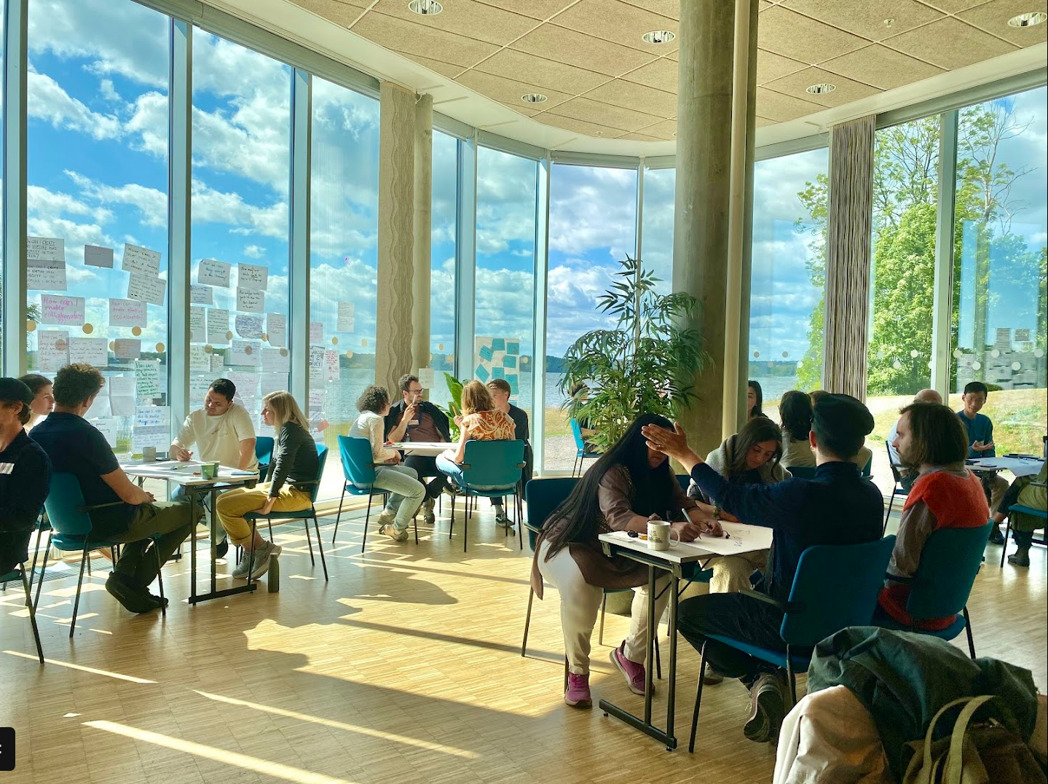
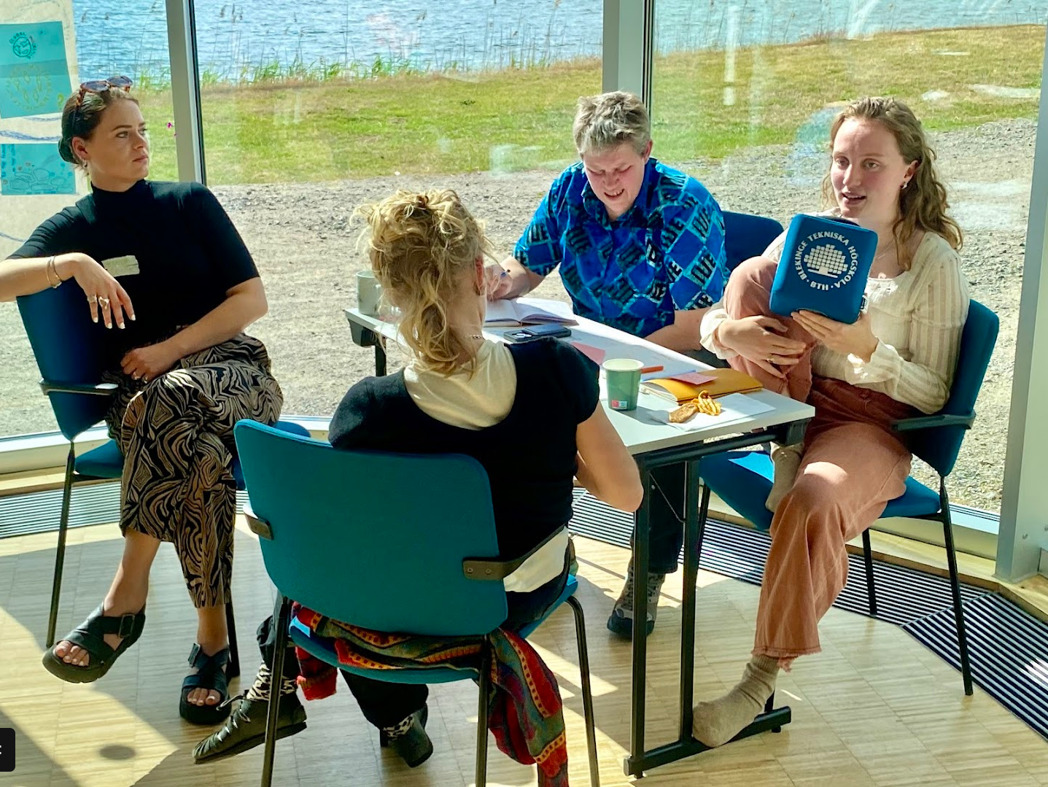
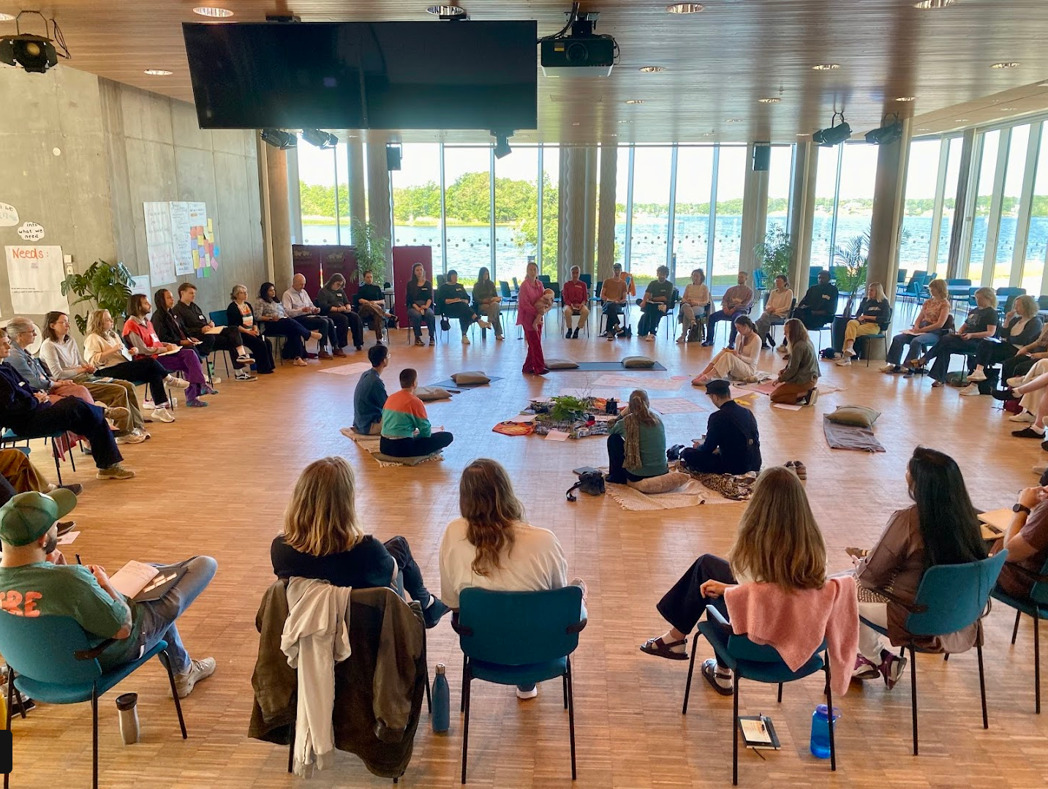
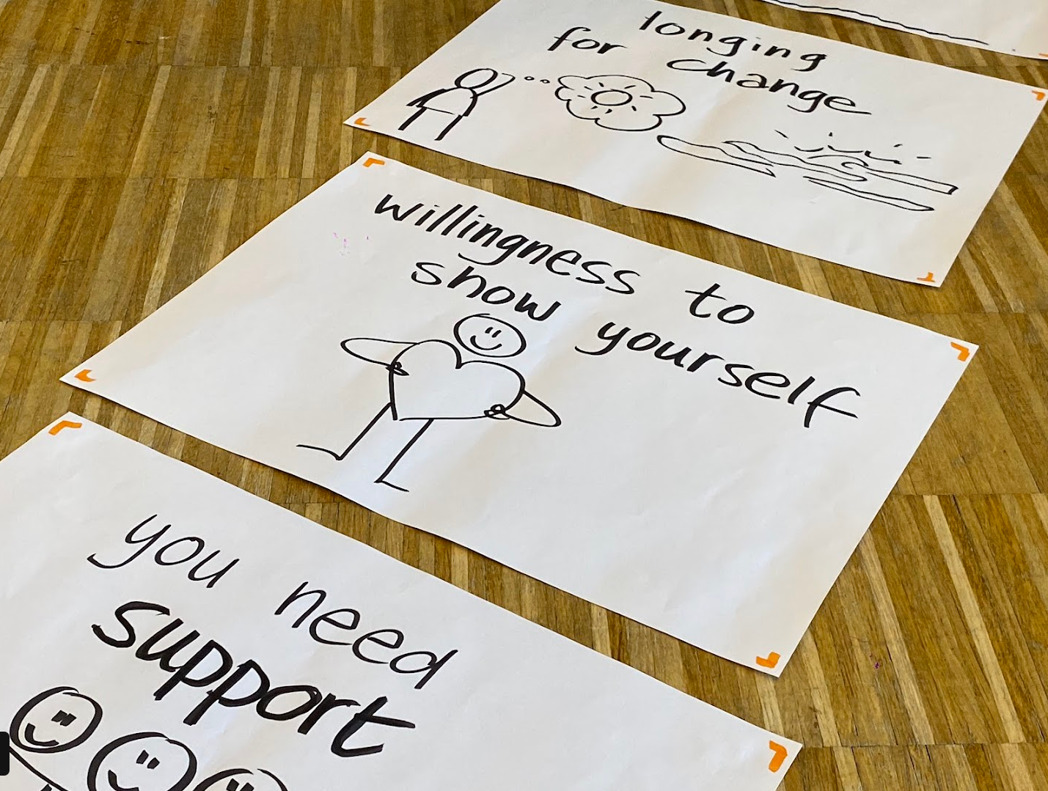
Photo credit: Narayan Silva