Articles from:July 2017

  • Grand opening set for new cycling path near Brock

    Travelling to Brock by bike or on foot just got a bit easier — and a lot safer.

    Work on the new Decew and Merrittville multi-use pathway has been completed, providing a safe route to get to the University from one of the most popular off-campus residential neighbourhoods.

    Last year, the Government of Ontario, City of Thorold, Niagara Region and Brock University announced a partnership to build a network of bike lanes and paths that would stretch from the Confederation Heights neighbourhood to the Brock campus.

    The announcement followed lobbying efforts by the Brock University Students’ Union for improved cycling infrastructure near campus.

    The first phase of the project began in 2016 with Decew Road reconstructed from Richmond Street to Merrittville Highway. Work continued this past April with a multi-use path and improved lighting installed on the highway between Decew Road and Sir Isaac Brock Way.

    An officially opening for the new pathway will be held Wednesday, July 19 at 3 p.m. outside of Niagara Region headquarters — on the southeast corner of Sir Isaac Brock Way and Merrittville Highway. The ceremony will be followed by a bike ride for cyclists of all ages. All are welcome to attend.

    Active transportation, such as walking or cycling, is a healthy way for the large population of Brock students and employees living in Thorold to commute to campus, said Elizabeth Yates, a liaison librarian at Brock, who is also a member of the Thorold Active Transportation Advisory Committee that advocated for the path project.

    “Before this pathway was built, walking or riding along Decew and Merrittville felt unsafe due to large volumes of traffic, with vehicles sometimes travelling over the speed limits,” she said. “Poor nighttime lighting was another concern.”

    As a cyclist and advocate for active transportation in the community, Yates was impressed to see so many partners come together to show their support for an initiative that “promotes healthy commuting and makes our area safer for everyone.”

    Story from The Brock News
  • Cheung’s hot study hits the big time

    By: Lydia Collas

    Cheung's Research

    A study by researchers at Brock University which found motivational self-talk to improve physical and cognitive performance was recently featured on time.com, receiving more than 6 million views in 24 hours.

    Dr. Stephen Cheung, Professor of Kinesiology and member of the Environmental Sustainability Research Centre (ESRC) at Brock University, and his colleagues wanted to see if athletes could improve their endurance in the heat simply by changing their thoughts. The long-held view is that hard physical limits underlie an athlete’s performance in the heat. But Cheung wanted to investigate how mental, rather than physical, factors affect endurance.

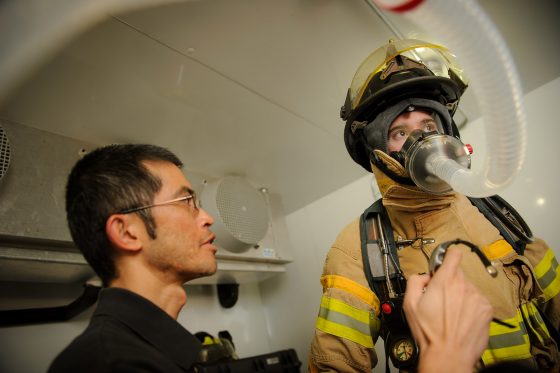
    The study, recently published in the January 2017 edition of Medicine & Science in Sports & Exercise, took a group of trained cyclists and had them ride in 40ºC heat until they reached the point of exhaustion. Following their initial attempt, half the group underwent a course in self-talk training. This is a sport psychology technique that involves replacing the negative messages going through your head as you cycle to exhaustion in a very hot room with positive ones of “I am focused” and “Keep pushing, you’re doing well.”

    The average cycling time in the initial ride was eight minutes before exhaustion was reached. The cyclists were then divided into two equal groups, one received self-talk training while the other did not. Cyclists who received the self-talk training extended their cycle for an average of three minutes. The time for the untrained group remained unchanged.

    These results challenge the view that hard physical limits underlie performance in the heat. Cheung says of the work “A novel part of the study’s finding that, even in very well trained athletes, their perception of discomfort can still be further trained and improved.”

    But it wasn’t just physical performance that improved. the cyclists were also asked to perform a cognitive task that involved finding and remembering the way out of a maze. Cheung found that the self-talk training also improved performance on this task, “It has also never been studied before whether sports psychology impacts mental performance during intense exercise in addition to the physical changes themselves. The combination of both cognitive and physical performance tasks was a novel aspect of the study.”

    This research clearly has relevance to athletes wishing to improve their performance. Indeed, Cheung is involved in the training of some high-profile cyclists, “I recently had the privilege of helping top US cyclist Amber Neben develop an individualized heat adaptation protocol prior to the 2016 World Championships held in Qatar. I think I was almost as excited as Amber was when she won gold in the Women’s Time Trial!”

    And it’s not only athletes that should take note either, Cheung says “What this demonstrates is that refocusing perception of discomfort can improve anyone’s tolerance to exercise and heat stress. This is of relevance to workers in the heat, such as firefighters, hazardous waste disposal, and ultra-deep miners.”

    It cannot go unmentioned that Cheung’s study received a huge amount of attention in the media. Published at multiple new outlets, it was also, to Cheung’s surprise, picked up by time.com: “It still constantly amazes me how broadly my work gets picked up sometimes, through both traditional media channels and also newer media venues.”

    As it often is with science, this study not only provided answers to some questions, but also gave rise to a whole host of new questions. Cheung has plans to explore the mechanisms that underlie the effect observed here, “I have colleagues in Belgium who have been seeing that altering the level of dopamine in the brain can also improve an individual’s tolerance to exercise and heat stress. The next step that I am exploring now with a PhD student is to merge these findings and themes of research together, ideally looking at how these sport psychology interventions may or may not affect the neurochemistry of the brain.”

    Link to full paper: Effects of Motivational Self-Talk on Endurance and Cognitive Performance in the Heat.

  • Brock Professor, Gary Pickering, recently featured on the CBC

    Global warming threatens some of the world’s favourite wines — for surprising reasons

    By Brandie Weikle, CBC News

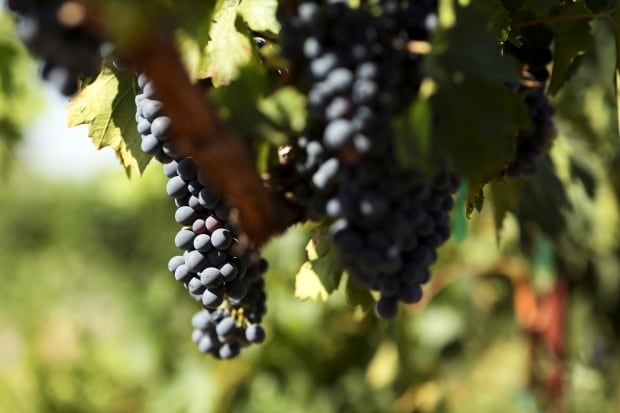
    A worker cuts grapes off the vine at a vineyard in Keratea, Greece. Researchers have linked climate change related heat exhaustion to decreased productivity among workers who harvest grapes for the wine industry.

    A worker cuts grapes off the vine at a vineyard in Keratea, Greece. Researchers have linked climate change related heat exhaustion to decreased productivity among workers who harvest grapes for the wine industry. (John Kolesidis/Reuters)

    In the wine industry, it’s not just the grapes that are affected by climate change, but the people picking them.

    Scorching work conditions for the farm labourers who do the largely manual grape harvest could result in productivity and economic losses for the wine industry, according to a study published in the journal Temperature.

    The study is the first of its kind in Europe to assess the impact of heat on agriculture workers.

    Researchers from Greece’s University of Thessaly studied workers in the vineyards of Cyprus, where grape pickers often endure temperatures up to 36 C.

    The authors used time-motion analysis to monitor study volunteers during every second of their work throughout four shifts. Additionally, the team measured environmental temperature against average skin temperatures of their subjects.

    Unscheduled work breaks increased up to 2.1 per cent for every additional degree of temperature.

    During the whole study period, 12.4 per cent of total work shift time was lost to unscheduled breaks.

    The study concluded that grape pickers experienced increased workplace heat, leading to “significant labour loss.”

    The authors pointed out that workplace heat stress has hefty financial implications across many industries. In Germany in 2004, for example, financial costs linked to heat-related work absenteeism and reduced productivity were estimated between $1 billion to $4.5 billion, while similar findings for Australia between 2013-14 indicated total losses around $8 billion.

    A delicate crop

    Earlier studies have established climate change as a major factor in wine production, even before the impact on workers is taken into account.

    A 2016 report in the Journal of Wine Economics, for instance, said that climate has a greater effect on the development of the vines and the composition of fruit than the soil conditions and the variety of grape.

    Temperature affects when the grape vines bud and fruit ripens, as well as the balance of sugars and acidity. Water deficits make for smaller berries and higher tannis, that study found.

    Grapes are a delicate crop, both in terms of the narrow temperature range in which they can grow, and the quality of the final product, says Prof. Gary Pickering, a biologist and viticulture researcher from Brock University in St. Catharines, Ont.

    USA-CALIFORNIA/WINE

    In 2014, dry conditions made these grapes in Davis, Calif., ripen early, just one of many places in the world where climate change is making it more difficult for wineries to produce consistent products. (Robert Galbraith/Reuter)

    “We’re seeing both in traditional wine-growing regions in Europe and the emerging wine-growing regions, lots of direct impact from climate change already,” he says, adding there will be “very severe impacts over the next couple of decades.”

    While the issues vary in different parts of the world, the most severe impacts are from longer dry periods and drought episodes during the growing season, says Pickering. This affects not only the growers’ ability to keep the vines alive but the process of ripening the grapes.

    “Increased frequency of extreme weather events are the other big one,” he says. Around the world wine regions are experiencing not only droughts but severe storms, and very cold or hot temperatures.

    “These have implications in terms of the consistency of grape quality that the consumer looks for when they buy their bottle … from one year to the next,” says Pickering.

    At first blush, the warming climate seems advantageous for Canada’s relatively young wine industry, because higher temperatures have allowed new wine regions to emerge here while old world wine regions have contended with problems like drought.

    “There’s certainly opportunities for the Canadian industry as well as threats from climate change,” says Pickering, who points to the wildfires in B.C. as an example of extreme weather events that are occurring here more often.

    “Smoke from the wildfires can taint the grape and taint the wine that follows,” he says. “They definitely taste smoky.”

    Asked if climate change is driving up the price of wine, Pickering points to a classic high-end wine as an example: red Bordeaux. “Bordeaux has struggled over the last few years to produce that top-end product.”

  • A greener Brock taking shape

    You may have noticed them buzzing about campus over the past few months.

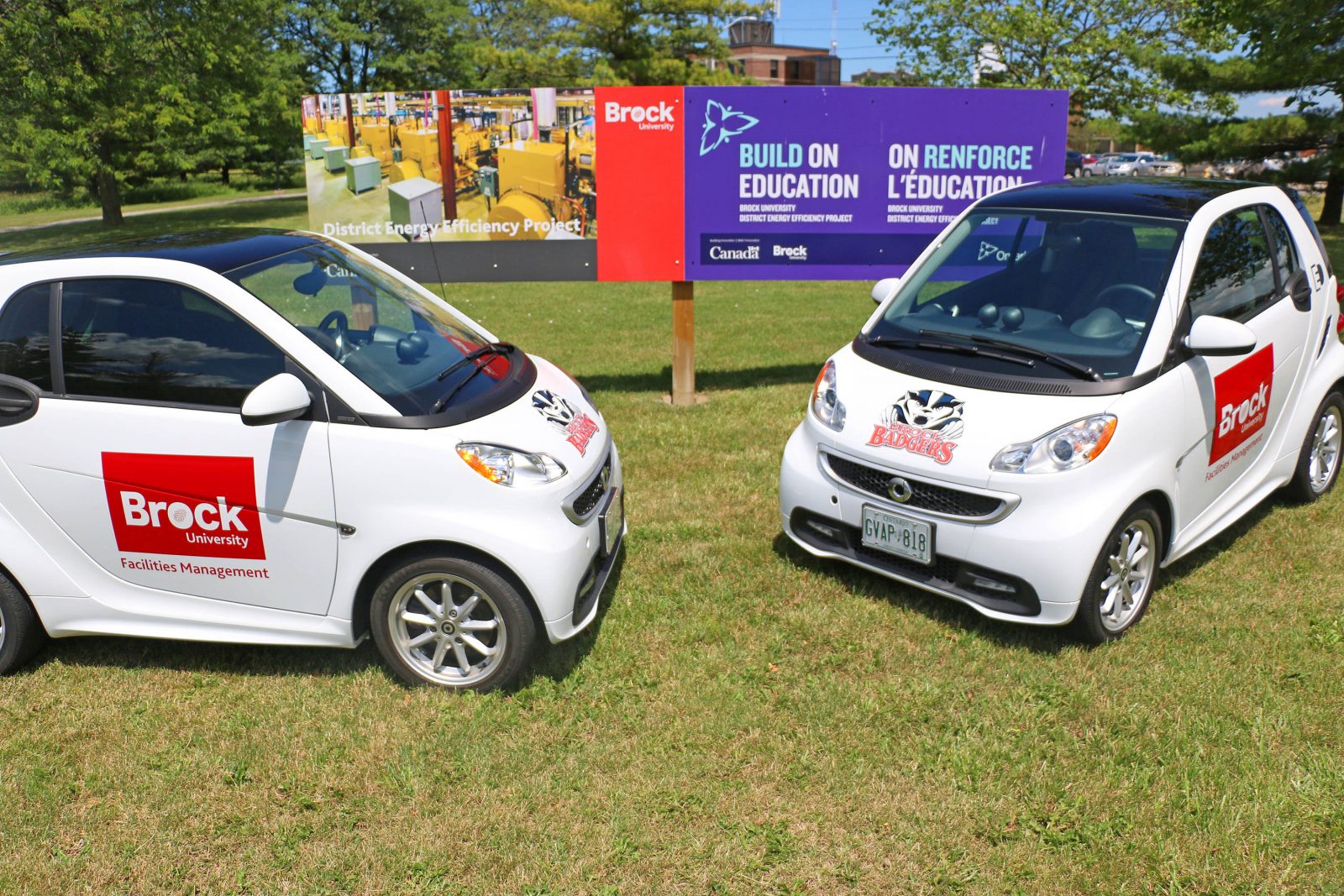
    Two new Brock-branded electric Smart cars have been added to the Facilities Management fleet, contributing to the University’s efforts to reduce carbon emissions.

    Brock has a number of initiatives on the go as work continues to achieve a goal of reducing carbon emissions by 20 per cent between 2013 and 2023.

    Scott Johnstone

    Scott Johnstone, Interim Associate Vice-President of Facilities Management, stands in front of Brock’s cooling system.


    The Smart cars replaced supervisor vehicles — one van and one SUV — previously driven around campus. The two-year-old electric cars, each with minimal kilometres, were purchased for $10,000 each. In comparison, vans previously added to the fleet were each more than double that cost.

    “We get about a week and a half on one charge just moving around campus, avoiding fill-ups at the gas pumps,” said Scott Johnstone, Interim Associate Vice-President of Facilities Management.

    “It means significant carbon savings.”

    The University sought out green options when replacing the fleet vehicles and the cars have proven to be a benefit since their introduction two months ago.

    “Our goal is to work toward carbon neutrality over time,” Johnstone said, calling the Smart vehicles a step in the right direction. “We’re trying to cut down on burning fossil fuels as much as we can.”

    The University is also midway through its $10.8-million District Energy Efficiency Project (DEEP), which is scheduled for completion by the end of April 2018.

    The project is funded by the federal and provincial governments, through the Strategic Investment Fund and Facilities Renewal Program respectively.

    The DEEP project includes an upgrade to Brock’s co-generation plant and satellite utility areas that will allow the University to reduce its carbon emissions by 15 per cent. The plant produces electricity, heating and cooling for main campus research laboratories, teaching spaces and supporting infrastructure.

    That reduction is a “huge step” toward Brock’s 20 per cent reduction goal, Johnstone said.

    The DEEP project will replace more than 50 per cent of the natural gas power co-generation engines and controls with state-of-the-art, high efficiency, electronically controlled units.

    Also replaced with a high-efficiency model will be the University’s 25-year-old absorption chiller, which will increase cooling capacity and save more energy.

    The new technology will significantly reduce Brock’s greenhouse gas emissions, while saving utility costs and reducing maintenance costs.

    It’s also expected to free up funds that can be put toward other energy saving initiatives and deferred maintenance projects.

    Brock is currently exploring solar and wind power options for the future.

  • Media Release: Brock launches new minor in environmental sustainability

    Brodie Hague

    Brodie Hague is a graduate of Brock University’s Sustainability Science and Society graduate program, which launched in 2014. Now, the University is offering a minor in environmental sustainability through its Environmental Sustainability Research Centre.

    With ice shelves cracking, green energy options expanding and the international political debate over climate change heating up, the environment is making headlines more than ever before. Coupled with that is the discussion around environmental sustainability, which impacts nearly all aspects of life.

    Starting this fall, Brock University undergraduate students will have the option of minoring in environmental sustainability through a new offering by the Environmental Sustainability Research Centre (ERSC).

    Combining economics with social and environmental sciences, environmental sustainability explores how to protect the natural environment and ecological health while maintaining or improving the quality of human life.

    The transdisciplinary ESRC at Brock has been home to a graduate program in Sustainability Science and Society since 2014, the new minor will give Brock undergraduates their first opportunity to take dedicated courses in the field.

    The minor is open to Brock students in any program and will focus on the problem-solving skills needed as businesses and governments adhere to new environmental legislation and society adapts to a changing world.

    Two new online courses will be offered this September: Introduction to Environmental Sustainability (ENSU 2P01) and Environmental Sustainability in Practice (ENSU 2P02). Third year classes will be added to the calendar in the coming years. While the ENSU courses are open to everyone, non-environmental sustainability minors will have to wait until July 20 to register.

    To complete the minor, students will be required to take 1.5 ENSU credits, and 2.5 additional credits from a list of approved courses from 15 departments and centres across campus.

    “Searching through the undergraduate calendar, we realized that many departments and centres integrate environmental sustainability concepts into their courses,” said ESRC Director Ryan Plummer. “As environmental sustainability is a transdisciplinary field of study, it was obvious that we should collaborate with these units across campus.”

    “We’re hoping to continue adding courses from our own research centre and other units across Brock,” Plummer said.

    The creation of the minor coincides with the fifth anniversary of the ESRC this year.

  • Job Alert: Coordinator, Projects & Programs

    We are hiring.

    The ESRC is currently looking to fill the job of Coordinator, Projects & Programs.

    Job posting AP 54/2017 for the Coordinator, Projects & Programs position is currently posted on the Brock University Career Opportunities page. The application process closes on July 19, 2017.