Articles from:June 2017

  • Congratulations to Marcie Jacklin on her retirement

    By: Samantha Morris

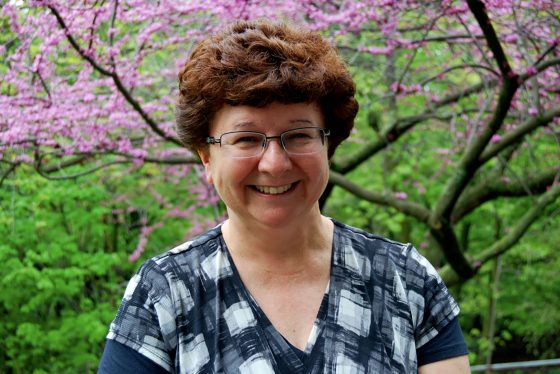
    Marcie Jacklin

    The Environmental Sustainability Research Centre (ESRC) is delighted and saddened to say farewell to Marcie Jacklin as she retires from Brock today. Marcie has worked in Brock’s James A. Gibson Library for 25 years, and has been a member of the ESRC since it’s establishment.

    “Marcie joined the ESRC as a Core Member in 2011 and has been extensively involved, serving on numerous committees and actively contributing to our activities. She played an essential role in developing our Sustainability Science and Society graduate program (Master of Sustainability) and has cultivated important connections with the Library,” says Ryan Plummer, Director of the ESRC.

    Throughout her years of involvement with the ESRC, Marcie has always served with an abundance of passion, joy, and positivity. From presenting seminar talks to graduate students, to speaking at or attending research cafes, to working on ESRC research projects, Marcie has been an active member of the ESRC from day one.

    A common theme across all of her involvement in the ESRC: birds, of course.

    Marcie is an internationally recognized birder. Her interest in studying nature, and specifically birds, started in the 1980s. Since then she has been a strong advocate for the environment, participated and coordinated several bird surveys and counts, volunteered as a birding guide, contributed to birding scholarship, and shares her knowledge about birds with everyone she meets.

    “Marcie has the rare ability to combine her personal passion for nature, especially birding, with her professional drive to engage people in meaningful ways with information about science and the environment. Marcie’s commitment to bettering our relationship with nature is extraordinary. She is a wonderful person who has greatly enriched the ESRC – I can’t thank her enough for all of her contributions,” adds Plummer.

    We wish Marcie all the best in her retirement and look forward to seeing her at future ESRC events!

     

  • Brock experts want you to ‘leave no trace’ when exploring Canada’s national parks

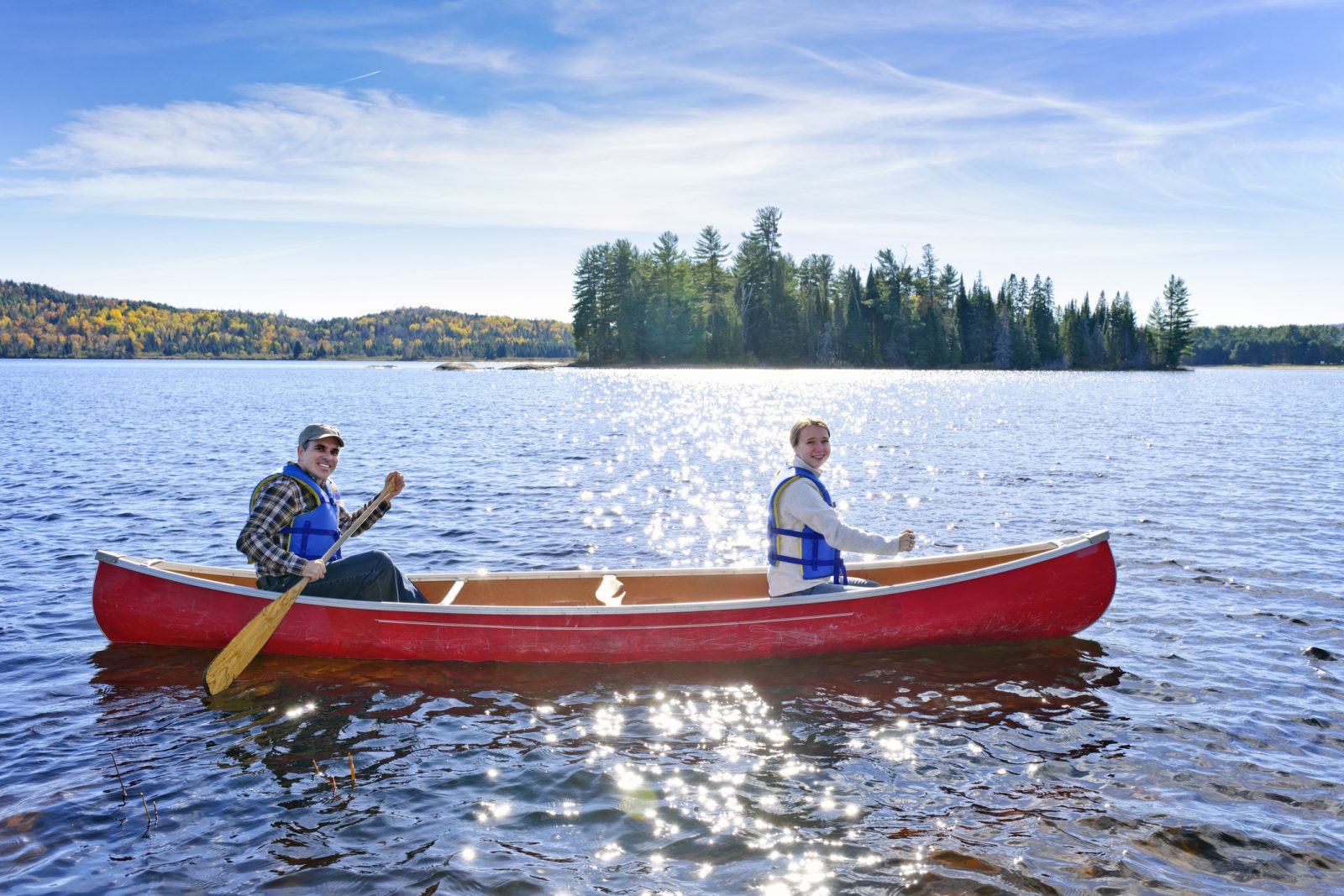
    While Canadians are visiting national parks, historic sites and marine conservation areas for free this summer, Brock experts want them to be mindful of their potential impact on these protected areas.

    As part of Canada’s 150th birthday celebrations, Parks Canada has opened its sites at no cost through use of a Discovery Pass. The gesture is expected to increase traffic at the national sites, and Brock experts are encouraging visitors to be mindful of leaving no environmental trace during their trip.

    “Healthy parks help to create healthy people and communities and can continue to do so for generations through actions of care,” says Recreation and Leisure Studies Associate Professor Garrett Hutson.

    Visiting Canada’s National Parks is a wonderful way to promote sustainable relationships with the natural world. By using Leave No Trace principles, Hutson believes Canadians can practise ways of recognizing and minimizing recreational impacts to natural areas.

    “Many visitors don’t realize the impacts they cause, which is why all park visitors should familiarize themselves with the seven Leave No Trace principles,” says Hutson, who has done considerable research on the topics of outdoor recreation management, outdoor leadership and person-place relationships.

    These principles include:

    • Plan ahead and prepare: Park visitors should do research about a site before visiting to find out what they’ll need for a safe and enjoyable experience. Considerations include but are not limited to planning for food, water, first aid, proper footwear such as hiking boots, and clothing such as rain gear, as well as maps that might be needed.
    • Travel and camp on durable surfaces: Visitors should stay on trails and not trample fragile vegetation. Additionally, camping at established campsites concentrates impacts as opposed to camping in pristine settings.
    • Dispose of waste properly: Whatever is packed in to a park should get packed out. This includes all trash and garbage.
    • Leave what you find: Artifacts discovered should be left for other people to enjoy. These could include archeological items, antlers, fossils and wildflowers. This principle also stresses the importance of not bringing non-native species into areas visited. Leave only footprints, take only pictures.
    • Minimize campfire impacts: Campfires are a privilege and should be enjoyed at established fire rings where permitted. Many people don’t realize that fire rings damage soils that may never fully recover. Instead of cooking over a fire, cook over a camp stove. Enjoy the glow of a small candle lantern instead of a fire.
    • Respect wildlife: Observe wildlife from a distance. Do not startle, harass or disturb wildlife in any way. Never feed animals. Feeding wildlife damages their health, alters natural behaviours and exposes them to predators and other dangers. Respect wildlife by storing food in a secure way away from tenting areas.
    • Be considerate of other visitors: Be nice to other visitors and respect their experience. Be courteous and help others in need.

    Students enrolled in Brock’s Outdoor Recreation courses often explore a variety of Ontario’s most stunning landscapes such as Algonquin, Killarney and Frontenac parks, where they practise and learn outdoor leadership while ensuring they leave a minimal impact on the environment.

    “We regularly use the Niagara Glen and other escarpment areas as outdoor classrooms,” says Hutson. “As part of our commitment to recreation management, our students earn a Leave No Trace trainer certification, which prepares them to teach minimum impact practices to others.”

    Integrating these basic Leave No Trace ideas into outdoor recreation programs has become commonplace, as more and more people are active outside, explains Recreation and Leisure Studies Professor Tim O’Connell.

    “This has led to heightened awareness of the need to educate outdoor recreationists about the magnitude and variety of impacts they create,” he says.

    Watch this video to learn more from Tim O’Connell about how to leave no trace this summer when visiting Parks Canada sites.

    Story from The Brock News


  • Stockholm Resilience Centre: Is adaptive co-management delivering?

    The following was recently posted by the Stockholm Resilience Centre website, which you can visit for the full article and links to additional publications.

    The answer: Possibly. Assessment of four UNESCO biosphere reserves reveals “myriad” of positive results.

    Kristianstads Vattenrike Biosphere Reserve is a cultural landscape in the southern part of Sweden. It stretches some 105,000 hectares within a densely populated area of the Skåne region. So much for the facts. As for value, it is hailed by the UN as an outstanding example of how biodiversity conservation and sustainable development can go hand in hand. That is why UNESCO in 2005 included it their ”Man and Biosphere Programme”, recognizing it as one of the world’s best examples of how relationships between people and nature can work.

    It doesn’t stop there.

    Kristianstads Vattenrike is also praised for its collaborative management approach and has consequently become a point of reference for a number of researchers studying adaptive co-management.

    Could there be more of these places?

    According to a study recent study published in Ecological Economics, the answer is yes, and they are thriving. Senior research fellow Ryan Plummer has together with centre colleagues Örjan Bodin, Lisen Schultz and other colleagues from University of Waterloo and Brock University analysed four UNESCO biosphere reserves in Sweden and Canada and whether their focus on adaptive co-management has led to positive results.

    “We identified a myriad of positive results both from an ecological perspective as well as from a livelihood perspective” Ryan Plummer, lead author

    The research team analysed feedback from 52 individuals involved in the management of the four biosphere reserves. The result of the analysis showed that a majority of them reported an increase in new collaborative undertakings with partners connected to the reserves.

    The analysis also revealed that this had led to a more sustainable resource use within the reserves.

    Visit the Stockholm Resilience Centre for the full story and links to additional publications.

  • Congratulations to the Master of Sustainability Class of 2017

    SSAS Graduates 2017

    Pictured from left to right: Amanda Palumbo, Rebecca White, Kelly Gibson, Katie Perrin, Natalie Gillis, Kelsey Scarfone. Absent from the photo: Katrina Kreivins and Brittany Friesman.

    On Monday, June 5, 2017, the Sustainability Science and Society (SSAS) graduate program celebrated the graduation of eight students.

    The Environmental Sustainability Research Centre (ESRC) would like to extend congratulations to our newest Master of Sustainability graduates. The 2017 graduating class included: Brittany Friesman, Kelly Gibson, Natalie Gillis, Katrina Kreivins, Amanda Palumbo, Katie Perrin, Kelsey Scarfone, and Rebecca White.

    The ESRC would also like to congratulate Katrina Krievins, who was named the 2017 recipient of the Distinguished Graduate Student Award – Sustainability Science and Society for achieving the highest overall average in the program.

    “Graduating is the culmination of years of hard work and acknowledges that these students have successfully fulfilled the expectations associated with conferring the degree Master of Sustainability,” says Ryan Plummer, Director of the ESRC and Graduate Program Director of SSAS.

    “This is an important achievement and I very proud of each of them. I am confident these vibrant individuals will go forward to positively influence our society and the relationship with the environment.”

    We wish you all the best in your future endeavours!