Explore the National AccessAbility Week (NAAW) 2026 poster series displayed across campus. Each poster highlights a different accessibility topic, disability-related issue, or area of awareness through brief educational content and community-focused messaging.
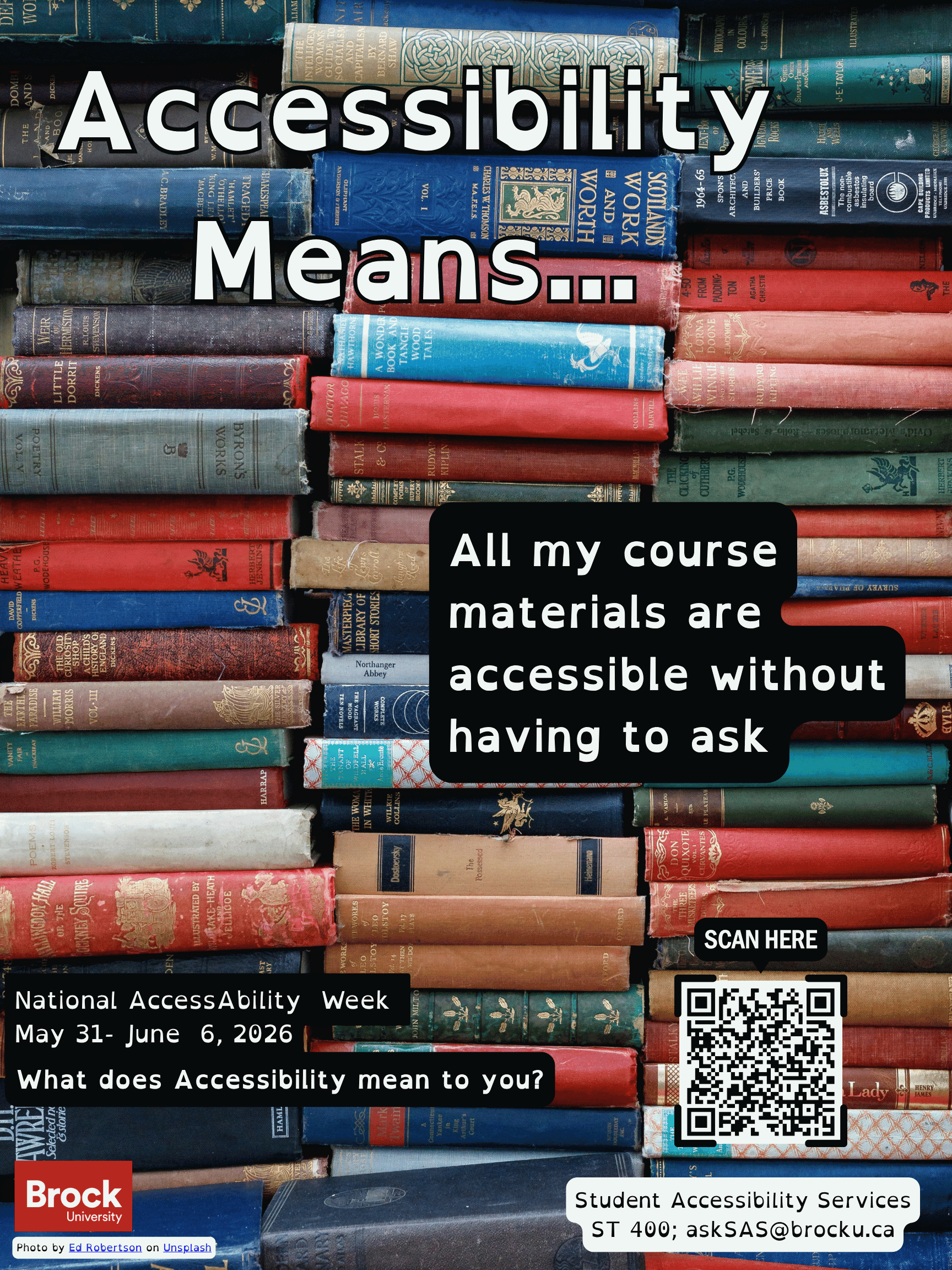
Accessible course materials help ensure all students can fully engage with lectures, readings, videos, tests, and online course content in ways that support their learning needs. Student Accessibility Services (SAS) supports accessible course materials through alternate format textbook services, assistive technology training and access, campus partnerships, and collaboration with instructors and departments across Brock.
Accessible course design may include screen reader compatible documents, alternate text for images, captioned and transcribed audio/video content, accessible Brightspace course layouts, advance access to reading lists for alternate format requests, support for recording lectures when required, and accessible virtual tests and quizzes that work with text-reader software. Together, these practices help create more flexible, inclusive, and equitable learning experiences for all students.
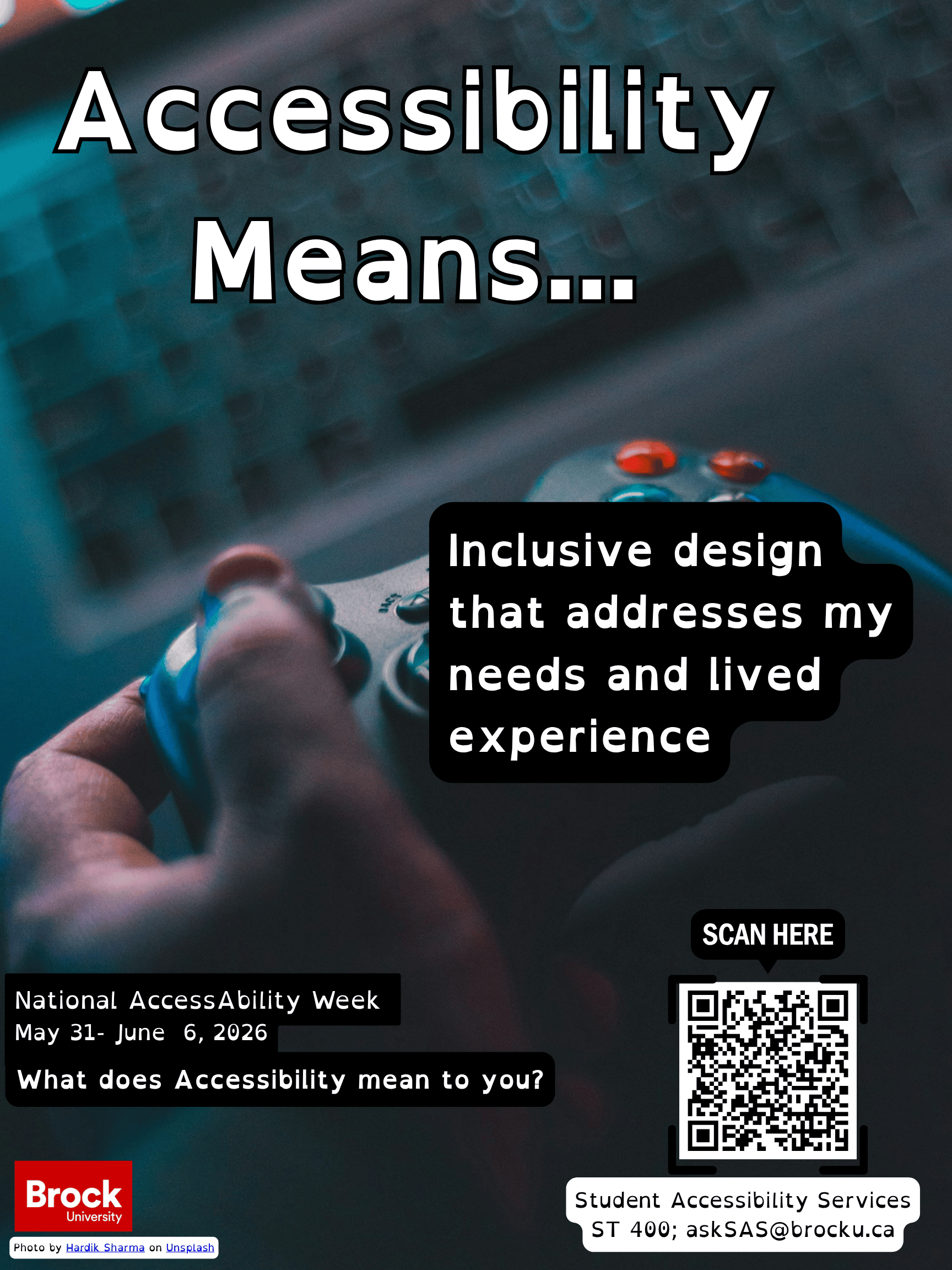
Inclusive design that addresses student needs and lived experiences recognizes that disability, accessibility, and learning are not one-size-fits-all. Students bring diverse identities, backgrounds, abilities, and lived experiences into the classroom, and inclusive design aims to create environments, services, technologies, and learning experiences that reflect and support that diversity from the beginning, rather than adapting only after barriers arise. SAS works collaboratively with students, faculty, campus partners, and the broader Brock community to help foster more inclusive and accessible experiences across academic and campus life.
Inclusive design practices may include offering multiple ways to participate and demonstrate learning, flexible approaches to communication and engagement, accessible physical and digital spaces, representation of diverse perspectives and experiences in course materials, and opportunities for students to share feedback about barriers they encounter. By centering lived experience and accessibility in the design process, institutions can help reduce barriers, strengthen belonging, and create learning environments where more students can fully participate and succeed.
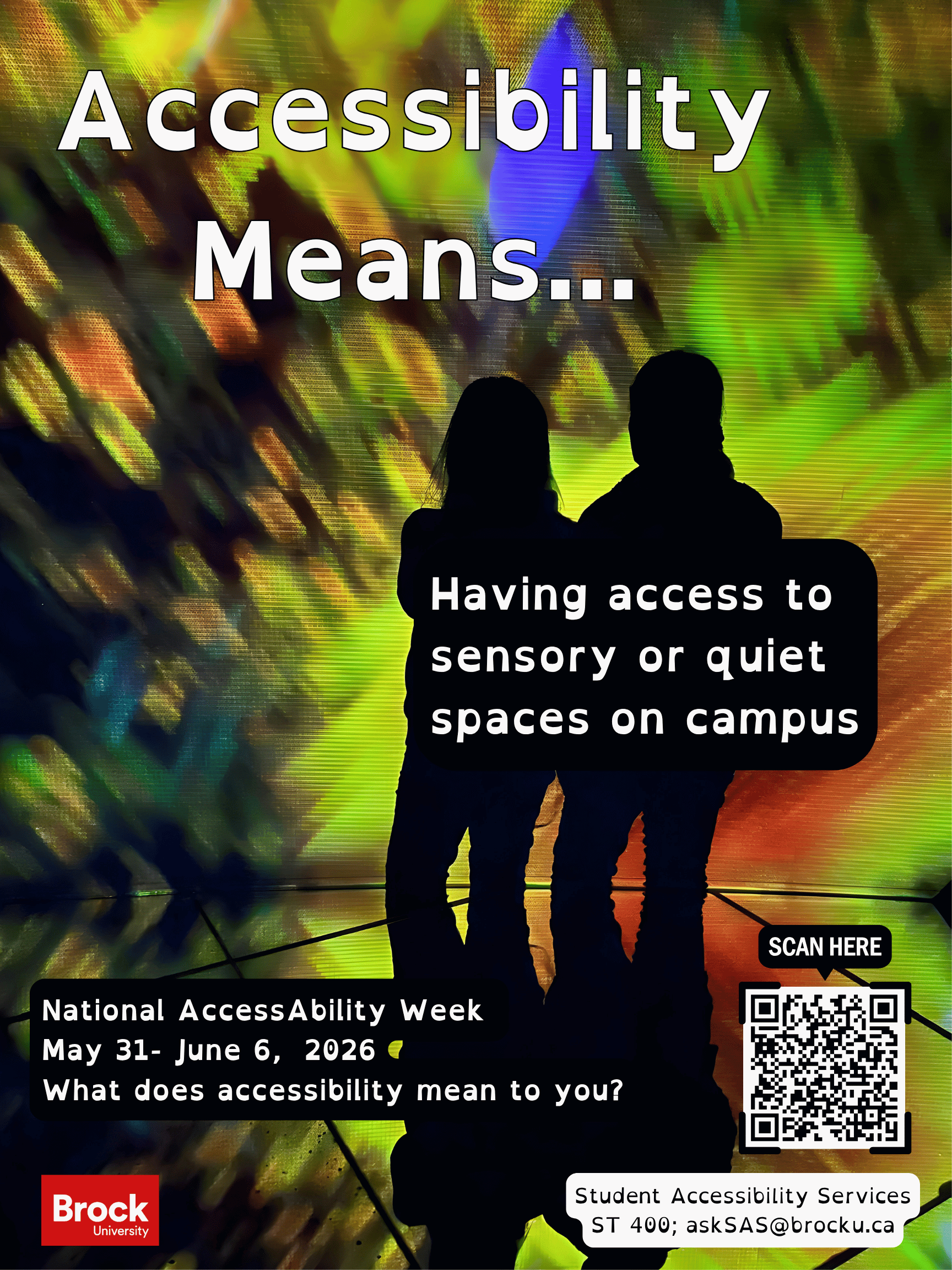
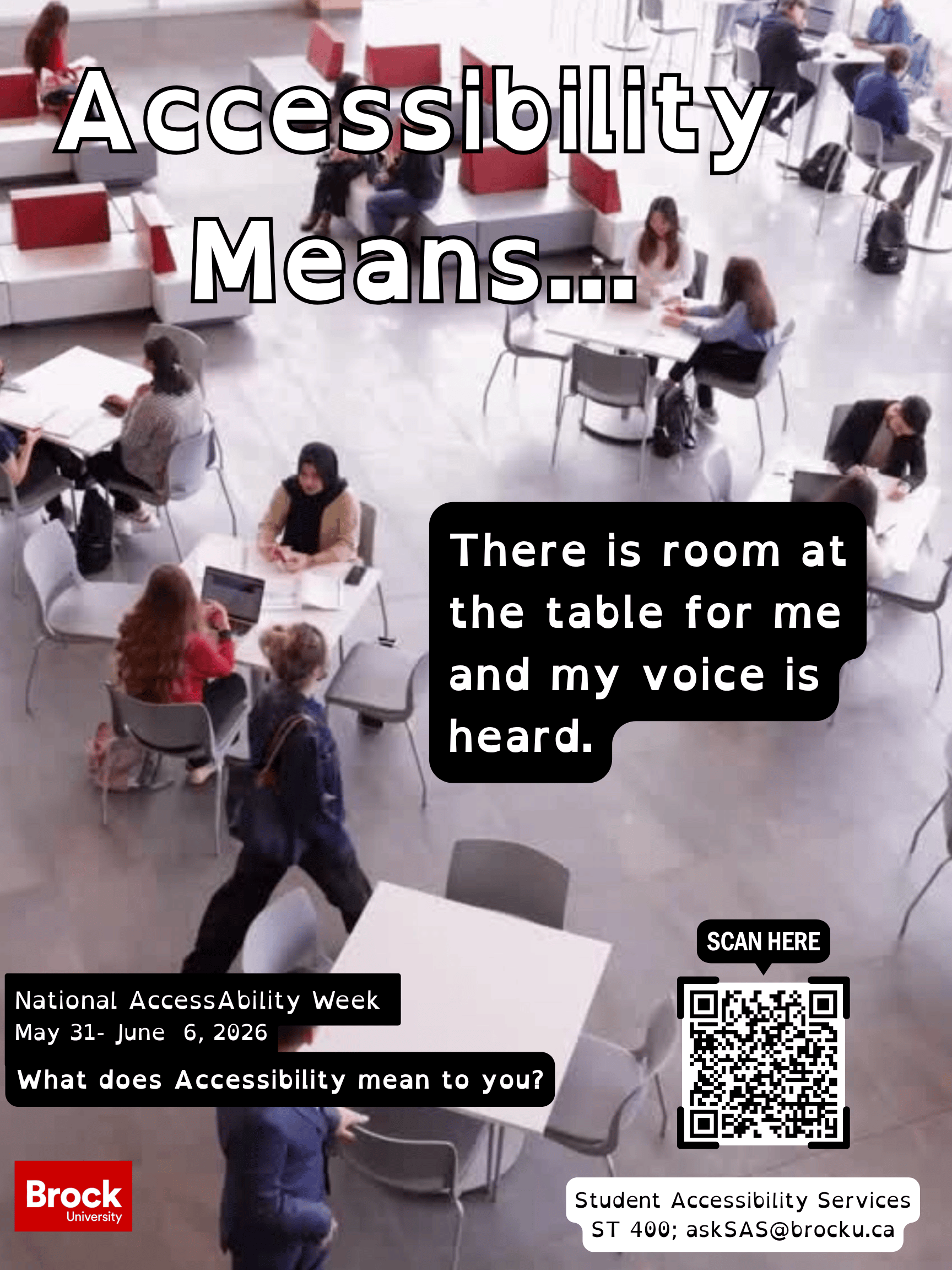
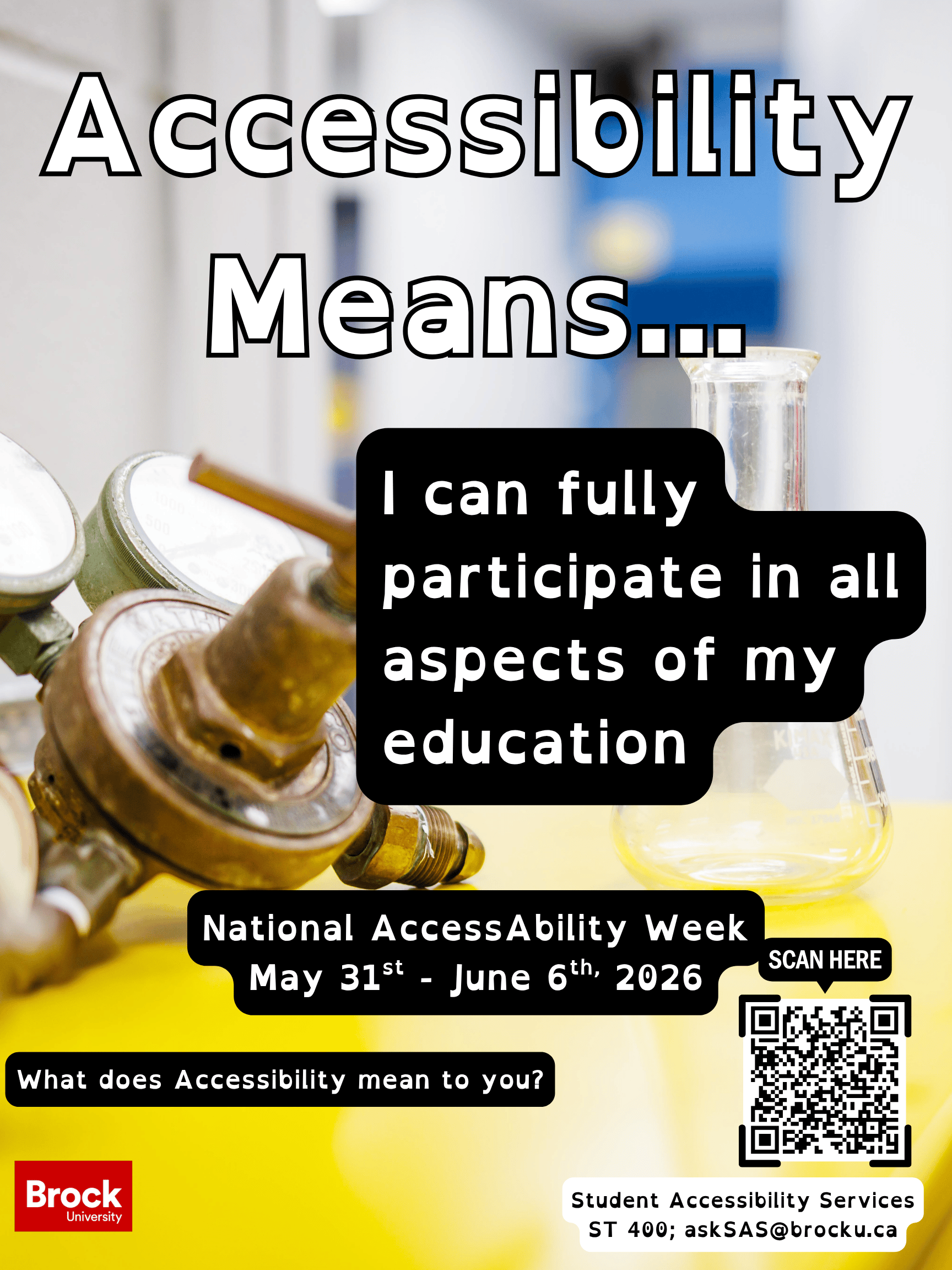
Accessibility means creating learning environments where students can fully participate in all aspects of their education. Inclusive education recognizes that students learn, communicate, and engage in different ways, and that accessibility should be considered from the beginning of course and program design.
Approaches such as Universal Design for Learning (UDL) help create more flexible and accessible learning experiences by providing multiple ways for students to access information, participate, and demonstrate their knowledge. Accommodations also play an important role in reducing barriers and supporting equitable access to education.
Student Accessibility Services (SAS) supports inclusive education through accommodations, assistive technology, collaboration with instructors and campus partners, and advocacy for accessible learning environments that support student success.
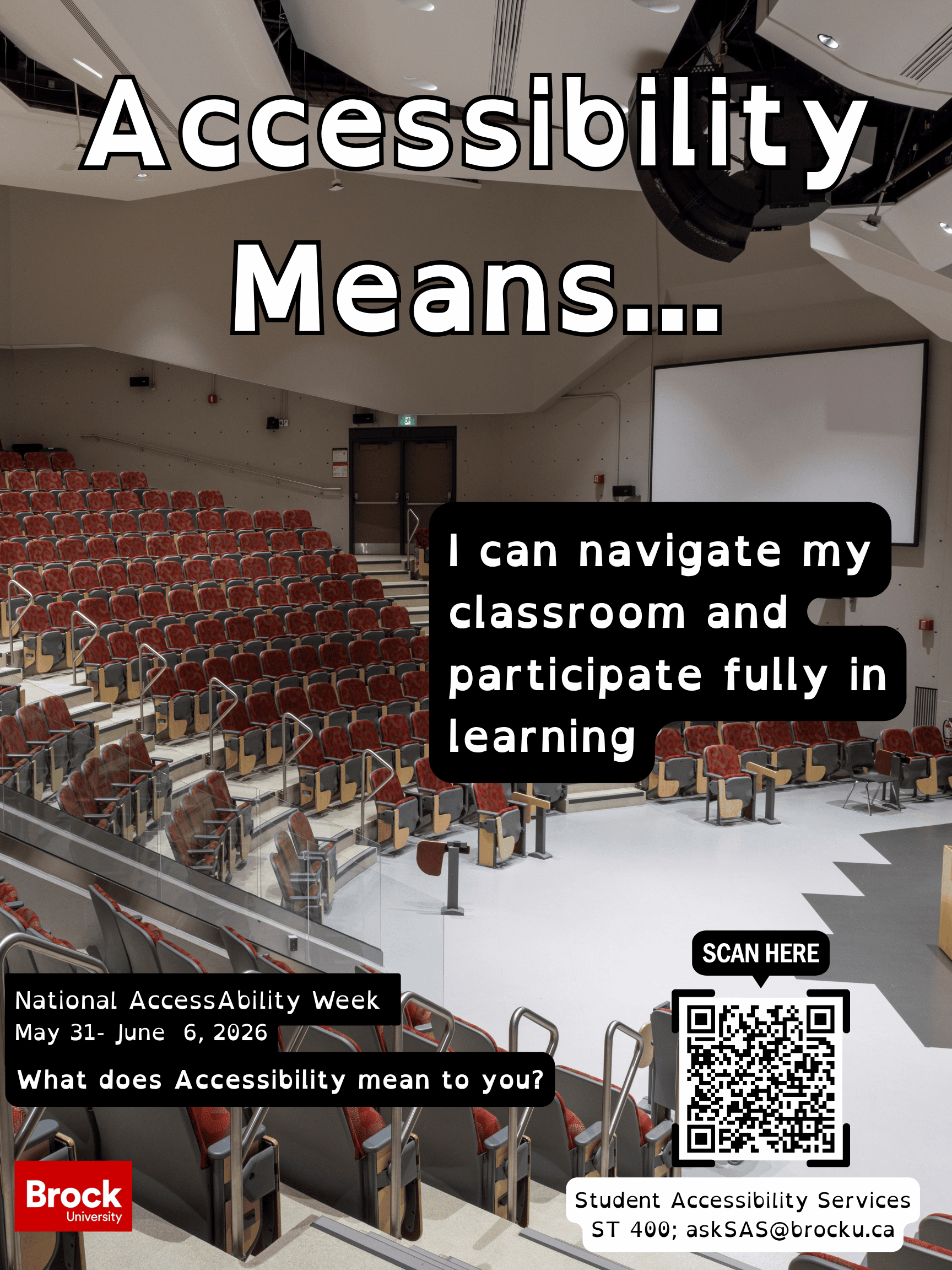
Accessible and inclusive classrooms consider both the physical learning environment and how students engage within it. Flexible and accessible spaces help support participation, collaboration, and learning for students with diverse needs and experiences.
Student Accessibility Services (SAS) supports classroom accessibility through accommodations, campus advocacy, and partnerships across Brock.
Examples of accessible and inclusive classroom practices include:
- Flexible seating and adjustable equipment
- Accessible lighting, sound, and captioning
- Access to charging stations and assistive technology supports
- Multiple ways to access information and participate
- Inclusive language and diverse course materials
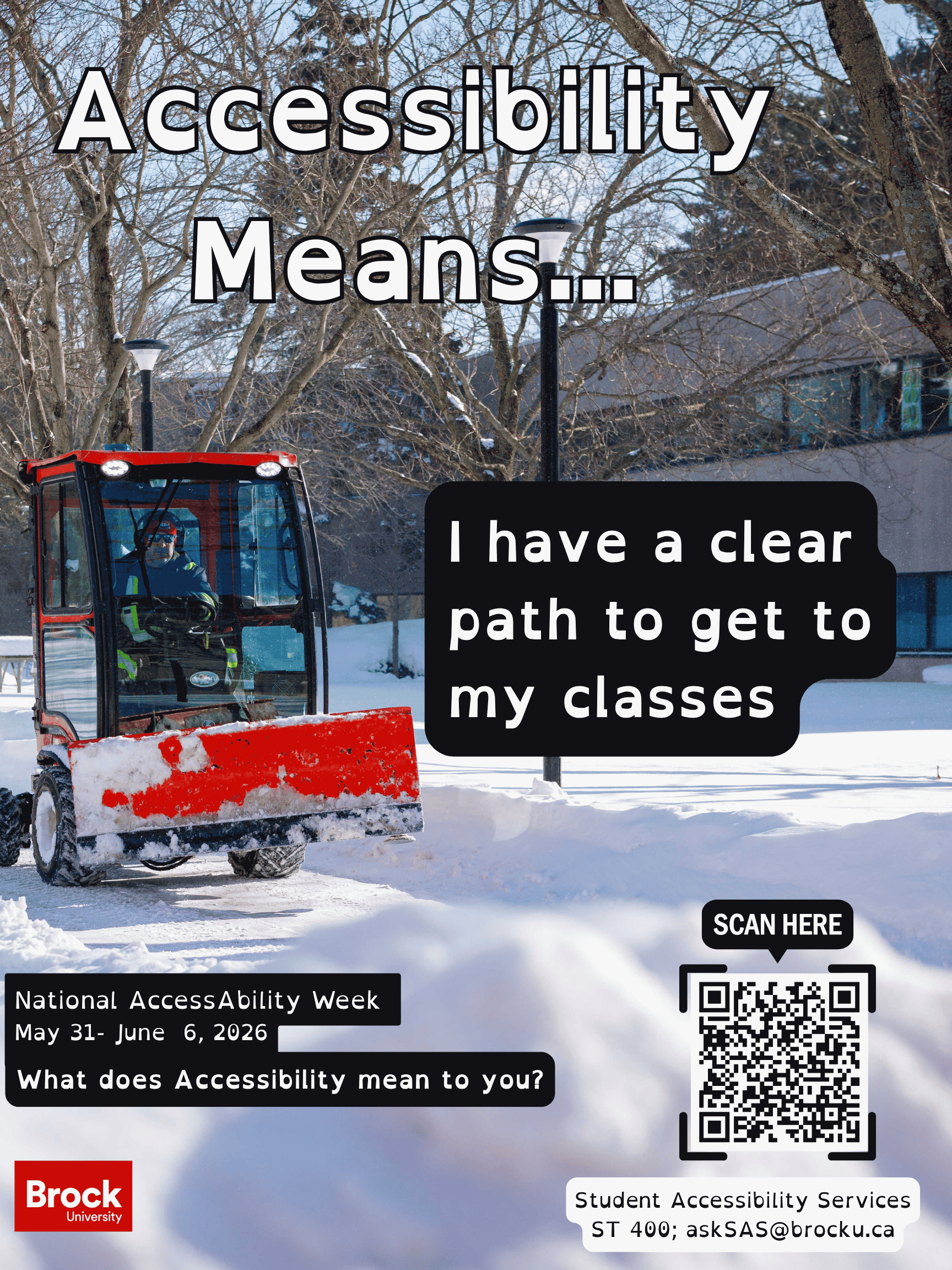
Navigating campus can be challenging for many students for various reasons. Accessibility features, including elevators, ramps, accessible washrooms, accessible entrances, accessible parking, tactile navigation strips on the floor, clear signage, and interactive campus maps, all support the different needs of diverse students.
But what happens when the elevator is out of service or sidewalks and paths haven’t been plowed after a snowfall? If campus is open, all students should have options for navigating the space safely and efficiently.
Student Accessibility Services (SAS) plays a role in advocating for accessibility on campus and supports students requiring classroom location accommodations for disability reasons.
Considerations for an accessible campus:
- Inclement weather policies that prioritize safety and access for all.
- Alternate routes clearly posted when elevators or accessible washrooms are closed for service.
- Regular accessibility audits on campus.