News

  • First Year Experience Blog: Madelaine Legault

    Blog Contributor: Madelaine Legault

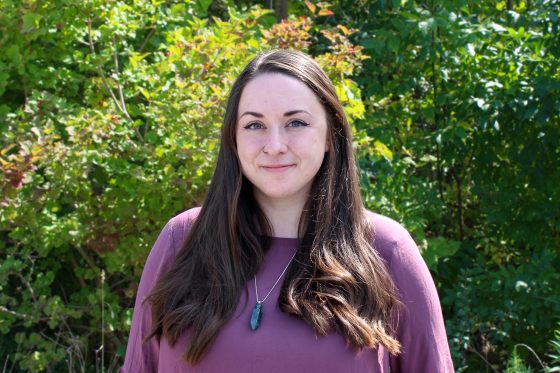
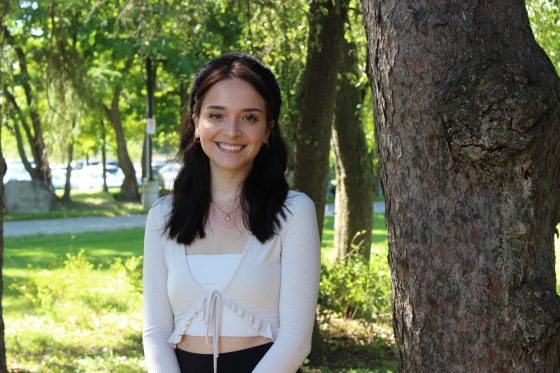
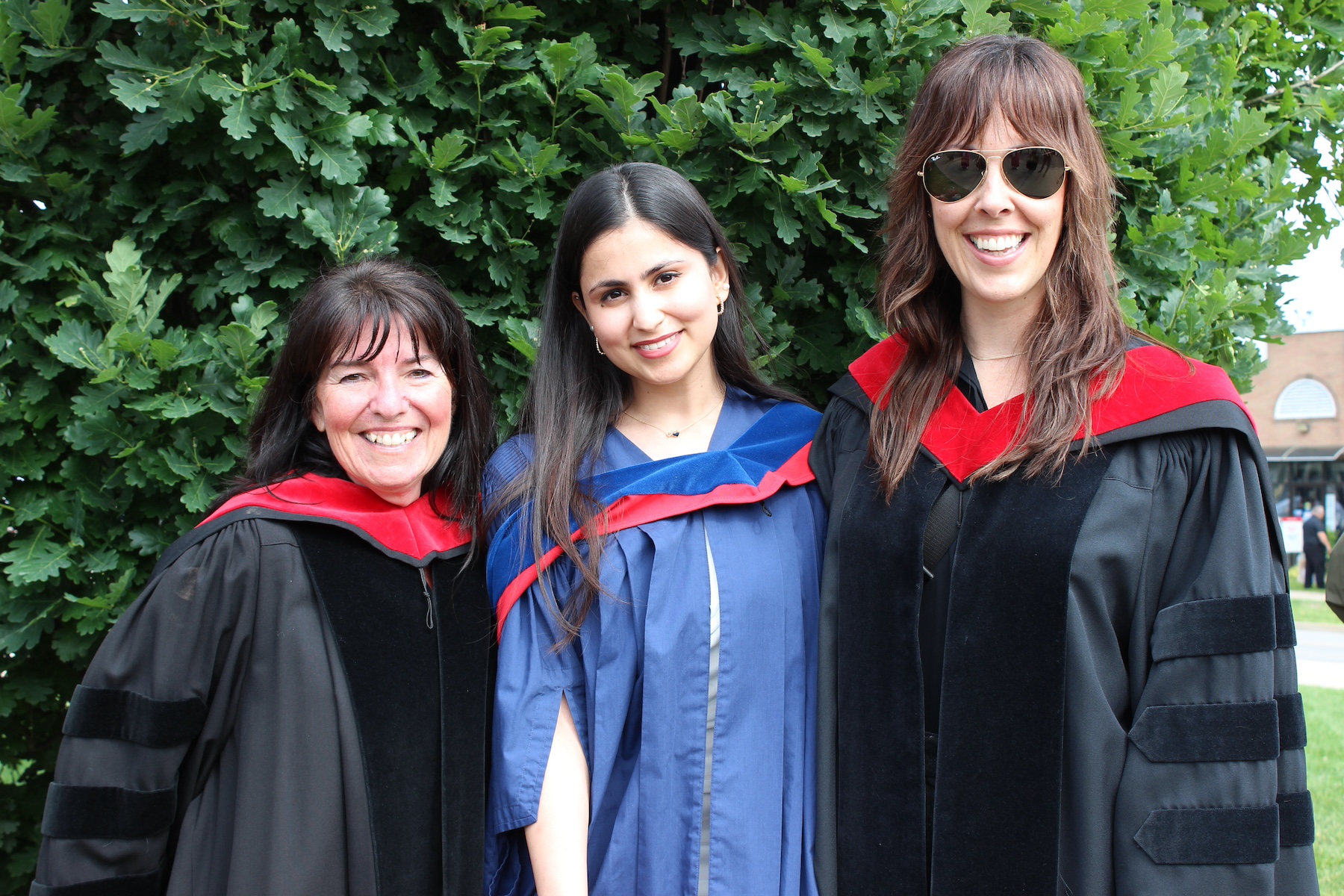
    Madelaine Legault standing in front of trees.

    Madelaine Legault is a first year PhD in Sustainability Science student. She is currently working under the supervision of Dr. Liette Vasseur and her research interests are in sustainable agriculture, food systems resilience, food security, environmental justice, and seed sovereignty. In this blog, Madelaine summarizes her experience in the first term of her PhD program.

    What inspired you to pursue graduate studies in environmental sustainability? 

    Well, there are many things that led me to apply for this program, and I think I could go on about these things for hours. But for one, for as long as I can remember, I have always loved gardening. I have fond memories of learning from my grandmother and mom in their gardens, so I have been learning about (and in) nature all my life. My undergrad and first graduate degreewere in gender studies, which is a transdisciplinary field like sustainability science. During these studies, I tended to focus on the concepts of food security and environmental justice. After I finished my first graduate degree, I went to work in the field—literally. I was lucky to work in community gardens, at non-profits, and on commercial farms. These experiences helped push me towards the subject of food security, justice, and sustainable food systems. When I was looking at programs that would support this line of research, the Environmental Sustainability Research Centre seemed like the perfect fit. 

    Can you describe a typical day in your program? 

    Every day is a little bit different than the last. Some days, I have courses to attend, where I engage in the theories underpinning sustainability science and the research methods that support it. Our class sizes are small, so I feel like we have a great chance to really engage with the topics and each other. Everyone comes from a different academic background, so a multitude of perspectives are involved in our discussions. These courses are also built to be interactive and experiential, so we are really getting a good mix of theoretical and practical knowledge. 

    When I’m not in class or doing course work, I am working as a teaching assistant and as Graduate Student Ambassador. I am also meeting with my thesis supervisor, Dr. Liette Vasseur, who is an incredibly inspirational tour-de-force. She has helped me apply for scholarships and conferences, and is showing me how to do a scoping review. I have so much to learn, and I know that she is there to help me get the most out of my graduate education. 

    What program experiences have had the most impact on your thinking? 

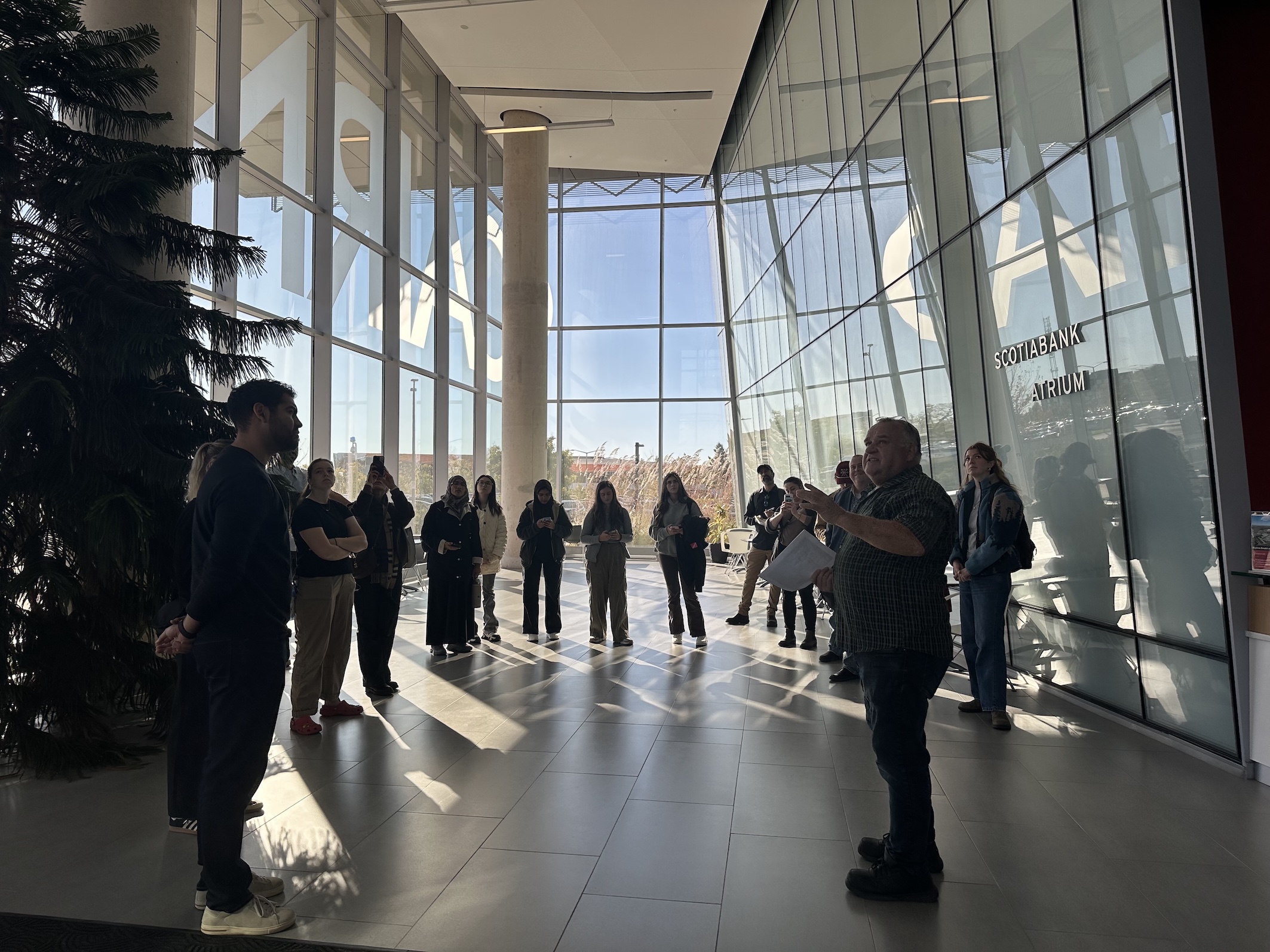
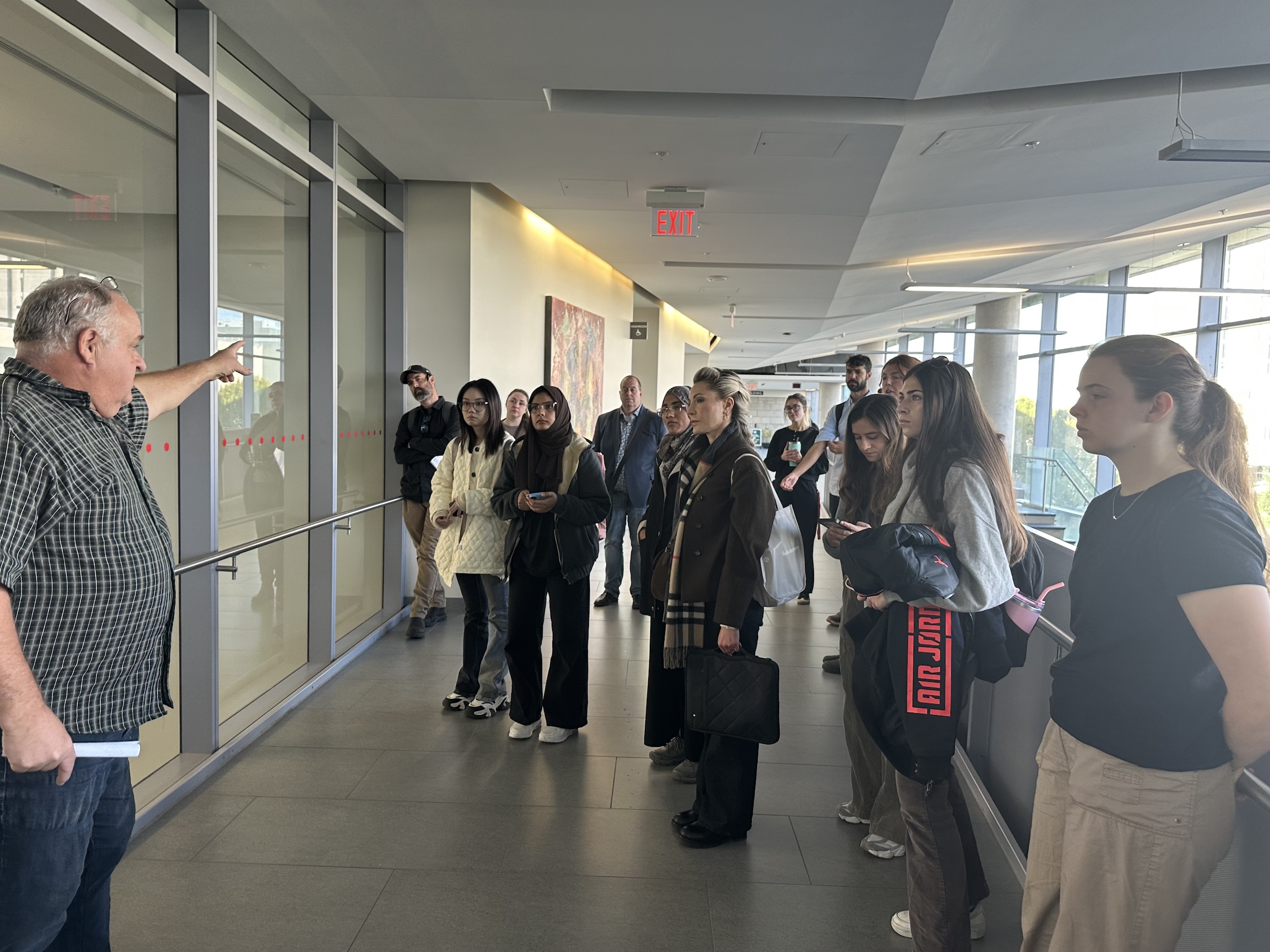
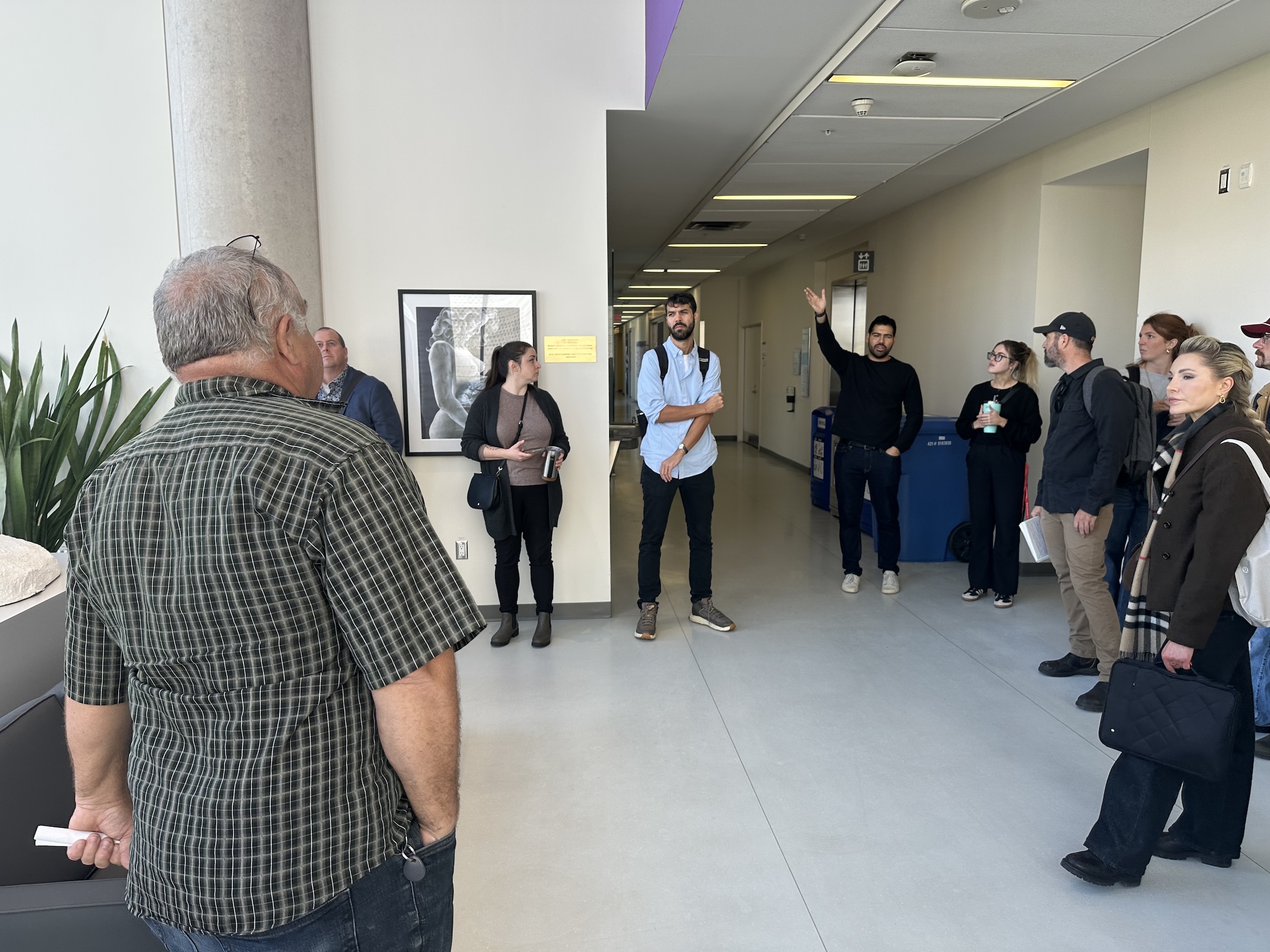
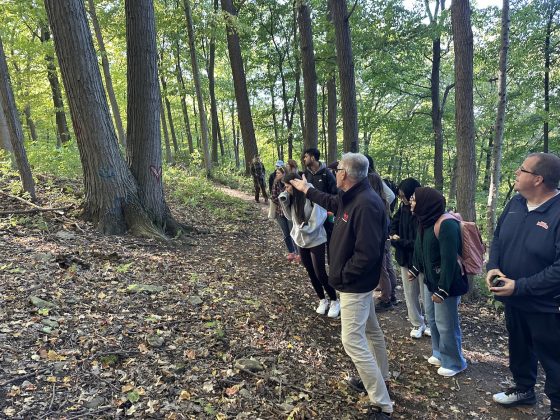
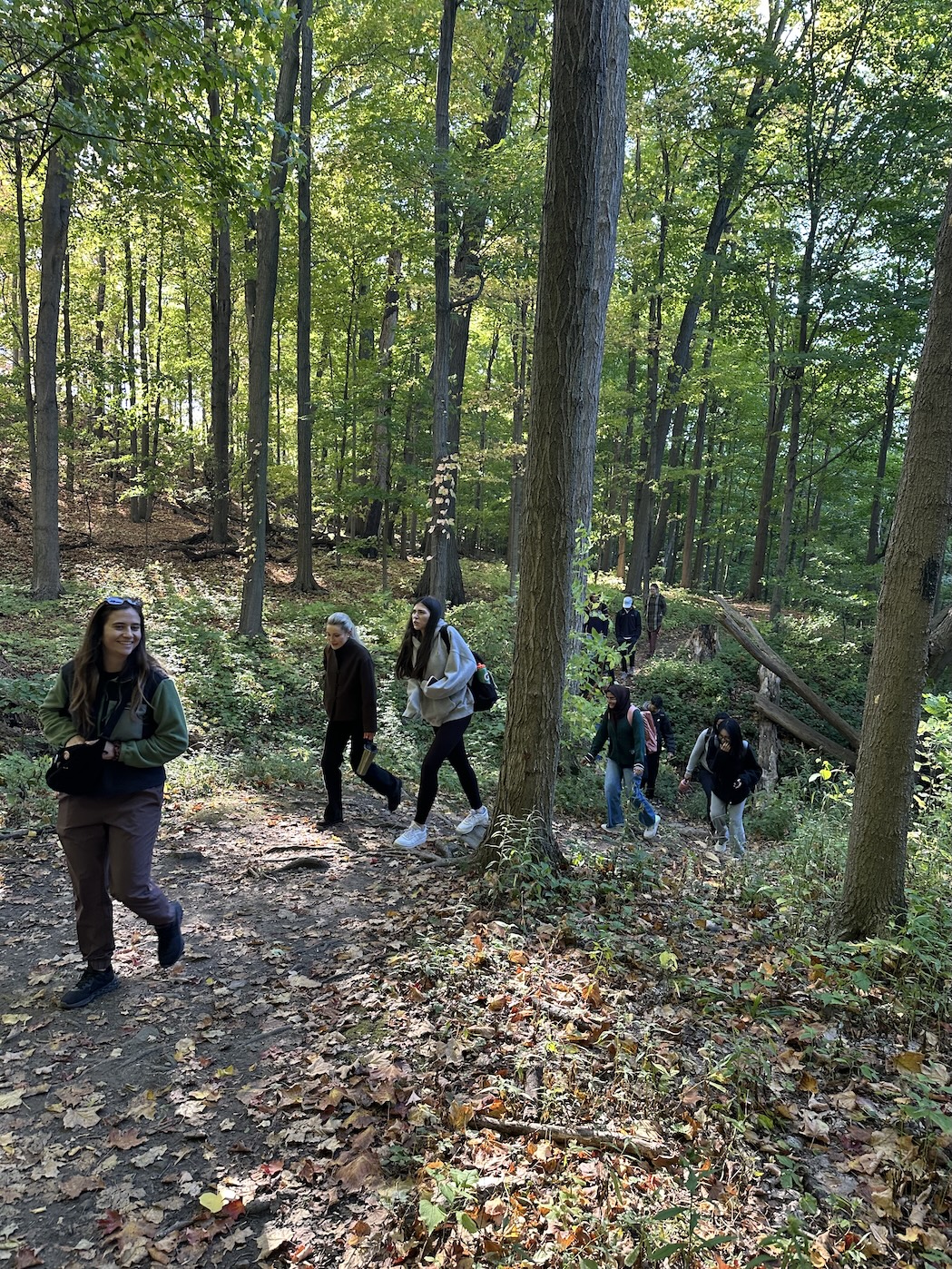
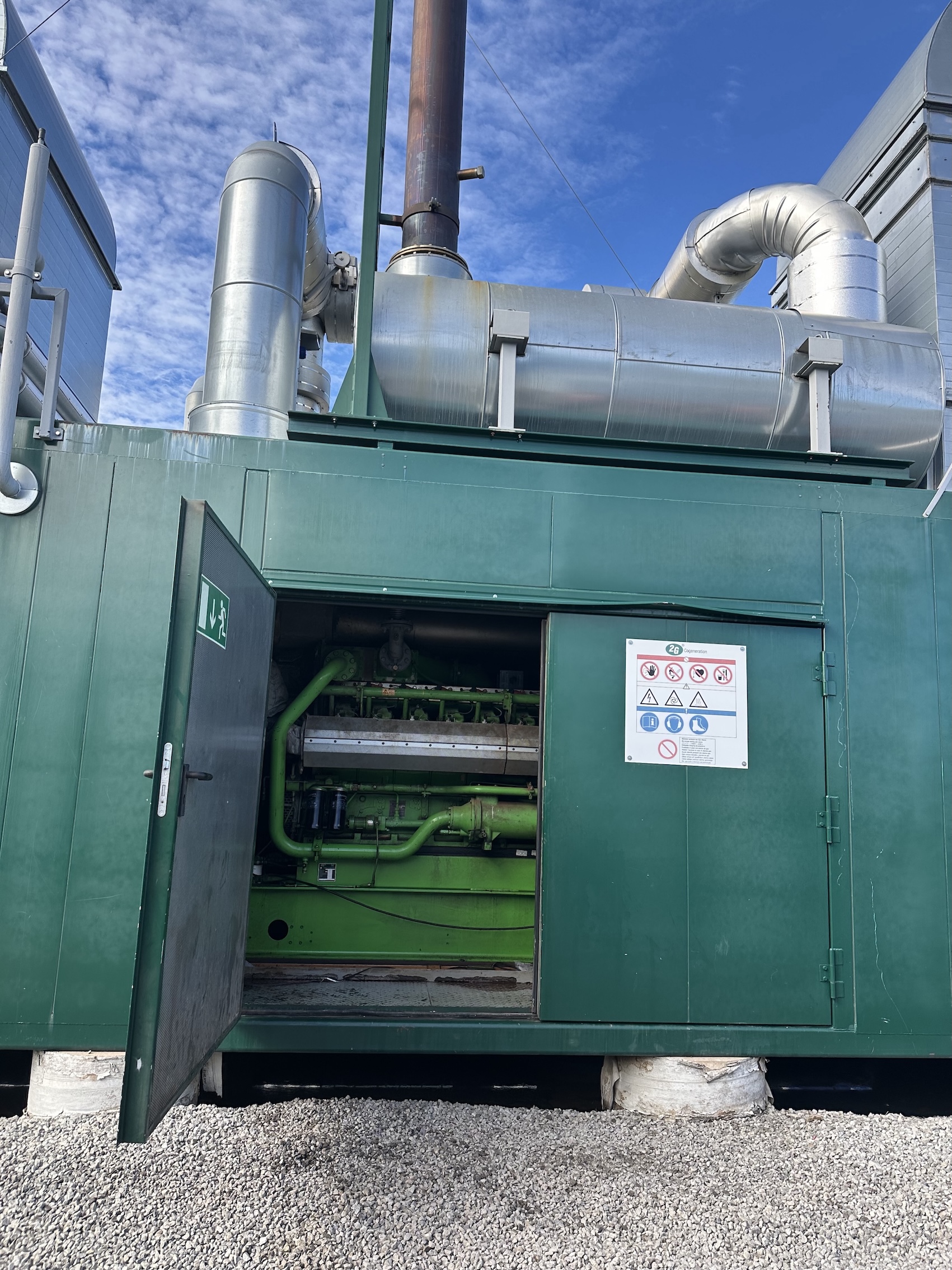
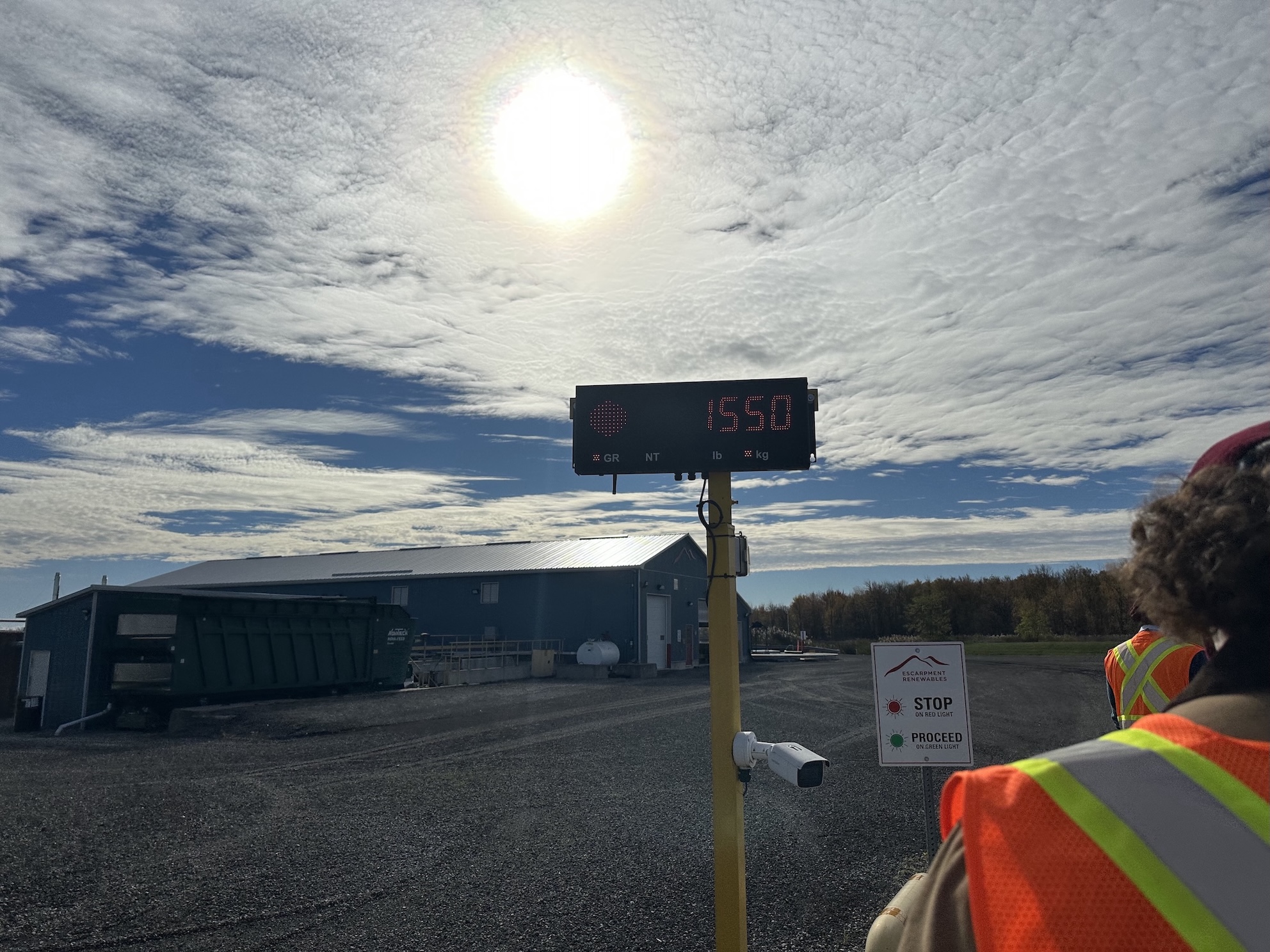
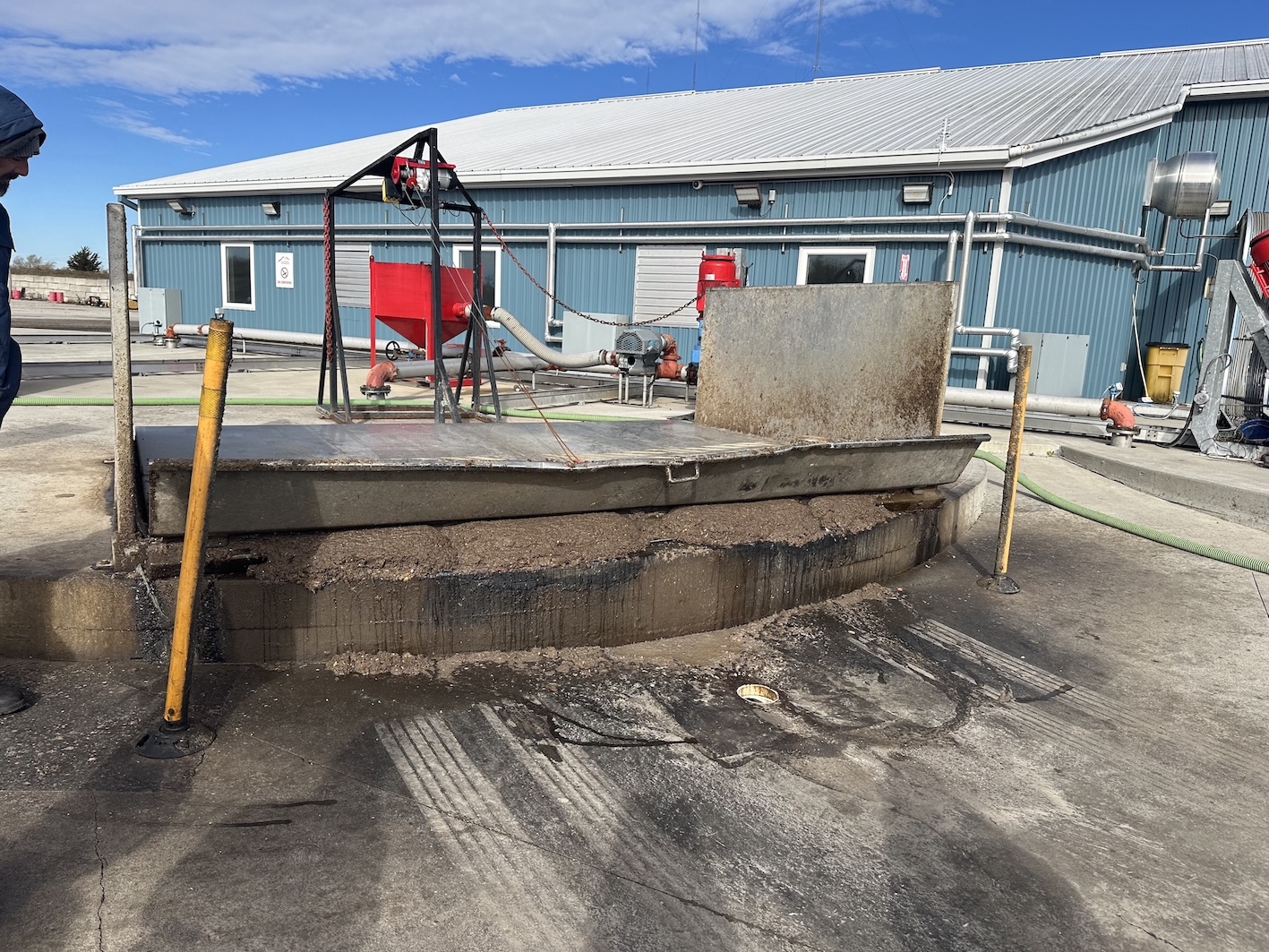
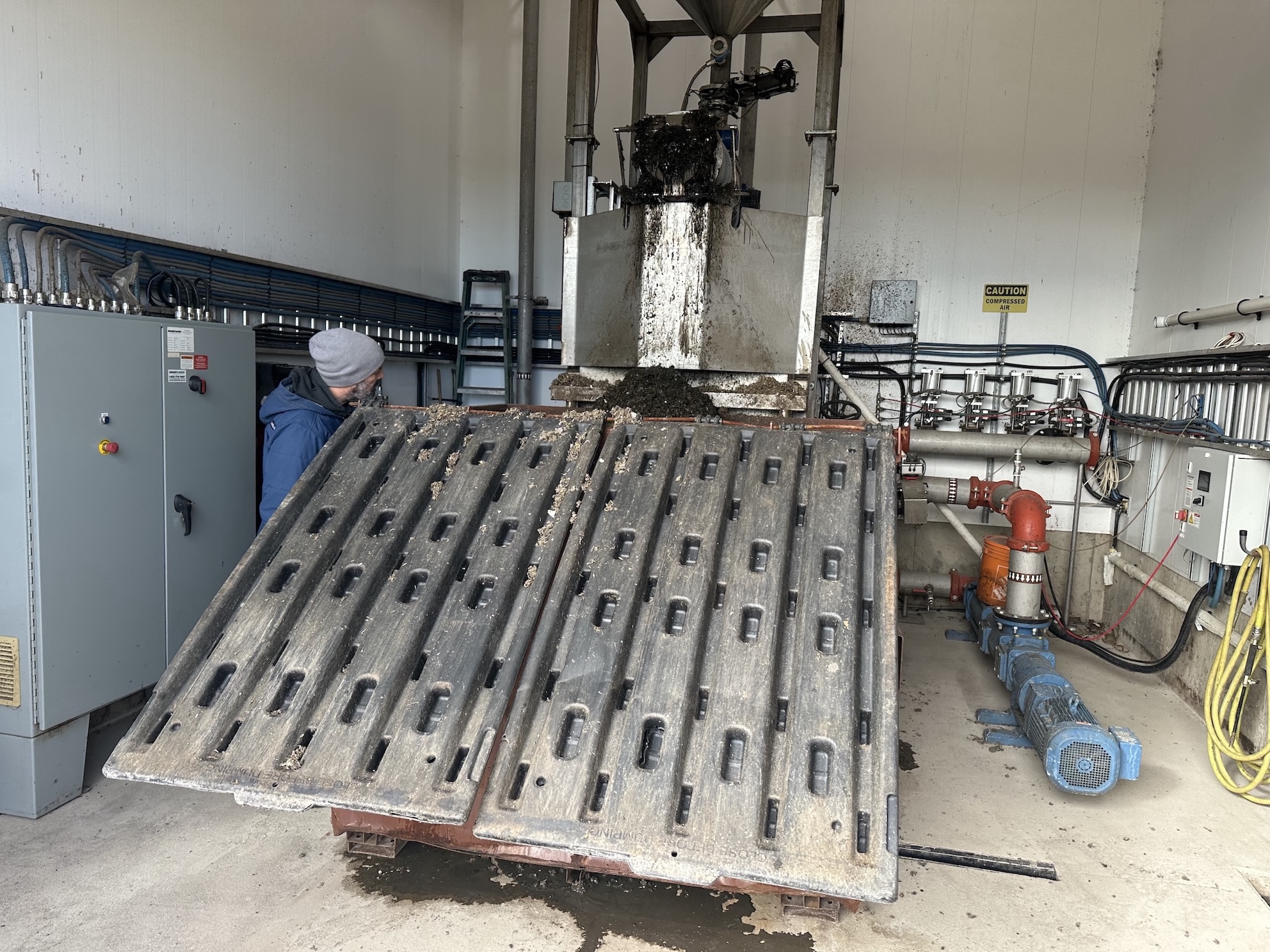
    The more experiential aspects of the courses have been helpful in broadening my understanding of the scope of sustainability science. We’ve done field trips to parks and natural sites undergoing restoration, to biogas facilities, and around Brock to study green building design, energy systems, and the Escarpment biosphere. So much of our education is built around engaging with our community and surroundings. 

    I also think that my fellow students have challenged me in the best ways. Our discussions inside and outside of the classroom have opened my eyes to the world of sustainability-related careers and endeavors out there, and to the multitude of perspectives that are necessary to unpack the complicated subjects of climate crises and solutions. I have learned to considerdiffering opinions as opportunities to grow my capacity for empathy and understanding. 

    What opportunities have you had to develop your research skills, whether through fieldwork, publishing your work, etc.? 

    When I started this program a few months ago, I doubted my research abilities. It had been a while since I was in school, and the only other “real” academic research I had engaged in was for my graduate degree. I had never written with the aim of publishing, and had a bit of imposter syndrome, thinking that this lack of publications meant I was not as good as my peers or ready to be in a PhD program. My supervisor, Dr. Vasseur, has been instrumental in building my confidence while building my skills as a researcher. She has not only opened doors for me to present my work but has guided me in building skills through practice. For example, I am currently writing a scoping review with her guidance, for which I am developing my own data collection and analysis protocol. Once I am done with this review, I will be able to use it as part of my thesis and can revise it for publication. I no longer feel like I am out of my depth and am excited for the new opportunities that I know I will encounter under her supervision. 

    How do you stay motivated when facing complex environmental sustainability challenges? 

    I feel as though I am constantly riding waves of hope and grief. I grieve the losses we face due to overlapping crises, and I grieve the future that feels perilous. I try to balance that grief by tethering myself to hope. To hope is a radical act in a world shaped by oppression and fear. Some of the ways I balance these feelings are by seeking out “good” news stories on achievementsin sustainability and environmental justice, or studies on successes in the struggle for a more sustainable future. I also look to art and poetry to balance these feelings. Mary Oliver always seems to have the right words.  

    Ultimately, I am most motivated when I feel connected to others who are overwhelmed like me and who are trying to balance these feelings, too. We are each others’ tethers to hope. I look at the wonderful people in this program and know that we are connected in this feeling, and are all working on solutions—and that is absolutely cause for hope. 

    What advice would you give to someone considering graduate studies in sustainability science? 

    Do it! Please go for it. I hesitated for years, but when I finally applied and entered this program, I knew it is exactly where I need to be. We need all hands on deck, and as many perspectives as possible to address this wicked issue. Take what you are good at, what you are passionate about, and focus it on helping your fellow creatures weather this storm. You have so much to offer. We welcome you to the fight! 

    In terms of practical advice, I say make connections when you can. Attend workshops, have challenging discussions, introduce yourself to others in the field, apply for committee positions, and write as much as you can (even if it is in the notes app on your phone). 


    Categories: Blog, Program Reflections, SSCI Student Contributor

  • First Year Experience Blog: Kinza Qureshi

    Blog Contributor: Madelaine Legault

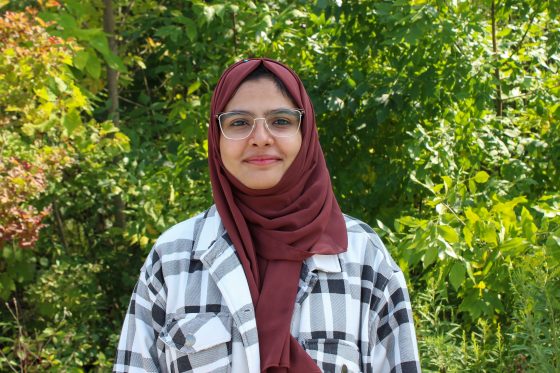
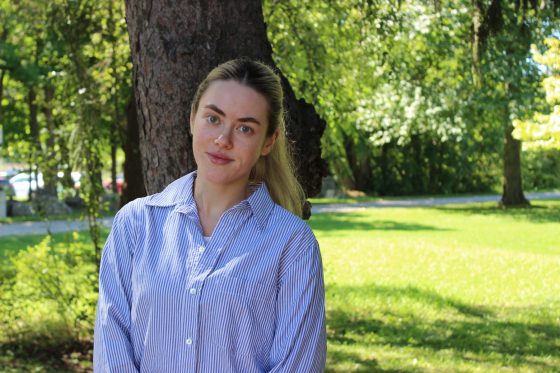
    Kinza Qureshi standing in front of trees.

    Kinza Qureshi is a first year student in the thesis pathway of the Master of Sustainability program at Brock University. She is working under the supervision of Dr. Marilyne Carrey and her research interests are in community resilience to climate change through nature-based solutions, sustainable development, and planning. She recently spoke to PhD in Sustainability Science student and graduate ambassador Madelaine Legault about her experience in her first term of the SSAS program.

    What inspired you to pursue graduate studies in environmental sustainability?  

     I decided to go into the field of environmental sciences for my undergrad, because in my country, I had seen a lot of issues regarding the environment, like flooding. There were not manyagencies in my country focused on the environment. There were a few that were working, but they were not getting the funding for that, so I decided to choose this pathway to help my people and to learn. I was studying environmental sciences broadly, and now I’m narrowing down to sustainability, because that’s the future. 

    How would you describe your typical day in the program? 

    Lately, I have been super busy with assignments, coursework, and TA work, so my days are honestly packed. I am also starting to work on planning my thesis with my supervisor. Right now, we are working on a topic. My focus is on the climate crisis and the communities that are directly affected by it. I want to build an empathy element by understanding their experiences, and I’musing geospatial data, remote sensing, and augmented reality to collect and present the impacts.  

    How do you think your research will contribute to sustainability science? 

    I had not previously considered the part that empathy plays in sustainability science. But now I realize that if we look at empathy and the way people have emotional connections with the subject, it could be an opportunity to engage with large audiences to let them know what the future would look like if we were all on the same page. It can shift people’s thinking towards sustainability and to work for the environment. Whenever we want to change something, we as a person need to change ourselves. And one thing that we all need to change is our empathy for nature and for the next generation. We are the last generation that has a chance to think about the future. We have to think about it. So, I think that empathy element in my research would look at the psychological connections to nature. And it could help bring a change in how we think of our future. 

    What program experiences have had the most impact on you? 

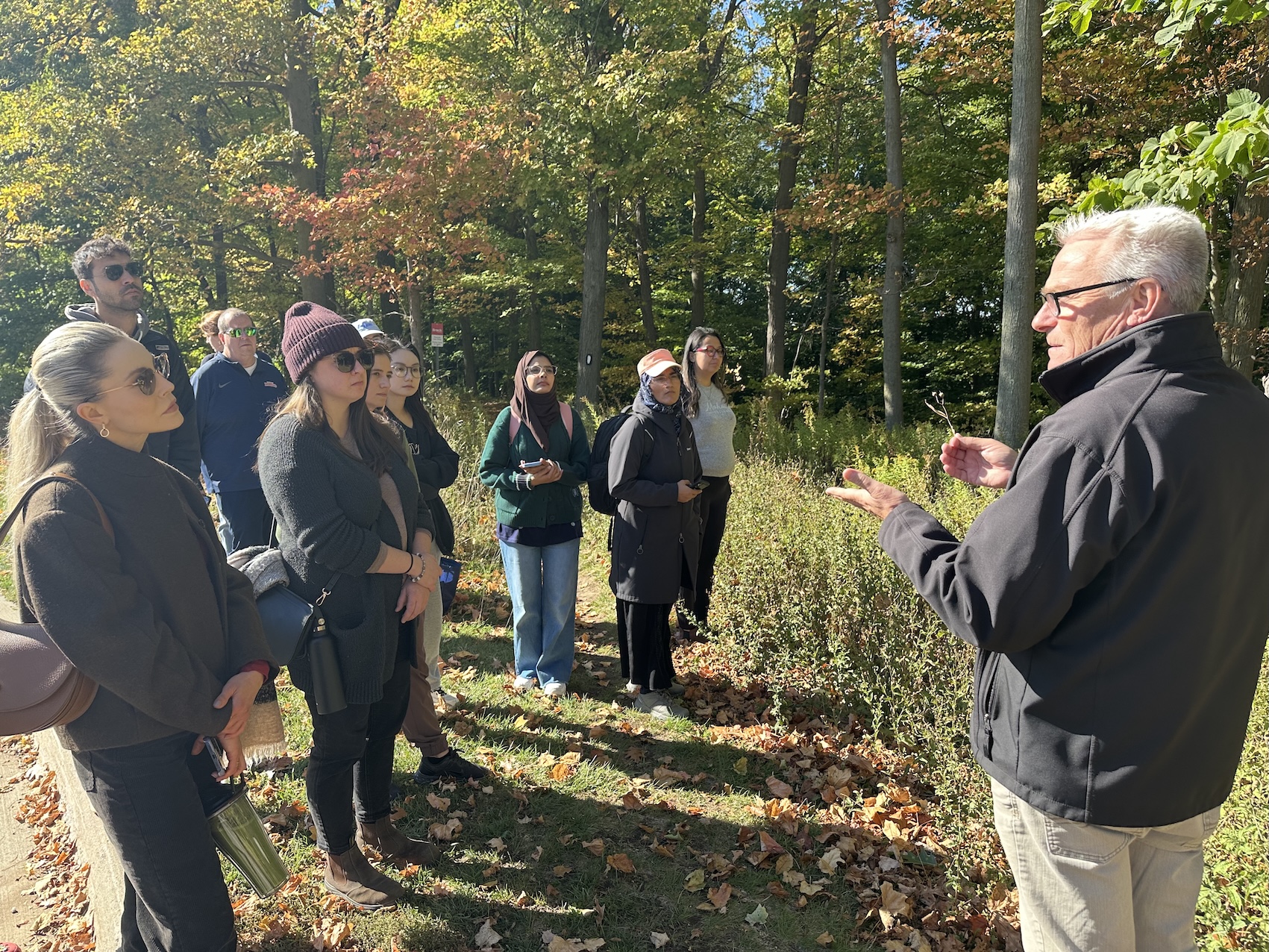
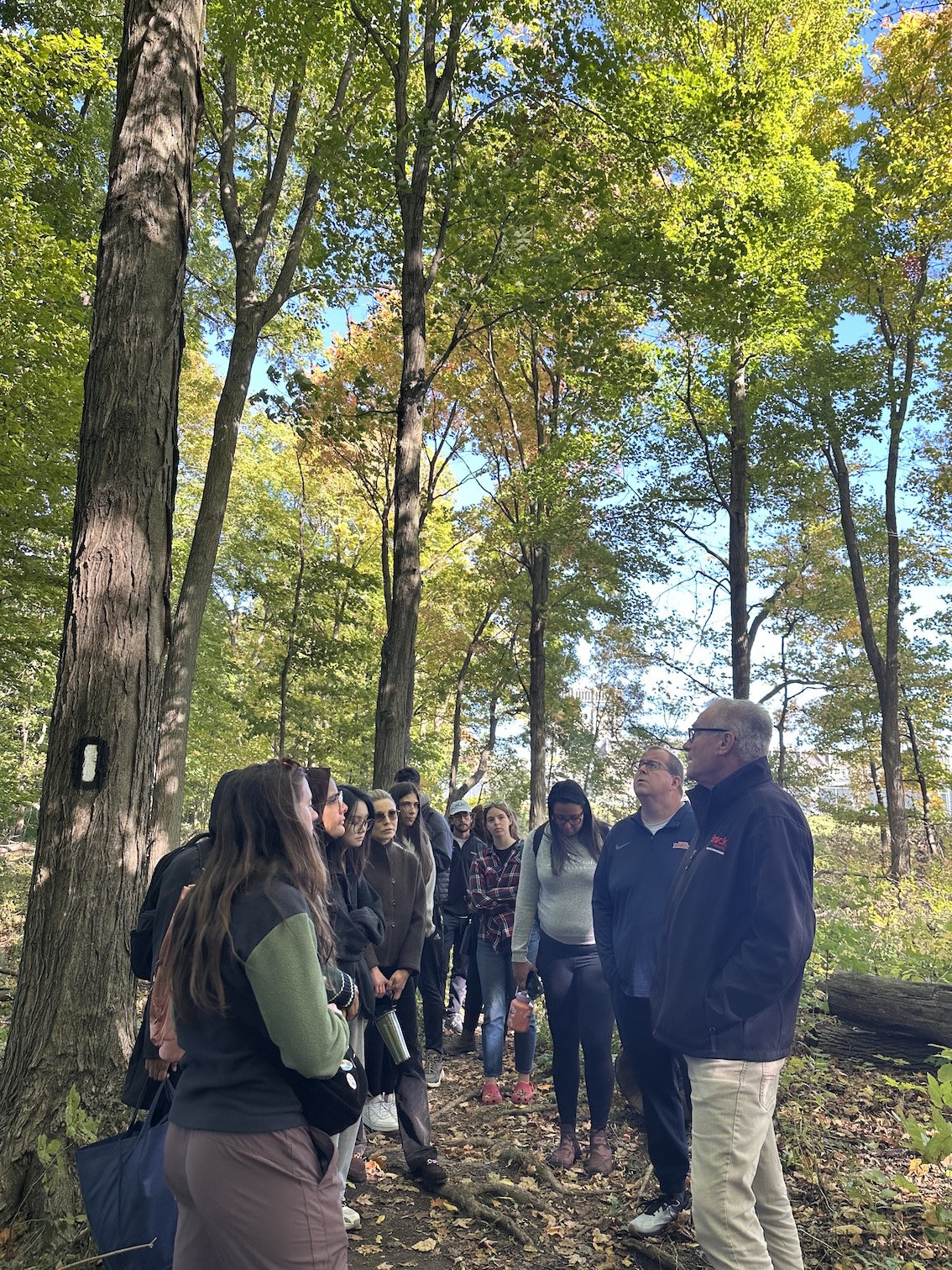
    Oh, I would say the field trips and like the “talking tree” project we are working on right now in SSAS 5V82 have really opened my mind. In my undergrad, I always wanted some practical experience, rather than just theory. So, these are opportunities for a different kind of learning rather than just pure theory. It’s a lesson that always stays in your mind. Like the tunnel tour we did, you can see that there’s a whole system underground that you didn’t know about before. 

    How has the program faculty and your peer group supported your academic journey? 

    My supervisor, Dr. Marilyne Carrey, has helped me a lot. She always encourages me to go to conferences and seminars, and she shares different opportunities inside and outside the university. She sees me and listens to what I want for my research. That’s really helped me because I’m from a different background, I have a different language, and I have to think before I speak. So, it’s really difficult for me, but she helps. Other than that, I would say my classmates are so friendly and help me whenever I need help. I just go and ask someone, and they’re always there to help.  

    How do you stay motivated when facing or when thinking about these complex and often very overwhelming crises? 

    One thing that motivates me is the idea that what I am facing today, I don’t want my future people to face. I have a connection with them. I don’t want my child to grow up in a world where they have no clean air to breathe, where they have issues like flooding and climate crisis or food insecurity issues. I think of future generations.  

    What advice would you give to someone considering graduate studies in sustainability science?  

    Oh, I always tell people to join this field because it’s growing and it’s the future. There are doctors that specialize in human beings, and people specialized in engineering, but students of the environment specialize in both nature and humans. I think this is an opportunity that is growing, and I would suggest that people come and explore. They would love this field! 

    Categories: Blog, Program Reflections, SSAS Program, SSAS Student Contributor, SSCI Student Contributor

  • First Year Experience Blog: Makenna Kollo

    Blog Contributor: Madelaine Legault

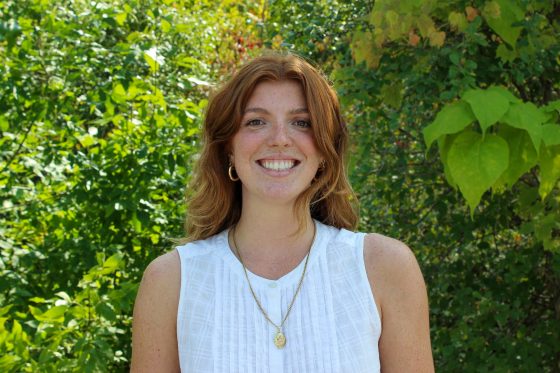
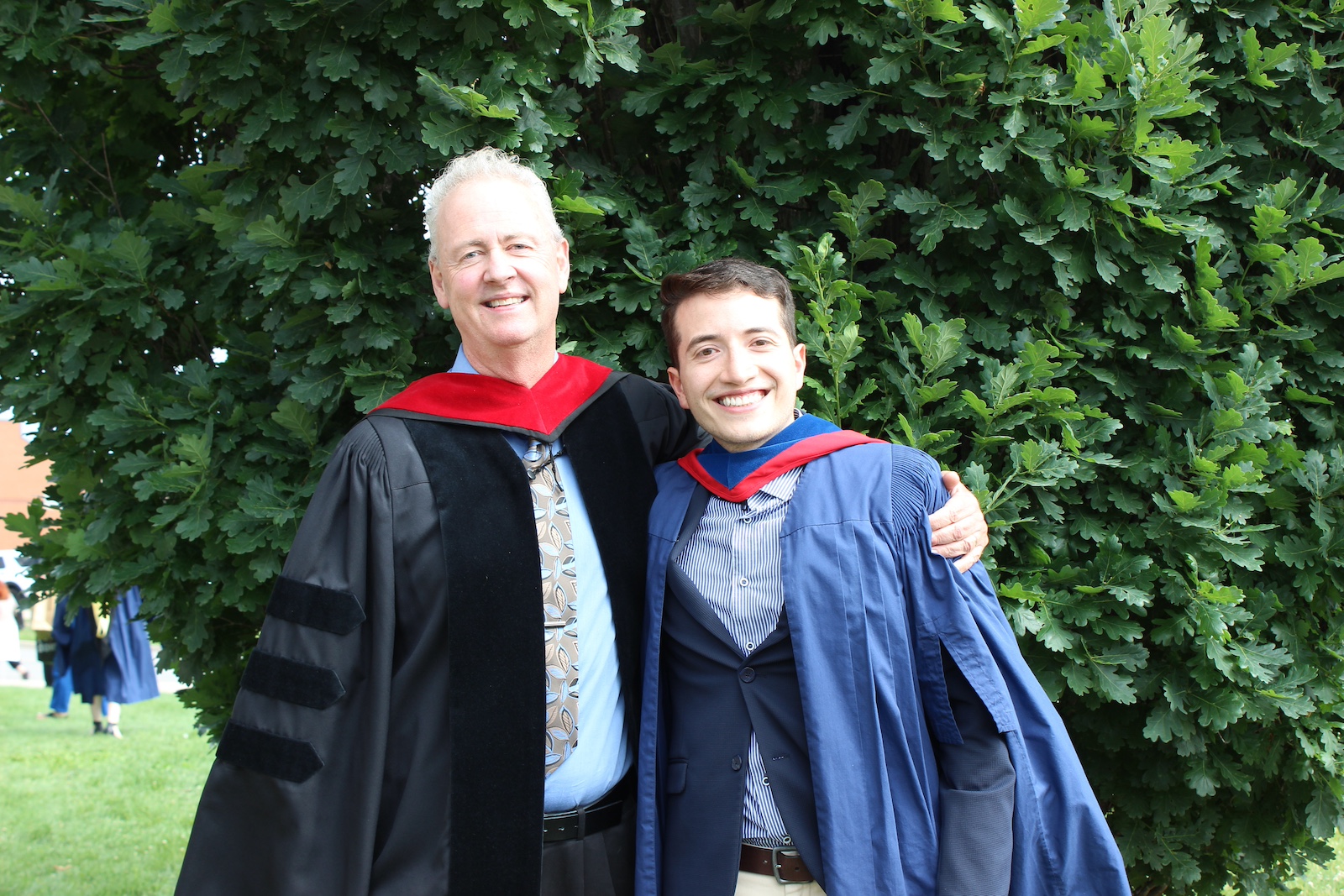
    Makenna Kollo standing in front of trees.

    Makenna Kollo is a first year student in the course-based pathway of the Master of Sustainability program. She recently sat down with PhD in Sustainability Science student and graduate ambassador Madelaine Legault to share her experience in the SSAS program as she finishes her first term.

    What inspired you to pursue graduate studies in environmental sustainability? 

    I completed my Bachelor of Recreation and Leisure Studies at Brock University, and through that, I did a lot of outdoor educational courses that were centered around our relationship with the environment. Climate change and climate action have been very important topics, especially with younger generations, and it was instilled in us that you cannot have a relationship with an environment or a natural space that no longer exists. So, my inspiration was trying to preserve, maintain and sustain environments for future generations to also have the same opportunities that I had as a child, like going to summer camp. I feel very passionate about it. I feel as though I can make a change. 
    How would you describe your typical day in the program?  

    I have four classes this term, so that leads me to be on campus three days a week for structured activity.  On Mondays, I have a biology course at night. Typically, I will do my readings and get everything done on Mondays and then go to class.  On Tuesdays and Thursdays, I also have classes. Those days involve me generating conversations with other students and faculty to broaden my perspectives and learn more about sustainability topics that are not within my scope of interest but expand my knowledge through conversations with my peers. And then I typically move on to a group meeting or work with my peers to work on projects together. It’s crucial in this role to try and think of other perspectives on sustainability. Overall, my days involve a lot of collaboration with faculty, staff, students, as well as other partners (both on and off campus) involved with the program. For example, this term we are working with Facilities Management at Brock and partners at Niagara Parks Commission. 

    What program experiences have had the most impact on you? 

    It almost feels like we’re doing an internship of sorts with different organizations in our courses with more experiential learning components. For example, right now we are working with the Niagara Parks Commission in SSAS 5P02 with Dr. Lina Taing. It feels as though we’re working directly with them towards a goal. Having the opportunity to work directly with an organization like that opens so many doors. It’s something I can speak about in interviews and in job applications. 

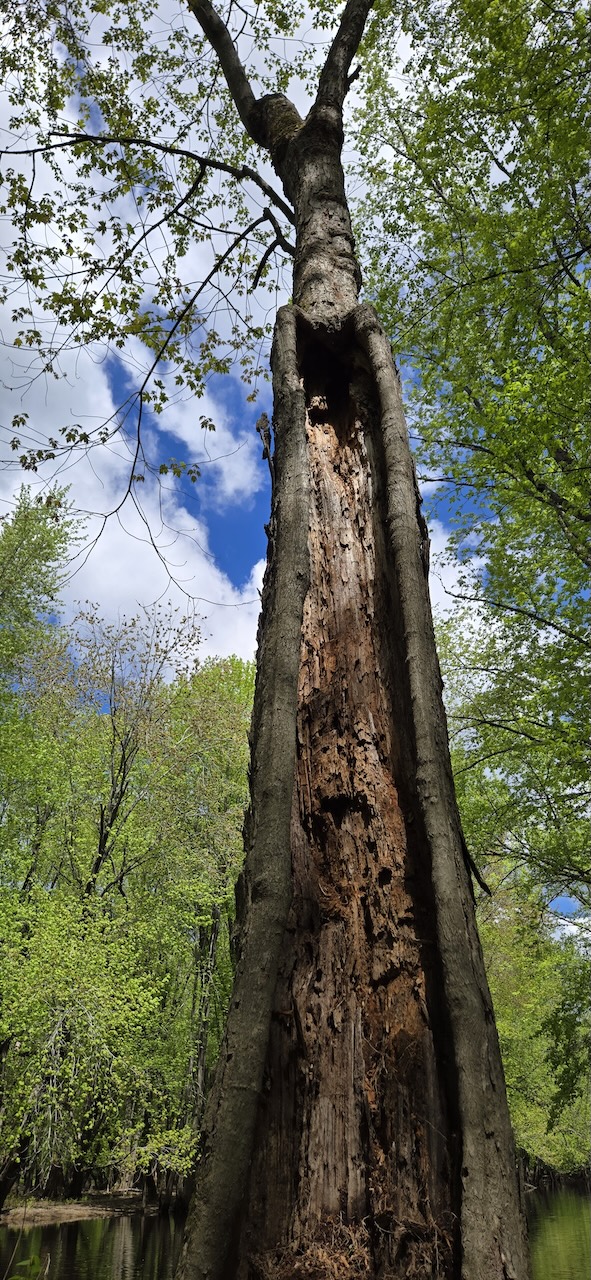
    I’m also thoroughly enjoying SSAS 5P82 with Dr. Marilyne Carrey. It is completely changing my perspective on what nature-based solutions are, because we are diving feet first into what they could be, rather than just learning the theory while sitting in a classroom. It is fully experiential, and she has developed this course where it is all to the beat of your own drum. We work collaboratively as a class towards a final goal. For example, we’re creating a “talking tree” tour right now. We’re choosing a tree, and we’re explaining how it’s impactful on the environment around it, and then also how we’re connected to the tree. We’re also talking about why you should care about it, and why it’s important. My tree is the eastern white pine, which is typically found within eastern Canada, and it is the provincial tree of Ontario. I have a tattoo of it, I’m super into it! 

    How has your understanding of sustainability science evolved since starting your graduate studies? 

    I’m embarrassed to admit it, but I was a small thinker before I came into the program. I thought of sustainability strictly in terms of environmental sustainability in natural landscapes. I was thinking of forests, mountains, fields, things like that. But for example, in one of our courses, we’ve done a tour of the energy system on campus, and through that I was able to understand that it’s not just cost effective when you turn off your light bulbs or your light switches or unplug something, it’s actually better for the environment.  

    In our courses, we talk a lot about international implications and sustainability sciences in our courses. It takes my understanding from a local to a global level. It’s broadening my horizons.  

    How has the program faculty and your peer group supported your academic journey? 

    There’s not a single time that I speak to my professors when they don’t have a smile across their face.  They are so welcome to new ideas about the program, about how they teach, even about what you have to say about a topic, which really makes it more intriguing and appealing to go to class. They are guideposts that I have definitely clung to. 

    As for my peers, I just love listening to people talk. We have backgrounds in chemistry and aviation, and water resource management, and then we have someone working in the wine industry, and then we have a politician. There’s just so many vastly different perspectives and somehow, we all care about the same things. It’s just so interesting. It’s making me a better person just to sit with them and hear why they care about sustainability. It’s amazing that we get to come together and all work towards a common goal while being such different people and still staying true to ourselves at the same time.  

    I think every vantage point is also so necessary in this field, because addressing this issue is arguably like the largest target that we will ever have. And it is not a solo job, and solutions do not come from one perspective but from a community of people that have banded together to make a change. And that’s what we’re seeing is happening here. 

    How do you stay motivated when facing or when thinking about these complex and often very overwhelming crises? 

    I’m going to share a story. Last year, maybe two years ago, I think it was an El Niño year, where we saw a lot of climate events happening. I was on a side of social media that was just full of doom. I would go on my phone and I would scroll, and I would see glaciers melting, a volcano in Iceland is blowing up, hurricanes, countries going underwater… I hated the fact that I could scroll past these news events and not think about it again. Part of me staying motivated comes from not wanting to see these things happen again. If I give up, I’m just one more person that’sconforming to the idea that someone else will fix it. So, I say, why not me? I’m so grateful that I get to have an education and that I get to be here, to have networking possibilities to advance into industries that can push for these changes. It’s not something that everyone can do in their lives. So, I take every day with grace.  

    What advice would you give to someone thinking about graduate studies in sustainability science?  

    Stay true to yourself. There’s a lot of people out there that don’t believe in sustainability science or have differing opinions about it. And I would say if this is where your heart lies, stick with it. You will be fruitful in any endeavor that you pursue when you are passionate about it. Also take every opportunity that comes to you. Someone asks you to volunteer? Do it. Someone asks you to join this class with them? Do it. If someone asks you to sit down for a coffee chat, absolutely do it. Because the best way to build and learn is to listen to other people. So, if you’re thinking about doing a masters in sustainability science, I say jump in, feet first. Take the risk. Take as many risks as you can but be true to you. 

    Categories: Blog, Program Reflections, SSAS Student Contributor, SSCI Student Contributor

  • ESRC Co-op Students Work Across Niagara Region

    Another Spring/Summer term is ending, and another cohort of Master of Sustainability (SSAS) students in the major research paper and co-op pathway are approaching the end of their work placements. We caught up with Rebecca Anderson and Allegra Caballero and they shared with us the work they’ve been doing and how it’s inspired them to become sustainability professionals.
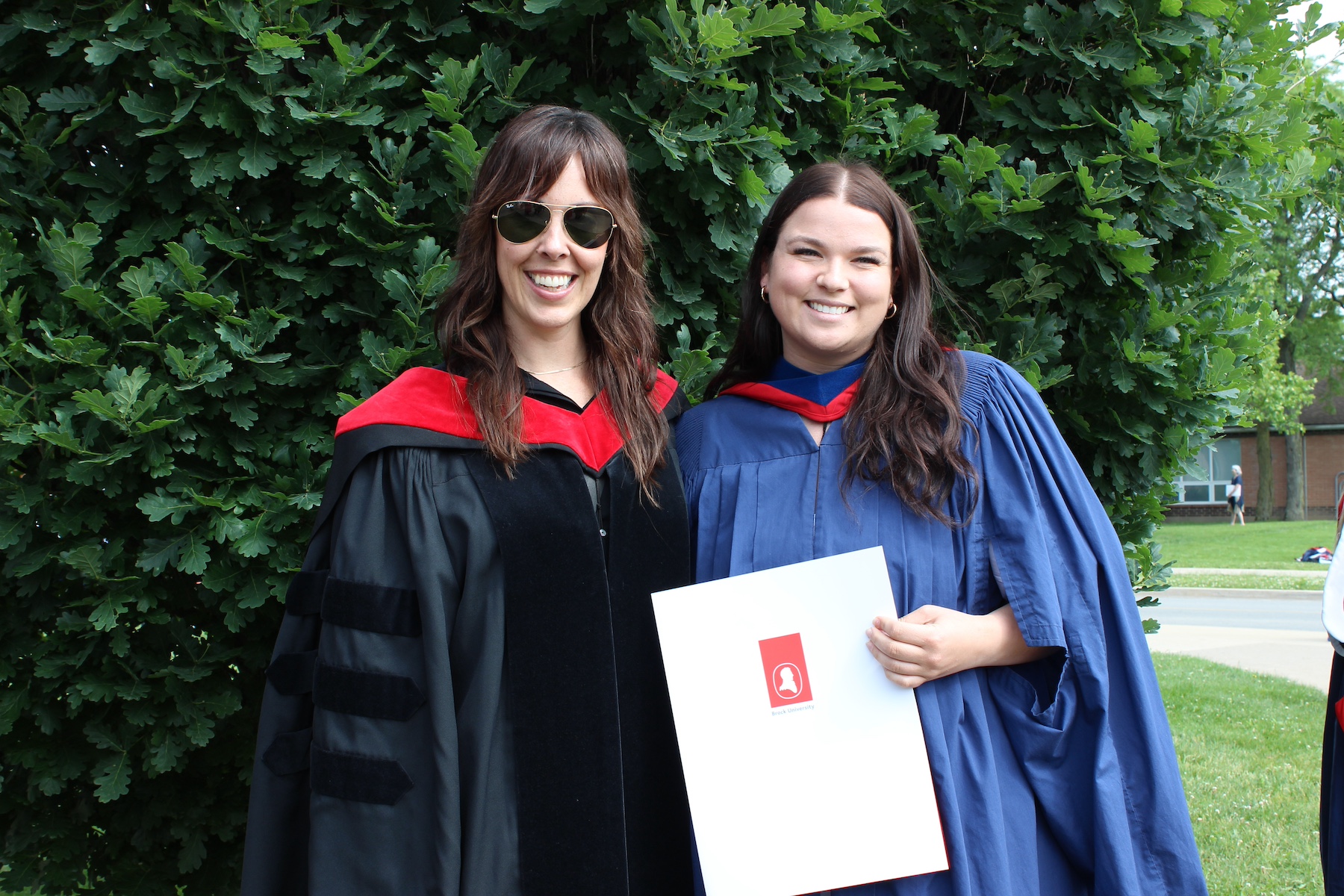
    Allegra Caballero

    Allegra Caballero is working with the Niagara Peninsula Conservation Authority (NPCA) as a Land Planning Associate. In this role, she supports the NPCA’s full-time Land Planning staff in their implementation of key land planning, acquisition, and public engagement activities, and has also been helping her team plan for the development of management plans for priority conservation areas. This is done through research, policy writing, and drafting text to populate the NPCA’s main webpage.

    When asked how her first year in the SSAS program prepared her for success in her co-op role, Allegra responded that “the coursework in the SSAS program has helped me gain valuable experience working on various management plans and working with others to reach a shared goal.

    Rebecca Anderson

    Rebecca Anderson is working for Brock University as the Sustainability Coordinator in the Facilities Management department. She described her role as being based significantly in sustainability education, “right now we are working on increasing the waste diversion rates on campus, so I am in the process of creating content like posters and online resources that will help educate staff and students on different waste streams”. Brock University is also preparing to submit for the 2025 THE Impact Rankings, and Rebecca has written a Brock News article highlighting Brock’s most recent submission.

    Like Allegra, Rebecca shared that her first year in the SSAS program helped to prepare her for her co-op position, “[my courses] familiarized me with concepts like the 17 Sustainable Development Goals (SDGs) and technical skills like preparing and responding to requests for proposals (RFPs). These were areas I was previously unfamiliar with, but that are now core elements that we use almost daily in my current workplace”.

    Allegra and Rebecca both shared how their co-op roles enriched their understanding of sustainability science and prepared them for careers in the sustainability field. “In just three short months, I have learned a tremendous amount” said Rebecca, adding “it has opened my eyes to other career options, as prior to this I had never considered working within an [academic] institution. I am appreciative of the administrative and legal concepts I have learned on the job that are crucial for tasks such as securing contracts or mandated reporting of our recycling data to the Resource Productivity and Recovery Authority.” Allegra echoed this sentiment, sharing that “working with a conservation authority has helped me reimagine sustainability, the value of nature, and where an individual with my skills and abilities can contribute to its protection – I have gained new skills and abilities that I hope to bring with me into a career at a conservation authority or environmental agency”.

    We are thrilled to see these students thriving in their workplaces, and look forward to hearing more from them when they return to begin their second year in the SSAS program!


    Categories: Blog, Co-Op, SSAS Program, Sustainability at Brock

  • Seen & Heard at the ESRC: Convocation Day!

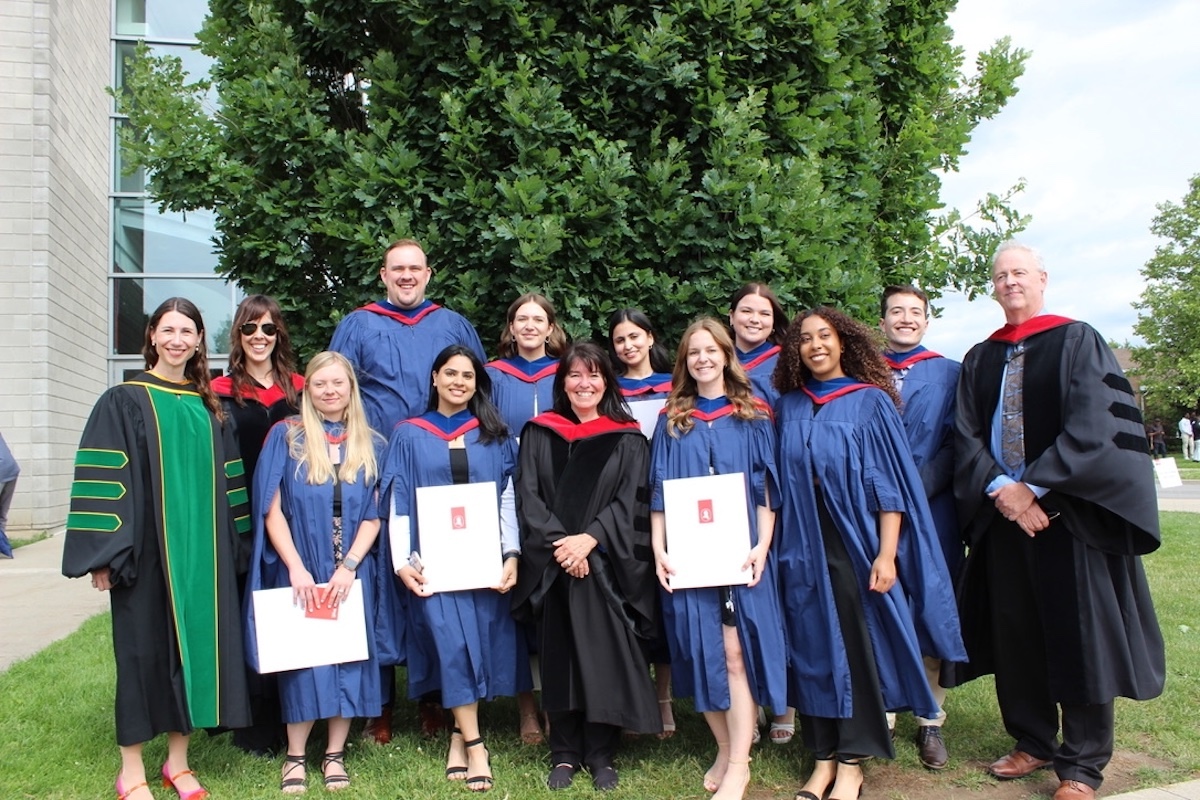
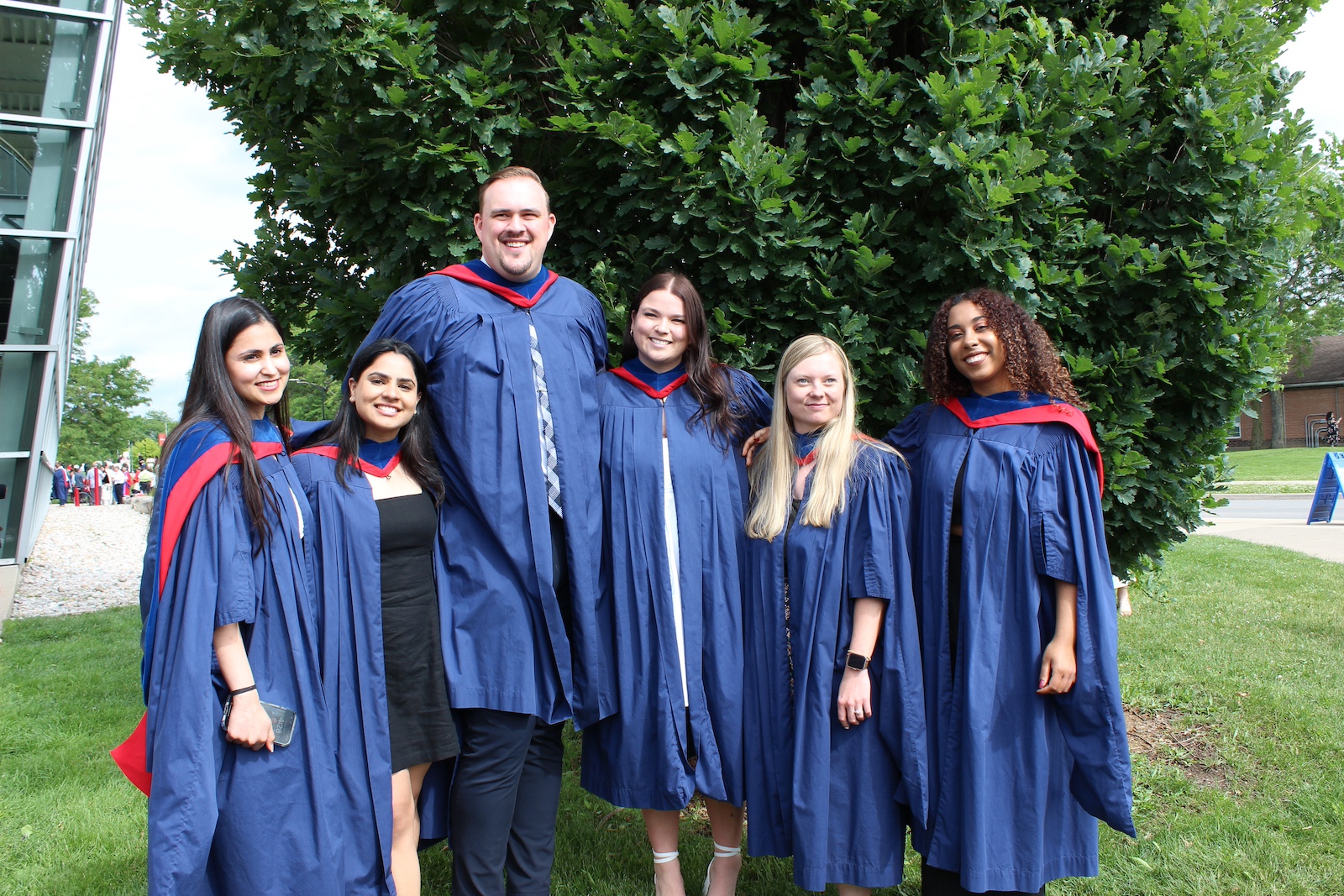
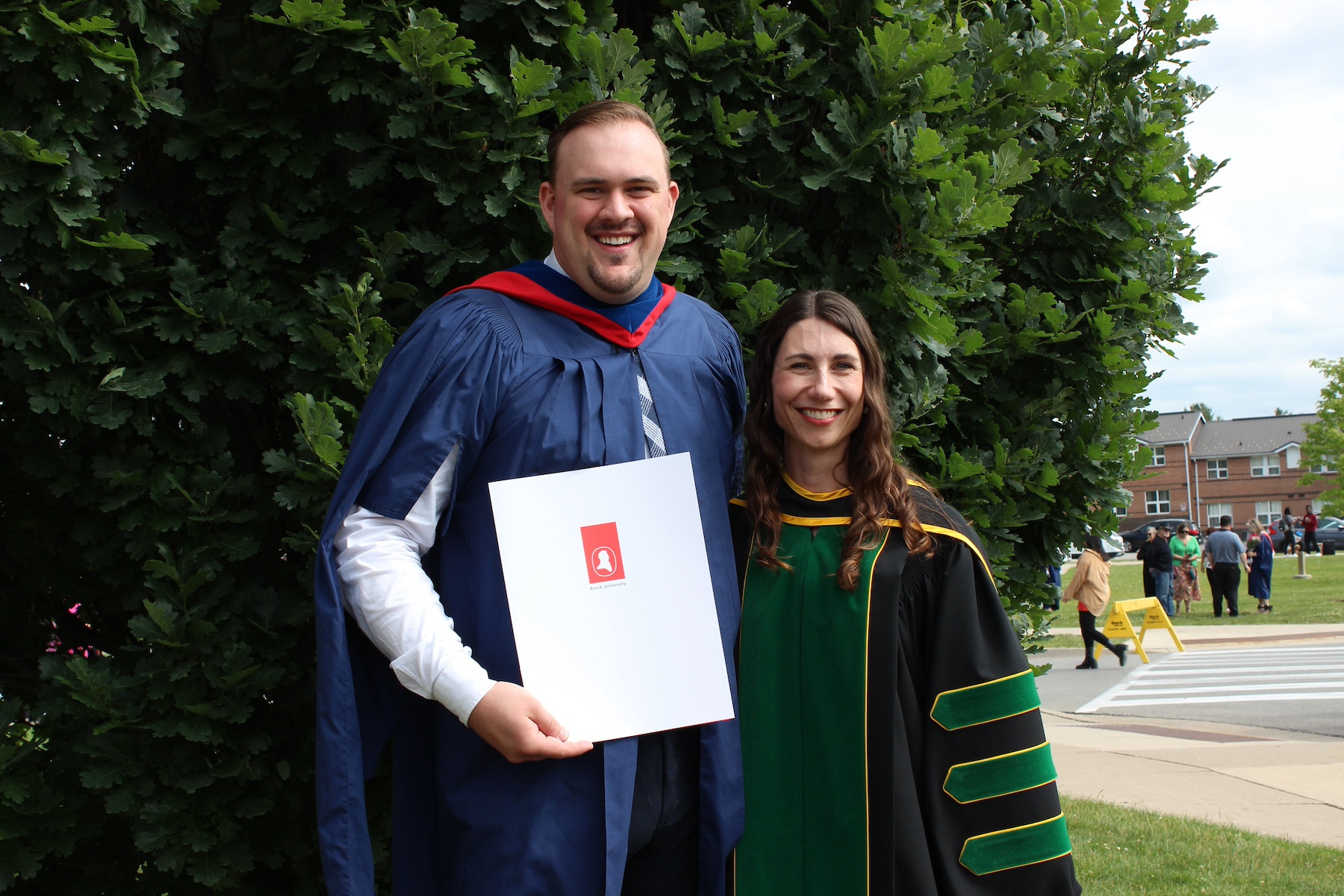
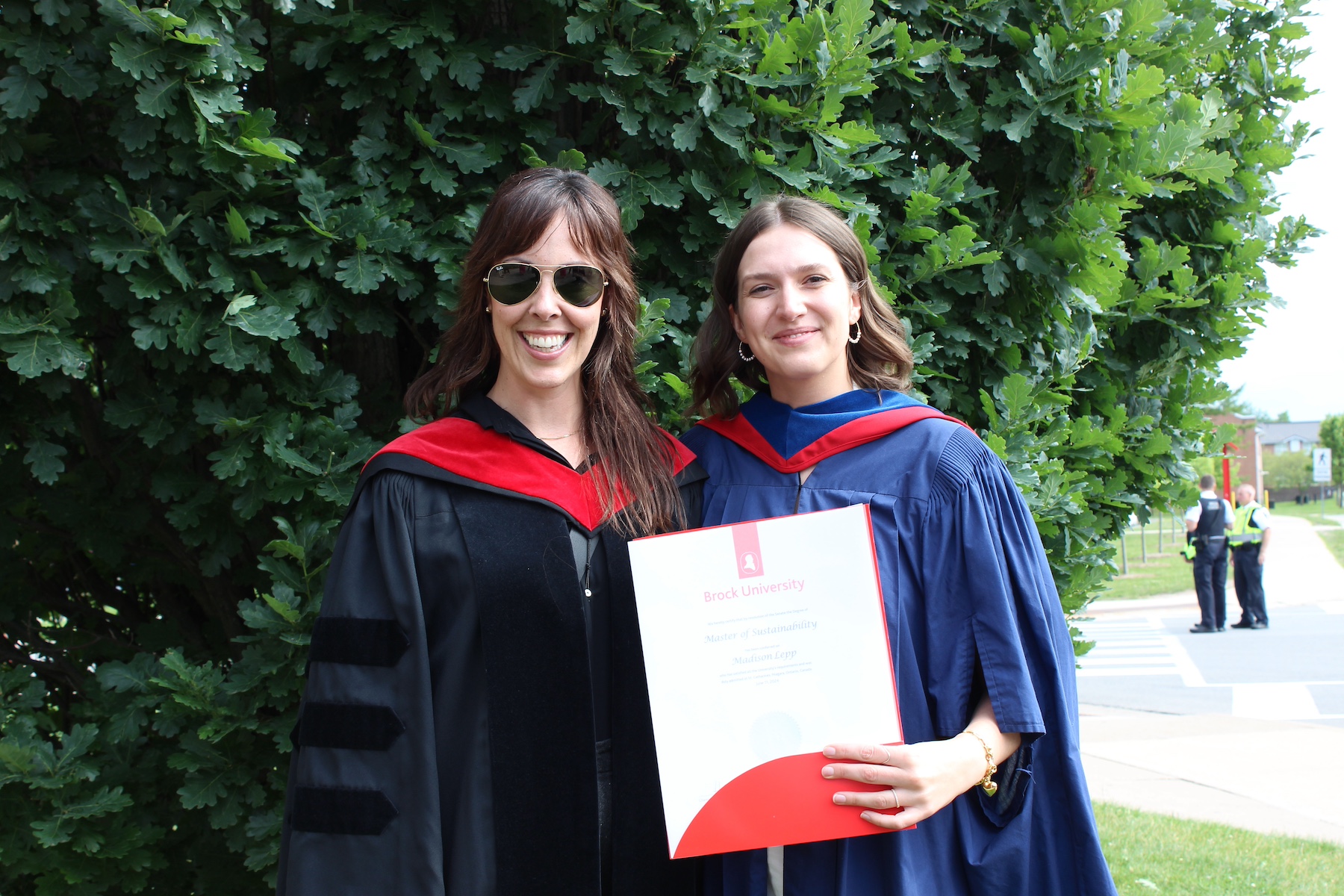
    This year’s Spring convocation ceremony saw 11 students graduate from the Master of Sustainability program, and we were thrilled to celebrate with these nine students in person. Congratulations to everyone who celebrated this week!

    To learn more about each of these graduates, check out our blog post and alumni webpage!

    Categories: Blog, SSAS Program

  • Congratulations to the Spring Class of 2024!

    Top Row L-R: Kassie Burns, Anmol Burmy, Alexa Dolsky, Dana Harris Middle Row L-R: Shannon Heaney, Erin Isaac, Madison Lepp, Sydney McIntyre Bottom Row L-R: Zeal Pandya, Sebastian Roa, Evan Rodenburg

    On June 11, 2024, 11 students will graduate from the Master of Sustainability program at Brock University! These students have worked incredibly hard throughout their studies and have participated and thrived in various Environmental Sustainability Research Centre (ESRC) initiatives and programs. On behalf of the ESRC, we are honoured to have been a part of each of their academic journeys and cannot wait to hear more from these students in the future!

    Kassie Burns joined the SSAS program in 2022 after completing her undergraduate degree at Brock. Kassie was in Scheme A of the program and completed her MRP research under the supervision of Dr. Marilyne Carrey, titled “Strategies for Enhancing Community Science: A Sustainability Science Narrative”. Kassie also completed a co-op position as a summer student with the Niagara Parks Commission and worked as a Research Assistant with the now-complete Charter with Facilities Management partnership. In addition to her studies, Kassie participated in the Mapping New Knowledges Conference at Brock, and was a co-recipient of the Rotary Club of St. Catharines Environmental Sustainability Graduate Scholarship.
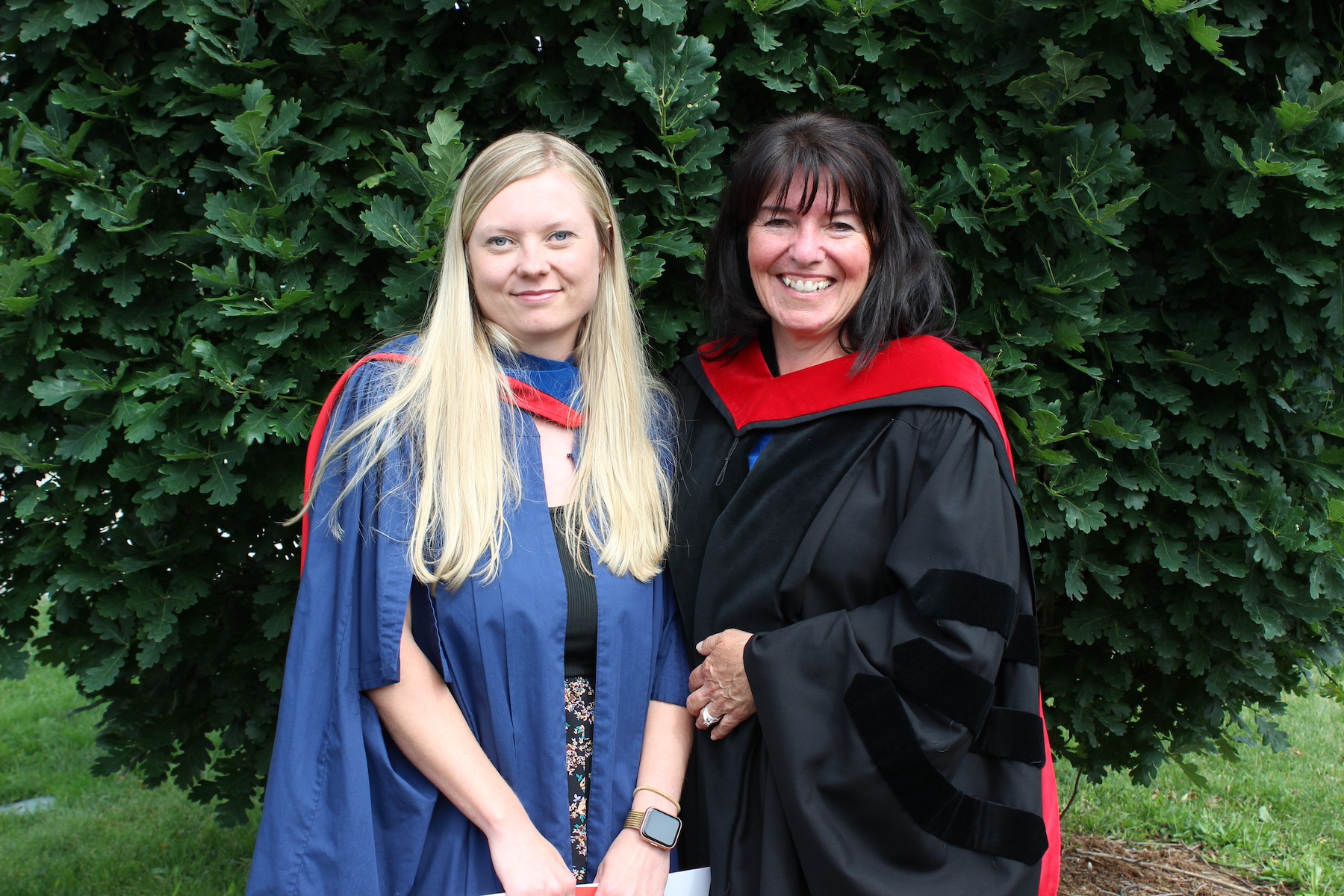
    Anmol Burmy joined the SSAS program in 2022 from Toronto Metropolitan University. Her MRP research focused on flood resilience and was titled “A Flood Tale of Two Cities: St. Catharines and London, ON” and was supervised by Dr. Diane Dupont. During her time as a SSAS student, Anmol took on the role of Project Manager for a consulting project with her fellow students for the Niagara Peninsula Conservation Authority. The results of this project will continue to be used by the NPCA for years to come. Anmol also completed a co-op position as a Planning Employment Surveyor with the Halton Region and was recently hired by the Township of North Stormont as a Junior Development Planner after successfully completing AMTCO’s Prime on Planning course with honours.

    Alexa Dolsky joined the SSAS program, virtually, from Alberta in 2020 and was one of the first students to join Scheme C of the SSAS program! Her MRP research was supervised by Dr. Ryan Plummer and titled “Applying an adapted sustainability framework to three government hydrogen roadmaps”. Throughout her time in the SSAS program, Alexa maintained a role with the Government of Alberta and is currently working there as a Senior Policy Advisor.
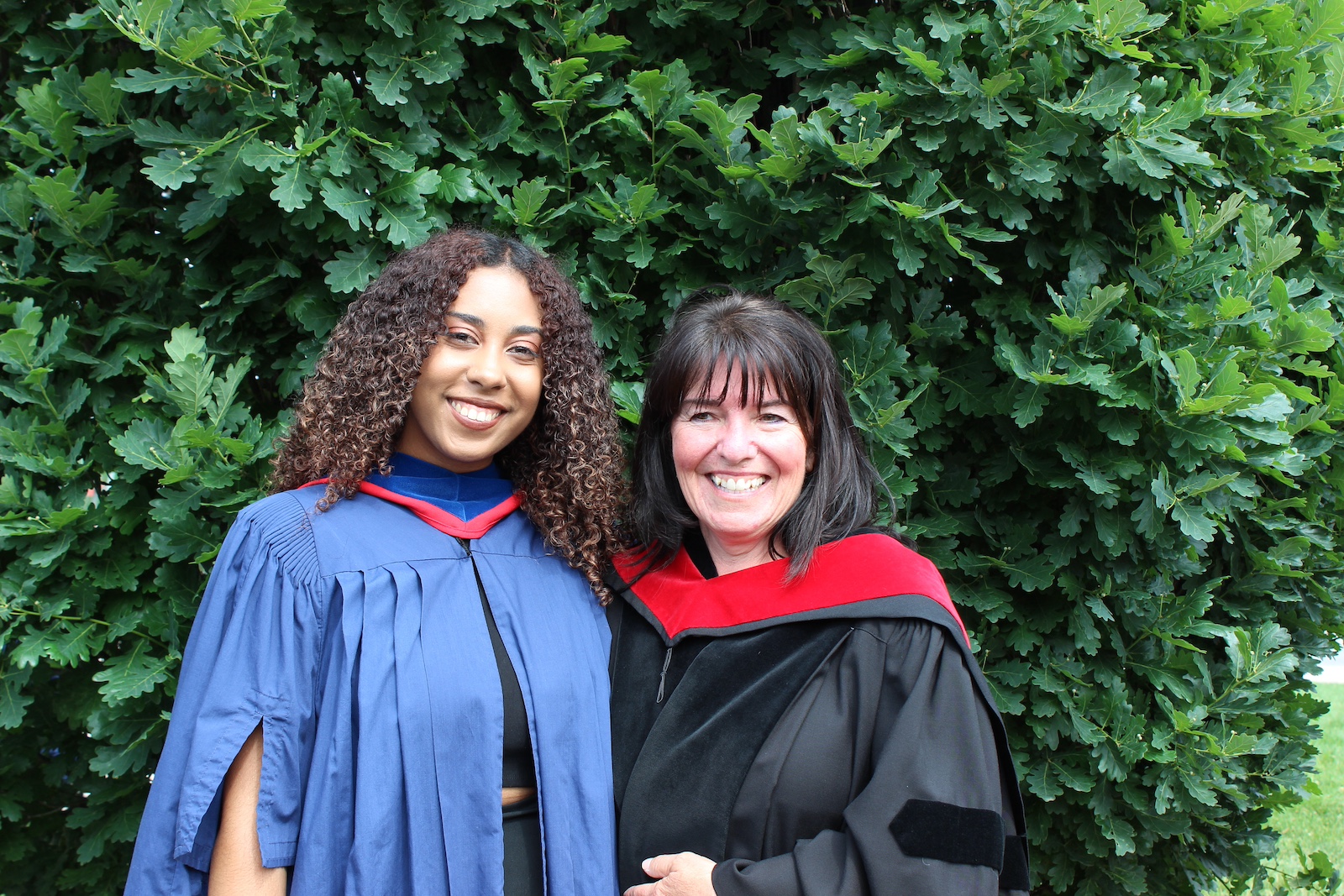
    Dana Harris joined the SSAS program as part of our third cohort in 2016. Her thesis research, titled “Characterizing intra-annual xylem cell formation and circadian cycle dynamics of Jack Pine (Pinus Banksiana) in the Northern Boreal Forest, Yellowknife, Northwest Territories” was supervised by Dr. Michael Pisaric and successfully defended by Dana on October 5, 2023. While completing her studies, Dana won the NSERC Science Exposed competition in 2018 and participated in several international conferences, including AAG in Boston, MA and the Le Studium conference on wood formation in Orleans, France. Dana also worked as an environmental officer at the Gahcho diamond mine in the Northwest Territories and currently works as a Fish and Fish Habitat Biologist with the Government of Canada. She currently lives in Yellowknife with her family.

    Shannon Heaney joined the program, virtually, from Alberta in 2021 and completed her thesis research under the supervision of Dr. Ryan Plummer. Shannon’s thesis was titled “Tactics to Engender Participation in Collaborative Environmental Management” and was successfully defended on October 20, 2023. During her studies, Shannon worked as a research assistant on the now-complete Excellence in Environmental Stewardship Initiative partnership with the Niagara Parks Commission. Shannon was also a recipient of the Ontario Graduate Scholarship and the Joan P. Nicks Sustainability Scholarship. She was recently hired by the University of Alberta’s Sustainability Council as a Project Planner – Special Projects.

    Erin Isaac joined the program in 2022 and completed her MRP, titled “Spotting Potential Threats: A Tool to Inform the Proactive Management of Invasive Insects on a Regional Scale” under the supervision of Dr. Marilyne Carrey. Erin completed a co-op work placement as a Climate Change Intern with the Niagara Peninsula Conservation Authority (NPCA) and also worked as a Research Assistant with the now-complete Brock-Lincoln Living Lab partnership. Erin was also a recipient of the Rovinelli Family Bursary and the Brock Horizon Scholarship. She is now working as a Project Assistant in Natural Asset Management with Niagara Peninsula Conservation Authority (NPCA).

    Madison Lepp joined the program in 2021 and completed her thesis research under the supervision of Dr. Jessica Blythe. Her thesis, titled “Advancing Resilience and Equity in Canadian Municipal Climate Adaptation” was successfully defended on January 25, 2024. During her time in the SSAS program, Madison worked as a Research Assistant with the now-complete Charter with Facilities Management partnership and participated in the Mapping New Knowledges conference. Madison was also the successful co-recipient of a WWF Go Wild Grant with fellow SSAS alum Alexandra Cotrufo. They used these funds to start the Brock University Seed Library, which has been an incredibly successful initiative for the university.

    Sydney McIntyre joined the program in 2022 and completed her MRP research, titled “Paper Parks or Protection: Evaluating Atlantic Canada’s Marine Protected Areas” under the supervision of Dr. Jessica Blythe. Sydney completed a co-op work placement with the Niagara Parks Commission as an Environmental Education and Stewardship Student and continued working in this role while completing her research. She also worked as a Research Assistant with the now-complete Excellence in Environmental Stewardship Initiative partnership and was a co-recipient of the Rotary Club Environmental Sustainability Graduate Scholarship. Sydney is now working for the NPCA as the Coordinator for the Niagara River Remedial Action Plan. 

    Zeal Pandya travelled from Ahmedabad, India to join the SSAS program in 2022. She completed an MRP titled “Climate Change Vulnerability Analysis: A Case Study of the Town of Lincoln, Ontario, Canada” under the supervision of Dr. Marilyne Carrey. During her time in the program, Zeal completed a co-op work placement with the Ontario Department of Environment, Conservation, and Parks as an Environmental Officer. Her position was extended, and she completed her placement over the course of two terms. Zeal was also a successful recipient of the Ontario Paper-Thorold Foundation Graduate Award.

    Sebastian Roa travelled from Bogota, Colombia to join the SSAS program in 2021. His thesis research, titled “Understanding youth attitudes, preferences, and the role of cultural values on intention to use carbon labels on food products: a case study of Argentinian and Canadian consumers” was supervised by Dr. Gary Pickering and successfully defended on September 12, 2023. Sebastian later published his thesis research in the journal Sustainable Production and Consumption and worked for Liberty Utilities, where he was tasked with supporting their ESG strategy. During his time as a SSAS student, Sebastian presented his research at the Mapping New Knowledges conference, served as a Brock International Student Ambassador, and was a successful recipient of the 2022 Spring Fellowship award.

    Evan Rodenburg joined the program in 2022 and became a member of Dr. Julia Baird’s Water Resilience Lab to complete his MRP research under her supervision. His MRP was titled “Understanding the Dimensions of Climate Change Misinformation”. As a Scheme A student, Evan completed a co-op work placement and was hired by Brock’s Facilities Management department as a Sustainability Data Analyst working on Brock University’s STARS submission.

    In addition to our 11 SSAS graduates, we’d also like to offer our sincere congratulations to the 11 undergraduate students who will be graduating with a Minor in Environmental Sustainability, several of whom were successful recipients of the TD Bank Group Scholarship in Environmental Sustainability: Cameron Burgess, Kiara Calder (scholarship recipient), Ruth Elysee, Lea Formicuccia (scholarship recipient), Julia Gardner, William L’Ecuyer, Taylor Partel, Vikki Rossiter, Suel Sakha, Aryan Tiwari, and Naomi Tufts (scholarship recipient).

    Congratulations to all of you, and best wishes in your future endeavours!

    Categories: Awards, Blog, Conferences, Event, SSAS Program

  • ESRC Graduate Students Complete First Year of Studies

    Another academic year has gone by, and two more cohorts of Environmental Sustainability Research Centre (ESRC) graduate students have successfully completed the first year of their respective programs. This year marked a significant milestone for the Master of Sustainability  (SSAS) program, as this year’s cohort is the 10th to join the ESRC! We were also excited to welcome our second cohort of PhD in Sustainability Science (SSCI) students to the program and have greatly enjoyed working with them as they transition into  sustainability scientists! We ended the year on a positive note with a variety of student presentations and several different course-based experiential education learning opportunities.

    On Tuesday, March 26th, the SSAS students presented their MRP and Thesis research proposals to a group of their student peers and ESRC faculty and staff. This group has been working towards their research proposals since the beginning of the year and all did a wonderful job describing their research topics. ESRC Graduate Program Director Dr. Jessica Blythe shared that the presentation topics ranged from environmental injustice in Canada’s cancer valley to Anthropocene narratives and guidelines for animal welfare, and that “it was a wonderful day that provided an opportunity to celebrate this significant milestone!”

    Next, on April 3rd, the Master of Sustainability students were tasked with delivering their final presentation on Brock University’s transition towards sustainable practices for their elective course SSAS 5V83: Just Transitions in Sustainability. The course instructor, Dr. Jen Holzer said of the presentation, “their work and insights were met with great enthusiasm and a desire to share their report with Brock administrators and stakeholders this summer. This project showed that there is a hearty appetite for student leadership on campus sustainability at Brock!”. With this presentation successfully behind them, the students had just one more final project to complete!

    On Friday, April 5th, the SSAS students were joined by their peers in the SSCI program to present their final projects in SSAS 5P03/SSCI 7P02: Problem Solving in the Environment/Engaging with Community in Sustainability Science. Since January, the SSAS students have been working closely with the Niagara Peninsula Conservation Authority (NPCA) to develop what course instructor Dr. Marilyne Carrey described as a “comprehensive month-by-month information repository that can be used for internal communications to educate and engage staff on key sustainability topics, organizational practices, and individual staff behaviours.” Meanwhile, their colleagues in the SSCI program collaborated with members of the Niagara Climate Change Action Network (NCCAN) to create, as Dr. Carrey explained, “a stakeholder engagement plan that will facilitate participation in the development of the Niagara Region Community Energy Plan.” Dr. Carrey added that the results of both projects will be of great value to their respective stakeholders and community organizations.

    It’s been a busy year for these graduate students, and we are very proud of them for all the great work that they have completed and the milestones accomplished! We wish this group all the best as they head into the Spring and Summer terms to begin comprehensive exams, co-op work terms, and data collection for their thesis research projects!

    Categories: Blog, SSAS Program

  • Reflecting on our Week in the Northwest Territories

    Blog Contributor: Samantha Witkowski

    Embarking on a journey to the Northwest Territories, Yellowknife, in the heart of winter, proved to be a frosty yet rewarding experience for Amanda Smits, myself, and our team at the Environmental Sustainability Research Centre. The primary purpose of our trip was to foster connections with our esteemed partners at the Government of the Northwest Territories (GNWT) and to host three impactful events.

    Day 1: The Chill of -40°C and Strategic Planning

    Our adventure began on a bone-chilling Monday, January 8th, as Amanda and I landed in Yellowknife amidst a temperature of -40 degrees Celsius. After taking a day to acclimate and meet with our lead partner from the GNWT, Vincent Casey, we strategically planned the week ahead, ensuring every detail was in place for our series of events.

    Day 2: A Thought-Provoking Sustainability Seminar

    The highlight of day two was our Sustainability Seminar panel discussion, centered around preserving culture in the face of a changing climate. Four insightful panelists, Nicole Lawson, Frank McKay, Jason McNeill, and Vincent Casey, shared their perspectives on this topic, engaging in a genuine and impactful conversation. Broadcasting the discussion back to Master and PhD students at Brock and the general public amplified the reach of the event, making it a resounding success. Click the link here to watch this informative seminar on the ESRC YouTube channel.

    Day 3: Course Feedback Session and Culinary Delights

    On the third day we hosted a feedback session for the “Introduction to Northern Climate Resilience” pilot course, co-created with the GNWT as part of the broader Leadership in Environmental Sustainability Certificate program. Learners joined us in-person and online to share about their experience in the course, which ran for a period of six week between October and December 2023. The positive feedback from learners, combined with constructive insights, provided valuable input for shaping future course offerings. Following the session, in-person participants were treated to a delectable catered lunch by a local restaurant, Sun Dogs, allowing for informal networking and relationship building.

    Day 4: Second Course Launch and Exploring Yellowknife

    The fourth day marked the launch of our final event – an exciting course launch! The “Ways to Engage” course is our second co-created course with the GNWT, and focuses on working together for the environment and how to frame the uncertainty that accompanies collaborative engagement. The course specifically considers community engagement through a northern lens, specifically drawing upon multiple perspectives, knowledge systems, and experiences. Course learners gathered in-person and online for the course launch session, where they were able to meet one another and learn about the course in greater detail. The course officially started on January 15th and runs for six weeks, until the end of February.

    On day four we also explored more of Yellowknife with Vincent Casey, taking in the breathtaking views, learning more about the local cuisine, and witnessing the construction of a snow castle on the frozen Yellowknife Bay, located on the shores of Great Slave Lake – a testament to the unique experiences Yellowknife has to offer!

    Day 5: Farewells and Gratitude

    Our final day took us to the GNWT offices to bid farewell and express our sincere appreciation to our partners. The trip not only allowed us to host successful events but also provided a profound learning experience, deepening our understanding of the Northwest Territories. We left with stronger connections, cherished memories, and a greater appreciation for the remarkable region we were fortunate to explore.

    Our work trip to Yellowknife was more than just a professional endeavor—it was an immersive journey into the heart of the Northwest Territories, leaving us inspired, enlightened, and eager to continue our collaborative efforts and return again in the future.

    Categories: Blog, Collaborations, Innovative Partnership

  • Fall Term Provides Experiential Education Opportunities for ESRC Students

    This Fall, students studying Environmental Sustainability at both the graduate and undergraduate level had multiple opportunities to learn in their community and engage with sustainability initiatives across the Niagara Region. Experiential education is an important aspect of both graduate and undergraduate-level education at Brock, and particularly within the ESRC. Amanda Smits, Centre Administrator at the ESRC, states “Providing experiential opportunities for students to get out into the field and create real-world connections with the content they are learning in the classroom is really foundational to our academic program offerings.”

    Below we’ve outlined the different types of experiences our students have taken part in over the course of this semester.

    SSAS 5P01: Foundations in Sustainability Science

    This is a core course for students in their first year of the Master of Sustainability program, but often includes Masters students from other programs at Brock and PhD students in the Sustainability Science program. This term, students enrolled in the course participated in three experiential education excursions. Their first excursion took them on a tour of various areas of Brock’s campus to learn about the university’s commitment to low carbon energy. First, the students hiked on the Bruce Trail through the Niagara Escarpment Biosphere Network, both of which border Brock’s campus. They were then taken to Brock’s Central Utilities Building (CUB) where Mary Quintana, Director, Asset Management & Utilities, and Drew Cullen, Manager, District Energy provided the students with a tour of Brock’s District Energy System and the tunnels that support the delivery of low-carbon utilities across Brock’s main campus. To learn more about the District Energy Efficiency Project please visit here or check out this Youtube Video.

    On their second excursion, the students learned about climate action in Niagara. They met with Beatrice Perna, Climate Change Specialist with the Niagara Region’s Corporate Strategy Services, and Alexandra Cotrufo, Climate Change Intern at Niagara Region and recent Master of Sustainability graduate. The students once again visited the Bruce Trail and utilized the fire pit area at Brock to have an informal conversation with both Beatrice and Alexandra about the climate change work being undertaken by Niagara Region and their career evolution. The students also got to learn more about the Niagara Climate Change Action Network, on whose steering committee Brock participates.

    For their final course excursion, the students left Brock’s campus and were taken on a tour of ecological restoration sites that are managed by the Niagara Parks Commission. NPC’s Project Manager of Forest Health, Corey Burant, and Master of Sustainability student Sydney McIntyre led the students around the various sites and explained how stewardship and biodiversity preservation is being prioritized in each, including the Chippawa Grassland Restoration Project, the Ussher’s Creek Coastal Wetland Restoration Project, and the Gonder’s Flats Wetland Restoration Project.

    SSAS 5V82: Nature Based Solutions in Sustainability

    In another graduate-level course, students got to witness a unique form of invasive species management. The students traveled to Niagara Falls to visit one of Ontario Power Generation’s (OPG) properties to see how they are utilizing goats to manage the spread of invasive phragmites. Here they met with Nancy Laser, Environmental, Chemical and Safety Tech with OPG to tour the site and learn more about how the goats are helping to clear OPG lands surrounding hydro stations and other areas. Clearing these lands allow staff to safely obtain readings of water flow rates, water quality, and water level readings at their sites while managing the spread of these invasive species. Fascinated by this innovative project, the course instructor, Marilyne Carrey, noted that it is “through these experiential education opportunities that graduate students gain the essential knowledge and practical skills needed to cultivate a deeper understanding and enthusiasm for developing impactful solutions to complex environmental challenges. Dealing with invasive plant species demands innovative approaches, such as those being implemented by the OPG.”

    You can learn more about the work being undertaken by OPG here.

    ENSU 3P90: Contemporary Environmental Issues

    ESRC graduate students weren’t the only ones to participate in experiential education this term, our undergraduate students also took part. This group of students took a trip out to Gonder’s Flats Wetland Restoration Project in late October 2023. There, they met up with Master of Sustainability student Sydney McIntyre, who introduced them to the iNaturalist app and demonstrated how Niagara Parks is encouraging members of the Niagara community to use the app to catalogue different plant and animal species in the region. The students used the app to participate in a mini bio-blitz, where they took photos and logged various species around Gonder’s Flats, which assists in growing NPC’s species database. The students then participated in a tree planting initiative in the area to increase biodiversity in the wetland.

    Dr. Jessica Blythe reflected “We often hear from students that these experiential education opportunities are some of the most memorable experiences of their program. Being able to connect directly with people in the fields that many of our students go on to work in provides an unrivalled opportunities for learning and networking”.

    Categories: Blog, Experiential Education, Minor in Sustainability, SSAS Program

  • Starting my time at Brock with an adventure

    Blog Contributor: Hannah Lübker

    Artwork Credit: Rachel Derrah (https://listendraw.ca/)

    During my second week of the SSCI programme, my supervisor Dr. Julia Baird and I flew to New Brunswick to attend the annual Wələstəq/ Saint-Jean/ St. John River Summit.

    After an extended breakfast with our colleagues from WWF-Canada, with whom we are collaborating in a partnership for freshwater resilience, we went on a little road trip along the river. I was very excited to finally see the river that my research will be centered around – it is beautiful in pictures, but truly stunning in person. As we drove through the countryside, we took breaks to take in the scenery, buy handmade pottery, or drink tea at a village bakery. As someone who is new to Canada, I was quite surprised by the friendly and talkative nature of the people we met, who showed interest in our project and immediately recommended people we should contact to talk about it.

    The summit began on Friday morning at the Nashwaak Meadows Centre for Ecology, which consists of two cozy barns, surrounded by nature. The event kicked off with a welcome from Simon Mitchell (leader of WWF-Canada’s Resilient Habitats team), who stressed that the UN Decade of Restoration should not only focus on ecological restoration, but on the restoration of language, culture, and relationships as well. Before we got too comfortable and sleepy in our chairs, we were led to the Nashwaak Meadows restoration site, to experience the restoration efforts, instead of just hearing about them. I really enjoyed this part, as it reminded me of the practical “getting your hands dirty” spirit of my undergraduate studies. There is something so satisfying about being in nature and seeing the tangible results of your work (for example the growth of the trees you planted), which is sometimes missing from my life in academia.

    The summit continued with presentations from the Canadian Rivers Institute, the Nashwaak Watershed Association, ACAP Saint John, the NB Invasive Species Council, WWF-Canada, and members of the Wolastoqey Nation in NB. While it was fascinating to learn about barriers to re-forestation on wetlands, how to identify invasive zebra mussels or how the indigenous value system applies to restoration, my favorite aspect of the summit was the atmosphere. The prolonged coffee and lunch breaks offered plenty of opportunities for informal conversation (and an impressive selection of food and drinks) and people were generally approachable, interested and kind.

    Unfortunately, our travels were cut short by an approaching hurricane, which lead to the cancellation of all summit activities on Saturday, and to us opting for an early-but-safe return home. Needless to say, I am already planning my return to New Brunswick to explore more places along the Wələstəq and connect to even more future friends and colleagues in the area.

    Why do we use the name Wələstəq? Visit https://gem.cbc.ca/absolutely-canadian/s22e06 if you’re interested in learning more about this.

    Categories: Applied Research, Blog, Conferences, SSCI Student Contributor