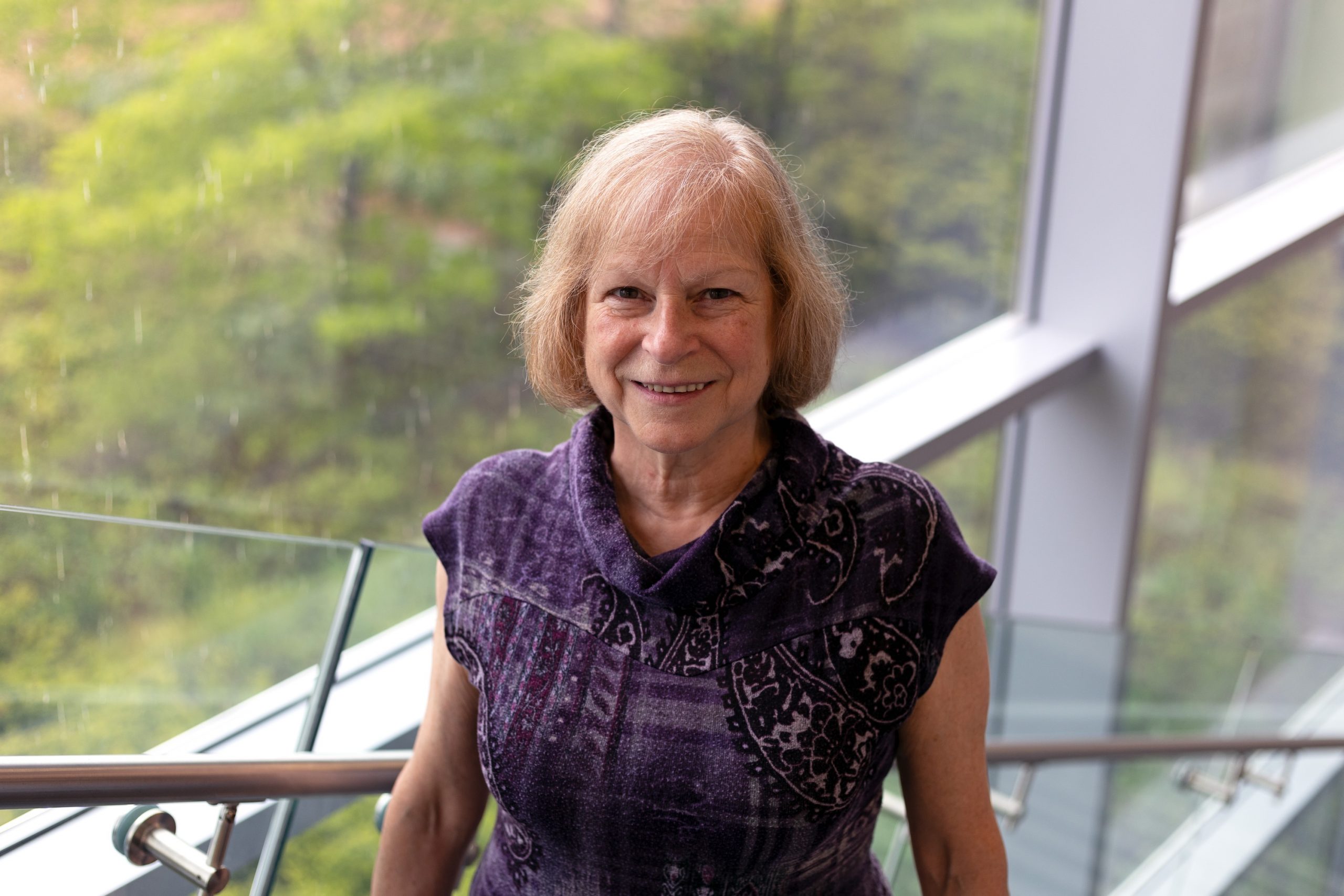
Professor, Department of Biological Sciences, Brock University
Cool Climate Oenology and Viticulture Institute Fellow, Brock University
UNESCO Chair, Community Sustainability: From Local to Global, Brock University
Office: F228
Phone: 905-688-5550 x4023
Email: [email protected]
Twitter: @LietteVasseur
About Liette:
Her research program is either interdisciplinary or transdisciplinary and links issues such as community-based ecosystem management, climate change adaptation and resilience, sustainable agriculture, and conservation (including ecosystem restoration). Her work is with/ for/ in rural, coastal and/or marginalized vulnerable communities. In Canada, it includes impacts of climate change and extreme events on ecosystems and communities, use of alternative technologies in sustainable agriculture, and ecosystem/landscape sustainable development and resilience.
Her work focuses not only on Canada but also internationally such as in China, where she is a visiting scholar and before a Minjiang Scholar at Fujian Agriculture and Forestry University working in sustainable agriculture and climate change adaptation. She is also visiting scholar at the Escuela Superior Politécnica de Chimborazo (ESPOCH), Riobamba, Ecuador working on climate change adaptation and resilience in the Andean Paramos as well as sustainable agriculture development in Indigenous communities of the Chimborazo. With partners in Canada and Germany, we work on climate change adaptation of small farming cooperatives in Canada, Benin and Morocco.
At the international level, she is currently the Deputy Chair of the Commission on Ecosystem Management (CEM) of the International Union for Conservation of Nature and co-lead of the thematic group on Biodiversity and Climate Change Policy and Practice and previously led the Ecosystem Governance and the Climate Change Adaptation thematic groups. She is also on the IUCN Academy Advisory Committee. Having worked for several years on women in sciences, she is now a member of the UNESCO International Consultative Group of Experts for Closing the Gender Gap in Science. She is currently co-Editor-in-Chief of Botany at the Canadian Science Publishing, and member of the board of directors of Nature Canada.
How does biology relate to sustainability/ESRC?
Doing environmental research using an interdisciplinary approach, my work is directly in line with the vision and values of ESRC.
For me, as an ecologist (in a discipline) and an environmental scientist, it is important that even my fundamental work can be translated into knowledge used for the betterment of the ecosystem (which includes all components, services and functions including humans). In our case, the ecosystem can start with the Niagara Biosphere Reserve but does not stop here, as my research is also abroad such as China and Africa. Locally and worldwide, we are facing challenges that are becoming more complex due to climate change, resource limitation and overexploitation.
My work has brought me to understand that in most cases, changes have to start locally (SIMBY – “Start In My BarkYard” as I proposed at Ecosummit 2000, Vasseur et al. 2002) and through strong engagement can move to other levels. It requires all aspects of the ecosystems to be examined and pros and cons for our activities being transparently discussed. I am using this approach in various projects where we not only examine ecological impacts of climate change for example but also health, socio-economic, cultural, etc.