Blog Contributor: Ruth Horn
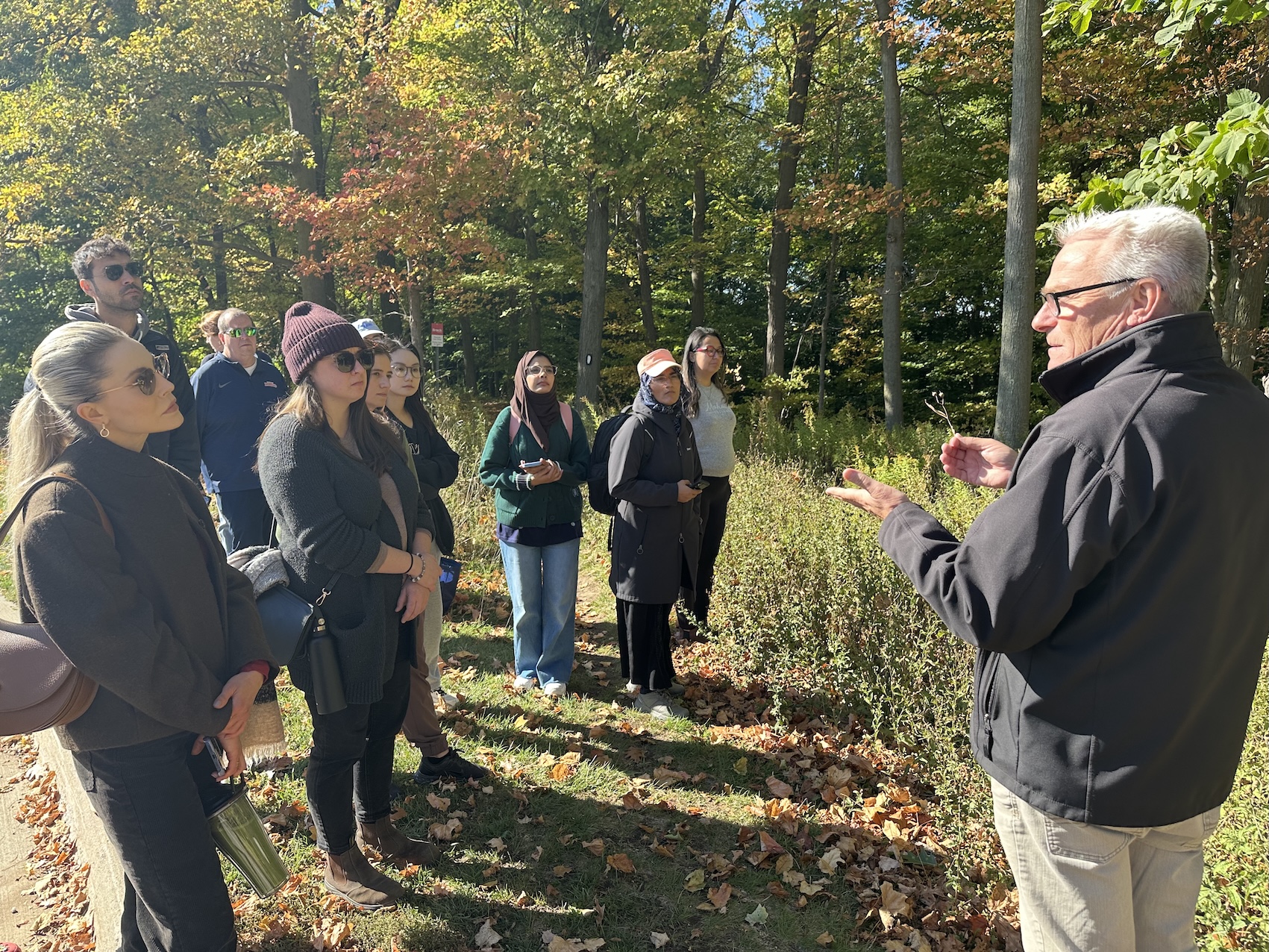
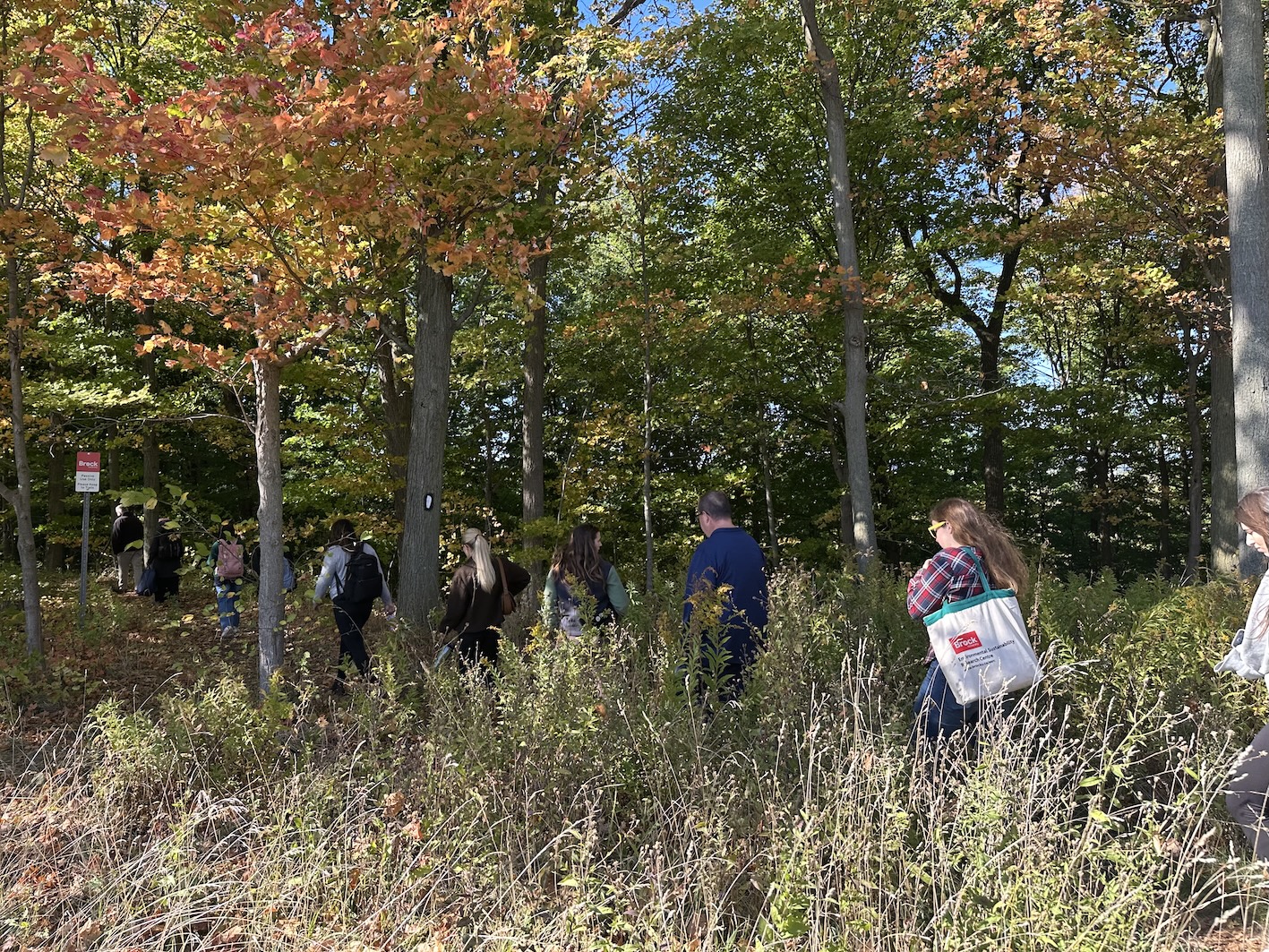
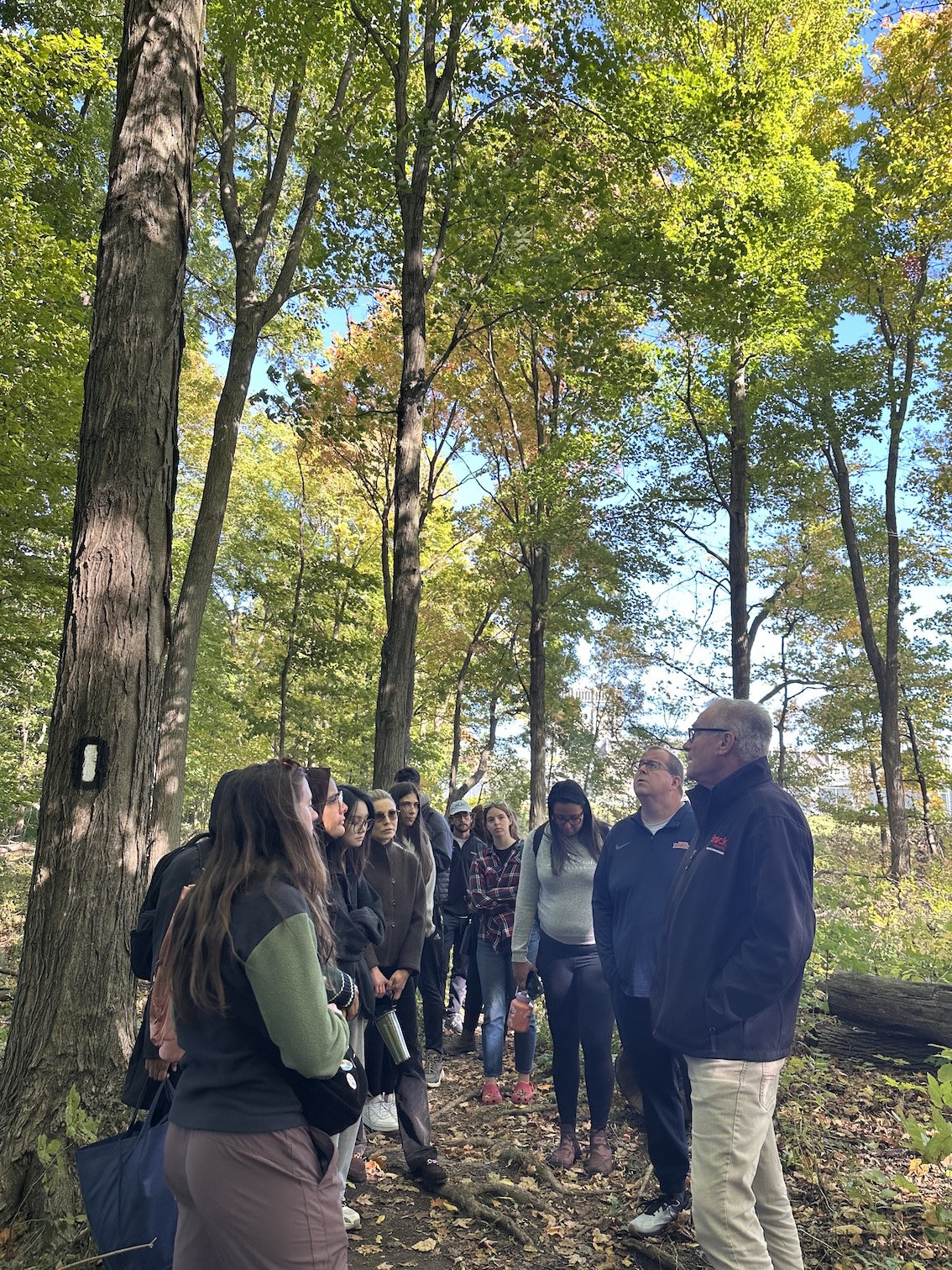
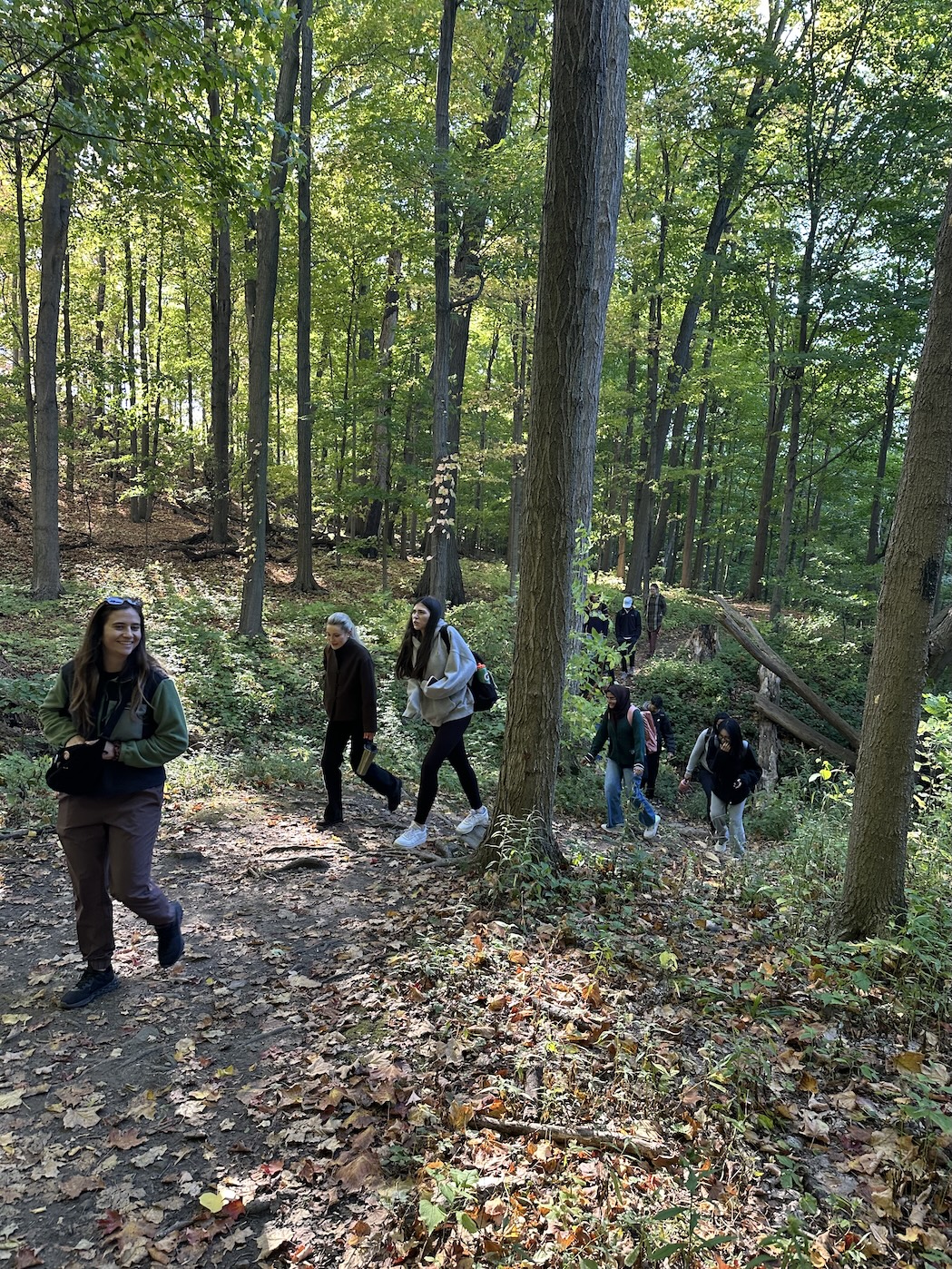
The trails tour with Facilities Management was a completely different kind of sustainability experience from the other site visits and significantly more in my wheelhouse. Instead of high-tech systems and machinery, this one was all about observing how nature, infrastructure, and human use interact in real time. The tour opened my eyes to the small, often invisible ways that sustainability plays out in everyday landscapes.
One of the first things I learned was about hedgerows and “utility mulch”. I’d never really thought about the idea of a hedgerow before. It’s such a simple feature, but it serves multiple purposes like providing habitat, acting as a buffer, and supporting biodiversity. The conversation about “no fire breaks” also got me thinking about how management decisions balance ecological value and safety. I realized that even what looks like an untouched natural area can actually be a carefully managed space shaped by both ecological and practical concerns.
Hearing about the infrastructure beneath the trails was also fascinating. I was surprised to learn that three major water mains run underneath, carrying all the drinking water for St. Catharines and that the system will soon supply Niagara-on-the-Lake too. The idea that the forested area I was walking through was quietly sitting on top of a vital water system made me think about how much infrastructure is hidden in plain sight. It connected to the broader sustainability concept of systems thinking: how different networks (natural and human-made) overlap and rely on one another.
One of the most memorable parts of the tour for me was learning about the effects of something as simple as mountain bike ruts. I had no idea that when people ride the trails in the rain, the tire tracks can change how water runs off, increasing erosion and even redirecting runoff. It was such a small detail, but it really stuck with me, especially as someone who bikes along those trails. It showed how small actions by individuals can have physical, lasting impacts on an ecosystem. It also made me think about shared outdoor spaces and how fragile they can be if not cared for properly.
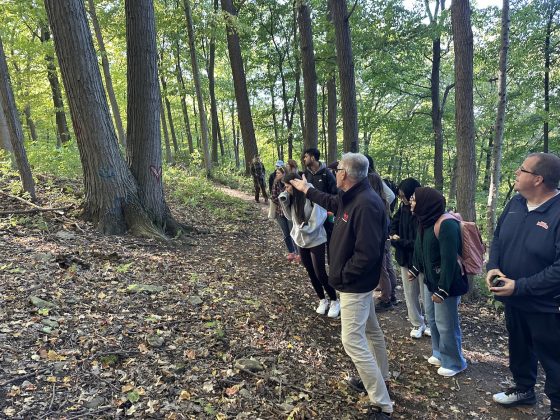
I found it interesting to watch our guide point out plants and trees as we walked. Seeing him notice trees and plants he hadn’t seen before and identify species in real time was helpful as this is something I would like to do in the future and it reminded me that I don’t need to know everything before sharing the information I do have. It gave me a better appreciation for the kind of ongoing observation and maintenance that goes into managing natural areas.
Overall, the trails tour reminded me that sustainability isn’t just about new technologies or large-scale systems. It’s also about awareness, observation, and care for the environments we walk through every day. It made me notice how many layers of life and infrastructure coexist on campus, and how much we depend on both human effort and natural balance to keep them thriving.