Every year around the holidays, perfectionism tends to rear its ugly head.
It whispers that the meal needs to be impressive, the house needs to look a certain way, the traditions need to be preserved just right. It convinces us that if something goes wrong, a late guest, mismatched plates, a moment of chaos, then we have somehow failed.
But when I think about the best holidays of my life, perfection had nothing to do with them.
A Basement, Three Tables, and Everything That Mattered
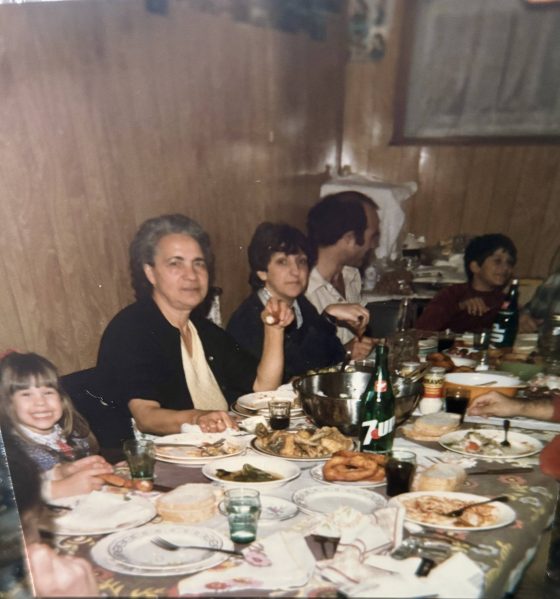
I grew up in a big Italian family, and Christmas was always at my Nana and Nonno’s house. Not upstairs, always in the basement. Three long banquet tables stretched across the room. Cousins crammed together at one end, parents and grandparents at the other. The chairs did not match. Neither did the plates. The house was not big or fancy, and the noise level was impressive.
Dinner always started with Nana’s homemade lasagna and mini meatballs, rich and comforting, the kind that filled the room with warmth before anyone even sat down. That was followed by the big turkey and all the fixings, passed hand to hand down the long tables. Nothing about it was styled or staged. It was meant to be eaten, shared, and enjoyed.
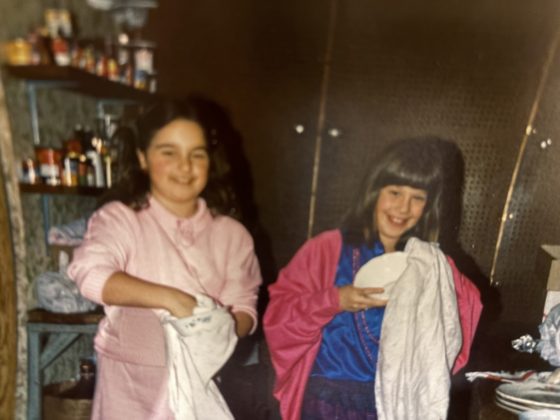
After the meal, everyone pitched in to do the dishes. Then the cards came out and we played Scopa, cards slapping the table, laughter bouncing off the walls. For dessert, there were grispelles, still warm and dusted with sugar, alongside baskets of walnuts that we would stack higher and higher to see who could build the tallest tower before it all came crashing down.
There was also an open door policy. We never quite knew who would show up. Sometimes family from Toronto would arrive without warning. No stress, no reshuffling of plans. We would just squeeze in tighter. Another chair would appear. Another glass would be poured. The homemade wine came out in old bottles, and the conversations flowed freely, stories, teasing, warmth, and laughter that felt endless.
It was messy. It was loud. It was far from flawless.
And it was everything.
Then and Now
Today, so much has changed.
An unexpected knock at the door can send a quiet ripple of panic through a house. We exchange looks. We wonder if the timing is right, if we are prepared, if we have enough, if things look the way they should. Unscheduled guests feel like disruptions instead of gifts.
 At the table, phones often come out before the conversation really begins. Notifications pull us away. Photos get taken. Messages get answered. We sit beside one another, but not always with one another.
Perfectionism thrives in this space. It convinces us that we need control, predictability, and polish before we can welcome others or really settle into a moment. But in doing so, it gently escorts us out of the very experiences we are longing for.
Perfectionism’s Quiet Cost
Research on perfectionism, including the work from our lab, shows that perfectionism is not just about high standards. It is about fear. Fear of disappointing others. Fear of being judged. Fear that if something is not just right, it somehow reflects our worth.
During the holidays, that fear can steal the very thing we are trying to create, connection.
Perfectionism pulls our attention away from the people in the room and redirects it toward what is going wrong. It asks us to manage appearances instead of moments. It tells us success is measured by how smoothly everything runs, rather than how deeply we feel connected.
But connection does not live in control. It lives in presence.
Nana’s Lessons Still Live On
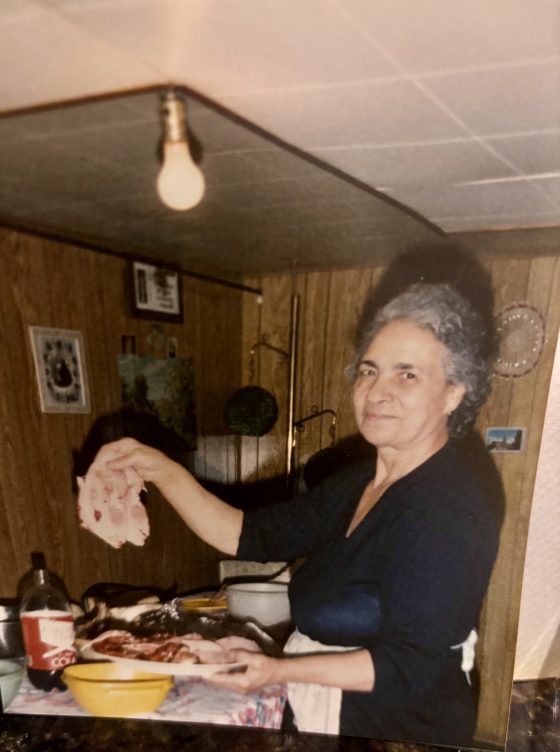
My Nana is no longer with us. The basement gatherings ended years ago. The tables are gone. The cards have been tucked away. And yet, her lessons show up every holiday season, whether I invite them in or not.
She never chased perfection. She chased purpose. She believed that feeding people, welcoming them, and making space, emotionally and literally, mattered far more than presentation or polish. She did not need things to be impressive. She needed them to be shared.
Her life quietly taught us that meaning outlasts appearances. That warmth matters more than order. That success is not found in flawless execution, but in showing up for one another, again and again.
How to Gently Loosen Perfectionism’s Grip This Holiday
If perfectionism feels especially loud this season, here are a few ways to soften it, inspired by research and by lived experience.
- Let good enough be more than enough.
A holiday does not need to be extraordinary to be meaningful. When we loosen rigid standards, we create space for joy, flexibility, and rest. - Choose self-compassion over self-criticism.
Perfectionism thrives on harsh inner dialogue. Self-kindness, especially when things go awry, protects our mental health and keeps us emotionally available. - Focus on people, notperformance.
Years from now, no one will remember the table settings. They will remember who made them feel welcome, safe, and included. - Put the phone down and stay.
Presence isa practice. Leaving the phone off the table, even for a short while, is a quiet act of resistance against perfectionism, disconnection, and distraction. - Make room for uncertainty.
Unexpected guests, changed plans, imperfect moments. These are not disruptions. They are often where the best memories are born. - Ask yourself what really matters.
Is it how the holiday looks, or how it feels to sit together, laugh together, and belong?
The Table Lives On
I still carry those basement Christmases with me. I carry my Nana’s open door, her easy laughter, her quiet wisdom. Her reminder that connection and purpose matter more than getting everything right.
Perfectionism promises a flawless holiday. But presence — messy, loud, unpredictable presence,—- is what makes it unforgettable.
And if we are lucky, that is the legacy we pass on. Happy Holidays from the Developmental Processes and Health and Well-Being Lab!