HERE’S THE BOTTOM LINE…
In the early stages of the pandemic, teenagers were generally making time to focus on their healthy habits, including daily exercise, healthy eating, relaxation, and adequate sleep. However, teenagers who put pressure on themselves to be perfect and also felt that other people expect them to be perfect reported engaging in fewer healthy habits during the pandemic. This suggests that being an “extreme” perfectionist may be a risk factor for poorer health-related behaviours, particularly in the context of the pandemic.
The COVID-19 pandemic brought on a drastic shift to daily life around the globe. Given the unprecedented times we are living in, there has been concern about how this shift has affected health and well-being, particularly among teenagers (e.g., Volkin, 2020). Even if young people have not been directly affected by the physical consequences of the COVID-19 virus, all youth have been impacted by substantial and sudden changes to their social environments, such as school closures and stay-at-home orders. It is important to examine how these changes may have impacted youth well-being.
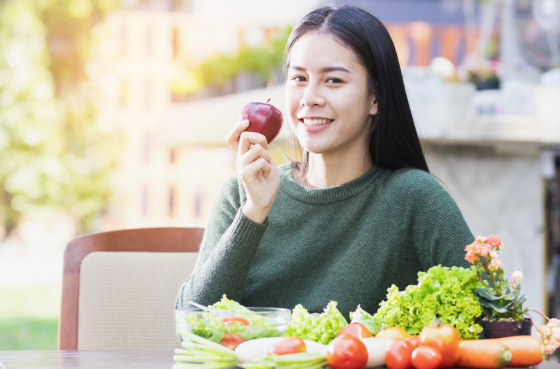
In a recent two-part study from the DPHWB lab, we looked at how the initial stages of the COVID-19 pandemic impacted healthy behaviors and how different forms of perfectionism were linked with these changes among Ontario teenagers. Read below to find out more about Part One!
What are healthy habits and why are they important?
Health-promoting behaviors, or healthy habits, are any daily actions that help to support good health and prevent illness (Sirois, 2001; 2019; Vickers et al., 1990). This includes eating healthy and balanced meals, incorporating exercise into your daily routines, getting a good night’s sleep, and finding time to relax. These behaviors seem to be especially important in promoting overall wellness during the pandemic. Specifically, engaging in these types of health behaviors have been likned with better physical well-being and infection prevention (e.g., Cummings et al., 2022) as well as better mental health (e.g., Shanahan et al., 2020) during the COVID-19 pandemic.
What do you mean by different forms of perfectionism?
Issues 2 and 3 of The Young & The Perfectionistic focused on perfectionistic cognitions, or automatic thoughts about the intense need to be perfect and to avoid mistakes. However, we can also think of perfectionism at the trait, or dispositional, level (Hewitt et al., 2017). At the trait level, perfectionism involves requiring absolute perfection of yourself and/or others (Hewitt & Flett, 1991). Among teenagers, researchers tend to focus on how and why teenagers demand perfection of themselves (Flett et al., 2016). This tends to happen through two pathways:
1) Setting unrealistically high standards for yourself (e.g., an internal need to be perfect)
2) Believing that other people in your life (e.g., parents, teachers, friends, coaches) expect you to be perfect and that they will be disappointed with you if you fail to live up to their impossibly high expectations (e.g., an external need to be perfect)
However, it does not always have to be one or the other.
In fact, some researchers suggest that different combinations of the internal and external pressure to be perfect can be linked with different outcomes (e.g.,Gaudreau & Thompson, 2010; Rice & Ashby, 2007; Stoeber & Otto, 2006), including outcomes related to physical health (e.g., Molnar et al., 2020; Sirois et al., 2019; Sirois et al., 2021).
In the current study, we were interested if the way teenagers’ healthy behaviors changed early on in the pandemic depended on whether they were:
1) High on the internal need to be perfect
2) High on the external need to be perfect
3) High on both the internal and external need to be perfect
Or 4) Low on both the internal and external need to be perfect (i.e., non-perfectionists)
How did we test this?
In Part One, we looked at how teenagers’ answers on surveys about healthy habits and perfectionism changed after the COVID-19 pandemic hit in Ontario. We compared our participants’ most recent pre-pandemic survey answers to their first post-pandemic survey answers. This gave us an idea of how healthy behaviors changed in the early stages of the pandemic. There were 202 participants who were included in the current study. These participants were between 13 and 19 years old and had filled out surveys both before and after the pandemic began.
What did we find?
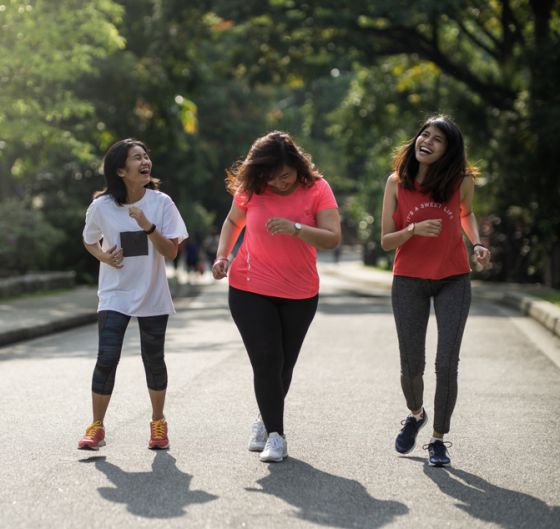
Overall, we found that teenagers were reporting an increase in healthy behaviors at the beginning of the pandemic, compared to before the pandemic. Specifically, the teenagers in our study engaged in the following behaviors significantly more often during the pandemic, compared to before:
- Got a good night’s sleep
- Participated in daily exercise
- Took time to relax
- Ate fresh fruits and vegetables
- Ate well-balanced meals
However, this did not appear to be true for all the participants in our study.
Teenagers who both set unrealistic expectations for themselves AND believed that others expected them to be perfect reported fewer health-promoting behaviors after the pandemic hit in Ontario.
In contrast, all other combinations of perfectionism (e.g., high on the internal need to be perfect only, high on the external need to be perfect only, low on both) were more likely to report habits that would improve their overall health, compared to before COVID-19
In conclusion…
It is possible that the early stages of the pandemic, which involved school closures and stay-at-home orders, offered most teenagers the chance to focus on their health and improve their healthy habits.
However, “extreme” perfectionists, who both hold impossibly high standards for themselves and believe that others will be disappointed in them if they are not perfect, were the only group to report fewer healthy habits during the pandemic, compared to before.
This week’s issue of The Young & The Perfectionistic helped us to understand how perfectionism was linked with changes to teenagers’ healthy habits during the pandemic.
Next week’s issue will focus on part two of this study, where we looked at interviews with teenage perfectionists during the first COVID-19 lockdown, to help us understand why this may be the case. Stay tuned!
TO LEARN MORE ABOUT THIS STUDY, CHECK OUT:
Blackburn, M., Methot-Jones, T., Molnar, D. S., Zinga, D., Spadafora, N., & Tacuri, N. (2022). Assessing changes to adolescent health-promoting behaviors following the onset of the COVID-19 pandemic: A multi-methods exploration of the role of within-person combinations of trait perfectionism. Personality and Individual Differences, 189, 111492. https://doi.org/10.1016/j.paid.2021.111492
PAPERS MENTIONED IN THE POST:
Cummings, J. R., Wolfson, J. A., & Gearhardt, A. N. (2022). Health-promoting behaviors in the United States during the early stages of the COVID-19 pandemic. Appetite, 168, Article 105659. https://doi.org/j.appet.2021.105659
Flett, G. L., Hewitt, P. L., Besser, A., Su, C., Vaillancourt, T. Boucher, D., Munro, Y., Davidson, L. A., & Gale, O. (2016). The child-adolescent perfectionism scale: Development, psychometric properties, and associations with stress, distress, and psychiatric symptoms. Journal of Psychoeducational Assessment, 34, 634-652. https://doi.org/10.1177/0734282916651381
Gaudreau, P., & Thompson, A. (2010). Testing a 2 x 2 model of dispositional perfectionism. Personality and Individual Differences, 48, 532-537. https://doi.org/10.1016/j.paid.2009.11.031
Hewitt, P. L., & Flett, G. L. (1991). Perfectionism in the self and social contexts: Conceptualization, assessment, and association with psychopathology. Journal of Personality and Social Psychology, 60(3), 456-470. https://doi.org/10.1037/0022-3514.60.3.456
Hewitt, P. L., Flett, G. L., & Mikail, S. F. (2017). The comprehensive model of perfectionistic behavior. In Perfectionism: A Relational Approach to Conceptualization, Assessment, and Treatment (pp. 25-63). The Guilford Press.
Molnar, D. S., Sirois, F. M., Flett, G. L., & Sadava, S. (2020). A person-oriented approach to multidimensional perfectionism: Perfectionism profiles in health and well-being. Journal of Psychoeducational Assessment, 38(1), 127-142. https://doi.org/10.1177/0734282919877754
Shanahan, L., Steinhoff, A., Bechtiger, L., Murray, A. L., Nivette, A., Hepp, U., Ribeaud, D., & Eisner, M. (2020). Emotional distress in young adults during the COVID-19 pandemic: Evidence of risk and resilience from a longitudinal cohort study. Psychological Medicine, 1-32. https://doi.org/10.1017/s003329172000241x
Sirois, F. M. (2001; 2019). The Wellness Behaviors Inventory. Unpublished manual. University of Sheffield.
Sirois, F. M., Toussaint, L., Hirsch, J. K., Kohls, N., & Offenbacher, M. (2021). A person-centered test of multidimensional perfectionism and health in people with chronic fatigue syndrome versus health controls. Personality and Individual Differences, 181, Article 111036. https://doi.org.10.1016/j.paid.2021.111036
Sirois, F. M., Toussaint, L., Hirsch, J. K., Kohls, N., Weber, A., & Offenbacher, M. (2019). Trying to be perfect in an imperfect world: A person-centered test of perfectionism and health in fibromyalgia patients versus healthy controls. Personality and Individual Differences, 137, 27-32. https://doi.org/10.1016/j.paid.2018.08.005
Stoeber, J., & Otto, K. (2006). Positive conceptions of perfectionism: Approaches, evidence, challenges. Personality and Social Psychology Review, 10(4), 295-319. https://doi.org/10.1207/s15327957PSr1004_2
Vickers, R. R., Conway, T. L., & Hervig, L. K. (1990). Demonstration of replicable dimensions of health behaviors. Preventative Medicine, 19(4), 377-401. https://doi.org/10.1016/0091-7435(90)90037-k
Volkin, S. (2020, May 11). The impact of the COVID-19 pandemic on adolescents: Faculty experts from the John Hopkins Center for Adolescent Health discuss the challenges faced by adolescents during the coronavirus pandemic. Hub. https://hub.jhu.edu/2020/05/11/covid-19-and-adolescents/
PLEASE NOTE: The information presented in this blog is intended for information purposes only. It is not intended to be used as diagnostic criteria. Perfectionism is not a recognized psychological disorder. The information in this blog is NOT a substitute for advice by an appropriate health professional. If you are experiencing distress, please contact an appropriate health professional.