
About The Master of Applied Gerontology Program
The Master of Applied Gerontology (MAG) professional degree at Brock University prepares graduates to positively influence gerontological practice, program administration, and the health and well-being of the aging population through innovative policy and practice approaches in the field of gerontology.
The MAG is a full (12-month; three-terms) or part-time course-based program that comprises:
- 6 half-credit core courses exploring current issues in gerontology, communication and aging, physical and physiological aspects of aging, mental health, interprofessional practice, and research literacy or program planning and evaluation
- 4 half-credit elective courses exploring a variety of topics such as mobility, community services, death and dying, health behaviour change, psychology, and specialized physiology topics related to aging
- a full credit 300-hour practicum in the Niagara Region
- a non-credit seminar-based course that brings students together with faculty, practitioners, community partners, and other guest speakers to discuss topics related to issues and trends in gerontology
Program Requirements
- Four-year bachelor’s degree in a health-related field
- Applicants must have a minimum of 75% (B) GPA over the final two years of study.
- Two references (at least one must be an academic referee)
APPLICATION DEADLINE: Review process begins after February 15th; however applications are accepted until the program is full
ENTRY: September entry only
NOTE: If your first language is not English, you must prove proficiency; this program will not accept an EPT exemption. For more information: https://brocku.ca/admissions/english-proficiency/
IS THE PROGRAM FUNDED?
The MAG program is not funded; however, students are eligible to apply for scholarships, OSAP and other funding, including the Douglas Rapelje Memorial Bursary.
For more information on Brock’s graduate studies funding, please visit: Funding information – Graduate Studies (brocku.ca)
For more information on Graduate Studies at Brock for International Students, please visit: International Applicants
Each MAG student must successfully complete one (1) full credit practicum experience (GERO 5F99) to fulfill their MAG degree requirements.
The practicum experience is a minimum of 300 hours in length, in agencies around the Niagara Region, completed during the Spring/Summer term ONLY.
All practicum opportunities will be developed and approved by the MAG Program.
Practicum settings vary from year to year; however, they include a wide range of local health care organizations and community support agencies. MAG partners include local hospitals, rehabilitation and seniors’ fitness centers, long term care homes, assisted living, hospice, palliative care support services, retirement homes, community support service agencies, Regional and Municipal governments, local businesses, and non-profit organizations.
The focus of MAG practicums varies in scope in terms of how students support the effective provision of program and services to older adults. The focus of opportunities will range from clinical and therapeutic support, health promotion, education and training, program development and implementation, program evaluation and quality improvement initiatives, and health administration training.
HOW DO I FIND A PRACTICUM OPPORTUNITY?
MAG practicum opportunities are posted on an internal site for MAG students each Winter term. Additional opportunities may also be identified by the student in consultation with MAG program.
Students enrolled in MAG program must also pay an experiential education administrative support fee. See the Faculty of Applied Health Sciences Experiential Learning webpage for further details.
WHAT IS AN APPLIED MASTER’S DEGREE?
An applied master’s degree is designed to help students prepare for a career in a specific field and puts the focus on real-world application. Applied graduate degrees typically require students to complete fieldwork (e.g., practicum, internship, projects, etc.) in their field of study before graduation. Such programs do not lead to entry into a doctoral program.
WHAT TYPE OF UNDERGRADUATE DEGREE IS REQUIRED TO APPLY?
Successful completion of a four-year bachelor’s degree in a health–related field such as kinesiology, nursing, recreation and leisure, health science, medical science, public health, physical education, psychology or equivalent.
CAN I MAIL OR FAX MY APPLICATION?
Application materials must be submitted online via the OUAC Portal.
NOTE: Mailed and/or faxed documents will not be accepted.
CAN I COMPLETE THE PROGRAM PART-TIME?
Yes, you can complete the MAG program part-time.
I HAVE BEEN OUT OF UNIVERSITY AND WORKING IN A RELATED FIELD FOR SEVERAL YEARS. FINDING A CURRENT ACADEMIC REFERENCE WILL BE DIFFICULT. CAN I STILL APPLY?
Yes, absolutely. We welcome applications from anyone with a health or health–related undergraduate degree in addition to professional and/or life experience working with older adults. In this type of situation, we recommend submitting two professional references as part of your application. In addition, please address this unique situation in your letter of intent.
DO I NEED TO FIND A SUPERVISOR?
The MAG is a course–based graduate program. Students DO NOT require a supervisor, as there is no research component to the program.
- Direct care for older persons and their families
- Program planning and evaluation
- Program management
- Municipal and regional government programs
- Provincial and federal government departments
- Social service agencies
- Community health centres
- Hospital-based programs
- Gerontological health research
- Providing gerontological expertise for private sector business and industry
- Health professional educator
A MAG degree can also enhance the quality of your application when applying for additional health professional training in:
- Medicine
- Physician Assistant
- Nursing Accelerated Stream programs
- Physiotherapy
- Occupational Therapy
- Speech-Language Pathology
The Reimagining Aging Speaker Series is an annual event offering public lectures to the Brock and larger Niagara community about exciting topics in the aging and gerontology field.
Reimagining Aging Speaker Series – Faculty of Applied Health Sciences (brocku.ca)
In collaboration with Niagara Regional Housing (NRH), the Intergenerational Community-Engaged Residency (ICER) Award provides a unique experiential learning and living opportunity to one incoming MAG student annually.
The successful applicant will apply theory to practice as they spend 12 months immersed in the lived experience of older adults at 14 Centre Street, a 132-unit subsidized seniors residence located in downtown St. Catharines. For more information about 14 Centre Street, visit Niagara Regional Housing and HNHB Healthline.
The awardee will support and contribute to the vibrancy of the residence by providing 30-40 hours per month of community engagement in the building, and in return, the awardee will receive a partially furnished one-bedroom apartment in an NRH seniors residence (students will pay <$100/month).
Application Process
All incoming MAG students are invited to apply for the ICER award upon acceptance into the program. Applications will be assessed on their community-engaged action plan, rationale for interest, and alignment with the aim of this award.
Meet our ICER Awardees
2025 – 2026 Anaiah Asif
“The ICER Award has given me the chance to live in my learning. It moved what I study beyond lectures and into everyday life, where conversations and small moments with tenants became just as meaningful as any course material. Living alongside older adults
challenged assumptions I did not even realize I held about aging and showed me how those assumptions influence the way we understand and respond to their experiences. It pushed me to reflect more honestly, and that process of unlearning and relearning has been one of the most transformative parts of my growth, both personally and professionally. Through ICER, I have developed a deeper understanding of aging that I will carry forward into my future career in healthcare, guiding how I listen, build meaningful relationships, and advocate for older adults in ways that recognize and respect their individuality and lived experience. This unique opportunity is one I feel incredibly fortunate to have been part of, and one that will stay with me long after it ends.”
2024 – 2025 Carver Leggatt *** 2025 Experiential Education Student of the Year Award***
“Living among older adults taught me the importance of patience, particularly when assisting with technology and relaying information to be comprehensive. I came to understand and appreciate the concept of “belonging” and what that means in a residency of older adults. The desire to be part of a group and the fear of rejection can deeply influence how individuals engage with others.”
“Ultimately, the ICER Award and time at 14 Centre Street leaves me with a deeper understanding of aging, a stronger professional identity, and renewed commitment to advocating for accessibility and community-building initiatives. The impact of this work has been profound, and I know the lessons learned and memories shared will shape my career in gerontology for years to come.”
2023 – 2024 Rebecca Pippy
“I learned the real difference a small interaction can make for someone, and how important those interactions are for some people even if it doesn’t seem to faze them in the moment. Tenants appreciate having a new face in the space and even if they don’t interact with the programs, they appreciate seeing someone trying to improve the building.”
“I learned how to really listen to people and observe a population, by talking to these tenants I learned more than I can say about older adults living on low incomes just trying to get by.”
“One of the central benefits of this placement for a student is getting to see, hear, and experience issues that older adults face and bringing those issues back to the classroom. I used my experiences in many examples over the year during classes, adding to discussions with real world examples which was beneficial for me as well as my classmates.”
“14 Centre Street really is a unique place to exist, and I feel honored to have been invited in with such kindness. I gained so much valuable knowledge and personal experience during my time there. It was an unforgettable experience and one that I will use to be the best gerontologist I can be.”
2022 – 2023 Ella Laygo
“This experience taught me to have a willingness to be vulnerable. I felt like everything was new to me and a learning experience, but I also reflected on ‘what are my neighbours getting out of this, how are they able to contribute their skills and talents with me and others?’ Listening to their life stories, personal experiences, complaints, and joys helped me understand the process of aging and the life course of a person”
“I messaged one of the tenants if he has any suggestions of what he experienced or what other older adults experience that needs evaluation or assessment [for an assignment] […] I thought ‘let me ask a friend’. I thought that this was valuable because I get to interact with tenants that benefits me with my schoolwork. And at the same time, I get to know where they are at and what needs to change in the system, in their point of view.”
If you have questions about the ICER award, please contact [email protected].
- Allan Adkin https://brocku.ca/applied-health-sciences/kinesiology/faculty-research/faculty-directory/allan-adkin-phd/
- Val Andrew Fajardo, PhD https://brocku.ca/applied-health-sciences/kinesiology/faculty-research/faculty-directory/val-andrew-fajardo/
- Alisa Grigorovich https://brocku.ca/applied-health-sciences/recreation-leisure/faculty-research/faculty-directory/alisa-grigorovich/
- Kimberley L. Gammage https://brocku.ca/applied-health-sciences/kinesiology/faculty-research/faculty-directory/kimberley-l-gammage-ph-d/
- Pauli Gardner https://brocku.ca/applied-health-sciences/health-sciences/faculty-research/faculty-directory/pauli-gardner-phd/
- Jenn Salfi https://brocku.ca/applied-health-sciences/nursing/contact/faculty-directory/jenn-salfi-rn-bscn-msc-phd/
- Luke Turcotte https://brocku.ca/applied-health-sciences/health-sciences/faculty-research/faculty-directory/luke-turcotte-phd/
- Colleen Whyte https://brocku.ca/applied-health-sciences/recreation-leisure/faculty-research/faculty-directory/colleen-whyte-phd/
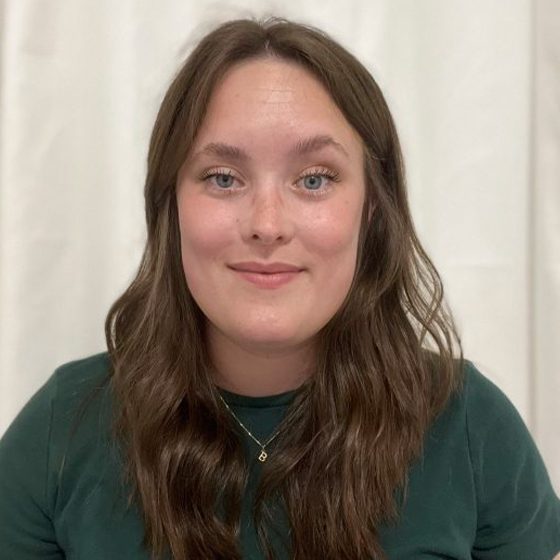
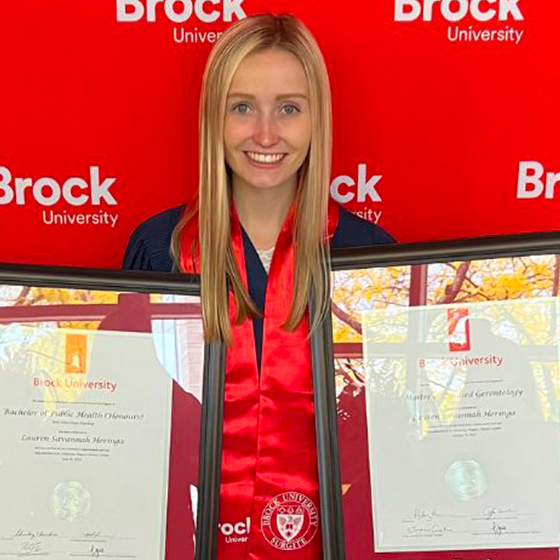
MAG Graduate Profiles: Where are they now?


Contact Information
Ty Bolibruck
Master of Applied Gerontology Program Coordinator
Office: STH 351
905 688 5550 x4560
[email protected]
Faculty Of Graduate Studies
[email protected]

