
The Niagara Community Observatory is a public-policy think-tank working in partnership with the Niagara community to foster, produce and disseminate research on current and emerging issues.
You can find all NCO research on our Policy Briefs page.
UPCOMING EVENT: October 5
Niagara Elections 2026: Changes and Challenges
The Niagara Community Observatory hosts a non-partisan evening discussion meant to educate and engage the voter on Monday, Oct. 5. It features Professor Emeritus David Siegel, a renowned expert on municipal politics, who will talk about the changes coming to Regional government and how that will affect residents. The evening will also include Brock experts discussing municipal issues: Charles Conteh (economic development), Joanne Heritz (Housing), Martha Barnes and Sarah Ane (Parks & Recreation) and public health (tba).
Our experts have created facts sheets for the evening, which you can find here:
Economic Development
Housing
Parks & Recreation
Public Health
References for all Fact Sheets
This event is nearly sold out. Please check Eventbrite for the latest availability.
Niagara Elections 2026: Changes and Challenges Tickets, Monday, October 5 • 7 PM – 9 PM | Eventbrite
Latest Research
Investigating Niagara’s Greenhouse Innovation Network
Niagara is one of the most important greenhouse production regions in Canada and its ability to encourage and support greenhouse innovations will play an important role in the national effort to promote food security and sustainability.
NCO Policy Brief #65, The Greenhouse Innovation Service-Delivery Ecosystem in Southern Ontario, maps and analyzes the ecosystem of greenhouse technology service delivery in Southern Ontario, focusing on agricultural intermediaries (loosely defined as organizations that support the development and uptake of greenhouse technology) as public service/program delivery entities. Our research questions ask: How do intermediary organizations support greenhouse agribusinesses and promote the uptake of innovation? How do they create value for their end-users? Who do they include in their network to achieve their
goal of promoting innovation in the agrifood industry? It concludes with several recommendations to improve service delivery.
The policy brief is written by Dr. Charles Conteh, Dr. Martha Barnes, and Dr. Carol Phillips, using social network analysis and interviews to map out and investigate the relationships and processes used in the development and uptake of innovations in the agrifood greenhouse industry.
You can read more about this research in The Brock News article, “Strengthening greehouse technology innovation in Southern Ontario.”
Visions of Indigenous Housing in Niagara
Indigenous Peoples in Canada are disproportionately unhoused, so any discussion of housing policy in Niagara, no matter the level of government, must recognize their needs and include their voices when making housing decisions – including co-development – to ensure safe, secure and culturally appropriate homes.
That is the starting point of the latest NCO policy brief, Indigenous Visions of Making Home in Niagara by Dr. Joanne Heritz and Dr. Liam Midzain-Gobin. 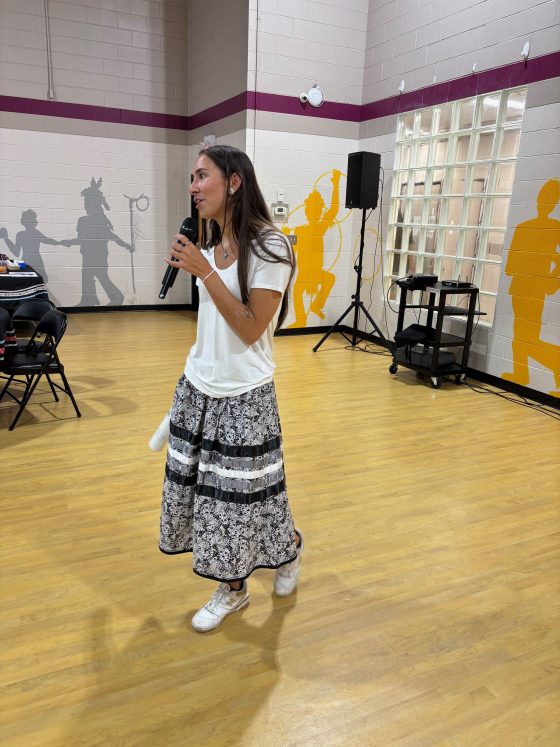
NCO policy brief #64 is part of two larger studies—supported by a Brock Indigenous Research Grant as well as the Niagara Community Foundation—about Indigenous housing in Niagara. It is co-authored by an Indigenous Housing Advisory Circle and follows Ownership, Control, Access, and Possession (OCAP) principles (FNIGC, 2023) for Indigenous data sovereignty that ensures research is developed for the Indigenous community. The brief gives an overview of land rights and treaties, principles guiding the research, details of how the research was carried out and recommendations for governments at the regional, provincial and federal levels. Its findings come from conversations and sharing circles that took place with 90 members of the Indigenous community in Spring 2024 and then reviewed and supported by the Indigenous community at events sponsored by IHAC in Spring and Summer 2025.
You can find the full policy brief here, or read more about it in The Brock News: Policy brief explores visions of Indigenous housing in Niagara.
Has the legalization of cannabis increased impaired driving rates?
Dr. Michael Armstrong, associate professor at the Goodman School of Business, has written NCO policy brief #63, Changes in Canada’s Impaired Driving Rates since 2018, summarizing and analyzing research data on how impaired driving evolved after 2018’s legislative changes. It uses data from Statistics Canada, hospital emergency rooms as well as especially focusing on a recent analysis of police-reported impairment data.
The research implies that drivers more often tested positive for cannabis use after 2018, but not necessarily for cannabis impairment. Meanwhile, although police detected substantially more impaired drivers than earlier trends would have projected, that increase seems related more to strengthened enforcement than to legalized cannabis.
You can read his full policy brief here.
The Brock News recently wrote about the research: “NCO policy brief explores impaired driving rates following cannabis legalization”
Increasing Hunger in Niagara: The Need for Action
The Niagara Community Observatory has just published policy brief #62, Increasing Hunger in Niagara: The Need for Action, by Dr. Joanne Heritz, Adjunct Professor and NCO Research Associate.
This research is a follow-up to her earlier policy brief on food insecurity in Niagara, focusing this time on the importance of congregate meals, as well as an update on food-bank use. It also provides recommendations for action from all levels of government. Dr. Heritz presented her research at a recent United-Way of Niagara event. You can also read about it in The Brock News:
“Food insecurity in Niagara rising at ‘alarming’ rate: NCO policy brief”
Crafting Inclusion within the Beverage-Alcohol Industry: Untapping the potential of smaller wineries, breweries, and distilleries
The Niagara Community Observatory and Goodman School of Business partnered for an engaging workshop on February 5 as they released NCO Policy Brief #61, Crafting Inclusion within the Beverage-Alcohol Industry, by Dr. Shawna Chen, Associate Professor of Entrepreneurship at the Goodman School.
Seventy people attended the event at Pond Inlet to hear Dr. Chen’s presentation on equity, diversity and inclusion in the industry followed by a riveting panel discussion featuring Bev Crandon (Vinequity), Adrienne Fox (Sleeman Breweries), and Ren Navarro (B.Diversity).
The brief’s findings are based on three studies,* including a survey and interviews, that gathered insights and perspectives from diverse people within the industry on their opinions of EDI in their workplace. The research explores:
- industry employee perceptions of the workplace.
- the important role that equitable HR practices and psychological safety play in an inclusive workplace.
- steps that can be taken within the workplace to responsibly integrate EDI policies.
- the meaning behind equity, diversity, and inclusion and their importance to a successful business.
- insights into how EDI policies in the workplace can support employees to achieve greater success within the industry.
You can read the full policy brief here. The Brock News also did piece on the project: “EDI advances needed in Canada’s alcoholic beverage industry: Brock Research”
*These studies were supported in part by the LCBO’s Spirit of Inclusion Initiative – a program designed to create opportunities for diverse women to enter, advance, and thrive in the beverage alcohol industry. To learn more visit: The Spirit of Inclusion Initiative
Navigating Generative AI
Our latest policy brief has just been released, Navigating Generative AI: Implications for small business and non-profits, by Dr. Kate Cassidy and Dr. Michelle Chen from the Dept. of Communications, Popular Culture, and Film. This marks Policy Brief #60 in the NCO series.
We’ve been hearing a lot recently about the use of generative AI in our daily lives, whether through social media or in the workplace. This latest research examines the risks and benefits of generative AI for small businesses and non-profits—and how organizations can prepare for its responsible use in the workplace. This also has implications for work in the public sector. The brief is based on exploratory research into the experiences of early adopters of generative AI in Niagara, providing a deeper understanding of generative AI’s potential and how one can learn to navigate its integration thoughtfully.
More than 80 people attended the NCO’s online presentation on January 21 with Dr. Cassidy and Dr. Chen. We would like to thank our panel Dolores Fabiano (South Niagara Chambers of Commerce), Rachel Gillmore (Community Potential), and Blake Landry (Niagara Economic Development) for their thoughtful perspectives on this burgeoning topic. You can find a recording of the session here.
You can also read about the event and the research in The Brock News article, “Businesses must plan before leaping into generative AI”.
2024 RESEARCH
WILSON FOUNDATION: Exploring Niagara’s Economic Past and Potential Future
How did we get here? Where are we going?
The Niagara Community Observatory and Brock University conducted a two-year research project in partnership with the Wilson Foundation, telling the story of Niagara’s economic development from pre-1900 to the present day.
Over two years, our interdisc iplinary reserch team focused on six key economic sectors: hydroelectric power generation; manufacturing and industry; marine transportation; tourism; agriculture and agri-business; and the emerging sector of information and communications technology. The information and knowledge gathered is now presented through three final reports, 16 working papers, five historical papers with 18 vignettes, and 10 videos. They can all be found here, on our project website hosted by the Brock Library. Our symposium gathered a full house of policy-makers and interested stakeholders to discuss the future of Niagara’s economy. You can read about the event in The Brock News piece: “Research offers recommendations to support growth in key Niagara Sectors.”
The project has also provided experiential learning and research opportunities for Brock’s student body.
NCO Director, Dr. Charles Conteh, led the project along with a research team gathered from the university’s Faculties of Social Sciences, Humanities, Education, and Goodman School of Business, as well as Library Archives and Special Collections.
For more information, see our Wilson Foundation page.
The Brock News funding announcement from Thursday, Sept. 8, 2022.
Age-Friendly Communities & Volunteerism
We are pleased to release Policy Brief #59, Change in an Evolving Niagara: Navigating the Age-Friendly Communities Movement and Volunteerism, by Aliya Aragon, a third-year public health student, and Dr. Miya Narushima, Associate Professor in the Department of Health Sciences.
We are in the middle of the United Nations (UN) “Decade of Healthy Ageing” (2021-2030), which is a global initiative to promote healthy aging and well-being for older adults, their families, and their communities. The key principle of the Decade is to foster older adults’ participation as the “drivers of change” in creating age-friendly environments, combating ageism, improving person-centred integrated care, and increasing access to good-quality long-term care. The region-wide community in Niagara has a head start toward achieving these goals, thanks to the Age-Friendly Niagara (AFN) movement that has created a structure of local advisory committees across its 12 municipalities, fostering civic engagement and intergenerational connections in Niagara’s urban-rural-mixed community.
Aragon and Dr. Narushima’s policy brief chronicles the age-friendly movement in Niagara while examining the changing demographic of the region. The authors propose that while the demographic is aging and diversifying, and many challenges have been exacerbated by COVID-19, this should be seen as an opportunity — especially through volunteerism — to engage older and younger generations alike, encouraging their civic engagement as community resources.
Food Insecurity in Niagara
UPDATE: Dr. Heritz recently presented a webinar on this topic as part of the 60 Research Talks at Brock series. You can find that webinar here – Addressing Food Insecurity: Challenges and Niagara’s Experience.
Policy Brief #58, Sustaining Food Security in Niagara, by Joanne Heritz, is a follow-up to her NCO research into affordable housing (briefs #48 and #54).
Dr. Heritz, assistant professor (LTA) in the Dept. of Political Science, looks at the food insecurity situation in Niagara, defined as the inability to afford adequate food to meet a household’s basic needs. A United Way report states just over 15 per cent of Niagara residents are experiencing food insecurity and that number is growing. Dr. Heritz conducted in-depth interviews with those working in the organizations that are on the front line supporting Niagara’s residents in need, in order to investigate the magnitude of the problem at the local level and the initiatives that have been implemented thus far to combat the problem.
Unaffordable housing, precarious employment, and inadequate social assistance are the primary reasons given for Ontario residents who are using food banks.
The policy brief makes recommendations for all three levels of government. Food banks are not the solution. They are a symptom of a larger problem. The hope is that this research will spark a conversation at all levels about what policy changes will help to solve those underlying problems and, as a result, stem the growth of food insecurity.
You can read more about this research in The Brock News (April 2, 2024) : “Brock research paints stark picture of food insecurity in Niagara”
Water governance in Lyons Creek East
Rebecca Van Massenhoven is a recent master’s graduate in the Dept. of Political Science. Her major research paper, supervised by Dr. Charles Conteh, looked at multi-level governance in the remediation of Lyons Creek East and was recently given the Faculty of Social Science Writing Award for Best Graduate Major Research Paper. She has turned this project into NCO Policy Brief #57: Managing Complex Relationships and Shared Responsibilities: The case of Lyons Creek East water governance
Specifically, this policy brief examines how the Niagara Peninsula Conservation Authority has worked with other governmental agencies and actors at various levels to create and implement policy in Lyons Creek East.
Van Massenhoven was also awarded the 2023 Gold Medal at the National Student and Thought Leadership Awards, by the Canadian Association of Programs in Public Administration (CAPPA) and the Institute of Public Administration in Canada (IPAC), for her research into participatory environmental governance.
2023 RESEARCH
Canada Summer Games research looks at municipal collaboration
The NCO’s collaborative project for the Canada Summer Games was released in September 2023. Policy brief #56, Municipal Collaboration in Regional Event-Hosting Processes: The case of the Niagara 2022 Canada Summer Games, is written by Kyle Rich, Erin Sharpe, Martha Barnes, Carol Phillips, and Emily Romano as part of the Vice President-Research Canada Games Research Grants program.
This research examines how local area municipalities collaborated once the Niagara Region was awarded the hosting rights to the Canada Summer Games, held in 2022. The research team presents a case study of the event using social network analysis and interviews to understand the structure of the hosting network, as well as the relationships and collaborations that developed. These relationships and collaborations can have implications for creating sustainable legacy and building knowledge and expertise within our municipalities.
The hope is that these findings can inform future decision-making related to how event bids are pursued and assessed within a regional hosting model, and how hosting structures can be strategically engaged to be beneficial for all participating municipalities.
Agri-Innovation Research Day, January 25, 2023
Our Agri-Innovation Research Day showcased the projects we have been working on over the past two years, funded by the Canadian Agricultural Partnership (the Partnership), a five-year, $3-billion investment by federal, provincial, and territorial governments to strengthen and grow Canada’s agriculture and agri-food sector.
The online event on Wednesday, Jan. 25 featured three sessions.
Morning Session (10 am to 11:30 am) – Automation & Robotics Adoption in Ontario’s Agri-food Sector (presented by Dr. Charles Conteh, Dr. Amy Lemay, and Dr. Jeff Boggs)
Thank you to our panelists: Steve Boese (Innovate Niagara), Kristen Obeid (OMAFRA), and Bill VandenOever (Bold Robotic Solutions, Inc.)
Lunchtime Session (12 noon to 1 pm) – Niagara Agriculture Municipal Learning Network (presented by Bunmi Okuwa and Dr. Amy Lemay)
Afternoon Session (2 pm to 3:30 pm) – Mobilizing Knowledge for the Adoption of BMPs in Ontario’s Horticulture Sector (presented by Shannon Ruzgys, Paige Fournier, Kaitlyn Carr, and Dr. Amy Lemay)
A recording of these presentations can be found at the following links:
Automation & Robotics Adoption
Niagara Agriculture Municipal Learning Network
Mobilizing Knowledge for the Adoption of BMPs
2022 RESEARCH
Growing agri-innovation series phase 3 
Our latest policy brief — #55 — has just been released!
Systemic Barriers and Drivers to Technology Adoption in Canada: Lessons for Agri-Innovation in Ontario from Stakeholders of Canada’s Global Innovation Clusters was written by Dr. Amy Lemay, Allison Clark, Dr. Jeff Boggs, and Dr. Charles Conteh as part of our ongoing research project funded by the Canadian Agricultural Partnership.
In this policy brief, which follows a working paper released in May 2021 and policy brief #53 released in November 2021, our attention turns to one-on-one interviews conducted with stakeholders of Canada’s Global Innovation Clusters (formerly known as Innovation Superclusters). This is the third phase of a more extensive four-pronged study to investigate opportunities and challenges associated with building competitive production systems in Ontario’s agri-food sector, focusing on the barriers and drivers associated particularly in the development and adoption of automation and robotics technology.
The interviews provide insights into the challenges faced by researchers, technology developers and intermediaries in developing, scaling and commercializing automation and robotics technologies and their perceptions of barriers and drivers of adoption faced by their end-users, such as farmers.
You can find a recording of the research presentation on our Podcasts & Presentations page.
This is an Ontario Agri-food Research Initiative (OAFRI) project. OAFRI projects are funded through the Canadian Agricultural Partnership, a five-year, $3-billion investment by Canada’s federal, provincial, and territorial governments to strengthen and grow Canada’s agriculture and agri-food sector.
SPECIAL REPORT CELEBRATING THE VPR CANADA GAMES RESEARCH GRANTS PROGRAM
The NCO kicked off a great day of celebrating Brock research on October 6 at the Brock-Canada Games Academic Showcase with its special report LEVERAGING RESEARCH FOR LEGACY How a stakeholder can leverage a major sport event to create lasting legacy for its own community and beyond: The case study of Brock University’s Canada Games Research Grants program. The report, written by Dr. Carol Phillips, Jake Quinton, and Dr. Julie Stevens frames the $200,000 grants program as a legacy-builder for both the university and Niagara. Some 34 faculty, six staff and 82 students across all Faculties participated on 30 projects, and 32 community partners also got involved.
—
IMPROVING SAFE AND AFFORDABLE HOUSING FOR WOMEN IN NIAGARA, BEFORE AND AFTER COVID-19
The NCO has just released its full policy brief, Improving Safe and Affordable Housing for Women in Niagara, Before and After COVID-19, written by Dr. Joanne Heritz, Dr. Kathy Moscou, and Dr. Charles Conteh. This policy brief is the culmination of a year’s work, funded through SSHRC and in partnership with the YWCA Niagara Region, in which the research team listened to women’s stories of homelessness in order to inform policy change.
The full brief follows our public event, held at Pond Inlet on Wednesday, June 22 where we released a fact sheet, Unhoused in Niagara, giving a snapshot of our findings. More than 50 politicians, community service workers, and academics gathered to hear that presentation by Dr. Heritz, Dr. Moscou, and research assistants Tara Dekker and Katie Keays. Special thanks goes to our amazing panel: Jenny Shickluna (Mgr. Housing Programs, Niagara Region), Wendy Sturgeon (Exec. Dir. Niagara Chapter- Native Women Inc.), and Christina Thomas (community support worker and a member of the project’s Housing Advisory Council).
You can find a recording of the June 22 presentation on our Podcasts & Presentations page.
Student Research
The NCO welcomes graduate students who may wish to be affiliated with the institute, participate in its community outreach activities, and contribute to producing and disseminating evidence-based research on current and emerging issues in Niagara and beyond. Visit our Opportunities to Participate page for more information. If interested, contact the NCO Director, Dr. Charles Conteh, by email: [email protected].
Our Director
Dr. Kyle Rich, director of the NCO, is an Associate Professor in the Dept. of Sport Management, Faculty of Applied Health Sciences, who specializes in how community, policy, and social inclusion/exclusion shape experiences in sport, recreation, and physical activity programs.
You can reach him at [email protected]