Articles from:September 2025

  • 10 years of reconciliation: Brock researcher on impact of Calls to Action in post-secondary

    EXPERT ADVISORY – SEPTEMBER 29, 2025 – R0109

    As many people across the country don orange shirts to observe the National Day for Truth and Reconciliation on Sept. 30, Sheila Cote-Meek finds herself encouraged by the support.

    But responding to those calls shouldn’t be confined to a moment in time, says the Professor and Director of Indigenous Educational Studies at Brock University.

    Cote-Meek, a member of the Temagami First Nation, is looking back on the 10 years since the Truth and Reconciliation Commission of Canada (TRC) first published its 94 Calls to Action.

    Reconciliation, she says, is a journey.

    “It’s an ongoing commitment to move forward together and build institutions that are more inclusive of Indigenous Peoples and knowledges,” she says.

    Cote-Meek says the TRC report was “a wake-up call” to all Canadian institutions — especially in education.

    “Universities and colleges began — and continue — to respond to the calls, which were established as part of the Indian Residential Schools Settlement Agreement, but we need to keep the conversation going 12 months of the year,” she says.

    Nationally recognized for her work to advance change in higher education through Indigeneity, decolonization and equity, Cote-Meek is working on a second edition of her publication, Colonized Classrooms – Racism, Trauma and Resistance in Post-Secondary Education, which was first published in 2014.

    By gathering perspectives of Indigenous faculty members and students across the Ontario post-secondary landscape, Cote-Meek is exploring how Canadian universities and colleges are making structural changes towards reconciliation through decolonization.

    “I am interested in how the sector is making deeper, systemic changes in ways that are not performative; in ways that are truly changing how Indigenous and non-Indigenous Peoples interact on campuses,” she says.

    Among those, Cote-Meek says, are curriculum changes, a rising number of Indigenous faculty, staff and students, and the creation of dedicated spaces and buildings on campuses to support them.

    “This increase in Indigenous presence on campuses is positive and encouraging; as a sector, we are moving forward and enacting curriculum changes to incorporate Indigenous content,” she says.

    Even with this momentum, Cote-Meek says it is critical to acknowledge that forms of racism in post-secondary education systems still exist and operate in different ways.

    Across the sector, support needs to be built in for Indigenous faculty whose course material often includes challenging and difficult subject matter, including the history and impact of the residential school system, she says.

    “The emotional labour and responsibility Indigenous faculty members bear can be a heavy weight to carry,” she says. “We need to work together to mitigate feelings of isolation and minimize potential classroom tensions for Indigenous students and educators.”

    While true reconciliation is not going to happen overnight, Cote-Meek says “we are beginning to see deeper shifts in attitudes about Indigenous Peoples and their beliefs. It starts with education.”

    Sheila Cote-Meek, Professor and Director of Indigenous Educational Studies at Brock University, is available for media interviews on this topic.

    For more information or for assistance arranging interviews:

    *Sarah Ackles, Communications Specialist, Brock University [email protected] or 289-241-5483

    – 30 –
    Categories: Media releases

  • SPARK initiative to position Brock as global leader in climate action 

    MEDIA RELEASE – SEPTEMBER 29, 2025 – R0108

    A new Brock University initiative is fuelling efforts to reduce the institution’s carbon footprint and impact on the planet.

    Now underway, SPARK (sustainability, performance, adaptation, renewal and knowledge) is a three-year clean infrastructure program that supports current University needs while also advancing Brock’s commitment to build a sustainable future.

    The energy retrofit will enable Brock to reduce campus greenhouse gas emissions by 83 per cent by 2028, surpassing the University’s initial target of a 75 per cent reduction by 2030 (compared to a 2013 baseline). The initiative will also cut energy usage by 60 per cent.

    SPARK will address deferred capital renewal and operational inefficiencies faced by the University, leveraging the Canadian Infrastructure Bank’s low-interest carbon fund in partnership with Enbridge Sustain through an energy-as-a-service funding model. This approach will move the retrofit forward without upfront capital costs from the University.

    “SPARK builds on Brock’s legacy of climate action and positions the University as a global post-secondary leader in sustainability and carbon reduction,” says Scott Johnstone, Vice-President, Administration and Services. “Through adaptive thinking and innovative solutions, we’re prepared to address the challenges of today while creating a better tomorrow.”

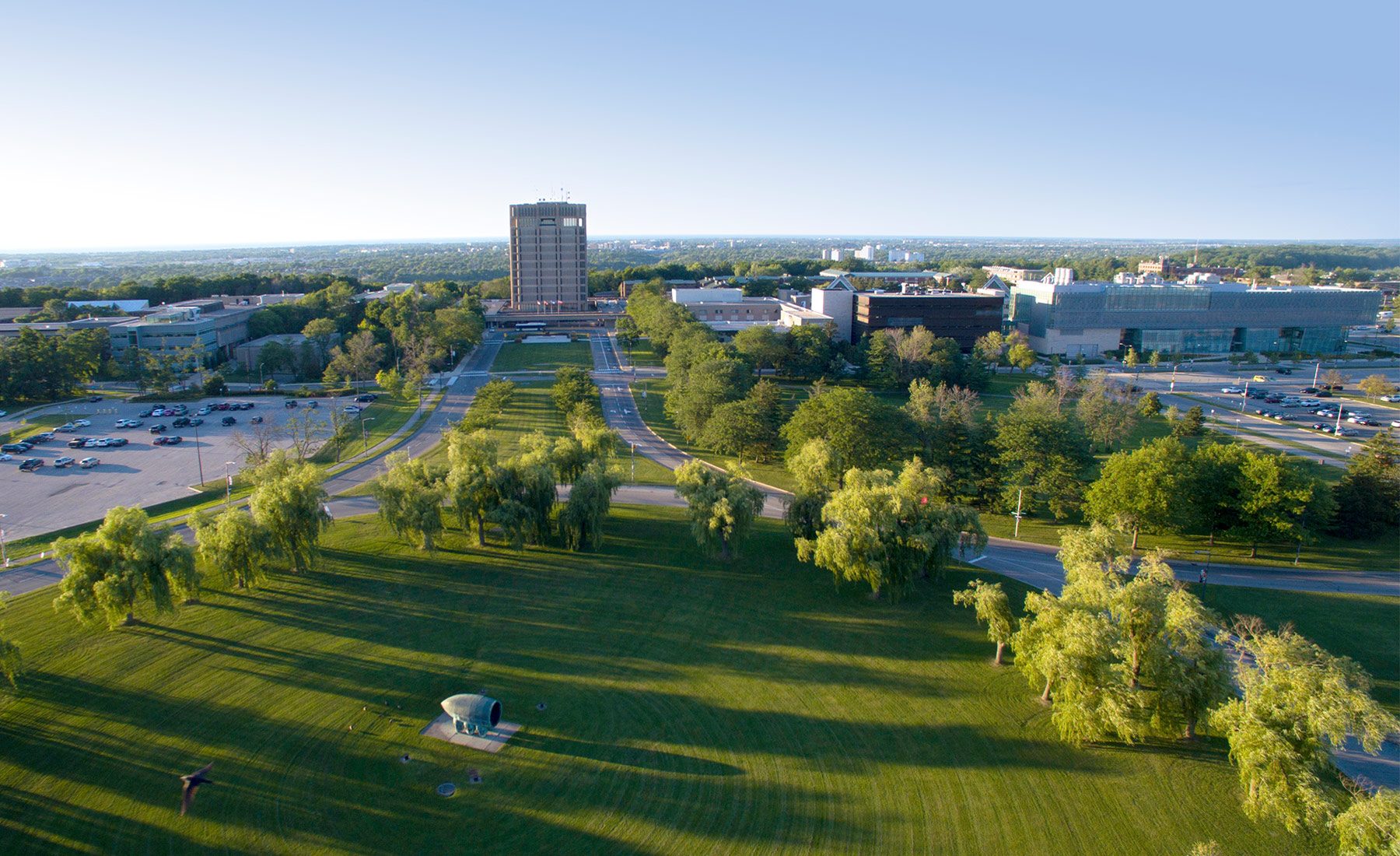
    To enable an energy-as-a-service solution, facility renewal will take place in spaces across campus, including the Walker Sports Complex, Arthur Schmon Tower, Thistle Complex, Robert S.K. Welch Hall and Mackenzie Chown Complex, among others. Work will also take place on Brock’s District Energy Network.

    SPARK will see lights across campus converted to LED, new efficient hot water heat pumps installed and building automation system controls optimized, among other upgrades. New air handling units will be installed in several buildings across campus and new fume hoods installed in the Mackenzie Chown Complex.

    Design is underway, with consultants conducting site visits and inspections across campus. The initiative’s completion date is planned for 2028.

    “Our modernized systems will not only meet today’s needs but will deliver reliable, cost-effective operations that strengthen our academic and research mission,” says Mary Quintana, Interim Associate Vice-President, Facilities Management. “We will deliver both energy performance, with savings through efficiencies, and building performance, fostering an improved student experience with healthier and more comfortable spaces.”

    SPARK will improve system performance across campus and prepare Brock to thrive in the face of future climate risks and uncertainties, Quintana says.

    “This is not only about infrastructure renewal; it’s about breathing new life into Brock and our community, ensuring that our spaces match the ambition and excellence of our people,” she says.

    For more information or for assistance arranging interviews:

    *Sarah Ackles, Communications Specialist, Brock University [email protected] or 289-241-5483

    – 30 –

    Categories: Media releases