Brock is one of only three universities in Canada to offer Integrated Engineering, a new approach to engineering education tailor-made to address emerging needs and challenges in the engineering field.
Brock Engineering employs a transformative work-integrated learning approach to prepare students to address the technological, engineering and social innovation challenges of the world in support of job creation, business development, community development and social inclusion across the Niagara region and beyond.
4 Principal Themes of Engineering at Brock
1. Sustainability
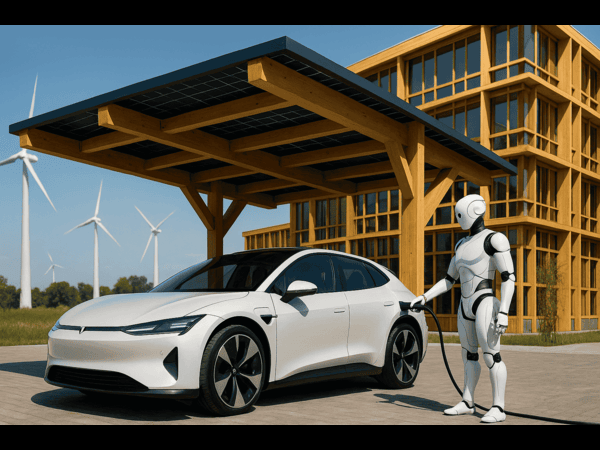
Encompasses sustainable construction, advanced materials, intelligent systems, and integrated clean energy solutions, including energy storage and conversion technologies such as batteries and green hydrogen systems, to support resilient infrastructure and effective environmental management. This theme supports healthier, more resilient communities through low-carbon design, AI-driven monitoring, smart grids, and human-centered innovation. Aligned with Canada’s commitment to achieving net-zero emissions, the focus includes electric vehicle integration, renewable energy systems, multi-energy coordination, and climate-adaptive technologies.
2. Automation and Manufacturing

Focuses on the design and deployment of intelligent systems for advanced manufacturing, robotics, and industrial automation. This theme emphasizes AI-enhanced processes, cyber-physical systems, and innovation in production technologies that improve efficiency, adaptability, and resilience. It supports the net-zero transition through clean and electrified manufacturing practices, sustainable supply chains, and smart, electrified production platforms.
3. Digital Infrastructure

Addresses the development of secure, scalable, and intelligent digital systems essential for modern society. This includes computing, data, and communication infrastructure, along with the integration of AI and systems thinking to optimize connectivity, real-time performance, and decision-making. Applications span energy systems, mobility, and public services.
4. Biomedical & Health Technologies

Centers on engineering innovations that improve human health and well-being, including medical devices, diagnostic tools, biosystems, health analytics, assistive technologies such as wearable robots that aid biomechanical function and technologies aimed at feeding the global population, along with processes that address food insecurity and enhance food safety. This theme bridges engineering and life sciences to create solutions that improve healthcare and food access.