
Forensic Psychology and Criminal Justice (FPAC) approaches the study of criminal behaviour and criminal justice from multiple theoretical perspectives. This transdisciplinary program will include the study of individual (psychological) factors, social and cultural factors, and factors relating to the criminal justice system and other relevant institutions.
Students will take courses from the Psychology, Child and Youth Studies, and Political Science departments. Our program combines the approaches of these disciplines to the study of criminal and aggressive behaviour. Rather than assuming that a behaviour, or a system’s response to behaviour, stems from any one factor or perspective, FPAC is premised on the idea that factors across disciplines are required in order to provide more nuanced, critical, and complex understandings of behaviour and responses.
Courses specific to the FPAC program include a transdisciplinary course at the third-year level that examines crime from multiple perspectives, a quantitative methods course (third-year), and a qualitative methods course (third-year).
Students will learn about the study of human behaviour in relation to psychological theory. First- and second-year courses will provide the background knowledge needed for the third- and fourth-year courses that focus on various types of aggression, antisocial, and criminal behaviour.
The Child and Youth Studies contribution to FPAC is three-fold. First, the Department of Child and Youth Studies is, itself, transdisciplinary in nature. You will get your first exposure to transdisciplinarity through introductory courses that focus on multiple approaches to the study of children and youth. Child and Youth Studies courses address issues and topics that are rooted within psychology, sociology and other theoretical perspectives. Upper-year courses in Child and Youth Studies that are included in the FPAC curriculum focus specifically on children and youth in relation to the criminal justice system. Importantly, issues are placed within broader social, economic and political contexts and the effects on marginalized social groups. These courses are taught from a critical sociocultural and criminological perspective.
Courses housed in Political Science will provide you with a background in how the criminal justice system operates. Through the required political science courses, students will also gain knowledge regarding policy and government, providing them with a backdrop for the more senior courses that focus on the criminal justice system. As in Child and Youth Studies, the Department of Political Science offers a wide variety of ontological, philosophical and methodological approaches.
FPAC prepares students for a variety of interesting and engaging careers, including:
- law
- corrections
- counselling
- policing
- criminology
- policy analysis
- justice administration
- advocacy
FPAC gave me a strong foundation in understanding why individuals might engage in crime, as well as the policies and institutions that respond to it, so I’m really excited to bring my unique, transdisciplinary background into a new academic space and contribute to discussions and research around how to make society more equitable and just for all.”
— JJ Parks

Degree options
Experiential Learning
In FPAC, you will have the chance to engage in experiential or hands-on learning.
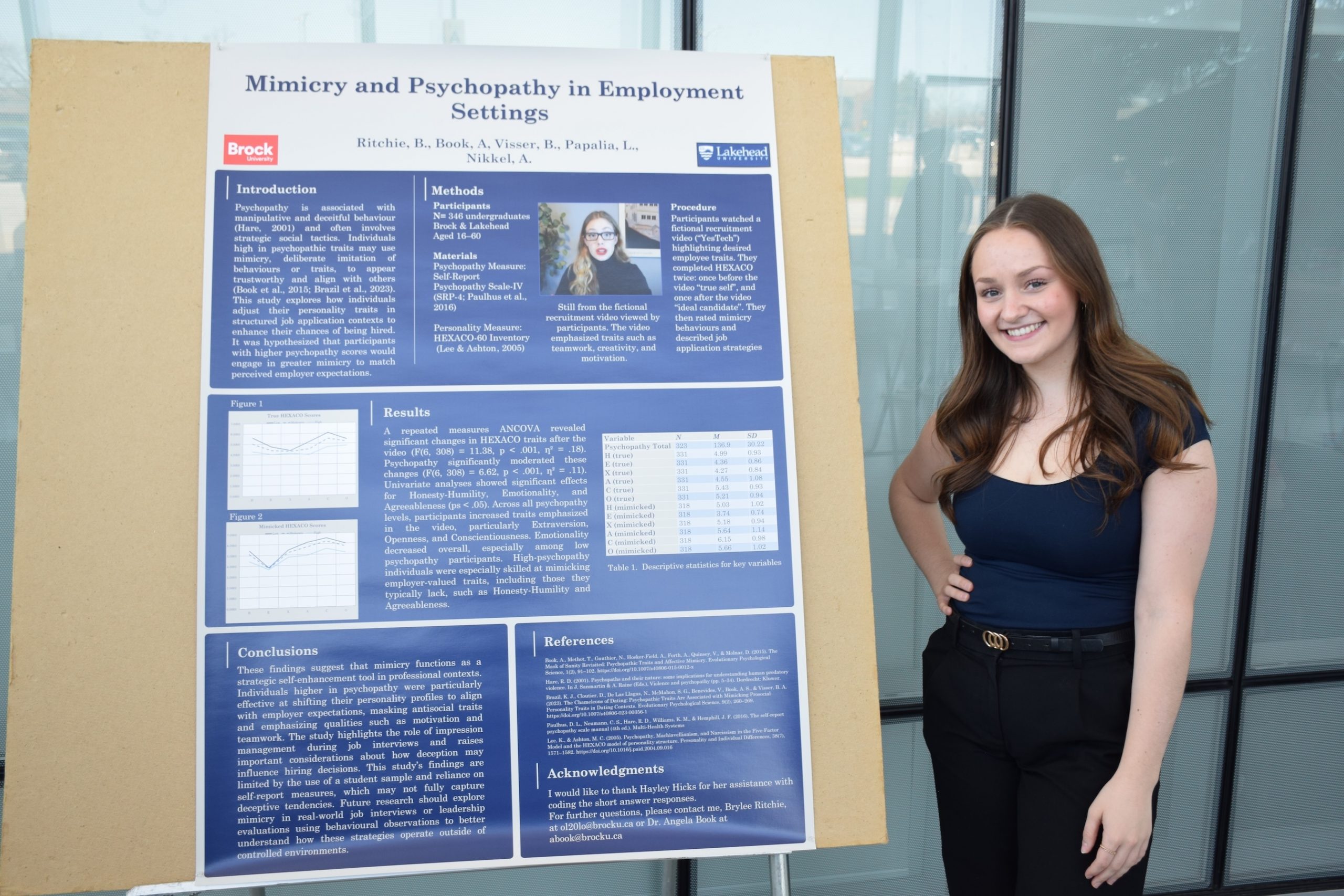
Honours Thesis (FPAC 4F95)
In the Honours thesis course, students have the opportunity to conduct research with a faculty member relating to forensic psychology and criminal justice. This experience provides them with the necessary research skills for going on to graduate school.
Practicum (FPAC 4F92)
Students also have the opportunity to complete a practicum in an appropriate community organization, which may include law enforcement, mental health, or other relevant agencies. This course provides students with practical skills that are directly relevant to their chosen career path.
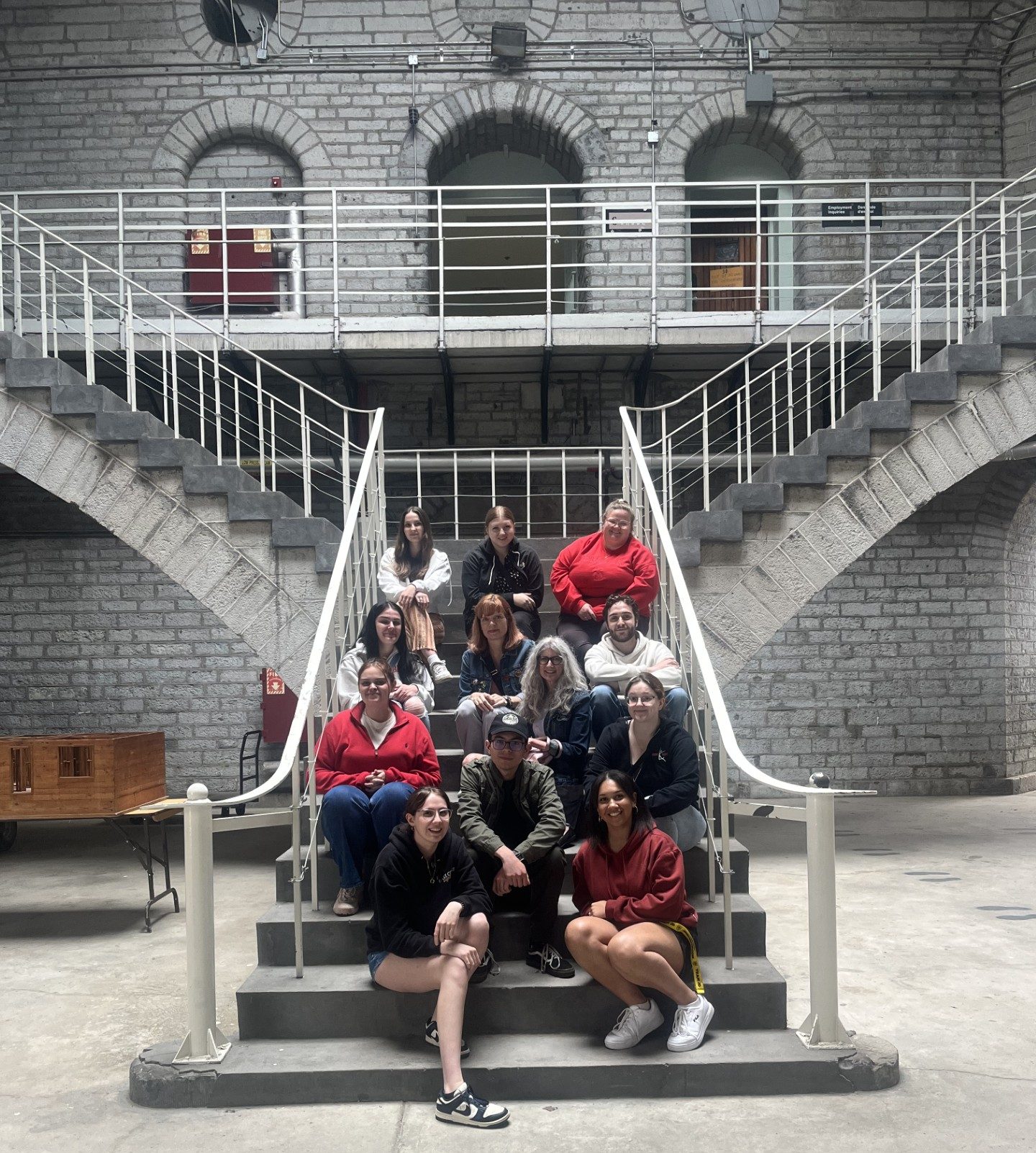
The Canadian Correctional System: Field Course (FPAC 3P92)
Students will visit penitentiaries in Kingston, Ontario over a 4 day period, learning about the different levels of security, assessments, and treatment programs for offenders.
Frequently Asked Questions
In FPAC, you will have courses from Child and Youth Studies, Psychology, and Political Science.
In year one, you are required to register in Psychology 1F90; Child and Youth Studies 1F90; and two first year half courses in Political Science. You will also need to take two context credits, one in Humanities and one in Sciences.
In Child and Youth Studies courses, you will examine issues affecting children and youth from multiple perspectives. You will learn about the factors and experiences that can lead children and youth to engage in criminal behaviour and how the criminal justice system responds from a critical perspective.
In your Psychology courses, you will learn about the study of human behaviour including aggression and criminal behaviour. For example, how do we predict who is dangerous and how do we know who will reoffend in the future? What exactly is a psychopath and are they more likely to engage in violent crime? How do we explain why some people engage in criminal activity while others do not?
In your Political Science courses, you will find out how the criminal justice system operates. Who makes criminal law, and who is responsible for law enforcement, including policing, prosecution, and the organization and operation of the courts? How does the constitution, especially the Charter of Rights and Freedoms, shape the criminal justice system and its processes?
Context credits are required to provide you with breadth of knowledge. As a student in the Faculty of Social Sciences, you need to take one full credit (1.0) in each of the Humanities and Sciences in your first year. Below is the list of courses that count as context credits. You must choose your context credits in first year from these 2 lists (one full credit from each).
Courses with an F in the name are full credits (1.0). Courses with a P in the name are half credits (0.5; you would need 2 of these to make one full credit).
HUMANITIES
CANA 1F91 (Canadian Studies)
CLAS 1P91, 1P92, 1P93, 1P95, 1P97, 2P34 (Classics)
CPCF 1F25 (Communication, Pop Culture, and Film)
DART 1P91, 1P92, 1P94 and 1P95 (Dramatic Arts)
ENGL 1F91, 1F95, 1F97 (English)
ENCW 1P06 (English)
FILM 1F94 (Communication, Pop Culture, and Film)
FREN 1F90 (French)
GERM 1F90, 1P93 (German)
HIST 1F90, 1F92, 1F95, 1F96, 1P91, 1P97, 1P99 (History)
IASC 1F02, 1P06, 1P99, 1Q98, 1Q99 (Interactive Arts and Science)
INDG 1F90, 2F01 (Indigenous Studies)
INTC 1F90 (Intercultural Studies)
ITAL 1F90, 1P96 (Italian)
*LING 1F25 (Linguistics)
MARS 1F90 (Medieval and Renaissance Studies)
MUSI 1F10, 1P50, 1P55 (Music)
MLLC 1F90 (Modern Language, Literature, and Cultures)
PHIL 1F90, 1F91, 1F93, 1F94 (Philosophy)
SPAN 1F90, 1P95 (Spanish)
STAC 1F98 (Studies in Arts and Culture)
VISA 1P99, 1Q98, 1Q99 (Visual Arts)
WRDS 1F90, 1P06 (Writing, Rhetoric, and Discourse Studies)
SCIENCES
APCO 1P00, 1P50 (Applied Computing)
ASTR 1P01, 1P02 (Astronomy)
BIOL 1F25, 1P23, 1P24, 1P27, 1P28, 1P91, 1P92 (Biology)
CHEM 1P91, 1P92 (Chemistry)
COSC 1P02, 1P50 (Computer Science)
ERSC 1P01, 1P02, 1P92, 1P94 (Earth Sciences)
GEOG 1F91 (Geography)
IASC 1P00, 1P50 (Interactive Arts and Science)
MATH 1P70 (Math)
PHYS 1P21, 1P22, 1P91, 1P92 (Physics)
SCIE 1P50, 1P51, 1P52 (Science)
As an FPAC student, you will meet with a student advisor once per year to make a program plan that works for you. To book an appointment with the Program Coordinator, go to my.brocku.ca, select Appointment Bookings – Academic Advising- Forensic Psychology and Criminal Justice.
Change of Major requests for current Brock University students are considered on a case-by-case basis and dependent upon space availability in the program at the time of the request. Spaces are typically reserved for new incoming students. Interested students must consult the Program Coordinator to further discuss eligibility.
If you choose to do a practicum in fourth year, you will be working for 80 hours with one of our practicum partners in the areas of law enforcement, law, and clinical/forensic. This will give you hands on experience in the field to prepare you for your chosen career path!
We have built choice into the program structure so that you will be able to choose among a variety of relevant courses depending on your interests and chosen career path. Please review the course calendar for further insight on the course program structure.
The entry requirements for FPAC are:
Minimum Average: 70%
Pre-requisites:
- English (ENG4U) (or equivalent*)
Recommended:
- One 4U math (MDM4U preferred)