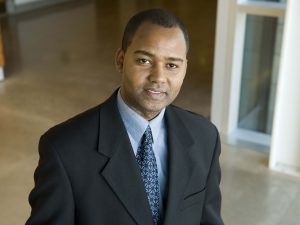
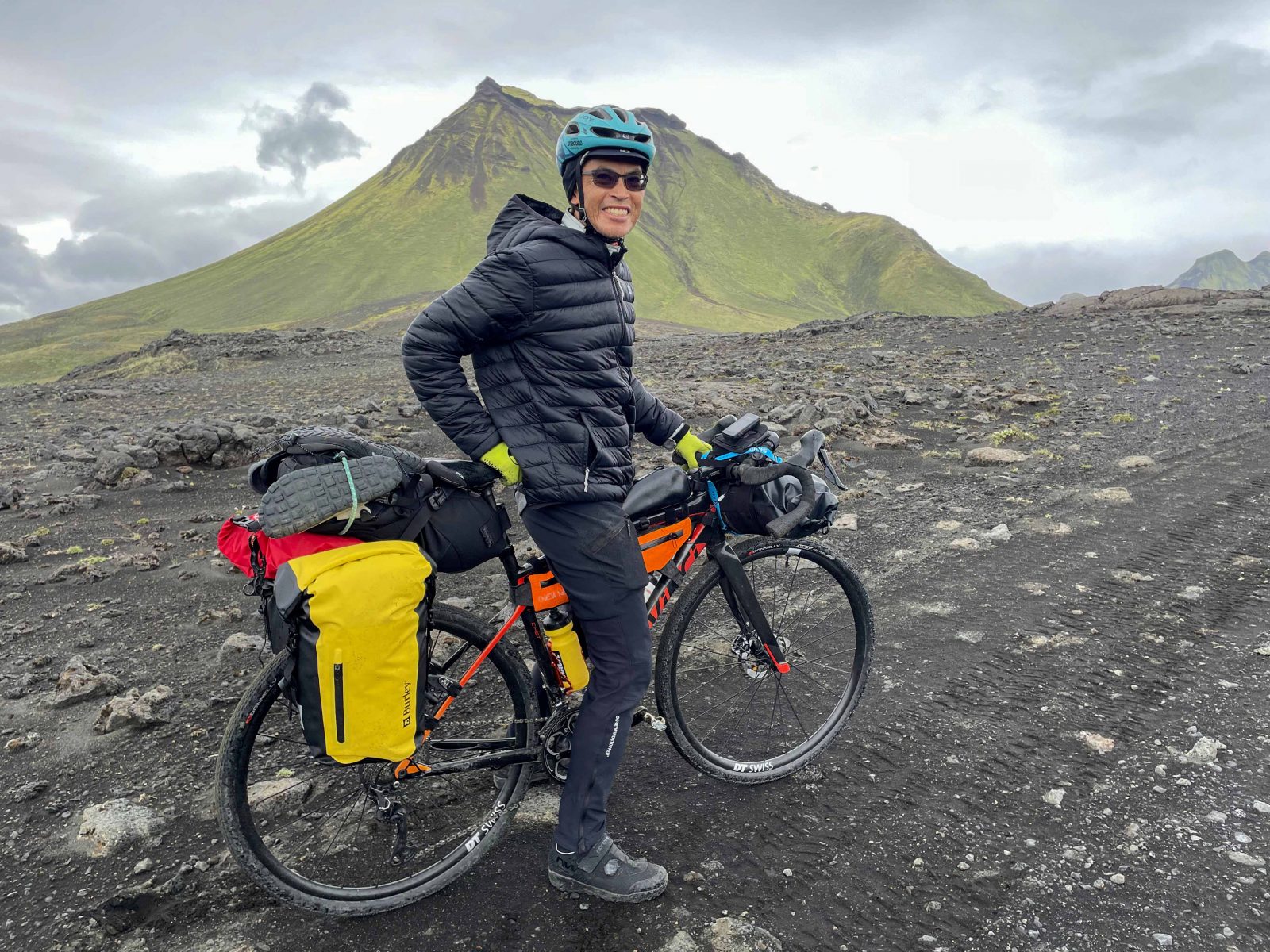
 Professor of Kinesiology Stephen Cheung is one of two Brock faculty members recently recognized with the Distinguished Professor designation by the Office of the President.
Brock University’s Distinguished Professor designation is a lifetime appointment recognizing full professors who have demonstrated exceptional research, scholarship or creative activity. Read more about the award and its recipients on The Brock News.
As a university student, Stephen Cheung was determined to figure out how to cycle faster.
That goal led him from his original path, studying oceanography, to a career exploring how the human body responds to extreme conditions.
In recognition of his contributions as a researcher, leader and mentor, the Professor of Kinesiology and environmental physiology expert recently received Brock’s Distinguished Professor designation. The lifetime appointment is the University’s highest honorary academic designation.
A prolific researcher, Cheung has published 165 scientific articles and was ranked among the top two per cent of international scientists with the most citations by Stanford University in 2025. He served as Tier 2 Canada Research Chair in Environmental Ergonomics from 2007 to 2017 and received Brock’s 2017 Distinguished Research and Creative Activity Award, the 2023 Michael Plyley Graduate Mentorship Award and the 2023 Faculty of Applied Health Sciences Research Excellence Award.
He is also a member of the Executive Committee of the International Conference on Environmental Ergonomics and the Editor of the International Journal of Sports Physiology & Performance.
But for Cheung, recognition is not a finish line. It is another reason to keep asking questions.
“I never look at any of these awards as ‘I have made it,’” he said. “This is just that extra bit of motivation, extra catalyst to really say, ‘I can do more.’”
Driving his research is a fascination with the body’s ability to adapt.
Leading the Environmental Ergonomics Lab (EEL), Cheung examines how environmental stress like heat, cold and altitude affect human physiology and performance, combining fundamental questions about how the body works with applications aimed at making work and recreation in extreme settings safer. The lab’s research has supported work with military personnel, miners, search-and-rescue teams, elite athletes and clothing manufacturers.
“The big thing I’ve learned is that that the human body is incredibly adaptable, and that we can do a lot more than what we assume is possible in challenging environments,” he said.
Calling himself a “specialized generalist,” Cheung follows ideas that capture his interest, moving across many areas of physiology as new questions emerge.
“I am happily chasing one idea to another within the overall field of environmental physiology,” he said. “This also allows me to work with a much bigger pool of collaborators and to learn new things from them.”
Cheung applies that same philosophy to his role as a mentor, encouraging students to bring their own interests and ideas to the lab.
“Students are not there to be clones of me or to do my work for me,” he said. “They bring their own ideas and talents, and I want to foster them.”
Cheung compares his role as a mentor to that of a mountaineering guide: providing the support and resources students need to pursue ambitions they can glimpse but may not yet believe are possible while fostering a lab culture that encourages initiative.
“You’re never the finished product,” he said. “You can always learn and take that opportunity to try to improve.”
Cheung’s impact extends beyond academic spaces. His interest in knowledge mobilization has reached media all through North America and included almost 25 years of writing about cycling science, including 2 books. He has also served as the Sport Science and Training editor for PezCyclingNews and as Chief Sport Scientist and part owner of a cycling data analytics company.
“If you don’t communicate your research,” he said. “If you don’t get it out there to the right audience, to the people who can actually benefit from it, what impact have you made?”