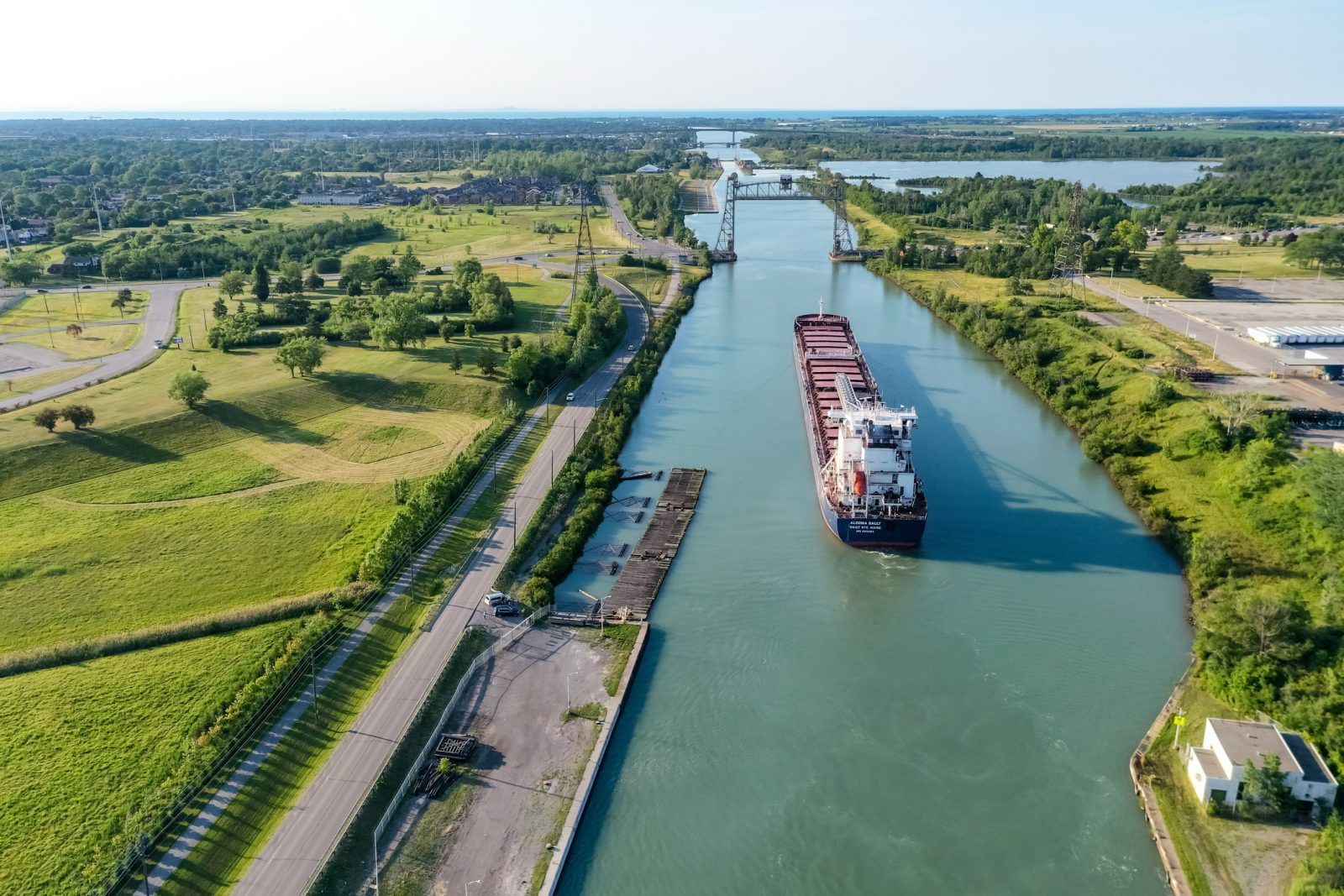
 A Brock-led team has partnered with Algoma Central Corporation to create a data-driven approach to fleet scheduling.
From stormy weather to canal lock lineups, navigating shipping route schedules on the Great Lakes-St. Lawrence Seaway system can create significant challenges for transportation companies and their clients.
When Algoma Central Corporation sought to develop a more data-driven approach to fleet scheduling, the marine shipping company turned to Brock University for the research to make that happen. The Canadian marine transportation company owns and operates dry and liquid bulk carriers serving domestic and international markets.
“Brock’s strong connections to the local marine business and logistics communities in Niagara and along the Welland Canal made it a natural fit for this research,” says Jason Davenport, Algoma’s Director of Vessel Traffic and Customer Service. “Having Brock researchers involved allows us to combine academic expertise with a practical understanding of the environment in which Algoma operates.”
Davenport connected with Professor of Marketing and Product Innovation Tek Thongpapanl to plan research on developing schedule optimization tools at Algoma.
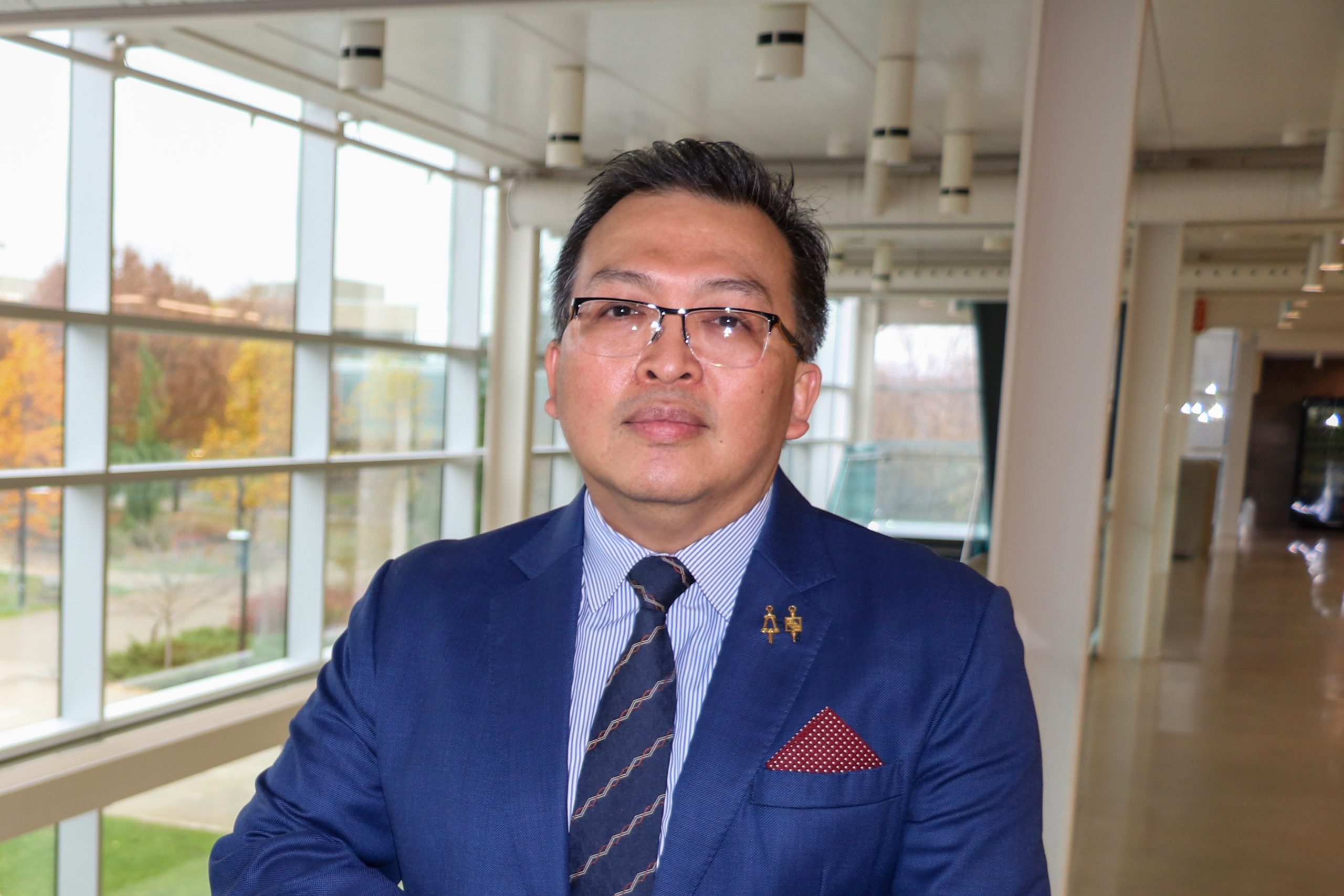
Professor of Marketing and Product Innovation Tek Thongpapanl
Thongpapanl recruited Nolan Kassie (BBA ’24, MBA ’26), who was pursuing his MBA in the Goodman School of Business at the time, to support the project. As part of his master’s work, Kassie completed two independent study terms and a four-month co-op placement at the St. Catharines-based company.
“I was familiar with a lot of the literature and the higher-level techniques used in this field, but I wasn’t able to actually work on a specific project in that field. Being able to actually work on this project and learn new techniques was very cool and furthered my interest in the field even more,” Kassie says.
During his time at Algoma, he worked with company officials and the faculty research team to learn about factors, or variables, the company needs to consider when planning routes and scheduling ships.
These variables include ship and cargo availability, canal bottlenecks, seasonal weather conditions, differences in ship speed depending on whether vessels are full or empty, and fuel consumption, among many others.
Davenport says working with Kassie and Thongpapanl was a positive experience.
“They have taken the time to understand the realities and constraints of our operations and have been interested in ensuring that the research addresses a genuine business problem,” he says.
The team’s preliminary findings have laid the groundwork for a more in-depth project to create algorithms for a schedule optimization system, Thongpapanl says.
“Algoma’s operations can involve more than 800,000 yes or no decisions, with the combination of factors such as the canal system and weather imposing more than one million constraints,” he says. “This gives us the opportunity to push the boundaries of analytics and optimization by developing a model that makes a true impact in an industry setting.”
With funding from Mitacs, Kassie — who is now doing a PhD at HEC Montréal — and two additional interns will help to design the methodology and develop models and algorithms for the overarching research project. The interns will be supervised by Thongpapanl and HEC faculty researchers along with Algoma officials and supply chain management experts from West Virginia University and the University of Cincinnati who have been involved in the project from its early stages.
Davenport says he and his colleagues are confident the project will lead to more informed scheduling and routing decisions across Algoma’s fleet while exposing students to professional, hands-on experience.
“The research has the potential to help us plan further ahead, respond more effectively to uncertainty and make better use of our vessels and resources,” he says.