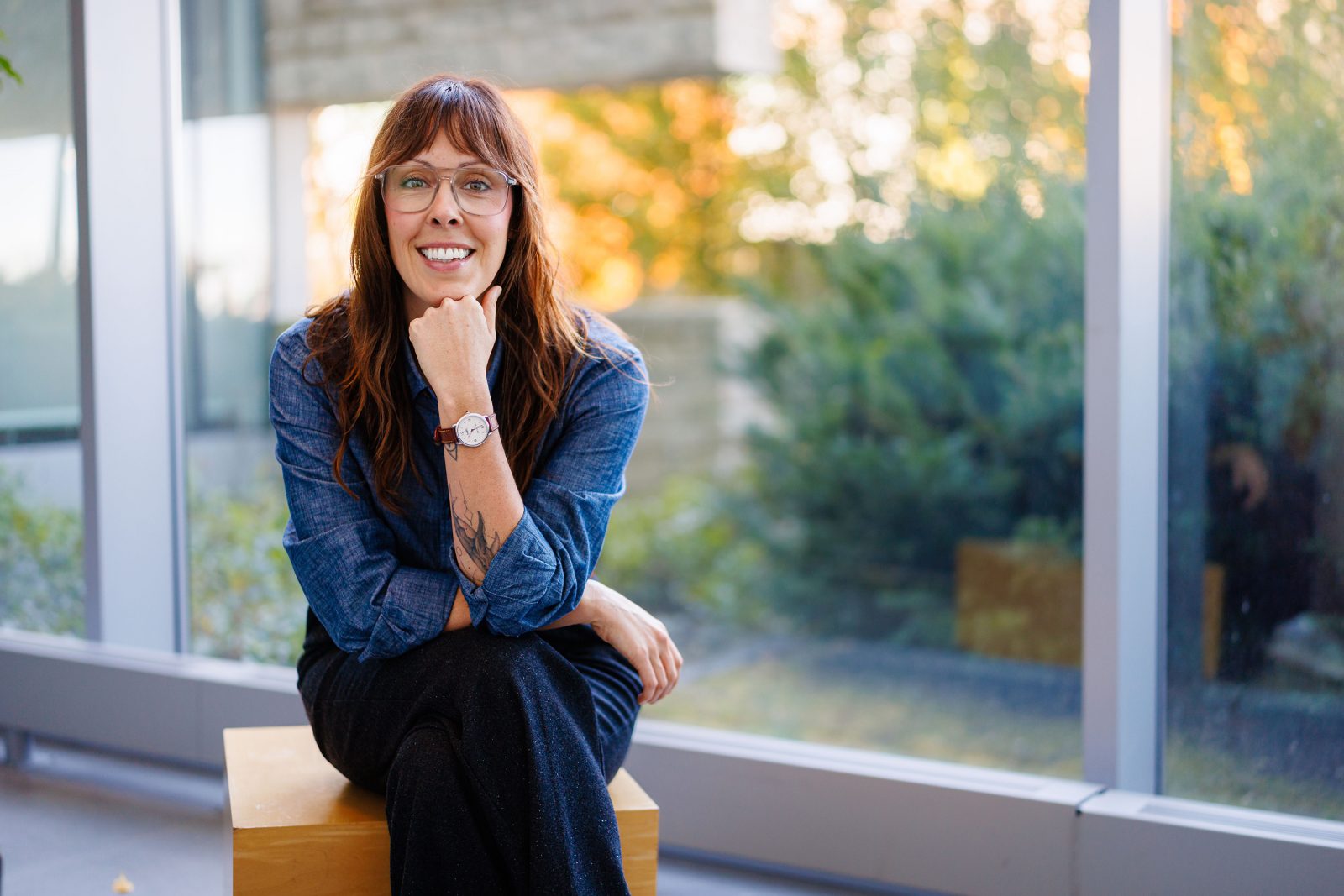
 Associate Professor Jessica Blythe, who returned to Brock after a medical leave for cancer treatment last fall, recently wrote about the challenges of trying to finish a major research collaboration while navigating chemotherapy — and the community of supportive colleagues who stepped up to help.
 After years of working alongside an international team to bring the Ocean Equity Index to life, Jessica Blythe encountered an unexpected obstacle: cancer.
In early 2025, the Associate Professor in Brock’s Environmental Sustainability Research Centre (ESRC) was in the midst of revisions to announce the new open-source tool on the cover of Nature’s print edition when she began six months of chemotherapy treatment.
What followed — navigating academia and ongoing research while faced with a serious illness — changed Blythe’s perspective and inspired her to share her experience more broadly.
Blythe celebrated the publication of the Ocean Equity Index in January. Months later, she penned a personal reflection: “What cancer taught me about being a colleague.”
The piece was published in Nature’s Research Communities Highlights on June 15 as part of the “Behind the Paper” blog series. The series offers readers a backstage view of the research process with insight shared from the journal’s authors.
Blythe took the opportunity to normalize talking openly about cancer and sick leave within academic environments. She says in a global health crisis of rising cancer rates, everyone can benefit from more frank conversation and clear guidelines for navigating situations like hers.
“When I went into chemo, there were lots of resources available to me about my medical journey, my mental health and social supports, but there was little written about the professional space,” she says. “We shouldn’t have to try to figure it out by guessing.”
Blythe is now using her experience to help others understand how sick leave affects academics, as their work is so often collaborative and interdependent.
When she learned she had to start cancer treatment, for instance, Blythe was not only trying to see a three-year international research effort through to publication, but she was also serving as Graduate Program Director in the ESRC and supervising students.
She credits Brock’s Health Management and Wellness Team for providing “excellent support” as she went on leave. The structural limitations of an institution, as well as personal experience of illness, will shape how engaged or distanced an individual chooses to become during a leave, she says, and professional communities should be prepared to accommodate various circumstances.
But efforts to do so successfully require more open dialogue.
“It’s OK to talk about cancer with your colleagues, in professional spaces and in print,” says Blythe. “There seems to be an unspoken taboo because it feels too personal, but it’s not just personal — it crosses over into the professional because of the collaborative ways in which we work.”
She describes the Behind the Paper article as “a love letter” to the colleagues who offered different but essential forms of support so that she could focus on healing.
“Within academia, we have long-term collaborative projects and responsibilities that can’t be put on pause for six months because that would disrupt too many other people’s work,” says Blythe. “I needed my academic community to carry pieces of the workload for me — it was the only way I got through. Their support took a huge mental load off my shoulders so I could focus on treatment without a constant worry or guilt about projects I was holding up.”
Since her return to work, Blythe — who has completed research on empathy and its potential to support sustainability efforts — says she is carrying forward the notion that empathy can also bring lasting benefits to professional environments.
“This experience has really taught me a lot,” she says. “Going through it, I was the recipient of a lot of empathy from my colleagues. Building on our research on empathy, I’ve learned that engaging with empathy is not only professional, but it’s a great way to be a colleague.”