 Brock University is preparing graduates to ask important questions and shape the path forward in the age of artificial intelligence with the launch of its Honours Bachelor of Arts in Artificial Intelligence.
As technology rapidly evolves, Brock University is preparing graduates to ask important questions and shape the path forward in the age of artificial intelligence.
The University is launching its Honours Bachelor of Arts in Artificial Intelligence (AI), which will welcome its first cohort of students in September 2027.
The Faculty of Humanities program will explore the potential risks and benefits of AI, with the impact of the technology on humanity a prime focus, says Interim Dean James Allard.
“Universities have always had an important role to play in interrogating the risks and challenges posed by scientific discoveries, technological innovations and social change,” he says. “The disciplines in Humanities are perfectly poised to adopt a critical, humanist approach to respond to AI and the complex conversations it prompts.”
The program will prepare graduates to thoughtfully shape policy related to AI deployment and effect social change to shape technologies for the better, Allard says, including responding to environmental and workforce concerns, for example.
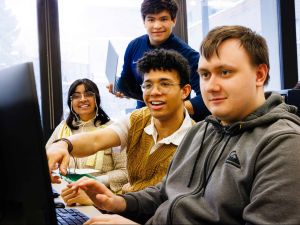
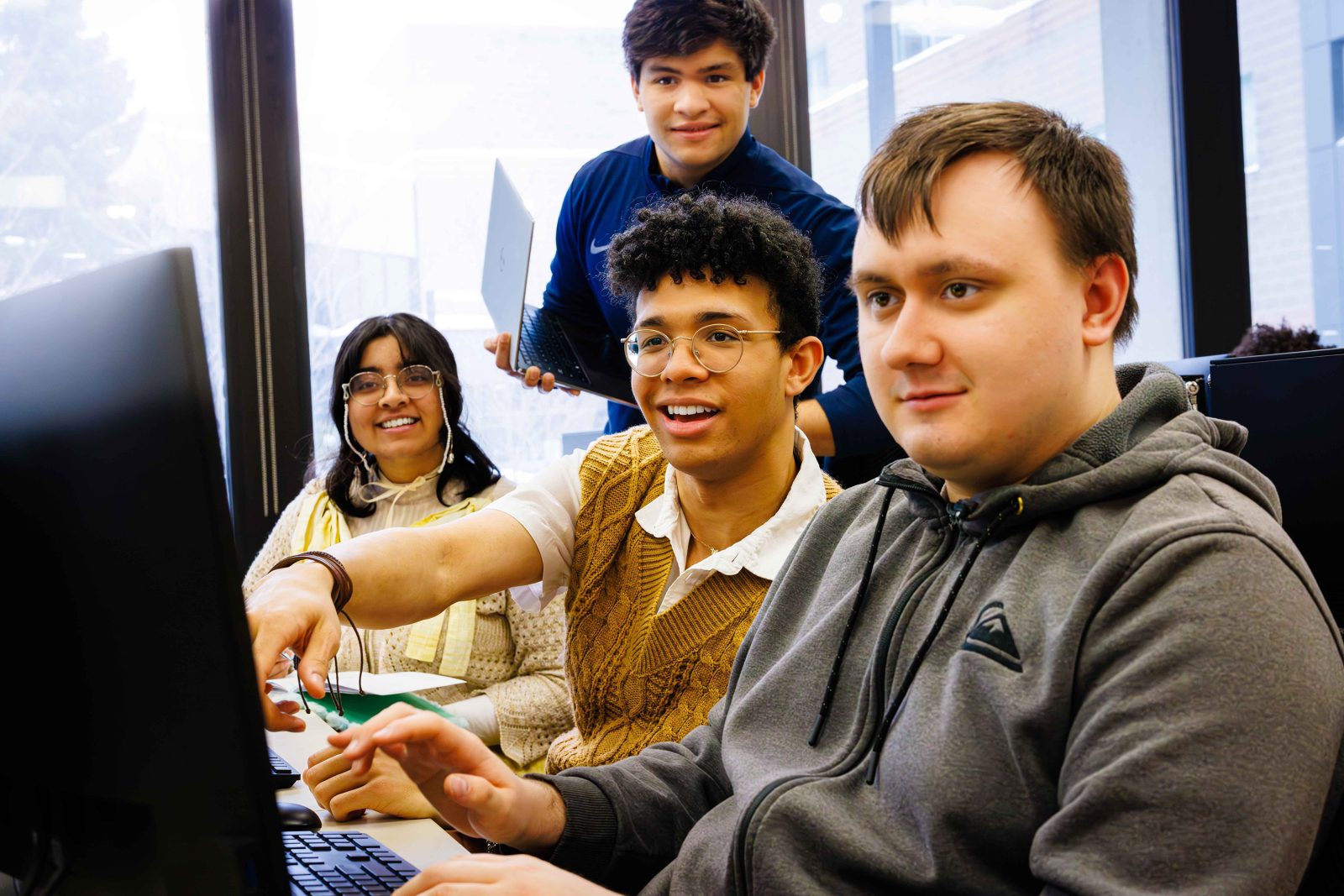
Informed, hands-on training with AI technology, paired with rigorous theoretical study exploring the impacts of AI, will enable grads to apply their deep insight and skills to a variety of industries spanning digital technology, research and policy, and interactive media.
Critical discourse underpins the program, which revolves around exploring the ethics of AI to position graduates as leaders in AI governance and policymaking, says Alex Christie, Chair of the Department of Digital Humanities.
Drawing on several disciplines, the program includes core courses engaging with communication, computer science, labour studies, environmental sustainability, philosophy and political science. It also includes a dedicated course on applied AI ethics that addresses decolonization and social justice.
“Exploring AI from multiple angles equips students to understand what AI can and can’t do and consider the impact of its limitations and consequences,” Christie says. “One of the core learning outcomes is empowering students to have a say in shaping the future of this controversial technology.”
The program also equips students with practical skills and the chance to gain professional experience through workplace co-op opportunities with organizations that are integrating AI into their workflows.
Graduates will be prepared for careers in a wide range of disciplines, including app development, technical writing, user experience design and interactive media design, as well as jobs in research and policy, such as AI consulting, ethics and policy analysis.
“As humanists, our critical approach to AI combines applied skills informed by in-depth knowledge of ethics, so graduates can lead the future of AI-enabled workplaces across business, health care, education, government, creative arts and beyond,” Christie says.
The program, he adds, is built on a foundational belief that the future technological landscape will be shaped by people who can oversee the responsible implementation of AI, including advising on its uses, misuses, applications and limitations.
Applications are now open on the Bachelor of Arts in Artificial Intelligence website.