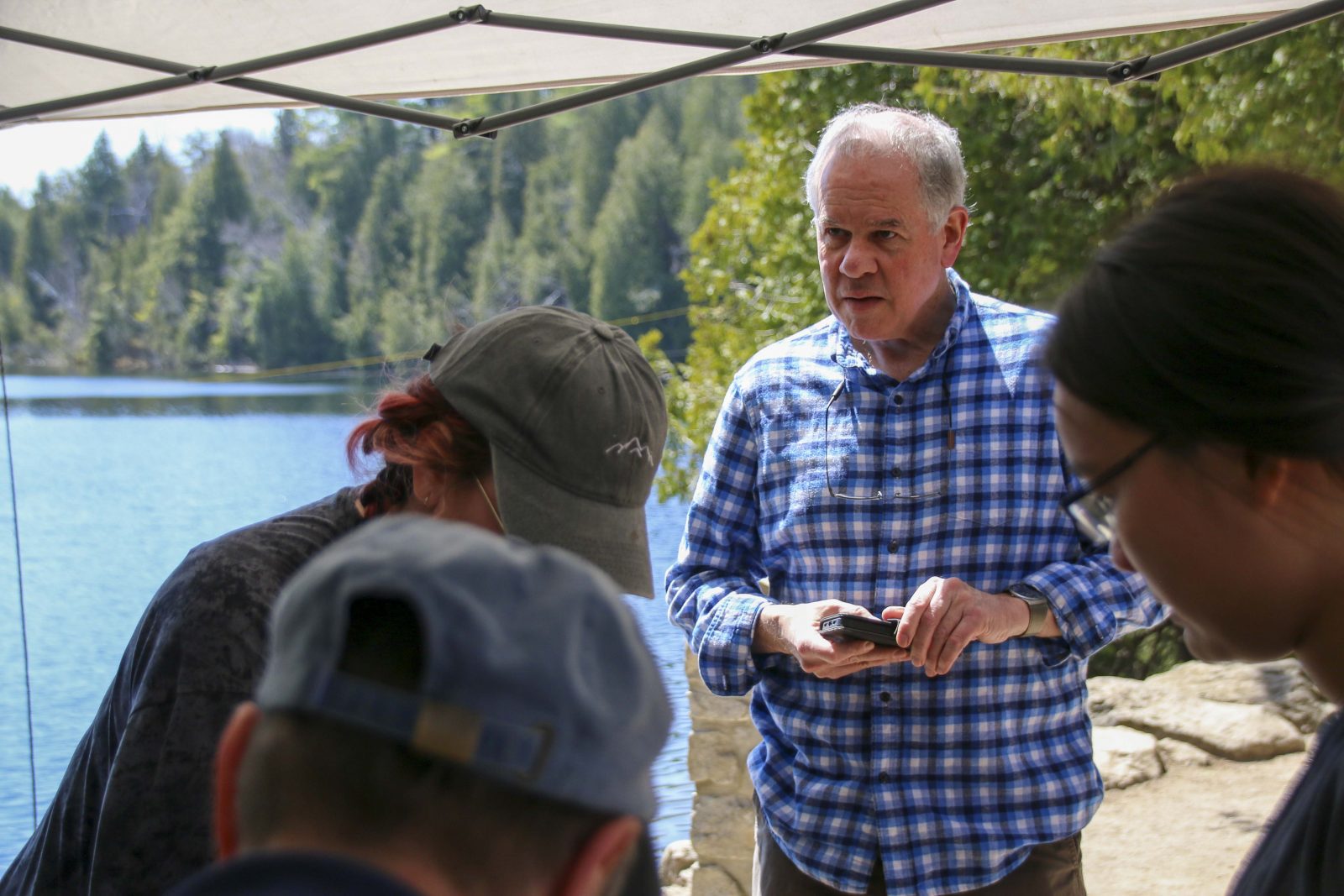
 In two new studies, Brock University Professor of Earth Sciences Martin Head (second from right) and geologists around the globe are reiterating the importance of adding the Anthropocene as a new epoch on Earth’s official time scale.
A team of international geologists is reviving the debate about adding a new epoch, the Anthropocene, to the Earth’s geological time scale — a move an international geological body rejected two years ago.
The researchers, including Brock Professors of Earth Sciences Martin Head and Francine McCarthy, recently released two new studies on the topic in the journal Nature Reviews Earth & Environment.
In recent years, Brock and other researchers have documented how human activities have dramatically and irreversibly transformed the planet’s geology since the Second World War.
Head says this abrupt change in strata — marked by the worldwide dispersal of radioactive plutonium when thermonuclear bomb tests began in 1952 — represents a “fundamental departure” from the stable conditions of the current Holocene Epoch, which began more than 11,000 years ago after the last major ice age.
One of the new papers, “Defining the Anthropocene Using Precise Geological Evidence,” details numerous chemical, physical and biological signatures found in rock and sediment layers that allow the Anthropocene to be recognised in the geological record globally and in various depositional environments.
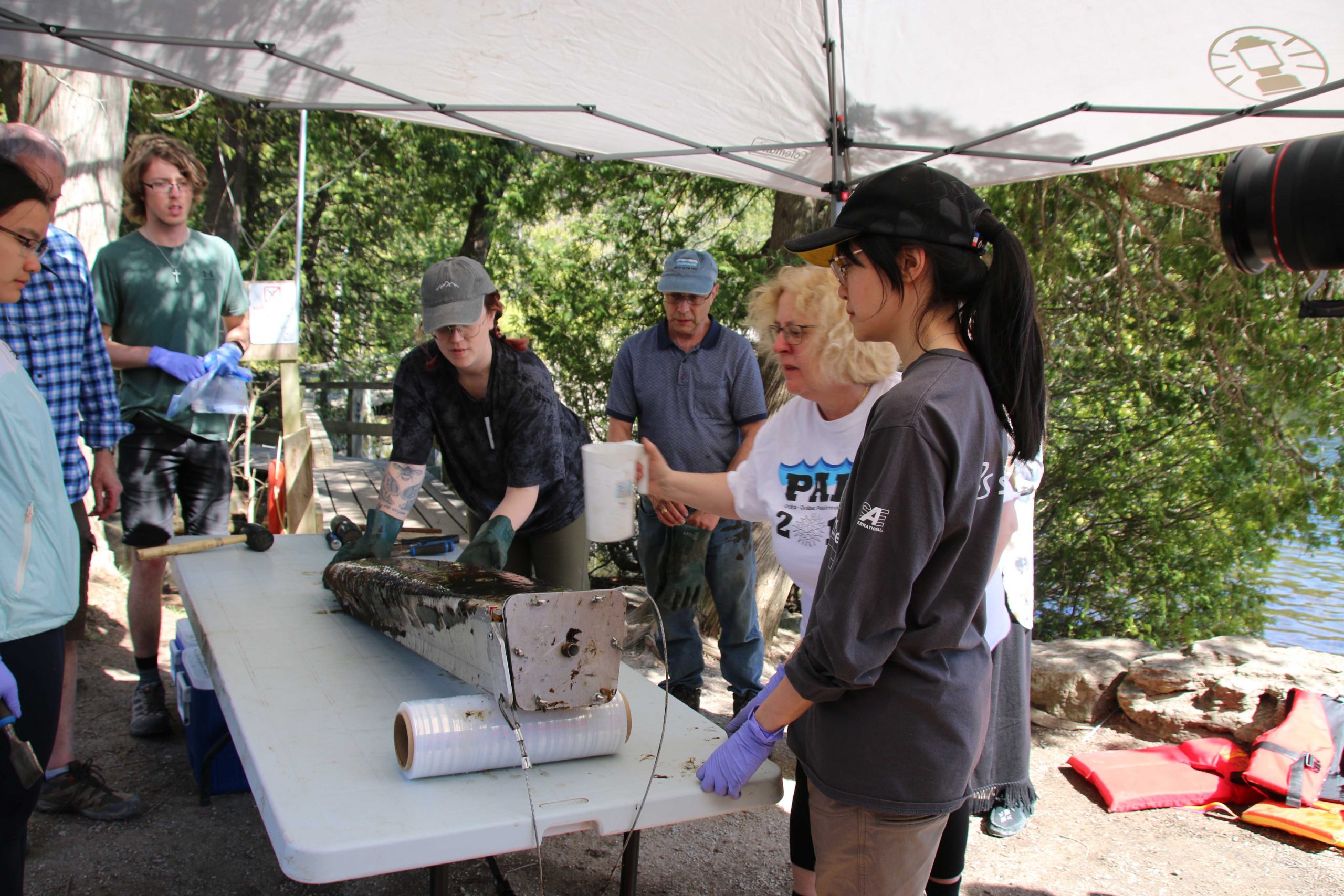
Professor of Earth Sciences Francine McCarthy (second from right) has conducted long-running research showing that Crawford Lake in Milton, Ont., contains the clearest evidence of a shift from the Holocene to the proposed Anthropocene.
According to the research team, these signatures — including plutonium, sulfur dioxide, nitrogen oxides, fly-ash, synthetic organic compounds, microplastics and patterns of plant and animal extinctions — point to the “Great Acceleration,” a mid-20th century phenomenon associated with global industrialization, commercialization and a significant increase in energy use.
“This global dataset goes far beyond merely identifying Anthropocene deposits, it characterizes the overwhelming human impacts on our planet’s functioning,” says Head.
The second article, “Future Directions for Anthropocene Research and its Applications,” addresses the fact that the term Anthropocene is now being used in the environmental and social sciences, cultural studies and education, such as in work addressing climate change, waste and pollution management, resource consumption and post-humanism concepts.
“The Anthropocene, in the quarter-century since it was first proposed and used informally, has acquired a range of very different meanings,” says McCarthy. “Formally stabilizing the Anthropocene’s meaning so we are all talking about the same thing would help us communicate about our planet, even as it transforms around us.”
McCarthy and Head have a long history with international efforts to formally add the Anthropocene to the time scale.
Head was Chair of the International body that oversaw the Anthropocene Working Group (AWG). The group was formed in 2009 to build on work of Dutch chemist and Nobel laureate Paul Crutzen, who coined the term Anthropocene in 2000. McCarthy became an AWG member in 2019.
The two Brock researchers participated in the AWG’s search for a location that could serve as an internationally agreed reference point in a section of rock or sediment layers – a so called “golden spike” – that defines the beginning of a new epoch in the geologic time scale.
The group identified 11 sites around the world where the boundary between the Holocene and the proposed Anthropocene is most evident.
One of these sites is Crawford Lake in Milton, Ont., where McCarthy and her team have been conducting research for more than a decade. In 2023, the AWG voted to identify Crawford Lake as being the definitive golden spike for the Anthropocene.
The group presented their proposal to the International Commission on Stratigraphy, which rejected the proposal in 2024 under contested procedures. Head says the proposal can be resubmitted at any time.
“While some prefer the Anthropocene to be unencumbered by strict definition, and to have us living in the Holocene Epoch that was marked by climatic stability, we encourage its use as originally conceived, to represent an ongoing time of societal and planetary upheaval which started in the mid-20th century,” says McCarthy.