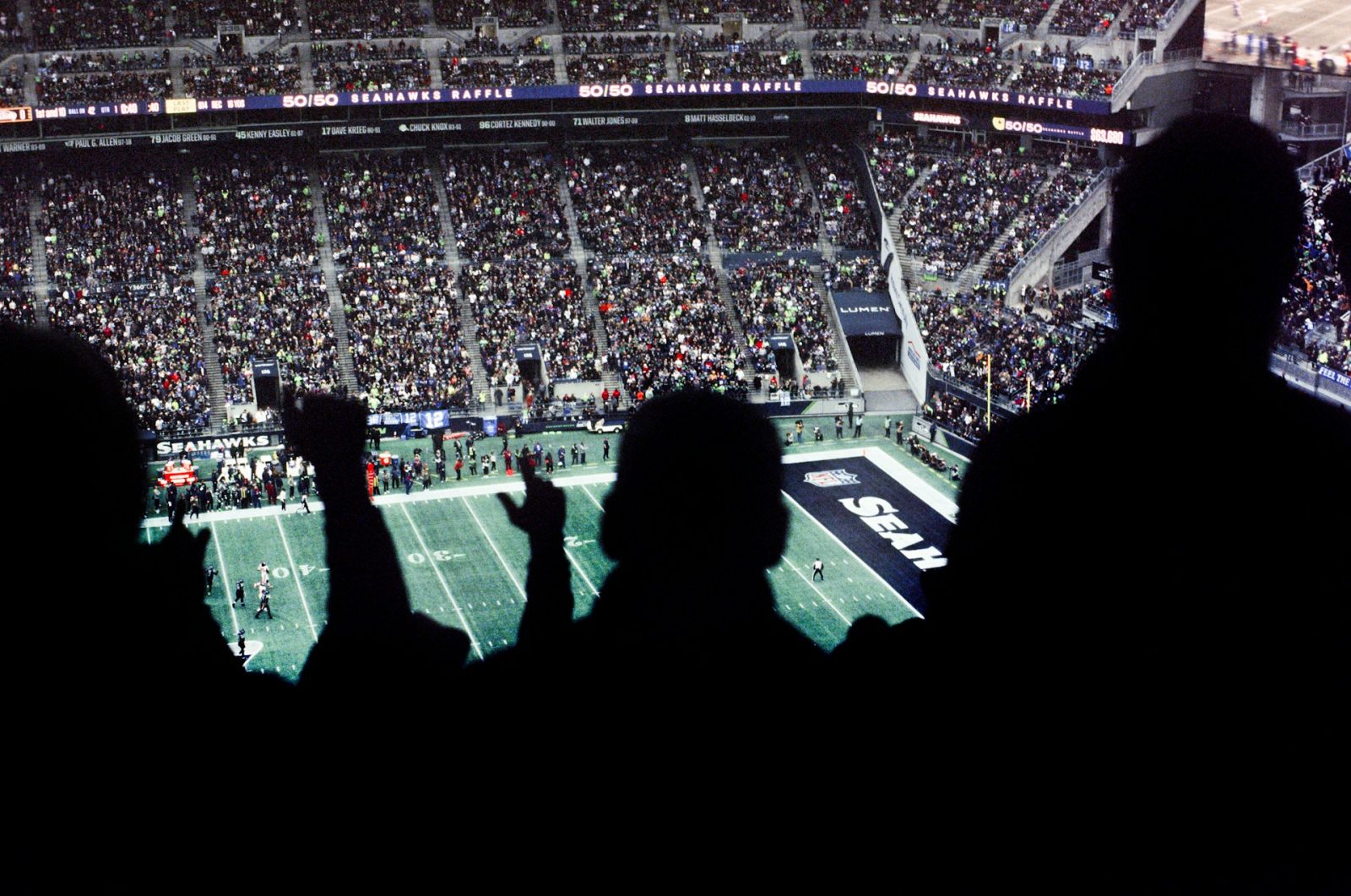
 Brock University researchers are weighing in on the storylines to watch at Super Bowl LX. Photo by Caleb Woods on Unsplash.
While the Seattle Seahawks and New England Patriots will go head-to-head this Sunday to secure the Super Bowl LX title, it’s the National Football League (NFL) that will ultimately come out on top, say Brock University researchers.
“The NFL’s ‘marketing machine’ has been telling compelling narratives of players and franchises across the league all year so that regardless of who ultimately wins, there’s going to be a great story attached,” says Assistant Professor of Sport Management Ryan Clutterbuck. “The NFL’s ‘secret sauce’ is how it capitalizes on those stories and engrains itself into the culture of its fans.”
Part of the allure this year lies in the redemption arcs and unexpected rises to the top playing out with athletes and coaches on both teams, Clutterbuck says.
Even the teams themselves, which last faced off in 2015, had dismal pre-season odds to make it to the Super Bowl.
“Seahawks quarterback Sam Darnold is now a starting quarterback in the Super Bowl after persevering through management decisions that took away his starting position and could have ended his career, and Patriots quarterback Drake Maye — in his second year in the NFL — is an MVP candidate in the biggest game of his career,” Clutterbuck says. “You also have Patriots Head Coach Mike Vrabel’s triumphant return to the Super Bowl to watch, so whichever way the game goes, there’s going to be great images and post-game conversation focused on remarkable achievements.”
In off-the-field action, the buzz about this year’s halftime show, headlined by Bad Bunny, is exactly the sort of chatter the NFL and its advertisers like to see, says Derek Foster, Associate Professor of Communication, Popular Culture and Film.
Public reaction has ranged from fandom to dismay, but Foster says no one should be surprised by the NFL courting the world’s most popular artist for its biggest game of the year.
“The NFL is increasingly positioning itself as an international cultural product, playing games in international cities to widen the reach of the league,” he says. “American artist Bad Bunny has made it to the top of every country’s Spotify playlist, top in international sales and so forth, so he represents a constituency that the NFL would find very difficult to ignore.”
Foster says that in the interest of spectacular halftime shows, the NFL has taken a much more hands-off approach to programming, instead letting Jay-Z’s Roc Nation select the musical acts since 2019.
He also points to the initial resistance to Taylor Swift’s fandom descending on the NFL and notes that the “experiment” worked, because supersizing the “spectacle” of the Super Bowl to be more inclusive of a young female audience allowed new fans to connect with the event.
“Some NFL owners reportedly resisted the initial halftime show headliner announcement due to the language divide, because as a Puerto Rican, Bad Bunny performs in Spanish,” Foster says. “Knowing the marketplace, they were not going to lose traditional Super Bowl viewers who still want to watch football, but they now have an opportunity to expand viewers worldwide.”
Despite successes in cultivating connections with fans and diversifying viewership, Clutterbuck says the league still has considerable work to do within its own ranks after a “frustrating hiring cycle in terms of under-representation of minorities in senior leadership roles.”
Notably, only one of the 10 head coaching jobs available this offseason went to a minority candidate, Clutterbuck says, and none went to Black candidates.
“In a league made up of, depending on the year, between 75 to 80 per cent players of colour, this is another black eye for the league and its leaders,” he says. “The NFL has implemented policies to address some of these challenges, with some success, but this seems like a big step back — particularly this year in the context of the current political climate and the NFL’s previous public efforts to ‘End Racism.’”