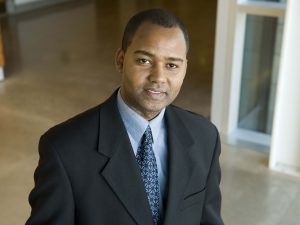
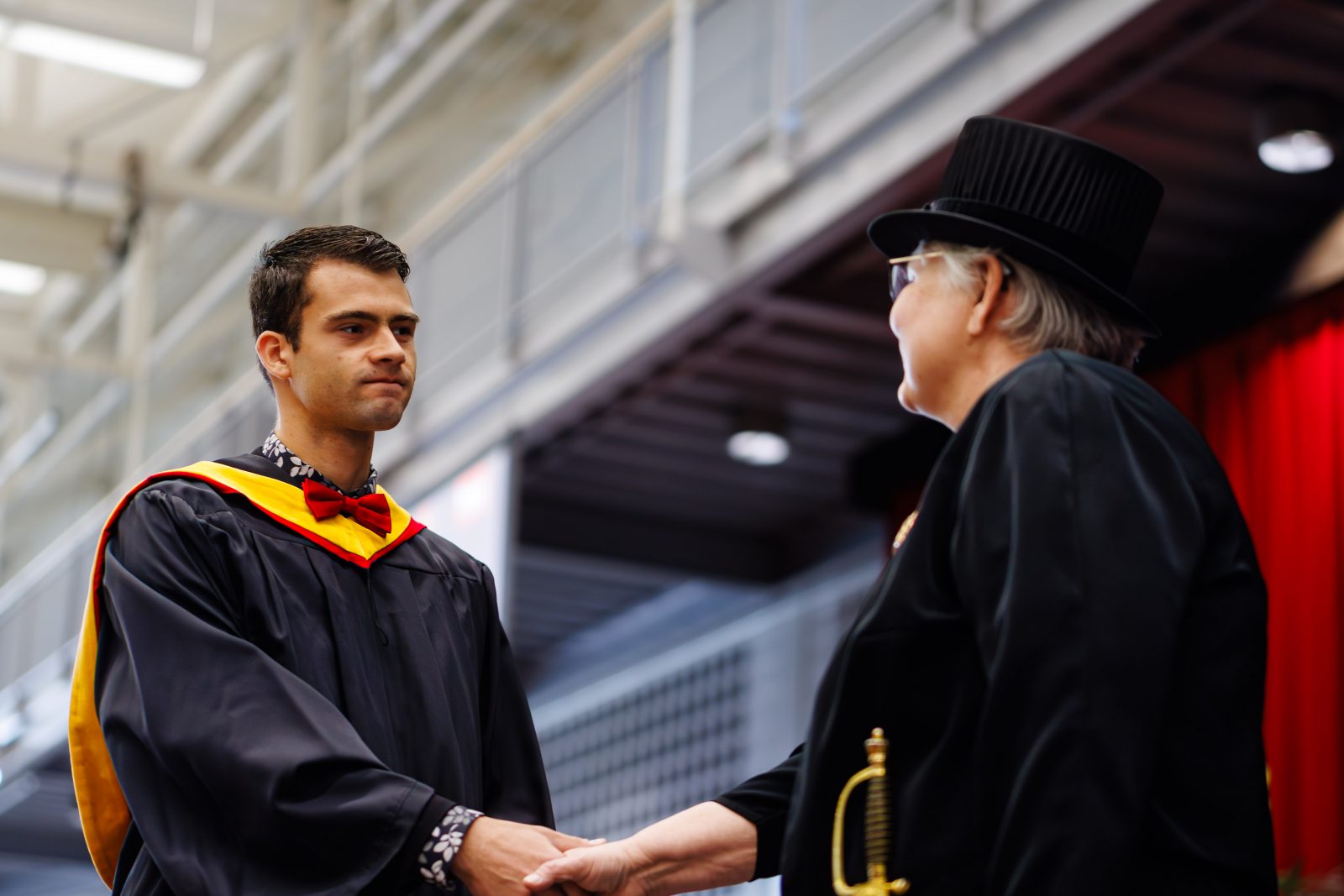
 Kevin Stefanchuk (BSc ’25), left, received his Bachelor of Science in Physics on Friday, Oct. 17 during Brock University’s 118th Convocation. As a student, he merged his love of woodworking and science by complementing his degree with two Entrepreneurship Co-op terms.
 Developing renewable energy technologies and running a woodworking business may seem like incompatible career paths.
While completing his Bachelor of Science in Physics at Brock University, however, Kevin Stefanchuk (BSc ’25) pursued his love of science while also exploring the world of entrepreneurship.
That experience, he says, will set him up for success in his upcoming master’s studies as well as his future career. Stefanchuk received his undergraduate physics degree during Brock’s 118th convocation on Friday, Oct. 17.
He completed two Entrepreneurship Co-op terms as part of his program and launched KPS Builds, where he designs and manufactures wooden furniture products, bowls and trinkets.
“It was a great experience to work with the Brock LINC to build and then develop a start-up woodworking business from something that I used to view only as a hobby,” he says.
As well as receiving coaching and mentorship from the Brock LINC, Stefanchuk also received the Venture Niagara Scholarship in Entrepreneurship to support him in bringing his products to market.
Julia Zhu, Director of Co-op, Career and Experiential Education, says Stefanchuk took an “unconventional path” by using his two Entrepreneurship Co-op work terms to bring his own business idea to life rather than joining an established company.
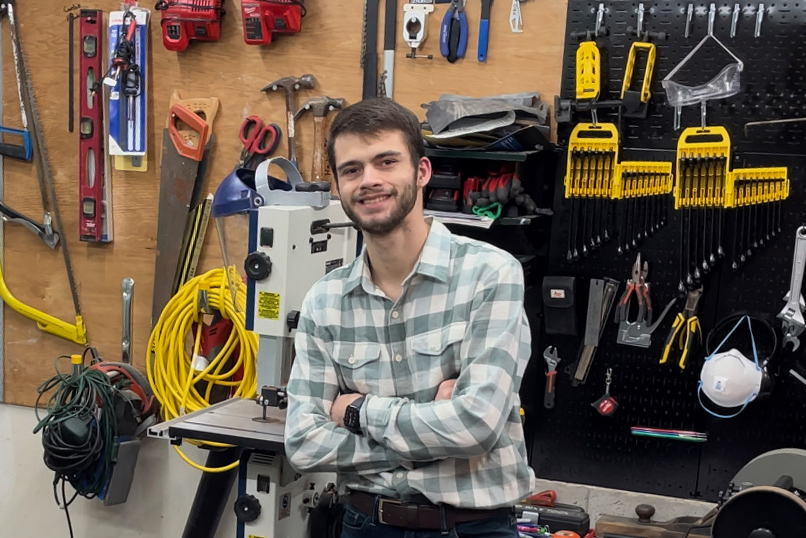
Kevin Stefanchuk (BSc ’25) launched a woodworking business while completing two Entrepreneurship Co-op terms at Brock.
“Through the Entrepreneurship Co-op, a partnership between Co-op Education and Workplace Partnership and the Brock LINC, Kevin received mentorship, resources and guidance to turn his entrepreneurial vision into a viable venture,” she says. “His creativity and determination not only helped him grow as a young entrepreneur but also earned him the Entrepreneurship Co-op Award in 2023.”
Stefanchuk says the entrepreneurship experience was an opportunity to try something new and develop transferrable skills — such as adaptability, communication, problem solving and project management — that he can now apply to his work as a scientist.
“A key thing I’ve learned from entrepreneurship is that you want to be able to explain something as simply as possible to catch people’s interest,” he says. “It’s the same with research — you need to get people interested in the work you are doing for a number of reasons, including to get grants to further fund the research.”
In his undergraduate studies, Stefanchuk focused on condensed matter physics, which examines the behaviours of solids and liquids resulting from interactions between atoms and electrons.
Under the supervision of Assistant Professor of Physics and Engineering Jasneet Kaur, he applied these principles to evaluate alternative methods for producing a zero-emissions fuel source called green hydrogen. It is typically produced using a process known as electrolysis, where an electric current is used to split water molecules into its constituent elements: hydrogen and oxygen.
“Hydrogen is a promising clean energy carrier capable of meeting increased global energy demands and reducing greenhouse gas emissions, but the process is currently very costly due to precious metal-based electrocatalysts,” Stefanchuk says. “For my master’s thesis, I’m planning on continuing my work exploring the use of non-precious metal alternatives to the platinum and iridium currently used to produce green hydrogen, that are synthesized using advanced materials, economically cheaper and equally as efficient.”
As for what comes next, Stefanchuk is currently putting his business on pause to focus on his master’s studies at Brock.
“I hope to continue on in the fuel cell and water electrolyser field and potentially go into industry to help develop this work and important technology further,” he says. “I also hope that sharing my experience may encourage people to explore entrepreneurship themselves as a beneficial part of their scientific education.”