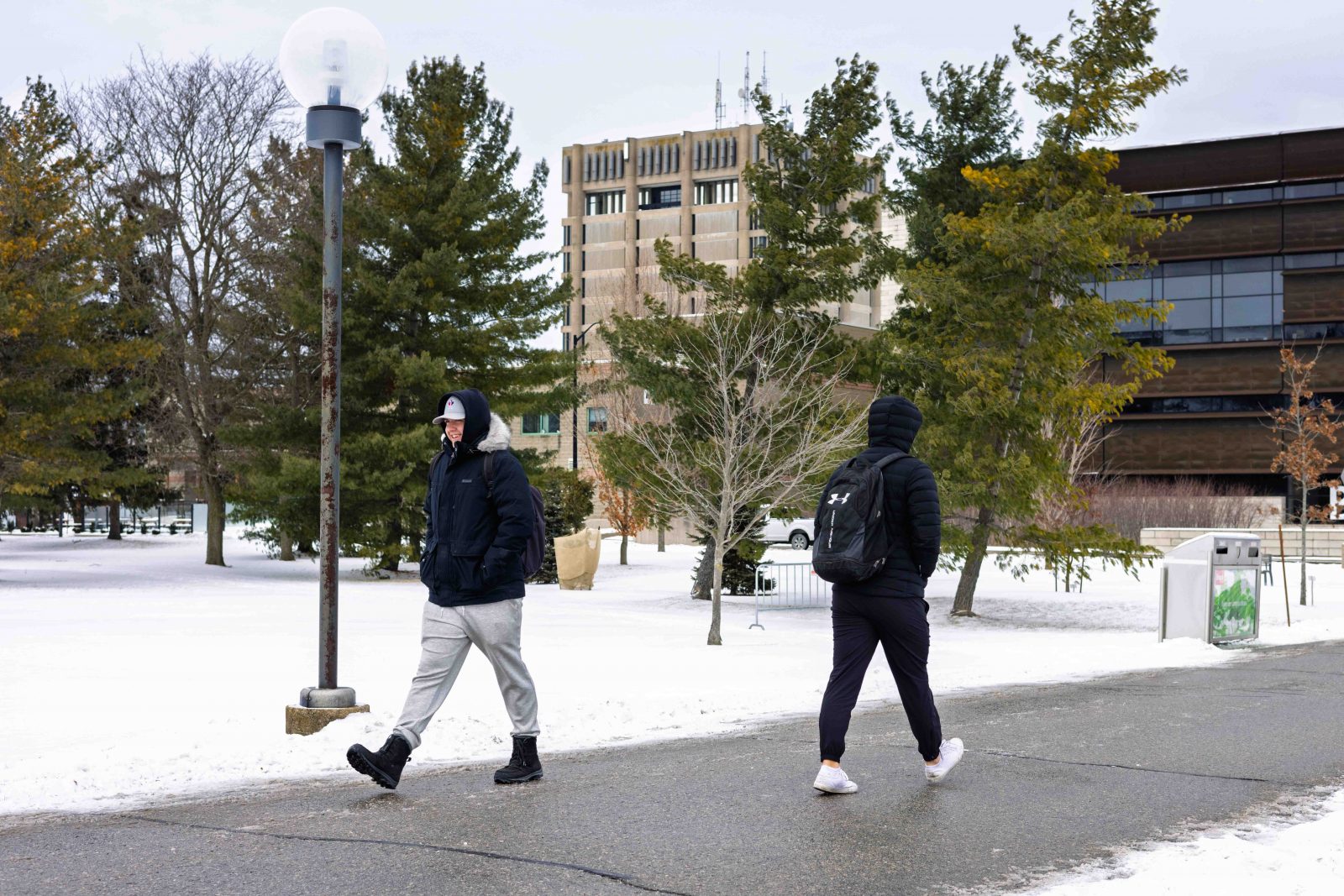
 Brock University reminds the campus community to follow the Cold Stress Guideline to prevent hypothermia and frostbite when temperatures drop.
Brock is reminding students, faculty, staff and visitors to stay safe by following the University’s Cold Stress Guideline while working in cold, wet and windy conditions.
Cold stress occurs when the body loses heat faster than it can produce it, causing core body temperature to drop. Factors such as wind chill, wet clothing and prolonged exposure can amplify the risk.
Brock’s guideline aligns with the Occupational Health and Safety Act and emphasizes preventing cold-related injuries like hypothermia and frostbite.
Symptoms of hypothermia range from shivering and fatigue to confusion and unconsciousness, while frostbite affects exposed skin, leading to numbness and discolouration.
The University advises supervisors to reschedule non-urgent outdoor work to warmer times or provide workers with a plan that includes frequent breaks and access to heated shelters.
Workers must wear insulated, layered clothing, inspect personal protective equipment (PPE) and monitor themselves for signs of cold stress.
Supervisors and management must ensure PPE is in excellent condition, provide warm drinks and monitor team members regularly. For those experiencing symptoms, medical help should be sought immediately.
The Cold Stress Guideline is available on the Health, Safety and Wellness SharePoint site.