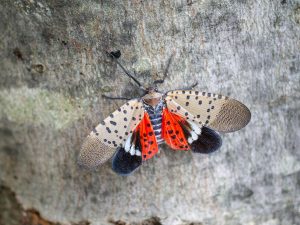
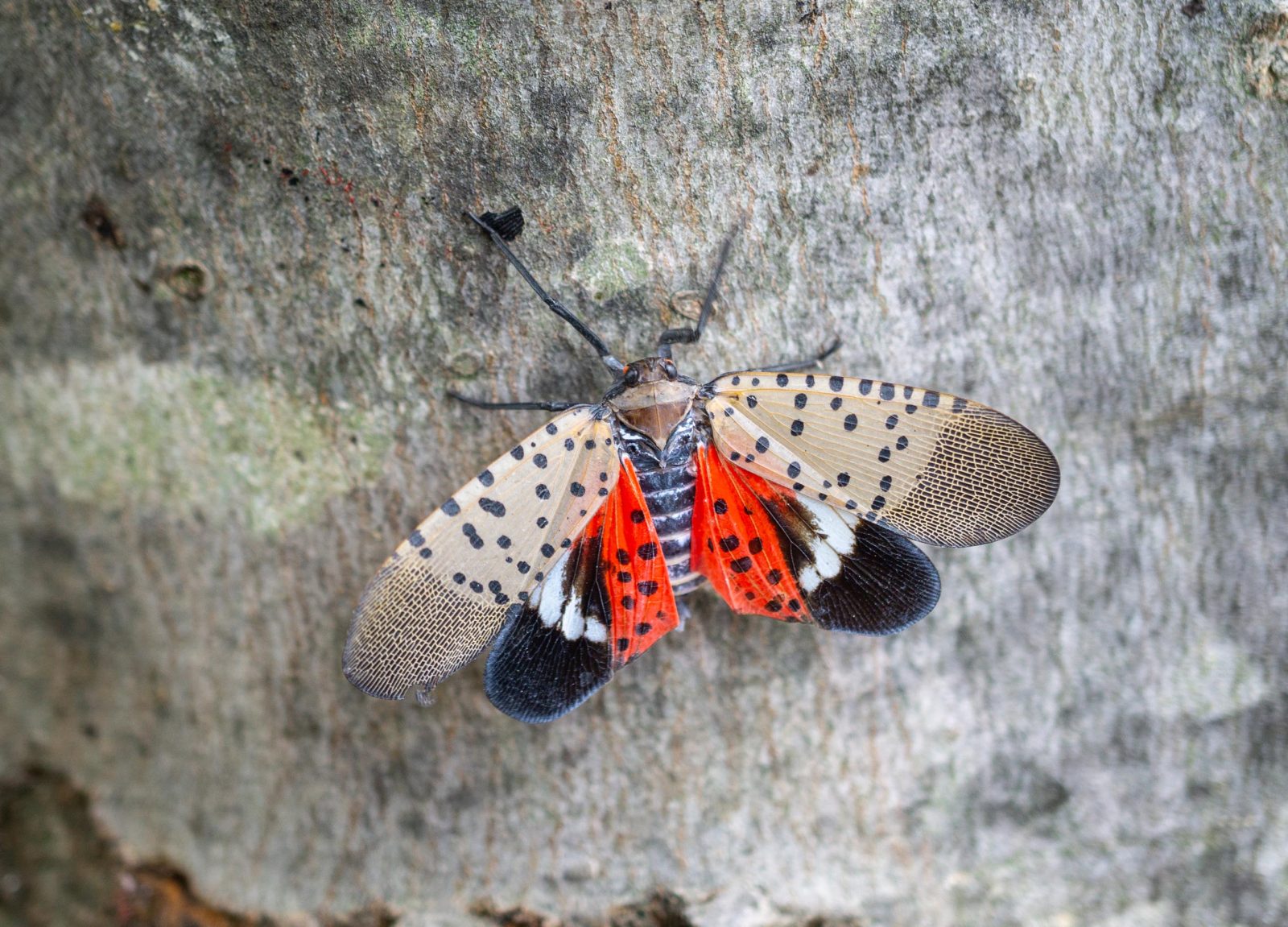
 Malkie Spodek, Senior Scientist at Brock University’s Cool Climate Oenology and Viticulture Institute, is among experts providing leadership to halt the spread of the spotted lanternfly.
Entomologist Malkie Spodek has built her career around studying insect pests that threaten agriculture. When the spotted lanternfly (SLF) first appeared in Windsor, Ont., this fall, the Senior Scientist in Entomology at Brock University’s Cool Climate Oenology and Viticulture Institute (CCOVI) knew what might be at stake for Canadian vineyards.
As Chair of the National Spotted Lanternfly Science Advisory Panel, Spodek is drawing on her extensive research on insects — to help protect vineyards from this new invasive species. The panel reports to the Canadian Food Inspection Agency’s SLF Technical Advisory Committee, advancing this important national conversation.
The spotted lanternfly is a planthopper, a distant relative of the grape mealybug. While the spotted lanternfly is not known to carry grapevine viruses, Spodek says they still pose challenges for grape growers.
“They have straw-like mouth parts for piercing the vine’s phloem tissue and sucking up sap. This weakens vines, reduces carbohydrate reserves, lowers fruit quality and can lead to winter injury or vine death under heavy feeding.”
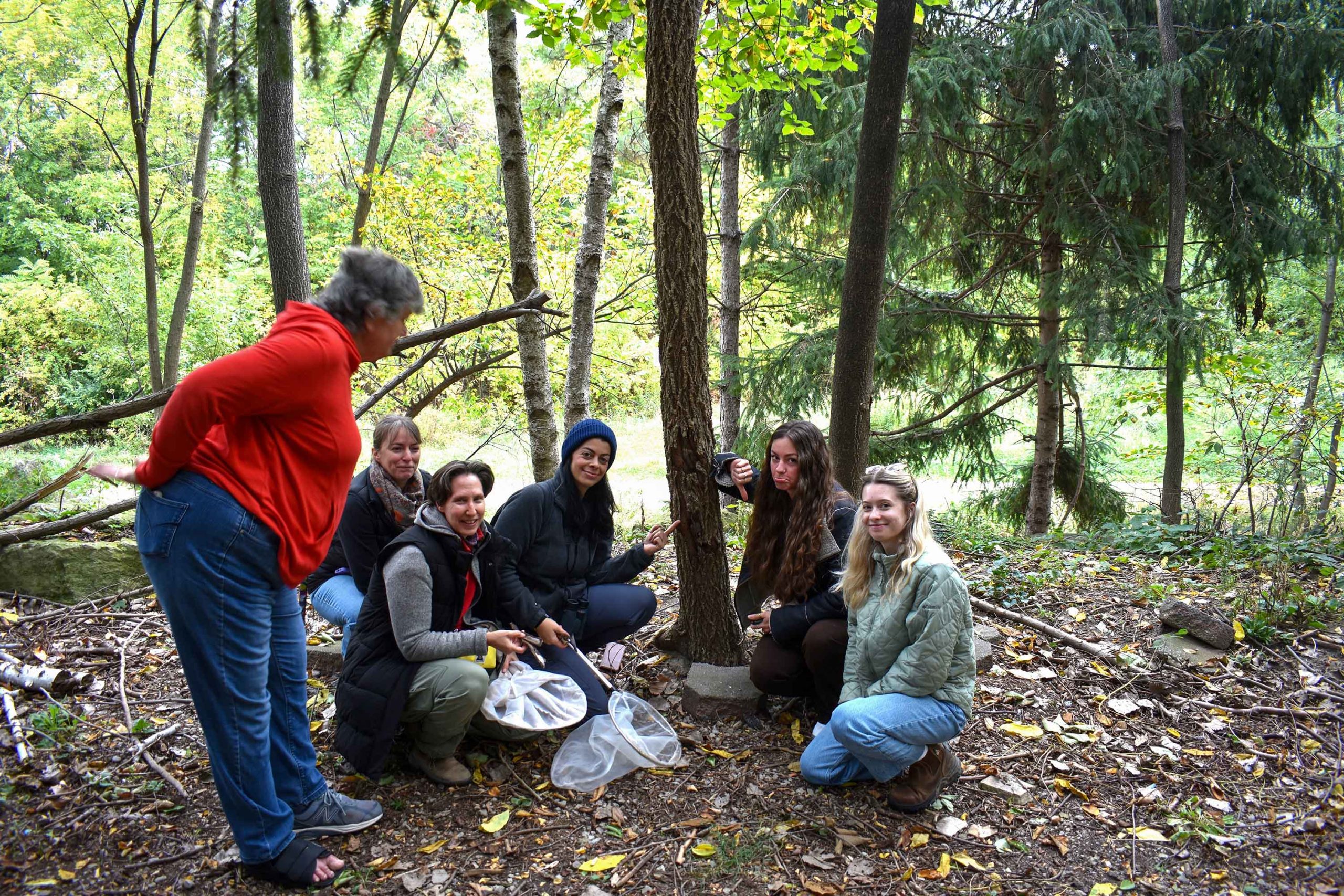
Malkie Spodek, Senior Scientist at Brock University’s Cool Climate Oenology and Viticulture Institute (second from left, seated) is part of a field visit to detect and identify SLF egg masses and adults in a Windsor municipal park. With her are representatives from the Ontario Ministry of Agriculture, Food and Agribusiness, the Grape Growers of Ontario, Agriculture and Agrifood Canada, the Ontario Grape and Wine Research Inc.
The insect’s waste also contains a sweet, sticky substance that falls on leaves and other parts of the plant. As a result, mould can grow on the leaves, blocking sunlight in the photosynthesis process and weaken the plant, says Spodek.
Native to China, India, Japan and Vietnam, the spotted lanternfly first appeared in the United States in 2014. Four years later, the Canadian Food Inspection Agency (CFIA) added the insect to Canada’s list of pests regulated by the federal Plant Protection Act and has identified it as a threat to grape, fruit tree and forestry industries in Canada.
Spodek conducted site visits in September and October in the Windsor-Essex area, where the insect first appeared this year.
Together with colleagues from CFIA, Agriculture and Agrifood Canada, Ontario’s Ministry of Agriculture, Food and Agribusiness (OMAFA), Natural Resources Canada, Grape Growers of Ontario and the Ontario Grape and Wine Research Inc. (OGWRI), she has since learned more about the invasive insect and met with grape growers in the region to provide support and more information to them.
She also shared insights on the spotted lanternfly’s status in Canada during a recent expert panel hosted online by the Invasive Species Centre.
Spodek is continuing to work with Ontario grape growers on advancing proactive management tools and spearheading research.
“I’m committed to protecting the long-term resilience and sustainability of the Canadian grape and wine industry against this invasive insect threat,” she says.
Spodek and her colleagues such as OMAFA Integrated Pest Management Specialist and CCOVI Professional Affiliate Wendy McFadden-Smith advise grape growers to look out for “egg masses” — brown, scaly clumps resembling tree bark — on the surfaces of trees, posts, rocks, cars, tractors and bins — or on any inert flat surface.
“There’s a likelihood that people driving from Windsor and surrounding areas into Niagara might inadvertently carry eggs laid on cars and transport trucks as well as the adult SLF, which has highly specialized grasping legs,” says Spodek. “There have been studies conducted in wind tunnels showing that they can really hang on tight in winds up to 100 kilometres per hour.”
Grape growers and community members who notice these insects and other signs can submit a report directly on the CFIA Spotted Lanternfly Reporting Page, contact the CFIA Plant Health Office (Niagara) at 905-937-7434 or reach the national CFIA line at 1-800-442-2342.
For now, the insect is not present in the Niagara region. Spodek will continue to take part in surveillance activities, educate growers about the invasive insect and stay current with latest research activities in the U.S. and Canada.