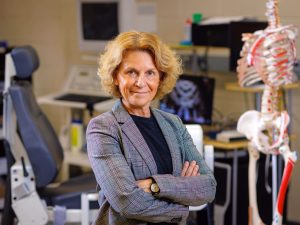
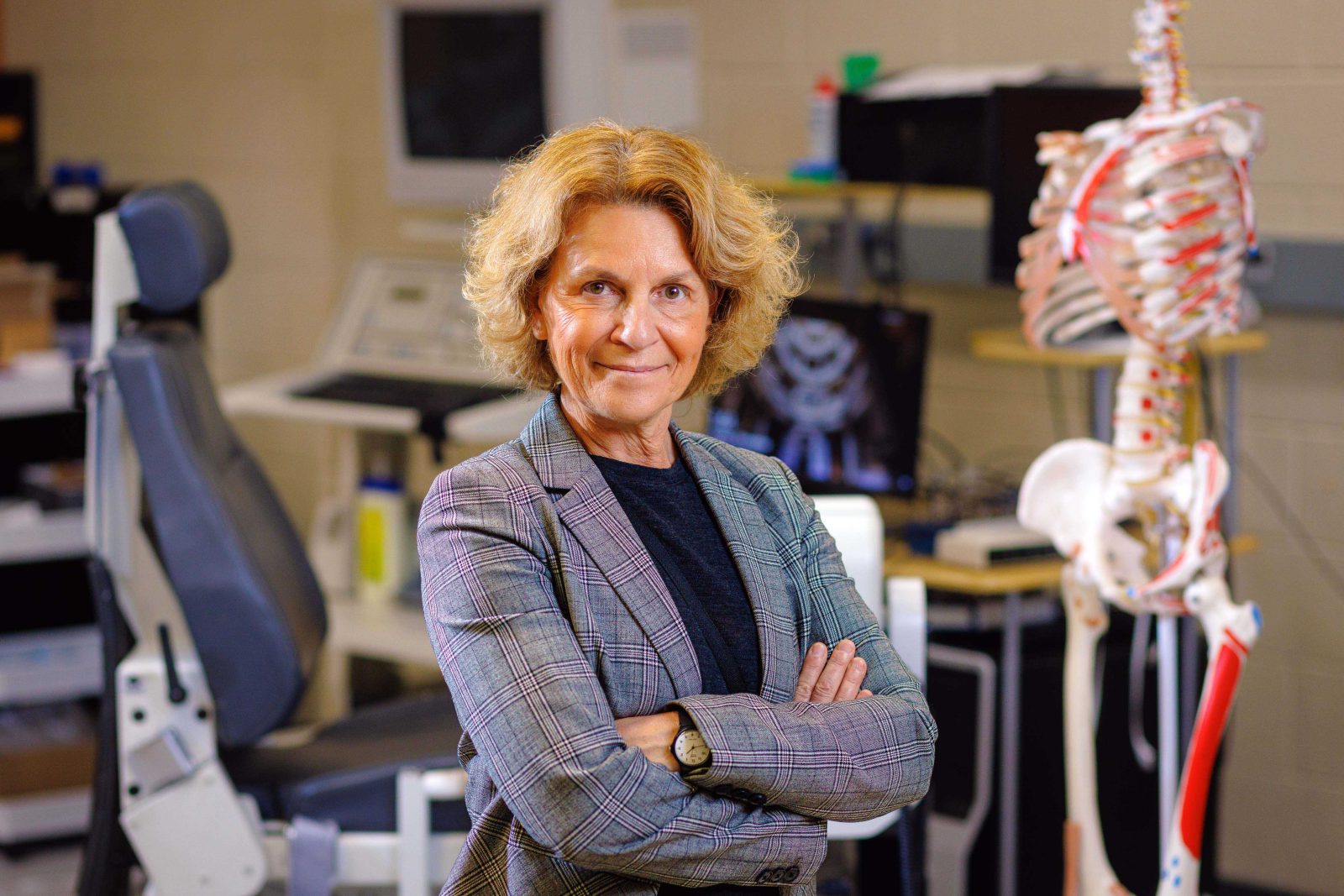
 Distinguished Professor of Kinesiology Nota Klentrou is heading up the Canadian portion of European research aiming to create digital exercise and motivational platform to help youth maximize their bone development.
Encouraging young people to start saving early for retirement is solid financial advice. For Nota Klentrou, there’s an even more valuable currency young people can bank: long-term bone health.
“Most of our bone mass is built from puberty up until around 25 years of age, making this the window of opportunity to reach our peak bone mass,” says the Distinguished Professor of Kinesiology. “We want to put more bone into the reservoir so that we can slow or prevent the bone deterioration that leads to osteoporosis and fragility fractures for post-menopausal women and older men.”
Klentrou and researchers from 27 European institutions are creating a digital exercise and motivational platform youth can use to build healthy bones with support from Horizon Europe, the European Union’s research and innovation funding program.
Brock is the only Canadian institution involved in the study and will receive about $700,000 (or €450,000) in funding.
The group’s four-year study, BUILD-BONE: Behavioural Interventions Promoting Osteogenic Exercise for Peak Bone Mass Attainment as Primary Prevention of Osteoporosis in Adolescents and Young Adults, will also evaluate the platform’s effectiveness by collecting participants’ physiological and behavioural data.
Two cell types play a critical role in regulating bone mass. Osteoblasts build new bone, while osteoclasts breakdown and remove existing bone. During growth, these processes shape the developing skeleton through a process called bone “modelling,”
In bone remodelling, which occurs throughout life, osteoclasts remove old or damaged bone and osteoblasts replace it with new bone, helping maintain bone mass and structural integrity.
Klentrou says exercise, particularly in late childhood and adolescence, triggers bone modelling and remodelling through mechanical loading, where movement and muscle contraction apply physical force and stress to bones. Osteocytes, a third type of bone cell, sense the stress that loading places on bone and convert it into biochemical signals that activate osteoblasts and osteoclasts.
As people age, however, osteoblasts may build less new bone than osteoclasts remove, and over time, this imbalance can lead to a gradual decline in bone density.
“Physical activity and nutrition are the two primary modifiable factors that can positively influence skeletal development and support lifelong bone health,” Klentrou says. “In contrast, sedentary behaviour and increased screen time during childhood and adolescence may negatively affect bone development and compromise skeletal health later in life.”
The European research team’s digital exercise and motivational platform — consisting of a mobile app and a smart wristwatch — aims to provide age-appropriate bone building activities and nutritional strategies for older children, teens and young adults.
Exercises include jumping, sprinting and other movements involving short bursts of energy, contact sports, gymnastics, track and field and resistance training as well as interactive challenges, games and rewards to encourage participation.
Multiple participating European rehabilitation and sports science centres will evaluate the app’s effectiveness in promoting bone mass accrual, the building of bone tissue throughout childhood, adolescence and early adulthood.
Klentrou and her team of Brock graduate students, led by postdoctoral researcher Andrew McKiel, will recruit 150 participants in three age categories — late childhood, adolescence and young adulthood — to test out the BUILD-BONE intervention.
The researchers will collect a range of measurements to determine participants’ bone density, body composition and bone biomarkers, which indicate the rate of bone remodelling.
Participants will then be given the app and wristwatch to use whenever they want.
The Brock researchers will gather data three times over 24 months, including physiological and behavioral measurements such as bone mineral density and content, bone biomarkers, hours of sleep, physical activity indicators and dietary intake. The team will also measure how often and consistently participants used the platform’s exercise, educational and psychosocial features.
Klentrou’s hope is that the BUILD-BONE platform can be replicated, adapted and implemented in Canada and across different European health systems to not only prevent osteoporosis but other non-communicable diseases.
“The overarching goal is to enhance physical literacy and musculoskeletal resilience in young populations, thereby improving mobility and reducing the lifetime risk of osteoporosis through early-life prevention strategies,” she says.