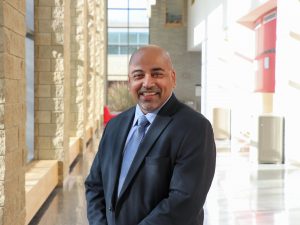
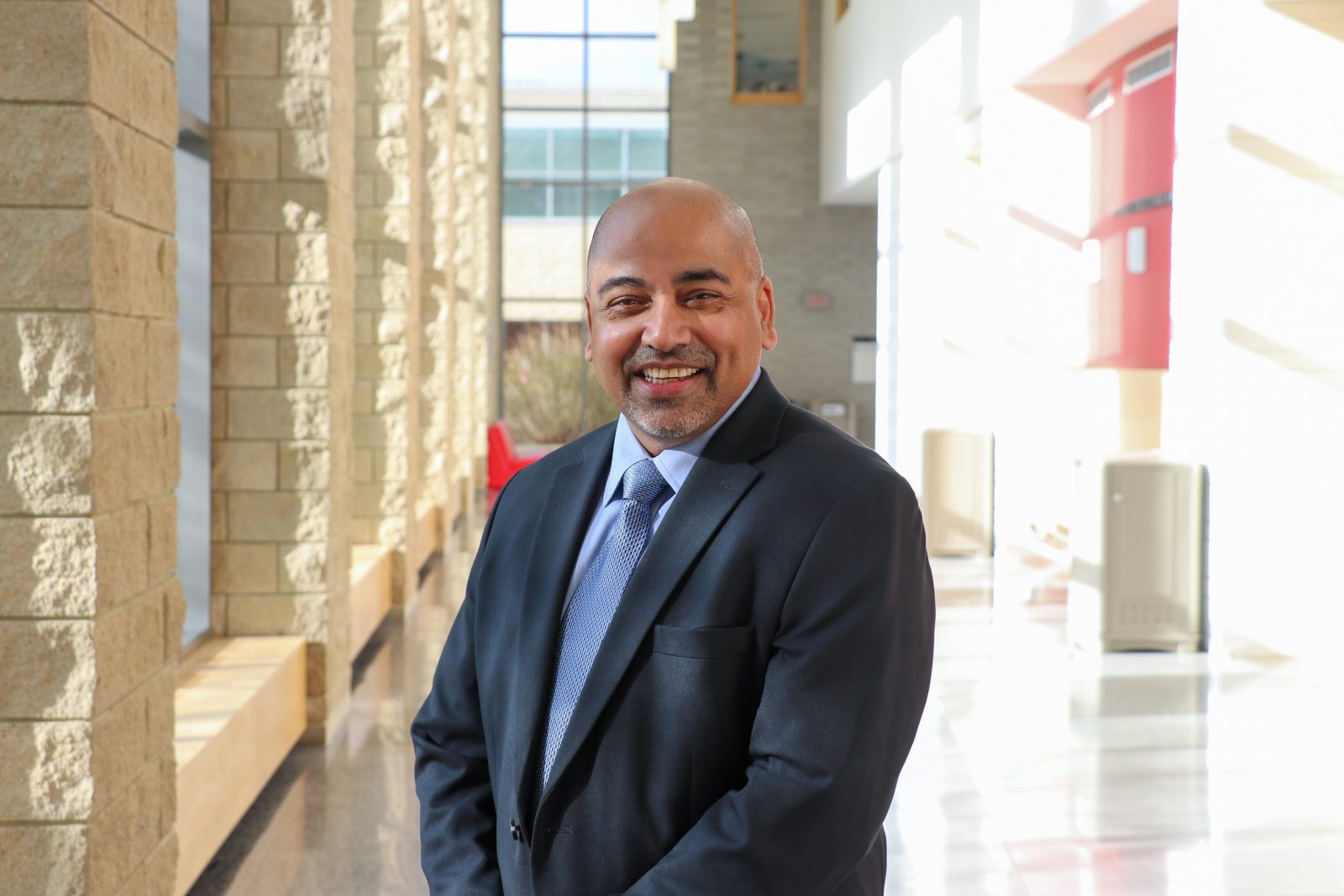
 Associate Professor of Educational Studies Rahul Kumar is igniting conversations on campus and across the globe about academic integrity in the age of generative artificial intelligence. During Brock’s 2026 Academic Integrity Week, Kumar discussed his latest research with the University and wider community.
Rahul Kumar is igniting global conversations about academic integrity in the age of generative artificial intelligence (AI).
The Associate Professor of Educational Studies aims to preserve authorship, human agency and trust in academic credentials as AI becomes increasingly integrated into learning and assessment.
“Artificial intelligence introduces new challenges and requires a rethinking of long-standing assumptions about education,” he said. “The conversation is about upholding academic integrity rather than simply addressing academic misconduct.”
His award-winning research conducted with colleague Professor Sarah Elaine Eaton from the University of Calgary explores the role of human agency and responsibility in post-secondary learning environments.
For Kumar, regardless of the capabilities, the responsibility of generative AI use remains human.
“AI can generate content, but it cannot take responsibility for its outputs. Educators, students, researchers and institutions must remain accountable for decisions — human judgment will always be essential,” he said.
In their recently released edited volume, A Research Agenda for Artificial Intelligence and Academic Integrity, Kumar and Eaton drawing on global expertise from scholars across six continents to explore how educators, researchers and policy-makers can uphold academic integrity in an era of rapidly evolving technology.
While originally conceived as a handbook, the publication evolved into a durable research agenda that instead of offering answers, poses critical questions to guide new research in the field.
“We quickly realized the pressing question: how do we create lasting research when the technology itself changes while we’re writing about it? We needed a roadmap for navigating future research,” he said.
Key topics explored in the new publication include policy considerations, equity and how human agency can be addressed. It also offers insight into lessons learned from historical technological changes in society, including those related to COVID-19.
“We also examined the relationship between convenience and human behaviour, as post-secondary students may adopt AI because it is convenient, but faculty may resist because changing established practices can be conceived as inconvenient,” he says.
This highlights how different groups experience technological change differently.
“The future of AI in education requires coordinated policy responses, not just individual classroom solutions. AI presents global challenges, and educational systems can learn from one another.”
Kumar and Eaton’s research agenda was launched virtually on Oct. 21 as part of Academic Integrity Week at Brock, hosted by the Centre for Pedagogical Innovation and campus partners from Oct. 19 to 23.
Vice-Provost, Teaching and Learning Rajiv Jhangiani said the week of events and workshops facilitated critical conversations on campus to strengthen the culture of academic integrity at the University.
“AI unsettles established approaches to assessment while creating new opportunities for innovation, so we need more spaces where educators can ask difficult questions, experiment with new techniques and tools, and learn from one another. Academic Integrity Week provides an opportunity to engage in these important conversations, strengthen our collective understanding, and ensure that evolving policy and practice remain grounded in the values that underpin transformative teaching and learning,” he said.
Sessions provided faculty and staff with an opportunity to share experiences, discuss challenges, explore emerging trends and exchange ideas related to academic integrity.
Workshops offered in partnership with Learning Services examined appropriate and inappropriate uses of generative AI, considered the risks of over-reliance on AI tools and offered tips interpret and follow course-specific expectations.
Jhangiani said the goal of developing strategies for making ethical, transparent decisions regarding generative AI use is ongoing work that will shape the future of the global educational landscape.
“As AI continues to reshape teaching and learning, our responsibility is not simply to adapt to new technologies but to exercise discernment about when and how they are used,” he said. “By preserving human agency and the productive friction through which meaningful learning occurs, we can ensure that innovation strengthens rather than undermines the fundamental purposes of higher education.”