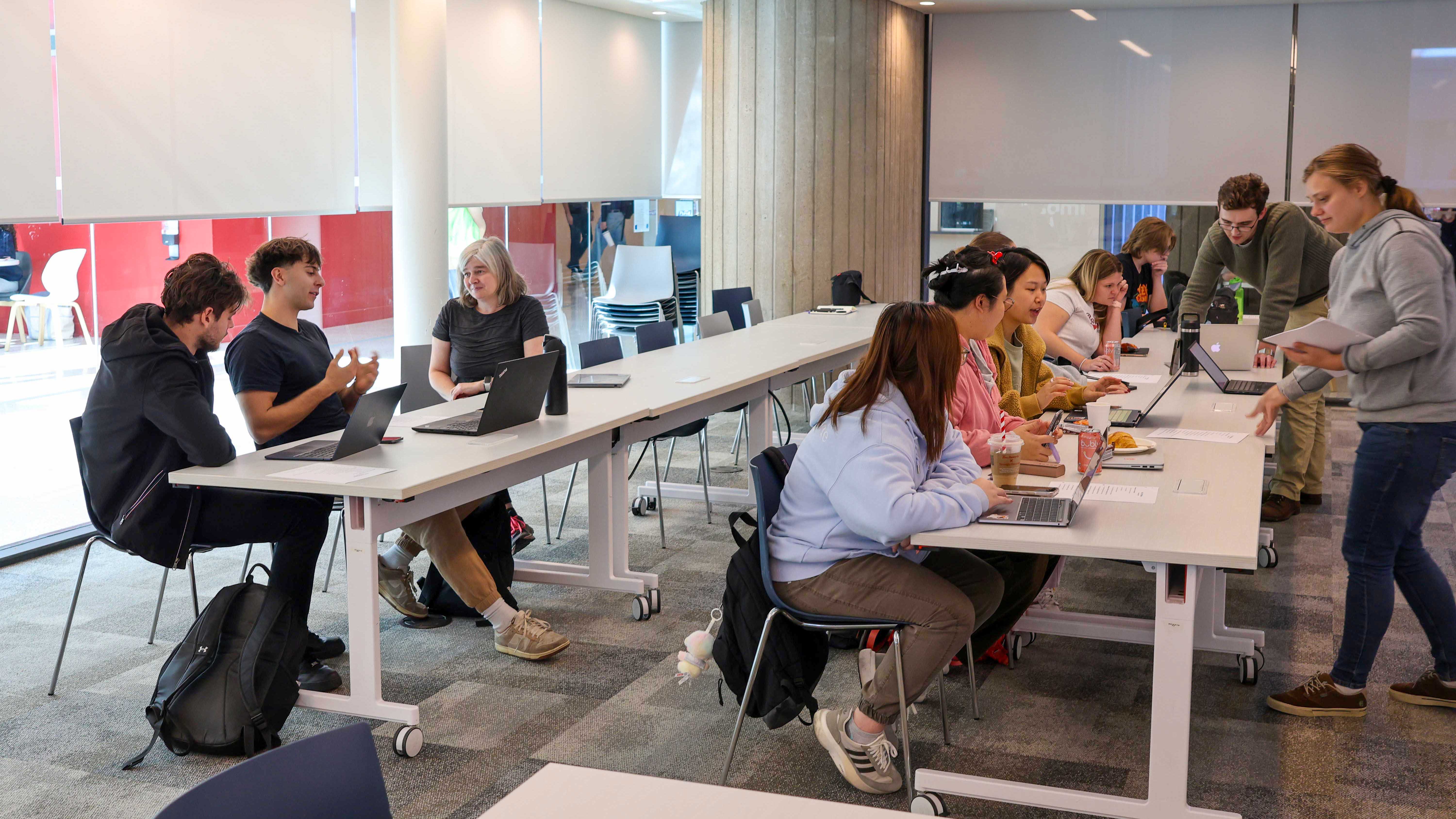
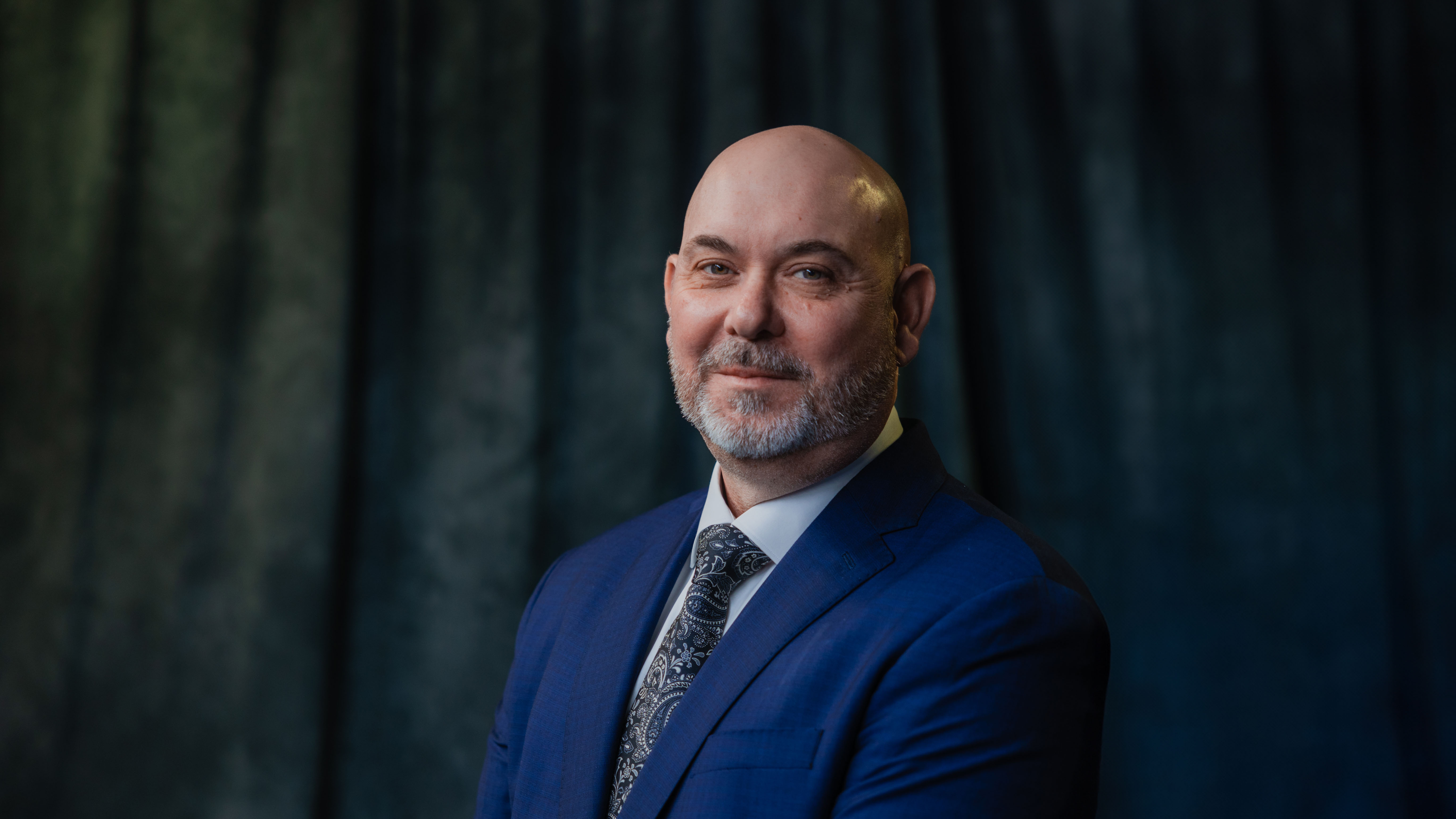
 Stephen Smith (BA '95) sharing insights into his career and how investigative genetic genealogy — combining DNA analysis with family research — is used to solve cold cases during a talk at Brock University on Oct. 19.
Behind some of the most challenging police investigations are questions that have gone unanswered for years.
Brock University Political Science graduate Stephen Smith (BA ’95) helps detectives pursue answers through investigative genetic genealogy (IGG), a field that combines DNA analysis with family-tree research to help identify unknown human remains or leads in homicide and sexual assault investigations where conventional DNA matching has not produced results.
As a Detective Sergeant with the Toronto Police Service’s (TPS) Homicide and Missing Persons Unit — Cold Case Section, he works on investigations that use emerging forensic techniques to advance cases that have remained unsolved.
Smith shared insights from his career alongside his colleague, forensic officer and Detective Constable Aimee Lukings, during an Oct. 19 event hosted by the Faculties of Applied Health Sciences, Mathematics and Science, and Social Sciences.
During his talk, Smith discussed the cold case of a nine-year-old girl who disappeared from Queensville, Ont., in 1984. At the time, investigative tunnel vision resulted in the wrongful conviction of an innocent man. DNA evidence eventually exonerated him in 1995, but the case remained unsolved.
Smith recounted that investigators revisited the evidence, including four skids of paper files. Using IGG and a DNA sample from preserved autopsy blood, they honed in on two family trees in Belleville, Ont., ultimately identifying the likely killer. The breakthrough demonstrated how preserved forensic evidence and advances in DNA analysis can help decades-old investigations.
Smith said every scientific advance makes it possible to crack previously unsolvable cases.
“Keeping pace with scientific advances is one of the biggest challenges — and exciting learning opportunities — of my job,” he said.
He emphasizes that the ability to assess information, weigh options and make decisions under pressure has been critical to his success. Smith credits the skills he developed while at Brock with building a foundation for his future career.
“The skills that you learn while getting a degree — writing, analytical reasoning and reflecting critically — they are all applicable to policing,” he said.
Through Brock’s Co-op, Career and Experiential Education job board, he applied and secured summer positions as a customs inspector using the Federal Student Work Experience Program at the Canada Border Services Agency. Colleagues he met through those experiences eventually encouraged him to apply at the Toronto Police Service.
Today, Smith is part of an award-winning investigative team where he manages IGG cases, grant funding and referrals from police services across Ontario to determine which cases may be suitable for the technique. The work is supported by funding from Ontario’s Solicitor General, which has helped provide genealogists and DNA testing services to police services across the province. According to Smith, TPS has been involved in more than 100 IGG case resolutions across Canada in the past four years, including nearly 80 in Ontario.