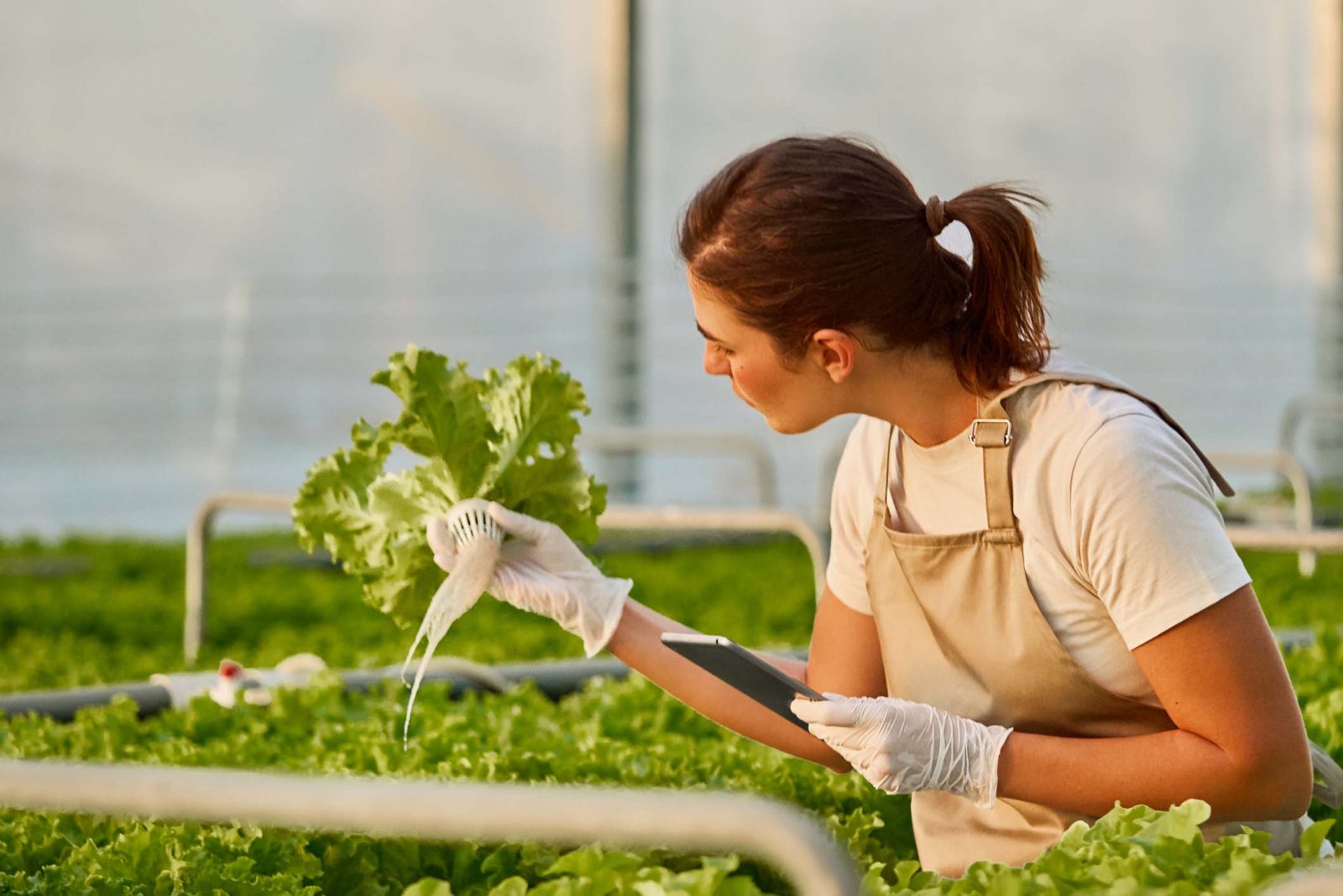
 A new policy brief published by the Niagara Community Observatory at Brock University examines the network of organizations in Southern Ontario’s greenhouse technology sector.
With grocery bills rising, new Brock University research is advocating for more investment in innovative greenhouse technology.
“If food security is a national priority, then greenhouse innovation must be a national priority, too,” says Professor of Political Science Charles Conteh, adding that food affordability, supply chain disruptions, climate change and the capacity to produce food domestically are growing concerns for many Canadians.
Conteh has co-authored a new Niagara Community Observatory (NCO) policy brief exploring the greenhouse innovation service-delivery ecosystem in southern Ontario. This area, which includes Niagara, is “one of the most important greenhouse production regions” in Canada, Conteh says, and plays a “critical role” in supplying fresh vegetables and other food products year-round.
The policy brief maps out relationships and processes among agricultural intermediaries, with the goal of understanding how these organizations support the development and adoption of greenhouse technology.
Intermediary organizations include individual growers, industry associations, technology providers, government agencies, researchers and postsecondary institutions, including Brock University and Niagara College.
For instance, agricultural organizations reach out to colleges and universities to develop research capacity, talent and infrastructure, while government agencies such as the Ontario Ministry of Agriculture, Food and Agribusiness and the Federal Economic Development Agency for Southern Ontario provide funding, regulation and policy direction.
“We found that all these connections are essential to translating new ideas into practical solutions for growers,” says Conteh. “As Canada looks for ways to strengthen food security and resilience, investing in and better coordinating these innovation networks is just as important as investing in food production itself.”
Conteh and co-authors Associate Professor of Recreation and Leisure Studies Martha Barnes and NCO Research Coordinator Carol Phillips surveyed approximately three dozen agricultural organizations, asking them questions about their organizations and others they collaborated with in nine areas of innovation.
The survey results showed organizations most closely collaborate with one another when supporting or conducting upstream research and development or early-stage research; validating and prototyping new or improved technologies; and mobilizing or commercializing new or improved technologies.
There was less co-operation with helping farmers and businesses adopt new technologies, connecting technology developers to end users in the network, and sharing data, technologies and information on regulations and workplace safety.
Overall, the researchers’ analysis shows the network of organizations involved in southern Ontario’s greenhouse innovation system is generally fragmented, competitive rather than co-operative and is constrained by funding shortfalls and cultural and institutional barriers, says Conteh.
“Food security is not just about growing more food,” says Conteh. “It’s also about building the innovation systems that position producers to adopt new technologies, improve productivity, respond to environmental challenges and remain globally competitive.”
To strengthen southern Ontario’s greenhouse innovation system, the team recommends:
- Introducing federal and provincial government funding with five- to seven-year commitments, allowing for long-term innovation projects to be undertaken with greater certainty.
- Establishing a regional body to bring organizations together and align their priorities, reduce duplication and facilitate ecosystem-wide collaboration across crops.
- Expanding industry-driven research funding that balances academic rigour with industry needs and timelines.
- Improving co-ordination among municipal, provincial and federal regulators to reduce duplication and improve regulatory clarity for greenhouse innovators.
- Developing standardized intellectual property agreements for agrifood partnerships.
- Creating targeted entrepreneurship supports for racialized innovators.
The Greenhouse Innovation Service-Delivery Ecosystem in Southern Ontario is available on the NCO website.