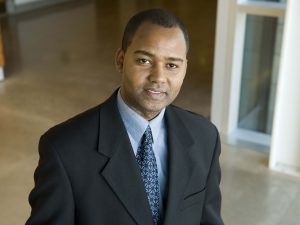
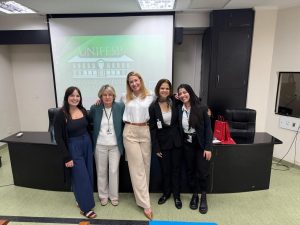
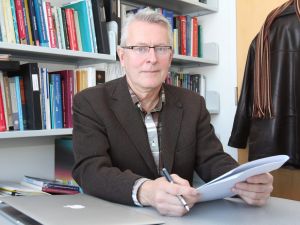
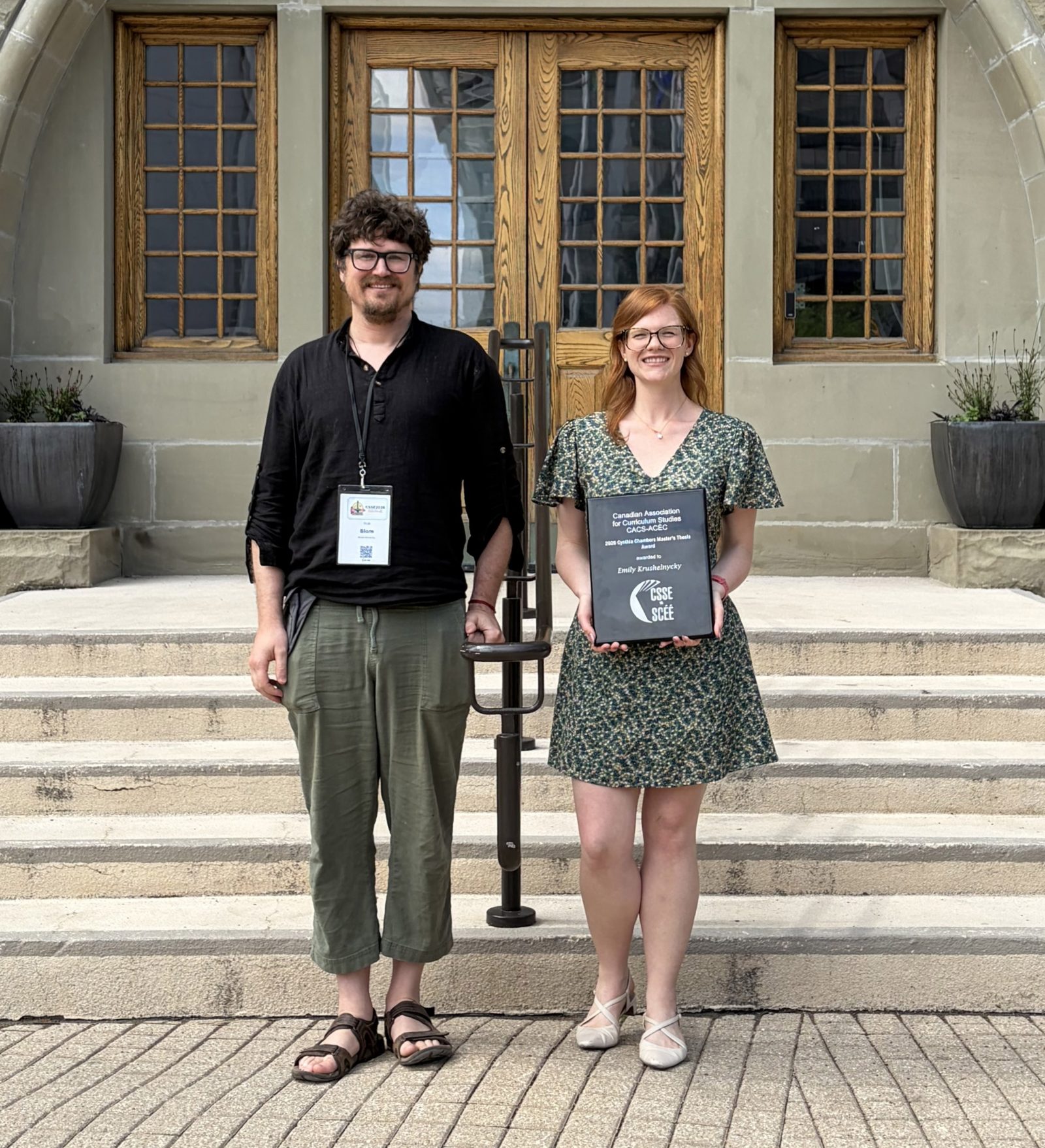
 Robert Blom (left) received the 2026 Canadian Association for Teacher Education Recognition Award for Theses and Dissertations on Teacher Education and Emily Krushelnycky received the 2026 Canadian Society for the Study of Education Cynthia Chambers Master’s Thesis Award during the annual Canadian Society for the Study of Education conference held at the University of Winnipeg from May 31 to June 3.
 Emily Krushelnycky (BEd ’22, MEd ’26) and Robert Blom (MEd ’14, Phd ’26) have garnered national attention thanks to their timely and thought-provoking graduate research exploring key issues in teacher education.
The Faculty of Education changemakers were recognized for their thought leadership earlier this year during the annual Canadian Society for the Study of Education conference held at the University of Winnipeg from May 31 to June 3.
Krushelnycky received the 2026 Canadian Society for the Study of Education Cynthia Chambers Master’s Thesis Award and Blom received the 2026 Canadian Association for Teacher Education (CATE) Recognition Award for Theses and Dissertations on Teacher Education.
Krushelnycky, a Master of Educational Studies graduate, has dreamed of being a teacher since her first day of Grade 1. But early in her teaching career, she became increasingly concerned by the amount of burnout she was seeing among new educators.
In many cases, new teachers trying to tackle science-based issues — or “socio-scientific” issues such as climate change — were feeling the burden of communicating complex and sometimes difficult topics to young learners, she says.
Motivated to explore the intersection between science education and child development, and drawing on her own teaching experience, she began examining how science-based topics that can attract intense debate are addressed in Grades 1 to 3.
“I often wonder what kind of world children are entering and how we as educators can best prepare them for it,” she says. “The responsibility often falls to teachers, and they need to be prepared and feel comfortable talking about difficult issues.”
Her award-winning research addresses how teachers’ attitudes, beliefs and understandings about child development may impact their ability or willingness to implement socio-scientific issues in the classroom.
Krushelnycky says if young learners are not introduced to difficult topics during their formative years, they may be less prepared to understand and engage with those issues as they get older.
Now entering a PhD in Educational Studies at Brock, Krushelnycky is building on her master’s research and teaching experience to create a practical resource for teachers to help them navigate complex issues in the classroom.
“If we can use age-appropriate language and tools, such as picture books to explore complex themes, children won’t feel so afraid,” she says. “Instead, they will feel empowered, inspired and motivated to do something about these big issues facing our world.”
For Blom, a PhD in Educational Studies graduate, teaching is more than just a profession — it’s a vocation.
He approached his doctoral research, which explores the role of philosophical thinking in teacher development, from a unique perspective informed by 10 years teaching high school math and refining his own teaching practice.
The completion of Blom’s Master of Educational Studies at Brock led to the adoption of the philosophical framework known as “non-Aristotelian systems” for his doctoral work. In philosophy, Aristotelian logic is binary, or bivalent.
“Examples are black and white, true or false, and up or down. Non-Aristotelian logic is a system of differences, with incorporation of ideas both laterally and horizontally that tries to find the true meaning of a situation by not avoiding the complexity of life,” Blom says.
This way of deep thinking provided the premise of Blom’s dissertation, which explores the idea of shifting the focus of teacher education from “development” to “envelopment.”
In the context of philosophy of education, while development can suggest knowledge accumulating in stages over time, Blom explores how the centuries-old concept of “envelopment” suggests that new knowledge does not simply replace what a learner knew before but incorporates and transforms previous understanding into a new worldview.
“In defining teacher envelopment, we encounter the meta practices of mindfulness and discernment which allow teachers to integrate knowledge into the present in an environmental way,” Blom says.
When aspiring educators practice mindfulness and discernment, a new version of themselves develops that recognizes a bigger picture and understands that previous knowledge was not wrong but instead being incorporated into new ideas, he says.
“This unlocks new levels of knowledge and mindfulness for teachers to tackle philosophical concepts such as post-truth, non-Aristotelian curriculum design and ontological growth.”