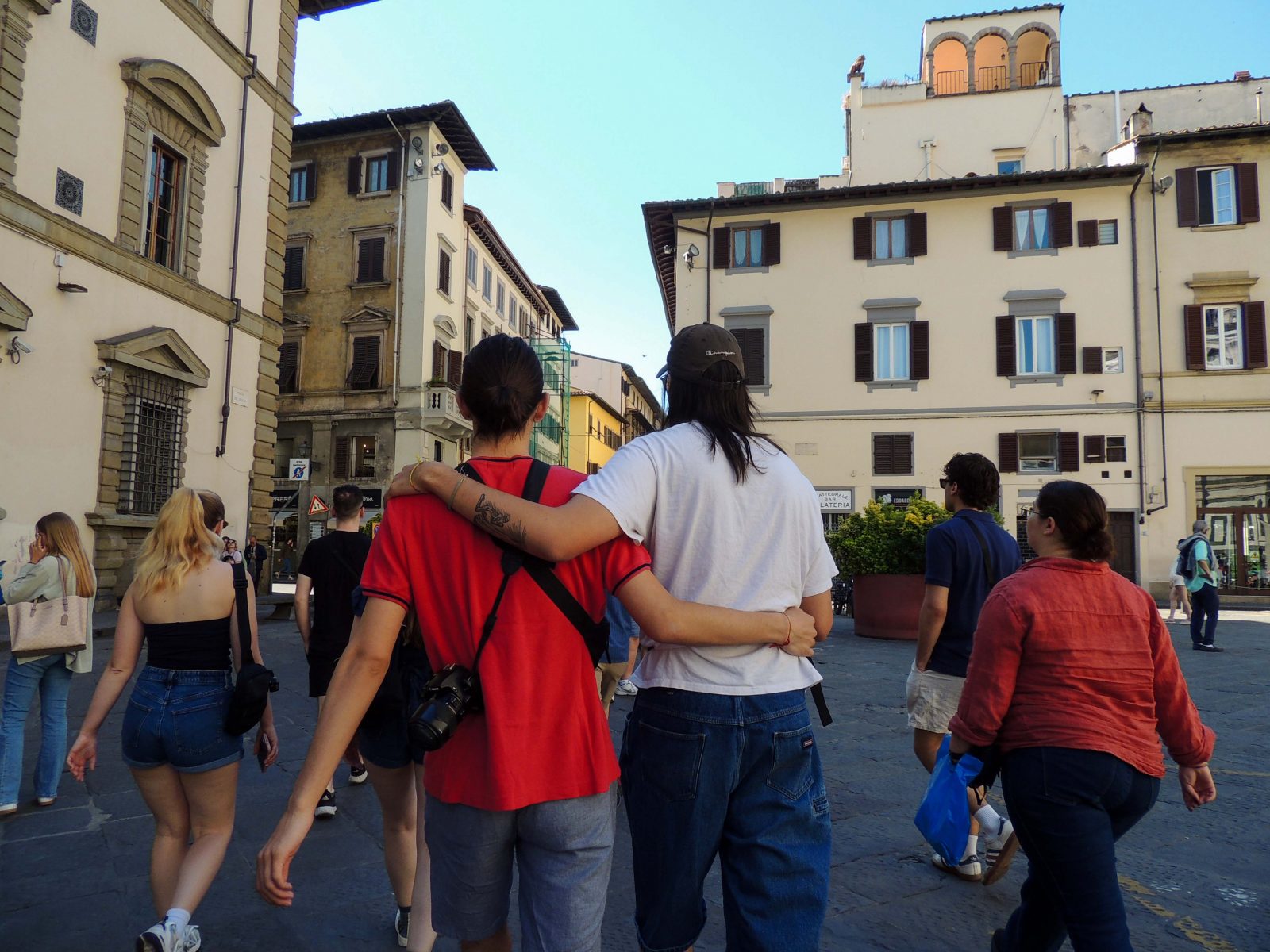
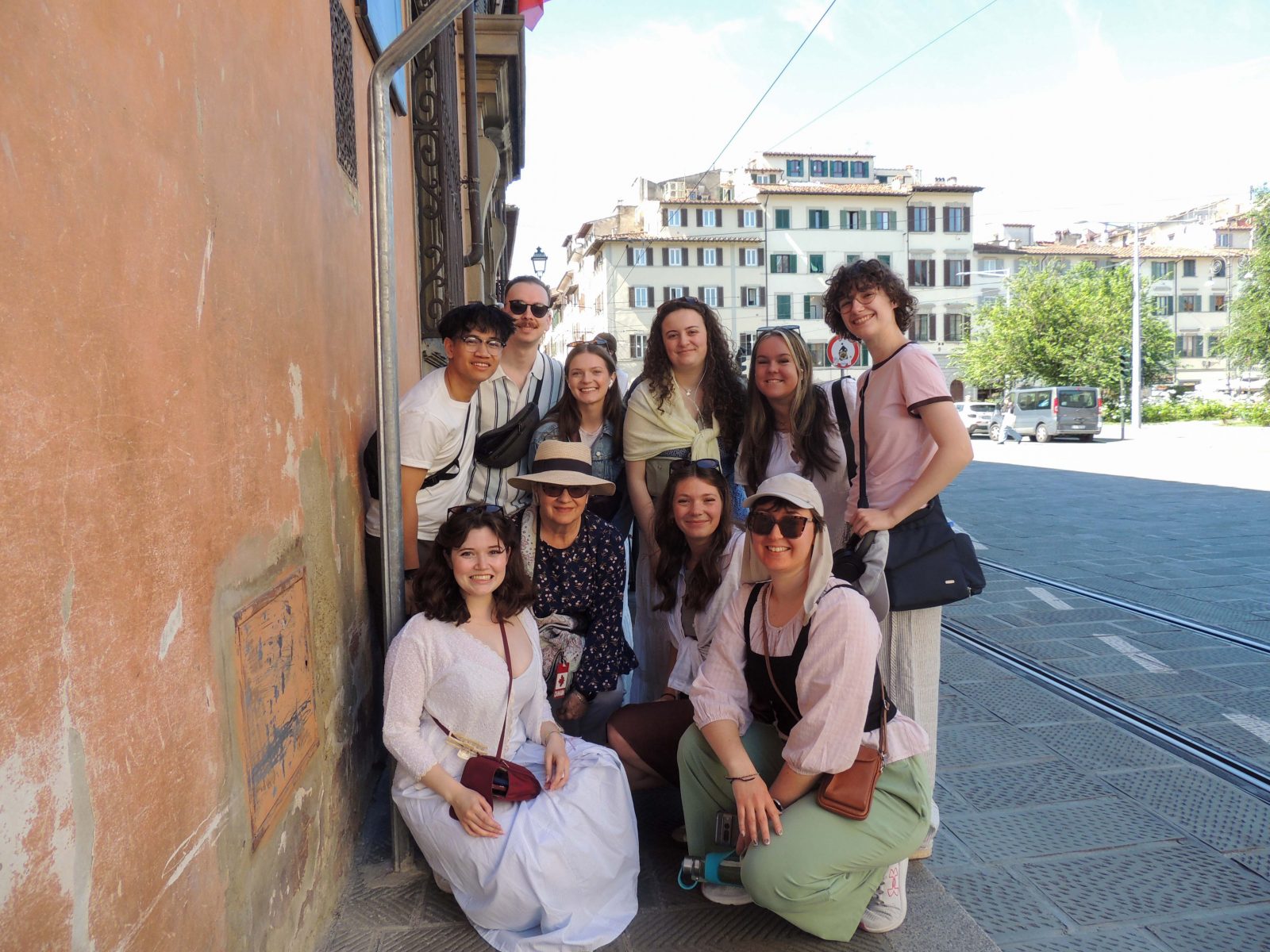
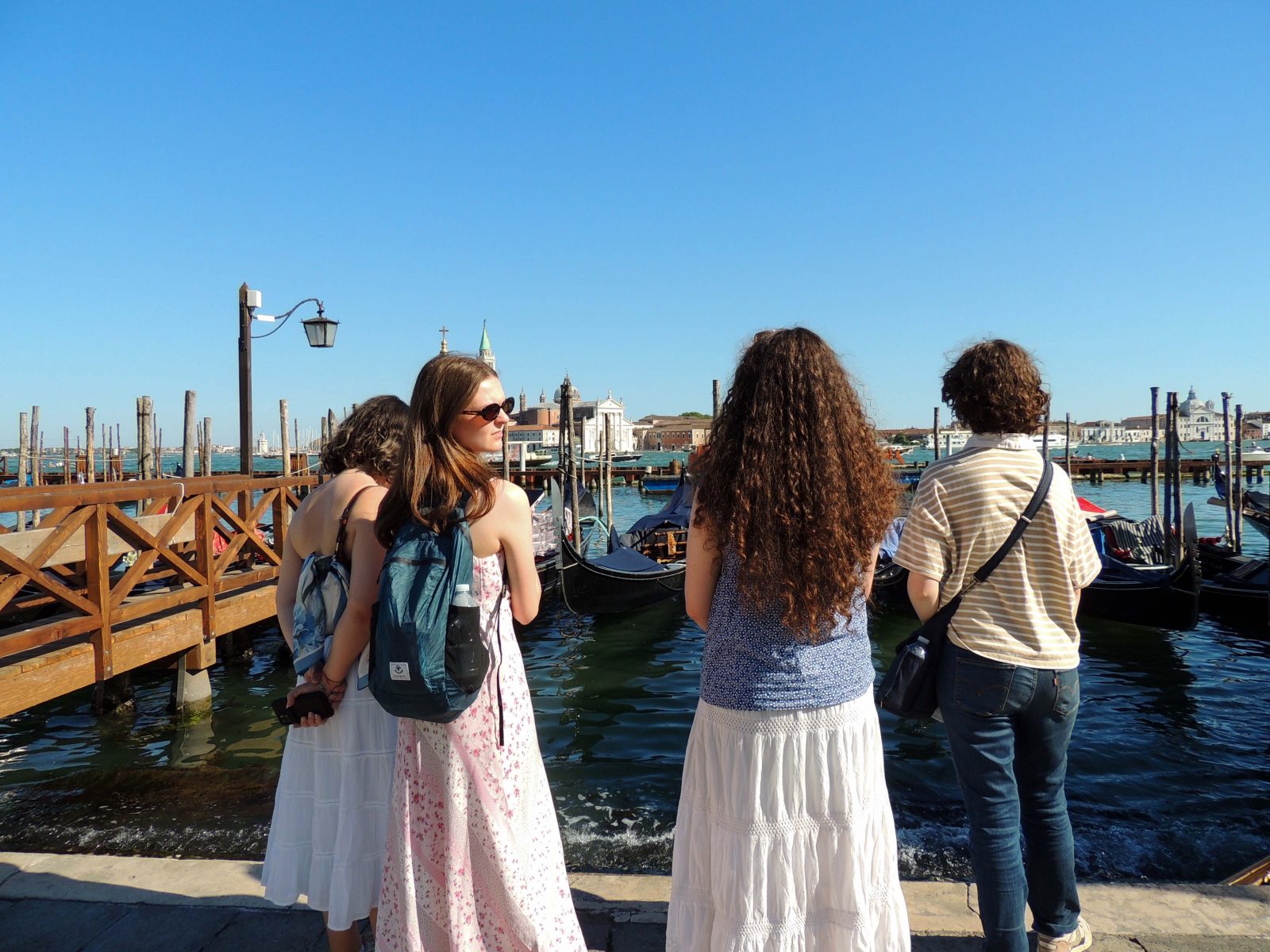
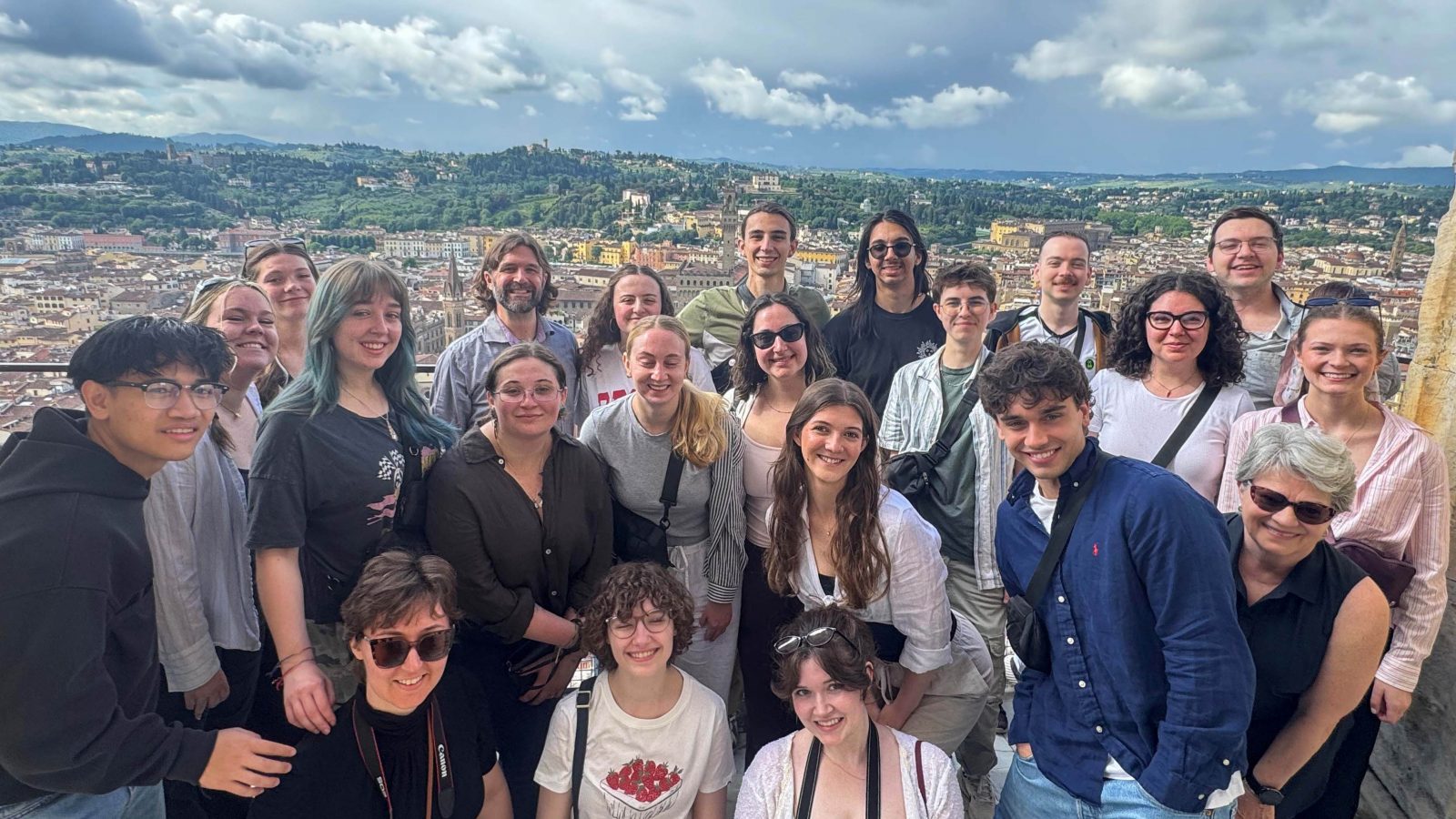
 Brock students led by Associate Professor of History Colin Rose climbed the famed Duomo Santa Maria in Florence, Italy, during a recent study abroad experience as part of an experiential Spring course on the social history of Renaissance Florence.
 From taking in majestic views atop the famous dome of Santa Maria del Fiore to tracing the steps of history in the birthplace of the Renaissance, Brock students brought their learning to life during a recent study abroad experience in Florence, Italy.
Led by Colin Rose, Associate Professor of History, the experiential Spring course MARS 3F52 Social History of Renaissance Florence included visits to significant cultural sites and guided tours as well as day trips to Siena and Bologna.
Students dove into intensive study of the Italian Renaissance, exploring social, political and cultural developments of the period with an emphasis on daily historical life in the city and its surrounding countryside.
“I have read so much about Florence in my studies at Brock that I could almost see the historical events happening as we visited the sites,” said fourth-year History student Nadia Preinitsch, who has taken many classes with Rose over the past three years.
In a rite of passage for any student of the Renaissance era, the group climbed the Duomo of Santa Maria to better understand how the architectural feat designed by architect Filippo Brunelleschi was built between 1420 and 1436.
For second-year MARS student Sophie Hillhouse, visiting the cathedral and looking up at the Dome, after climbing to the top to see the city from above, was a moment she will never forget.
“From underneath, the space between me and the dome felt like a massive pressure; the air felt heavy with the devotion of art,” she said.
The group also visited the Uffizi gallery, the ancient church of Santa Reparata and its Roman mosaics, and the church of Santa Croce where Michelangelo, Niccolo Machiavelli and Lorenzo Ghiberti are buried.
Lectures and readings about the everyday experiences of the Florence’s Renaissance residents sprang to life through walking tours that traced the stories of historical characters like Cosimo de’ Medici and Giovanni the woolworker.
Rose said in addition to experiencing the modern-day place in person, students thought historically about how intense community bonds created the societies of the Renaissance period, and how important those community bonds were in societies divided by inequalities and structural violence.
“They will take these critical ways of thinking — ways of being human — into their communities and futures with them, and they’ll use them to help others. I couldn’t be more proud,” he said.
From visiting many other churches and museums such as the Museo dell’Opera del Duomo, the Monastery of San Marco, the Pitti Palace, the Ospedale degl’Innocenti, to watching the sunset from Piazzale Michelangelo, Rose said students approached and the world of the Italian Renaissance with inquisitiveness and courage.
“They’ve come back knowing more about how history is created in the service of the modern world, and how the work of past craft and culture can shape people’s experiences and perspectives in the present,” he said.
According to Rose, third-year French Studies student Maya Argudin described the experience best.
“The days were fantastic and filled with incredible sights and deep learning, very sore feet, excellent gelato and genuinely great conversations,” Argudin said.