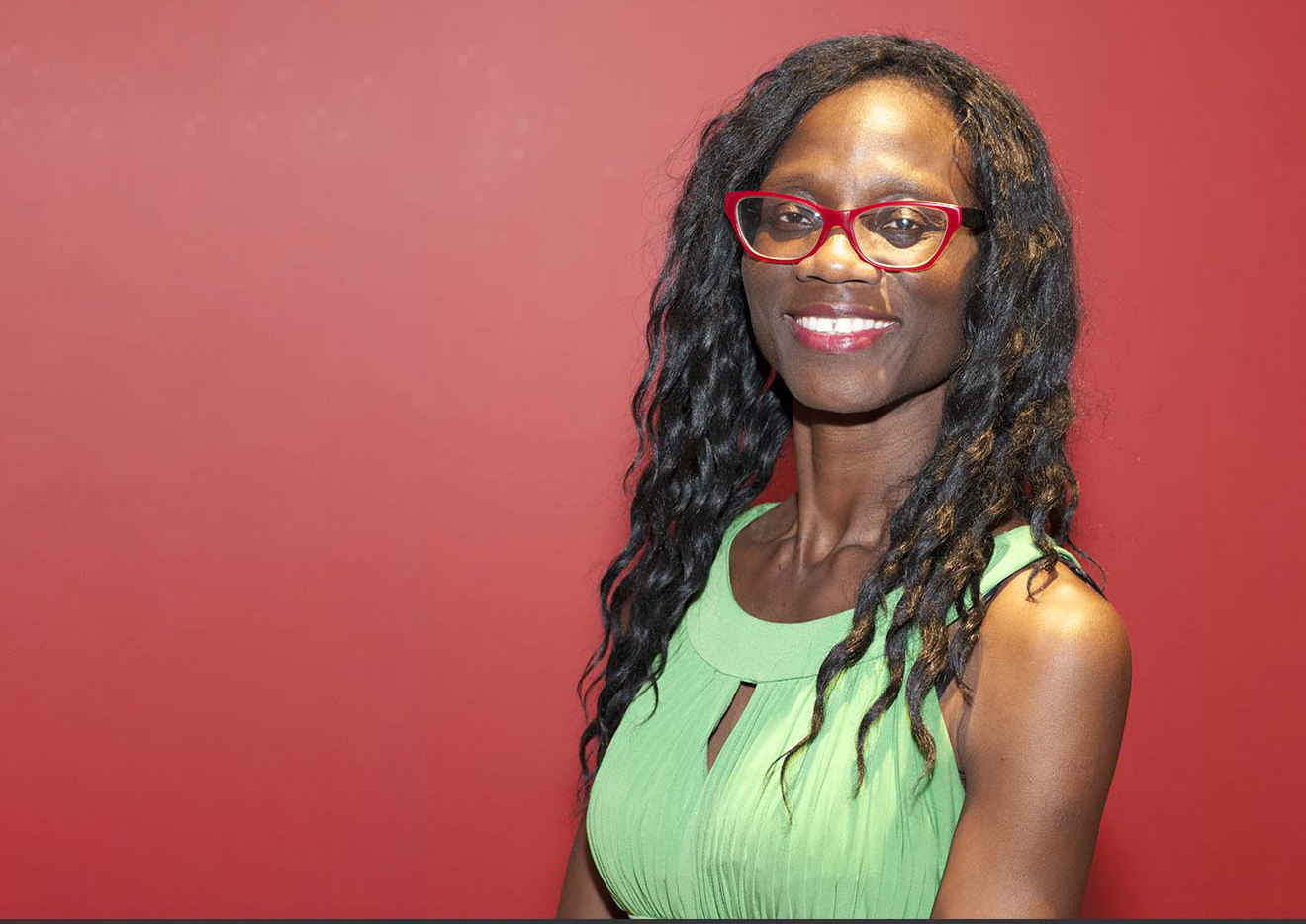
 Professor and Chair of the Department of Computer Science Betty Ombuki-Berman, who is leading the “Healing Algorithms: Decolonizing AI for Health Equity in Indigenous and Black Communities” research project, is one of three Brock projects to receive the Government of Canada’s New Frontiers in Research Fund (NFRF) – Exploration grants, announced May 13.
There’s an expression Beatrice Ombuki-Berman sometimes uses when she discusses artificial intelligence (AI) algorithms: “technology is never neutral.”
This is particularly true in the health-care sector, says the Professor and Chair of the Department of Computer Science, where algorithms can perpetuate and deepen inequities faced by Black and Indigenous communities.
“When AI systems are trained on incomplete or biased data, they can be less accurate for communities that have historically been excluded or misrepresented,” she says. “In health care, that can mean missed risks, flawed decision support and the unintentional reinforcement of existing inequities at scale.”
Ombuki-Berman and her team are striving to tackle these and other inequities by co-designing a new AI framework through their research, “Healing Algorithms: Decolonizing AI for Health Equity in Indigenous and Black Communities.”
It’s one of three Brock University projects receiving a total of $750,000 from the Government of Canada’s New Frontiers in Research Fund (NFRF) — Exploration, which supports high-risk, high-reward interdisciplinary research. Also receiving NFRF grants are Assistant Professor of Engineering Ryan Schroeder and Associate Professor of Chemistry Jianbo Gao.
Chris Bittle, Member of Parliament for St. Catharines, says the funding encourages researchers to develop fresh, unconventional perspectives and methods resulting in “game-changing” impacts.
“Brock University researchers continue to push the envelope as they pursue new ways of advancing society,” he says. “These three projects show the creativity and vision that bring technology to the next level while ensuring that meeting human health and well-being needs remain front and centre.”
Ombuki-Berman’s team includes Assistant Professor, Women’s and Gender Studies/Sociology Lyn Trudeau, who is co-leading the research, Assistant Professor of Computer Science Blessing Ogbuokiri and Associate Professor of Health Sciences Valerie Michaelson.
To reimagine how AI systems are designed, the team will form two distinct advisory boards, one representing Indigenous communities and one representing Black communities.
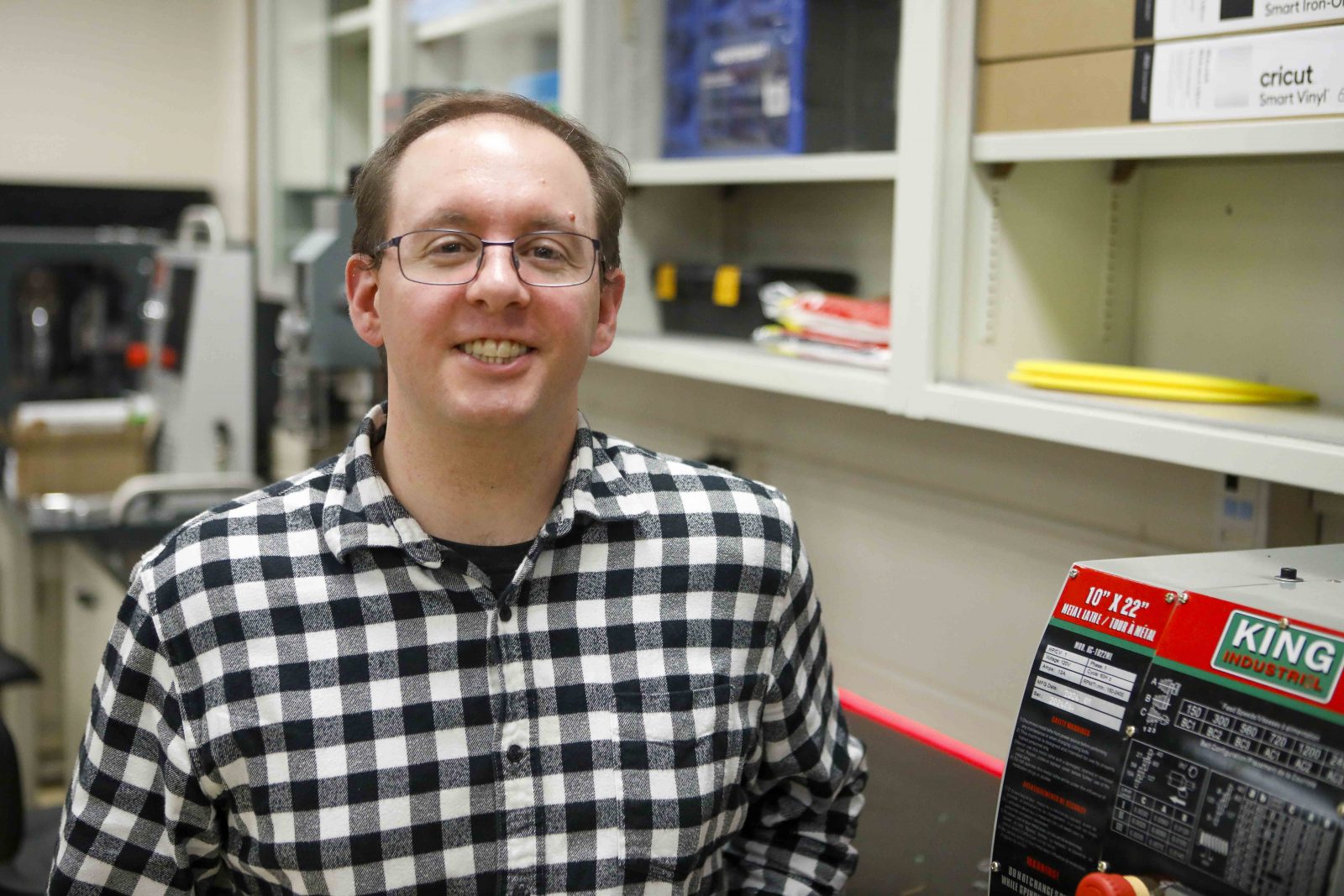
With his NFRF funding, Assistant Professor of Engineering Ryan Schroeder and his team plan to create garments equipped with sensors older adults wear to encourage them to exercise.
These boards will help guide how community knowledge, lived experience and culturally grounded perspectives are meaningfully reflected in the research. They will also explore the development of community-facing dashboards, among other tools, to support advocacy, public education and resource mobilization.
“Our goal is not simply to make existing AI systems fairer, but to rethink the assumptions on which they are built,” Ombuki-Berman says. “A more equitable healthcare system means more transparent AI-informed decisions, a lower risk of overlooking historically underrepresented communities and a meaningful voice for affected communities in shaping the technologies that influence care.”
Schroeder’s project, “Creativity in motion: Technology-enhanced art therapy to motivate physical activity in older adults,” involves creating new garments equipped with sensors designed to encourage older adults to exercise.
The sensors pick up movements — such as walking, stretching or dancing — and convert the signals into music or visual arts.
In the case of music, the older adults’ arms and legs control specific instruments. The music is played through headphones or performed in an ensemble with peers.
For the visual arts, the wearer’s limbs control colour, brush stroke width and texture, creating digital artwork that can be showcased on a screen.
“One of the exciting aspects of this project is that it reimagines physical activity for older adults as something creative, expressive and socially meaningful, rather than just routine exercise,” says Schroeder. His team, co-led by Associate Professor of Kinesiology Shawn Beaudette, includes researchers from four Brock Faculties.
Gao’s project, “Harnessing Chirality for a New Generation of DNA Sequencing Technology,” aims to make DNA and RNA sequencing technologies more accurate for activities such as biological research and drug development.
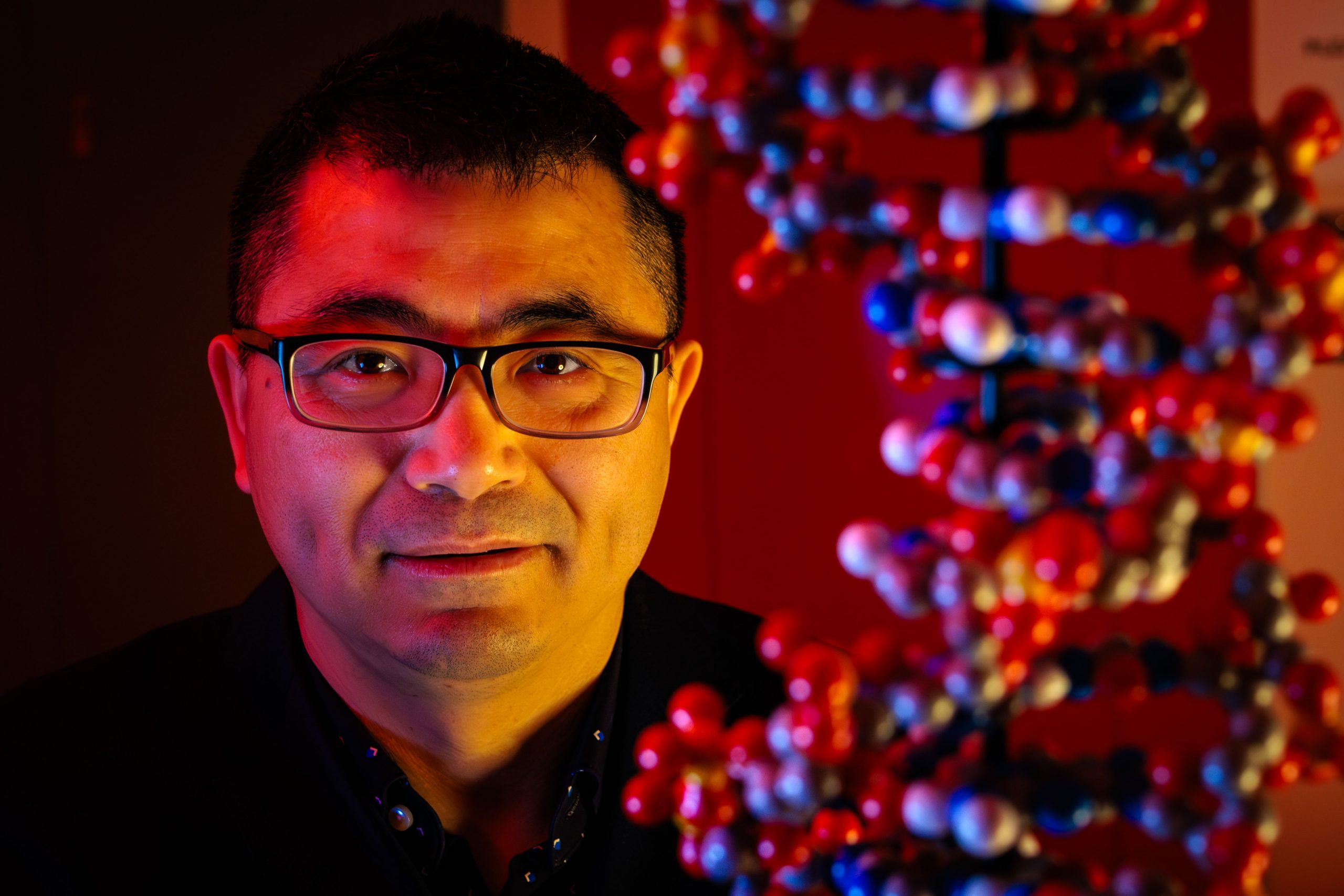
Associate Professor of Chemistry Jianbo Gao and his team received NFRF support to study how to make DNA and RNA sequencing technologies more accurate for activities such as biological research and drug development.
DNA and RNA molecules contain a property called chirality, where a pair of molecules are identical but can’t be superimposed on one another and maintain the same image. Gao says it’s similar to when two hands are side-by-side. One hand needs to be flipped over to the other to make the shape of the hands identical.
DNA and RNA molecules are matched when they’re being sequenced. Existing methods use ions or photons, which often involve a number of steps that can introduce “noise, bias and errors” into the data, he says.
Gao’s team — which is co-led by University of Toronto researcher Ina Anreiter — aims to use use electrons in the transcription process instead because they are better able to bring about chirality, cutting down on the number of steps to match molecules.
“Our high-risk, high-reward project pioneers a fundamentally new approach to nucleic acid sequencing, one that could redefine the fields of genomics and transcriptomics,” says Gao. “Modern biology relies heavily on these technologies, and our advancements will position Canada at the forefront of global innovation in DNA/RNA sequencing, genetics and biomedical research.”
Such breakthrough innovations occur when academic disciplines come together in a way that expands traditional approaches to addressing societal concerns, says Vice-President, Research Tim Kenyon.
“Dr. Ombuki-Berman, Dr. Schroeder and Dr. Gao have assembled national and international teams that bring vast, deep knowledge and experience to the table,” he says. “I look forward to the innovative solutions that will result from these rich synergies.”