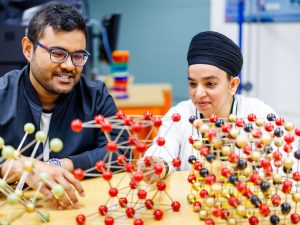
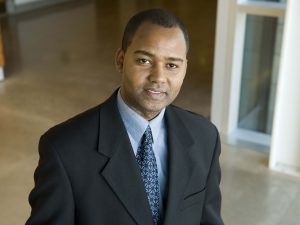
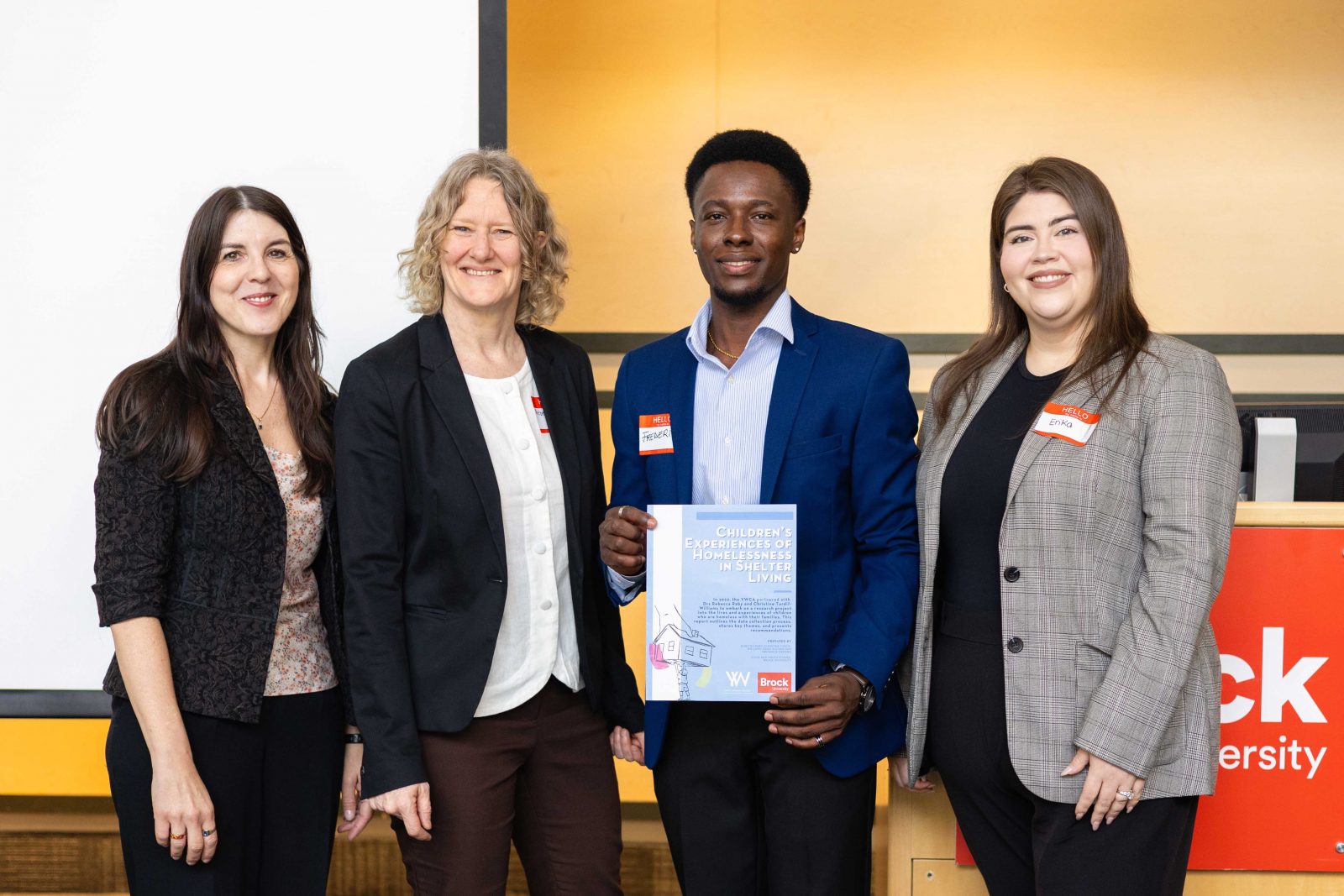
 Researchers from Brock’s Department of Child and Youth Studies launched a new report in collaboration with YWCA Niagara Region detailing experiences of homelessness for Niagara’s youngest residents. From left are Professors Christine Tardif-Williams and Rebecca Raby with PhD students Frederick Oppong and Erika Alegria.
For children, experiencing homelessness is about much more than losing the roof over their head.
It’s about saying goodbye to beloved pets. Changing schools mid-semester. And leaving behind a cherished toy that provides comfort when times get hard — often at a time when it is needed most.
These are some of the many challenges expressed by Niagara children who’ve shared insight into shelter living while participating in a research collaboration between Brock University and YWCA Niagara Region.
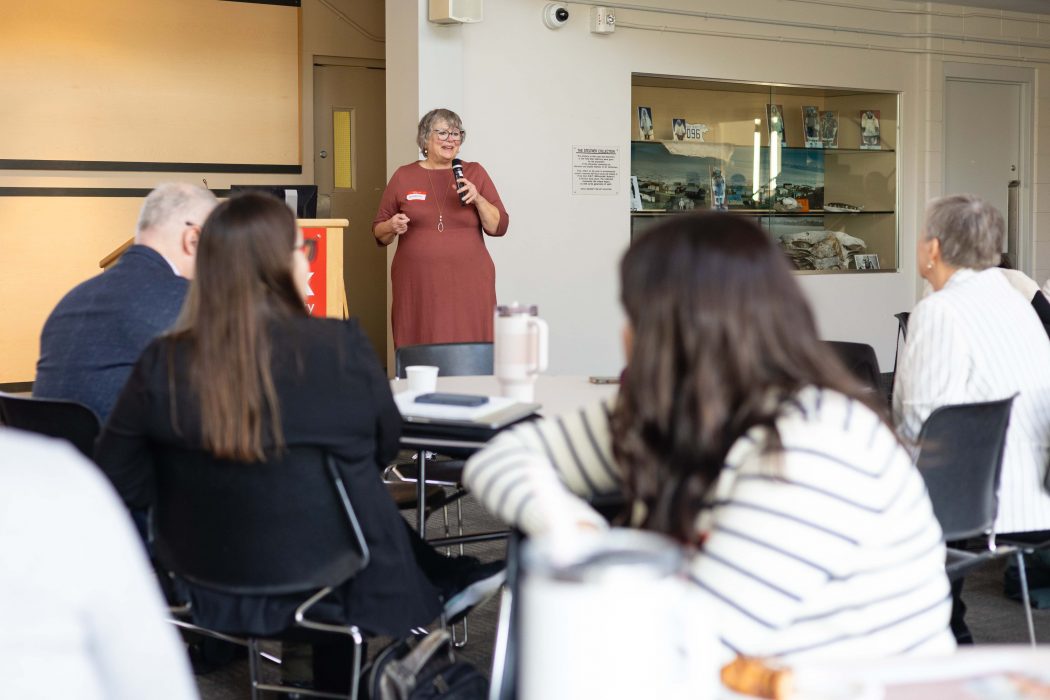
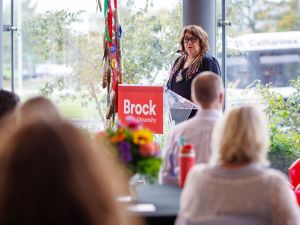
YWCA Executive Director Elisabeth Zimmermann spoke at the launch of a new report detailing experiences of homelessness for Niagara’s youngest residents on Tuesday, March 31 at Brock University.
The multi-year project, which saw Brock researchers connect with shelter residents aged five to 14 in an after-school program at the YWCA Niagara Region, led to the development of a report that was presented during a launch event at Brock on Tuesday, March 31.
“Children’s Experiences of Homelessness in Shelter Living” shares the stories of unidentified Niagara children experiencing homelessness while outlining recommendations, based on their insights, to enhance supports and meet their needs. The report was presented at the event by Professors of Child and Youth Studies Rebecca Raby and Christine Tardif-Williams alongside PhD students Erika Alegria and Frederick Oppong.
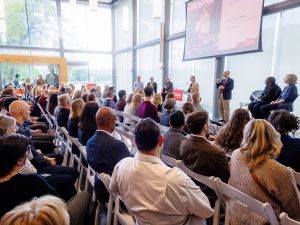
Brock researchers were joined by community experts from Niagara Regional Native Centre, YWCA Niagara Region, The Hope Centre and Second Story Community Homes and Services for the presentation and a panel discussion on children’s experiences, one of the least talked-about aspects of homelessness.
From the start of the project, born from Brock’s Memorandum of Understanding with the YWCA, the driving factor was letting children speak for themselves.
“Working with a really sensitive population, we wanted to make sure we could hear from children about their experiences,” says Raby. “We can’t always filter that through adult voices commenting on what the children are experiencing. We wanted to hear from the children directly in a way that was respectful, ethical, inclusive and on their own terms.”
Getting to know the children and their interests helped the researchers develop activities that encouraged them to share, such as designing a dream house to highlight what children missed about stable housing or art projects to help them talk about what was going well in their lives and what was not.
“We learned to be flexible with the activities,” says Alegria, with the team providing options to make the children more comfortable with participating. If drawing wasn’t for one individual, perhaps Lego or Play-Doh was a better fit, she says.
The researchers also had to adapt their methodology to the realities of life for their young participants, who might abruptly leave the shelter between researcher visits and no longer be part of the programming.
“As a research team, we had a discussion about the transient nature of our participants,” says Oppong. “It helped us focus on the present moment and try to make each interaction meaningful, even if it was brief.”
What emerged from the research were several themes around the challenges of shelter living, as well as overall difficulties related to family homelessness.
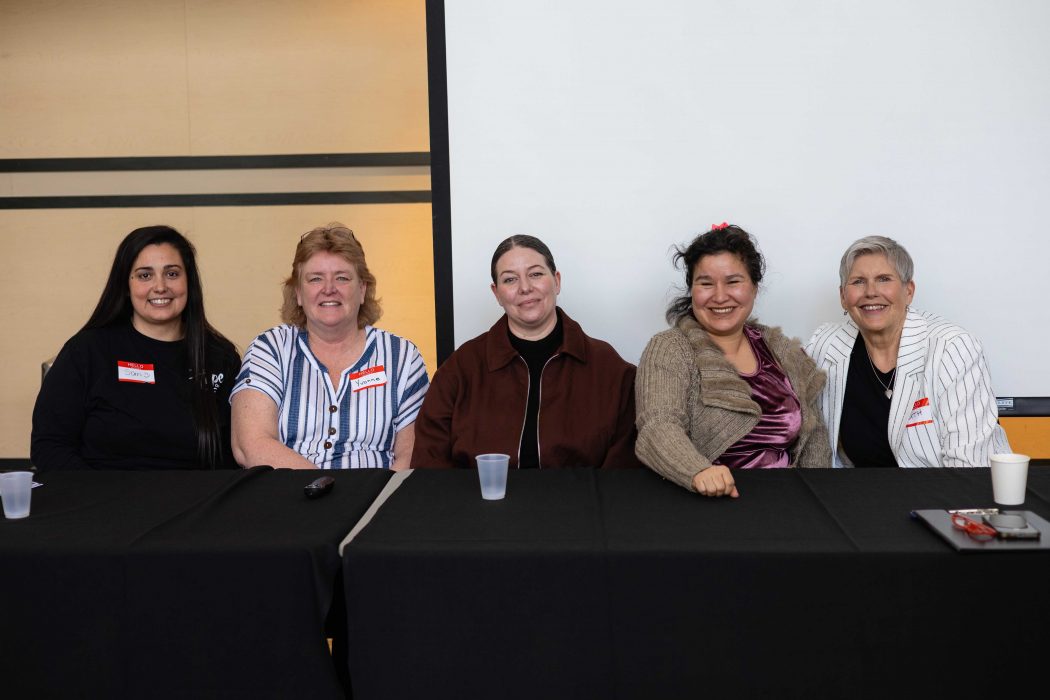
From left: Samantha Hill of The Hope Centre, Yvonne Kulawic of Second Story, Lisa Rice of YWCA Niagara Region and Mary Ellen Simon of Niagara Regional Native Centre participated in a community panel moderated by Ruth Unrau (right) of YWCA Niagara Region at Brock University on Tuesday, March 31.
But the research also highlighted strengths children frequently displayed while operating within the cohesive and predictable environment of the after-school program.
“I was struck by how active the children were in building relationships, especially with each other in the after-school program. But they also talked with us about relationships with siblings, community members, people in the neighbourhood, people who weren’t part of the program, animals and virtual gamer friends,” says Tardif-Williams. “They actively engage in trying to build those relationships in multiple ways with different people.”
While the report acknowledges the need for widescale structural change, an increase in initiatives to alleviate homelessness and improved funding, it also provides recommendations to nurture children’s strengths and resiliency and to help meet their needs.
The report recommends shelters offer consistent, age-appropriate programming as well as computer access; consider strategies to facilitate pet-keeping or encourage interactions with therapy animals; and introduce strategies to address the stigma children report experiencing, even at a very young age.
For YWCA Niagara Region Executive Director Elisabeth Zimmermann, the report emphasizes the need for everyone in the community — from educators to policy-makers — to appreciate the experiences of children living in shelters and to recognize that the issue of family homelessness needs to be viewed through its own lens.
“When we think about homelessness, we don’t think about the fact that it’s affecting children,” she says. “The launch of this report is so important for us from our organization’s standpoint because we want to start a broader community conversation on how we support children in this experience.”