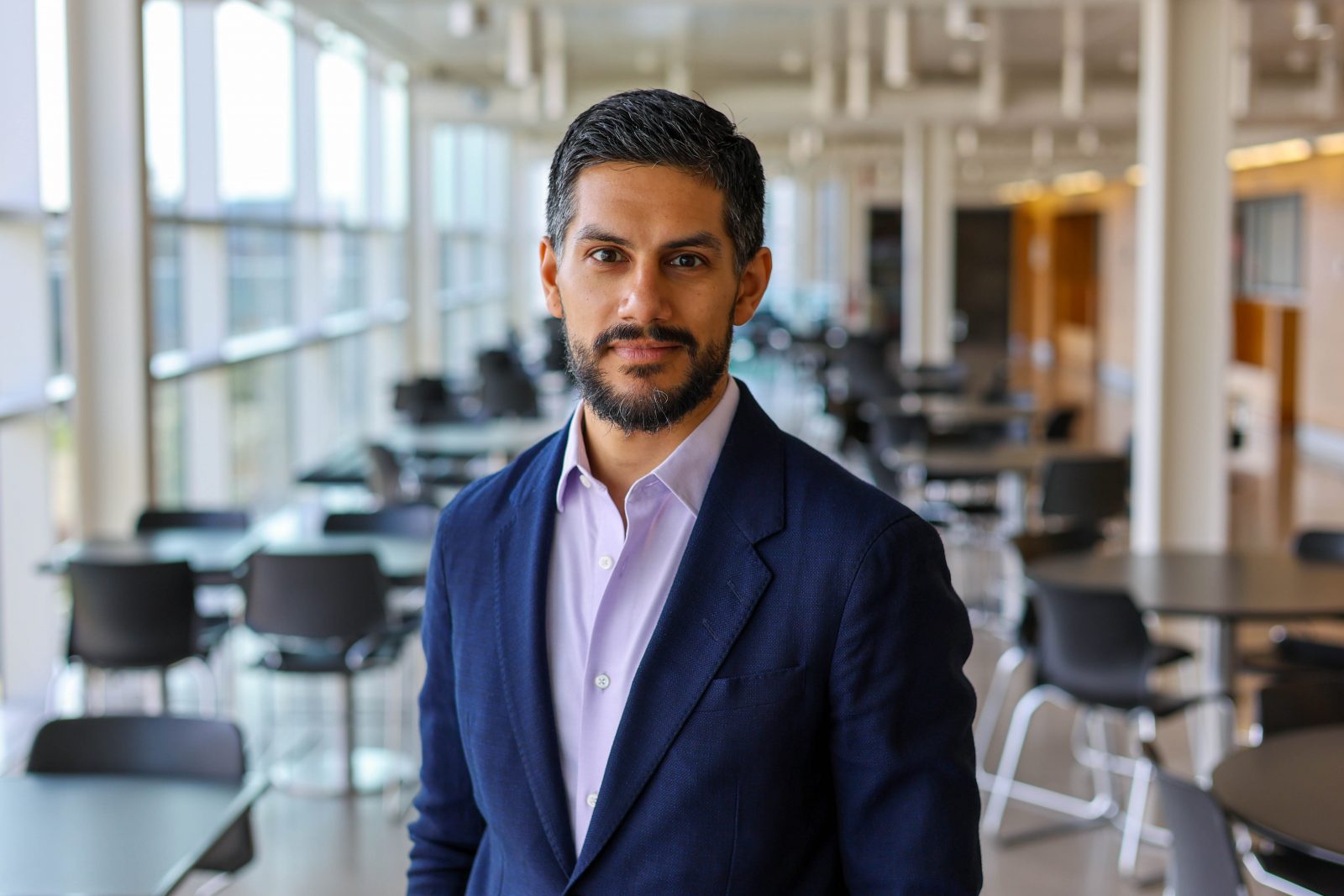
 Community members are invited to hear Associate Professor of Political Science Liam Midzain-Gobin speak on challenging notions of settler colonial sovereignty at a public talk on Friday, Mar. 27 at 5 p.m. in RFP 214.
Associate Professor of Political Science Liam Midzain-Gobin thinks it’s time to ask different questions, and be open to honest answers, about Canadian and Indigenous sovereignty.
The international relations specialist studies Indigenous-settler relationships as international politics. His new book, Settler Colonial Sovereignty: Visions of Improvement and Indigenous Erasure, examines how Canada’s settler colonial governments have relied on narratives of productivity to justify harms to Indigenous communities.
Midzain-Gobin says his goal is to understand assumptions that are baked into Canada’s political systems but not often discussed.
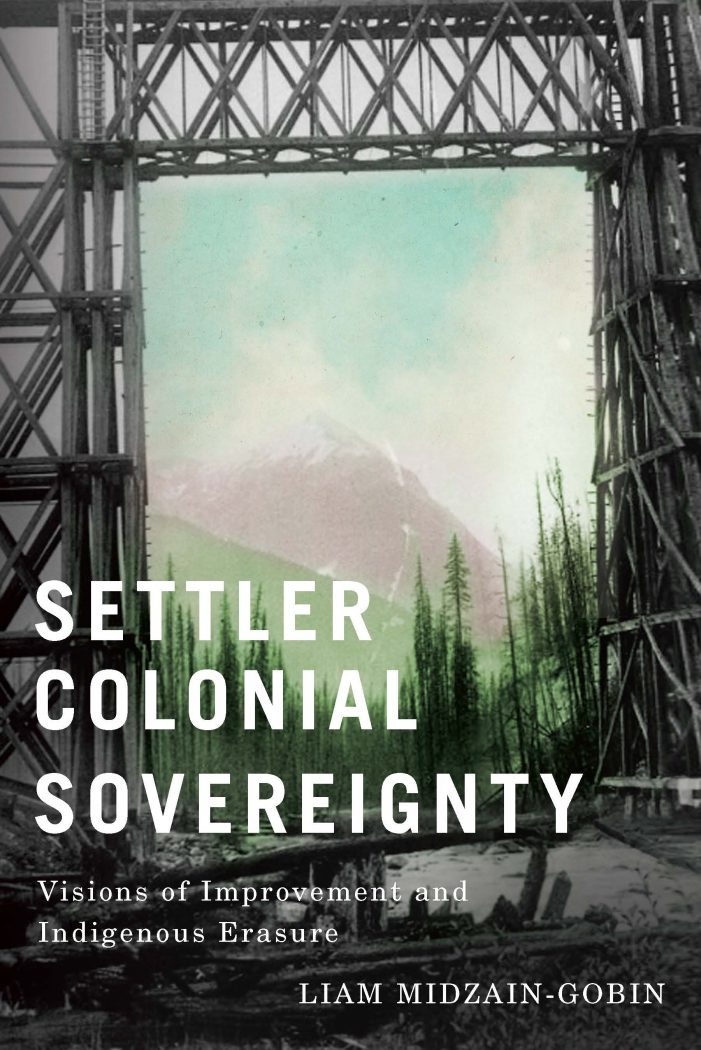
Settler Colonial Sovereignty: Visions of Improvement and Indigenous Erasure was published by McGill-Queen’s University Press last fall.
“Those seemingly facile assumptions actually require a lot of political and intellectual work to sustain them,” he says.
One of the primary assumptions he dissects is the question of “improvement,” a concept he says “became a guiding purpose for colonization.”
According to Midzain-Gobin, a perceived need for colonists to clear land and plant crops or raise livestock to feed the growing settler population resulted in policies and actions that could only be justified by ignoring or erasing existing practices for sustaining Indigenous communities.
“Any claim that colonists needed the land to be able to use it for agriculture or open it up for settlement to make it productive is based on a notion of improvement,” he says. “This notion still structures how settlers think about peoples, lands, waters and animals, which has really important consequences for how the settler project continues to reproduce itself today.”
One of the book’s case studies provides an in-depth analysis of the McKenna-McBride Commission, which was tasked with confirming the size of reserves for Indigenous Peoples after British Columbia entered Confederation. Commissioners wanted to assess land used for agriculture, but the Indigenous communities they spoke with relied on fishing, not farming, for sustenance.
“In this Joint Royal Commission, fishing was not a part of what the commissioners were told to ask about because the water wasn’t important from a settler colonial mindset. The questions were foreign to the actual way of being with the land, rather than just using it productively, that was central to those communities,” says Midzain-Gobin.
The idea of improvement continues to play a role in arguments about Canadian sovereignty in 2026, with renewed debates about building pipelines and developing mining projects that raise legal questions about treaties and land rights.
Midzain-Gobin says there is a good reason that challenges from Indigenous Peoples are often upheld by the Supreme Court of Canada, and that until settler colonial governments turn attention to building strong relationships, they will likely continue to waste time in courtrooms instead of working toward co-operative solutions.
“Suggesting that building a new pipeline will protect Canadian sovereignty from external threats highlights to me the delusion of singular Canadian sovereignty,” he says. “When I think about sovereignty in Canada, I’m thinking about a multitude rather than a singularity and a more stable political foundation — if we can shift our assumptions about how the world works in a way that isn’t extractive or instrumentalizing Indigenous knowledge.”
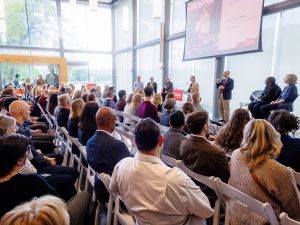
All are welcome to attend a public lecture by Midzain-Gobin on Friday, March 27 from 5 to 6:15 p.m. in Rankin Family Pavilion room 214. He will present as the final keynote speaker at the Two Days of Canadian Sovereignty conference and also mark the opening of the Comparative Borders undergraduate conference. Both events are organized by Brock’s Centre for Canadian Studies.