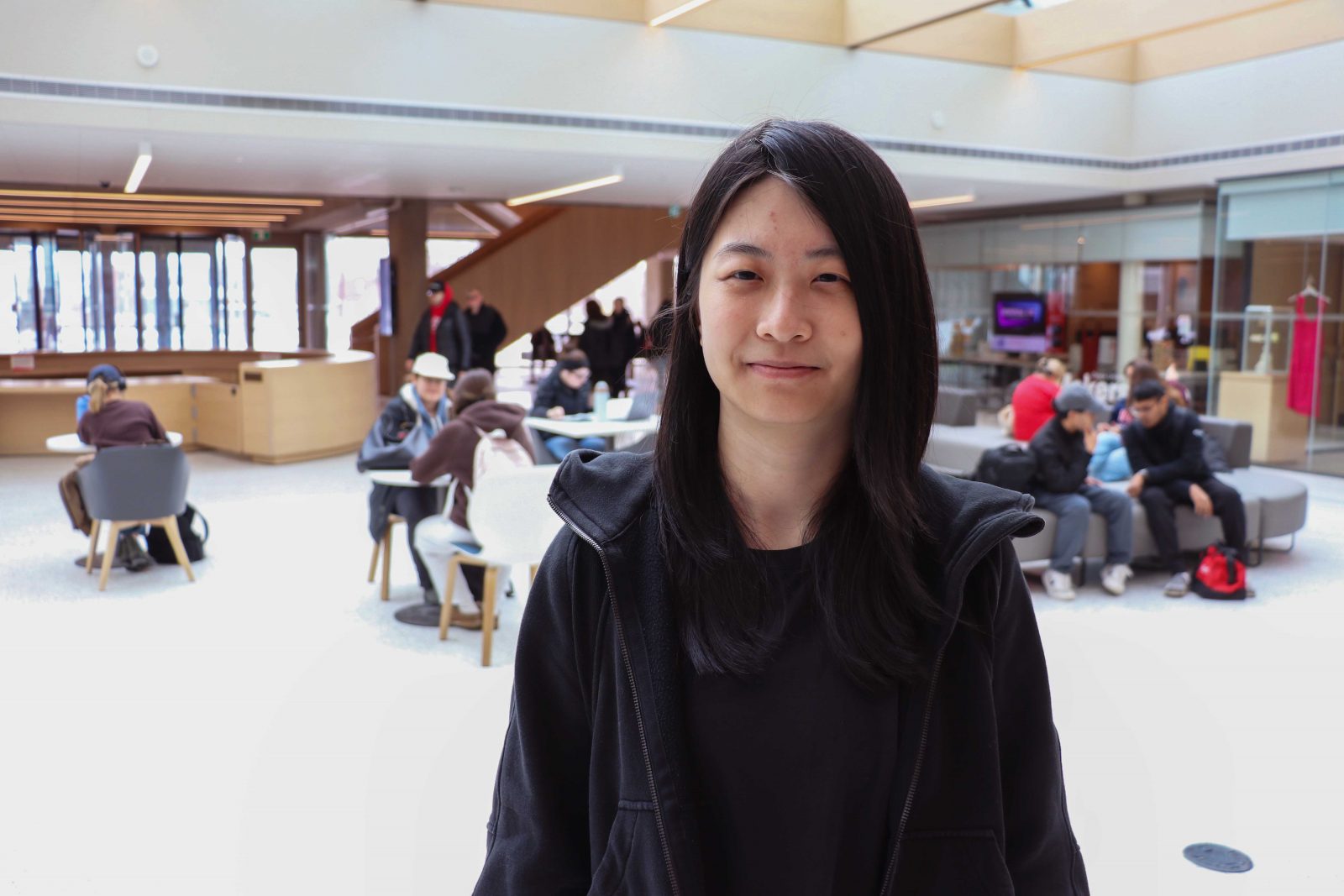
 Third-year Computer Science student Jiani Zhao analyzed artificial intelligence models used in scientific research during a work term funded by the Undergraduate Students Research Award (USRA). The deadline to apply for a 2026 USRA is 8 p.m. on Monday, Mar. 9.
Third-year Computer Science student Jiani Zhao has been curious about how research is conducted since she started her studies at Brock.
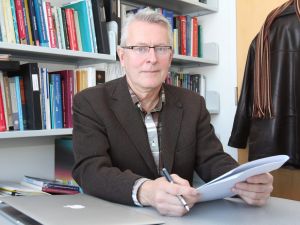
Last summer, she got hands-on experience as a member of a research project led by Yifeng Li, Canada Research Chair in Machine Learning for Biomedical Data Science.
Zhao’s work involved analyzing artificial intelligence (AI) models found on Google DeepMind and three other sites that generate three-dimensional structures of protein sequences. Scientists frequently use these open-source tools in research investigating the mechanisms of diseases.
Zhao, Li and the other members of the research team have submitted their study to a journal for publication, with Zhao as the lead author.
Zhao and Li were able to conduct this research thanks to the Government of Canada’s Undergraduate Students Research Award (USRA), which provides up to 16 consecutive full-time weeks of research employment in the areas of natural sciences, engineering, social sciences, humanities and health care.
The deadline to apply for a 2026 USRA is 8 p.m. on Monday, Mar. 9.
USRA funding is funneled through the Natural Sciences and Engineering Research Council (NSERC), the Social Sciences and Humanities Research Council of Canada (SSHRC) and the Canadian Institutes of Health Research (CIHR).
The application is a two-part process. Students fill out the Brock USRA Application Form Part A and the Natural Sciences and Engineering Research Council of Canada (NSERC) Part I form, while supervisors fill out the Brock USRA Application Form Part B and the NSERC Part II form.
Full requirements and instructions can be found in Brock’s 2026-27 USRA guidelines.
“The USRA program gives students hands-on, mentored research experience that can shape their next steps, whether that’s graduate studies or a career in the field,” says Associate Vice-President, Research Deborah O’Leary.
Thanks to her USRA-funded experience, Zhao now plans to pursue graduate studies in the fields of computer science and AI.
Li says providing undergraduate Canadians with research funds through USRA and other initiatives can bring about “life-changing opportunities.”
“As a supervisor under the USRA program, I’m glad that Zhao’s research potential has been identified and her career goal is now becoming an independent researcher,” says the Associate Professor of Computer Science and Biological Sciences.
Brock’s NSERC USRA allocation for this cycle includes 23 awards. While Black student researchers are eligible to be considered for all awards, NSERC has provided a designated allocation of 2 of those 23 awards specifically to support Black student researchers.
Awards for self-identified Indigenous student researchers are not counted within the institutional allocation and may be awarded beyond the 23 awards noted above.
In addition, Brock has a further allocation of two SSHRC USRAs and one CIHR USRA for self-identified Black student researchers.
Also contributing funding to the program are project supervisors and the Office of the Vice-President, Research.
Questions about USRA can be directed to Balajji Devatha Venkatesh, USRA Liaison Officer, at [email protected] or Patricia Okpara, USRA Liaison Officer, at [email protected]