A new Humanities course, ITAL 3P02 — Black Italy: Shifts in Italian Cultural Identity, is exploring what it means it to be a Black Italian by examining cultural identity on a local, regional and national scale.
 For Rachel Grasso, equity and allyship are at the core of ethical teaching and learning.
An Instructor in Modern Languages, Literatures and Cultures (MLLC), Grasso is challenging the idea of a homogeneous Italian identity through a new course, ITAL 3P02 — Black Italy: Shifts in Italian Cultural Identity.
The third-year Humanities course traces the history of Black communities in Italy aiming to move beyond stereotypes of Italian identity and explore how race, gender and class intersect to shape diverse lived experiences.
“We are exploring what it means it to be a Black Italian by examining cultural identity on a local, regional and national scale in a move toward equality and decolonization,” she says.
Topics include the presence of Black Africans in Renaissance Europe, the Italian colonial period, the relationship between Italian citizenship and laws and race, and the Black Lives Matter movement in Italy.
Grasso uses scholarly texts, literature, art, music, and social and digital media to engage with key themes. From addressing Italian language bias to listening to hip hop and Afrobeats, Grasso is keen to share how Black Italian cultural production challenges assumptions linking Italian identity to whiteness.
The goal, Grasso says, is to reframe Italy as multicultural, interconnected and shaped by colonial and diasporic histories.
“There is rich diversity in contemporary Italy, locally and regionally, that has always existed in the Italian peninsula affected by a complex history of colonialism,” she says.
The process of decolonization in Italy is complex, Grasso says, but an important start is the acknowledgment of Italy’s colonial past and the effects it has on contemporary Italian society and government.
“A significant step would be changing the country’s jus sanguinis citizenship law that makes it difficult for the children of immigrants to become citizens. Decolonization also entails making the notion of Italian identity heterogenous and inclusive in relation to race both in Italy and abroad,” she says.
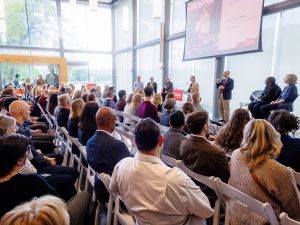
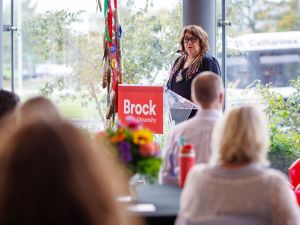
Grasso is amplifying the voices of Black Italians by inviting guest speakers to share their work and research with the class and Brock community, including Black scholars and activists Angelica Pesarini and Camilla Hawthorne.
For third-year French Studies student Misbah Memon, being part of the first-ever course cohort feels like a milestone moment.
“Standout in my learning has been the deep dive into Italy’s colonial past. By examining how that history forged the Italy we see today, we can draw critical, sobering parallels between historical colonial periods and the rise of the far right-wing movements today,” Memon says.
David Sharron, Head of Archives and Special Collections, also visited the class to help students learn how to access the collections at Brock and make connections to Black history in Canada.
“Exploring memory and whose stories are told, and whose are forgotten, informs how we consider archival collections as an important space where stories of the past are preserved,” Grasso says.
She aims to open ways of thinking about national identity and how the various aspects of a person’s identity affect their lived experiences on a daily basis, specifically in relation to forms of oppression.
“We also look at the concept of positionality and ask questions about how one’s identity affects the experiences they will have, while addressing how we position ourselves in relation to the topics we are studying,” Grasso says.
Upcoming online talks will feature celebrated Black Italian filmmaker Fred Kudjo Kuwornu on Tuesday, March 3 and Black Italian rapper and author Amir Issaa on Tuesday, March 24. The events are open to the Brock and wider communities, with registration information available on ExperienceBU.