Professor Emeritus of Epidemiology Martin Tammemägi is co-leading a global study investigating factors that put individuals who never smoked at greater risk for lung cancer.
 While avoiding cigarettes and tobacco can help prevent lung cancer, rising rates of diagnosis among those who’ve never smoked are raising questions about other risk factors for the disease.
Professor Emeritus of Epidemiology Martin Tammemägi is closely monitoring the global trend as co-leader of the FALCONS study, an international network of researchers investigating lung cancer risk factors among never-smoking individuals. The disease is currently the fifth-highest cause of cancer deaths worldwide.
“There’s an issue of fairness for people who never smoked and get lung cancer,” says Tammemägi. “They deserve to benefit from the same preventative programs that smoking individuals do, even though the incidence of lung cancer in individuals who never smoked is low compared to smokers.”

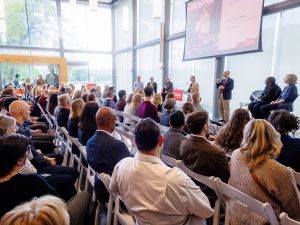
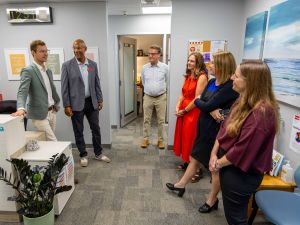
Dr. Andrea McKee (left), Chief of the Division of Radiation Oncology at the Lahey Hospital and Medical Center’s Sophia Gordon Cancer Center in Burlington, Mass., presented Professor Emeritus Martin Tammemägi the Brady McKee Award of Excellence in CT Lung Screening at the Rescue Lung Society’s annual conference in Boston Oct. 25.
The team involves 26 clinicians and researchers in 15 countries who are collecting and analyzing data on more than 150 different factors – such as poor nutrition, infections, family history of cancer and diabetes – thought to be associated with lung cancer.
They will then develop risk prediction models of lung cancer in those from western and east Asian countries who have never smoked.
Tammemägi says heavy air pollution increases lung cancer risks for people living in East Asian countries, with women being particularly vulnerable.
“Women do a lot of indoor cooking using organic biological materials, which give off carcinogenic fumes that they inhale, making them susceptible to cancer,” he says.
Other risk factors for never smokers include older age, being female, chronic obstructive pulmonary disease, inherited genetic changes, radon exposure to second-hand smoke, and exposure to diesel fumes, he says.
The third component of the FALCONS study is to conduct simulation models that will identify under what conditions lung cancer screening of never smoking individuals will be effective and cost-effective.
The study, which began in April 2025, is expected to wrap up by the end of March 2027.
Tammemägi’s leadership of the FALCONS study is one of many research accomplishments that earned him the Brady McKee Award of Excellence in CT Lung Screening from the Rescue Lung Society.
The award, presented Oct. 25 at the group’s annual conference, acknowledges milestones Tammemägi achieved over his 35-year career. Some of these include:
- Developing the PLCOm2012 lung cancer prediction model for smokers and others at high risk of developing the disease, which is currently being used by the U.K.’s National Health Services as well as the provinces of British Columbia, Saskatchewan, Ontario, Quebec and Nova Scotia to inform screening programs.
- Developing a model predicting the probability that a nodule showing up on a CT lung scan is cancerous.
- Serving as Scientific Lead of the Ontario Health-Cancer Care Ontario Lung Cancer Screening Pilot and the Ontario Lung Screening Program from 2016 to 2023.
- Participating in multiple trials including the Prostate Lung Colorectal and Ovarian Cancer Screening Trial, the National Lung Screening Trial, the Pan-Canadian Early Detection of Lung Cancer Study, and the International Lung Screening Trial.
- Developing Bayesian Lung Cancer Risk Prediction Models for Indigenous Peoples in Canada, Australia and New Zealand.
- Co-leading the “Air Pollution and Lung Cancer Risk Prediction” project funded by the Terry Fox Research Institute.
The Rescue Lung Society is a U.S.-based international organization of clinicians and researchers working to eliminate barriers to CT lung cancer screening through education, advocacy, research development of new tools to streamline program implementation and management.