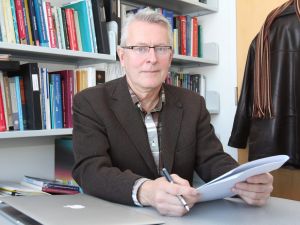
With support from a Brock University Indigenous Research Grant, Assistant Professor of Women’s and Gender Studies and Sociology Lyn Trudeau (BA ’08, MEd ’13, PhD ’24) has partnered with Adjunct Professor of Education at Lakehead University Trâm-Anh Bùi to study international students’ knowledge and perceptions of Indigenous Peoples in Canada.
NOTE: Brock University announced the creation of its Indigenous Research Grant in 2021. This is one in a series of articles profiling the research of the 2025 recipients of this yearly internal award. Read more on the series on The Brock News.
It all started with a bit of a cultural misunderstanding between then-PhD student Lyn Trudeau (BA ’08, MEd ’13, PhD ’24) and her classmate Trâm-Anh Bùi.
While getting to know each other, Trudeau shared that she is Anishinaabe’Kwe from the Sagamok Anishinawbek First Nation, Eagle Clan. Bùi, who had recently arrived from Vietnam, wasn’t sure what Trudeau was referring to.
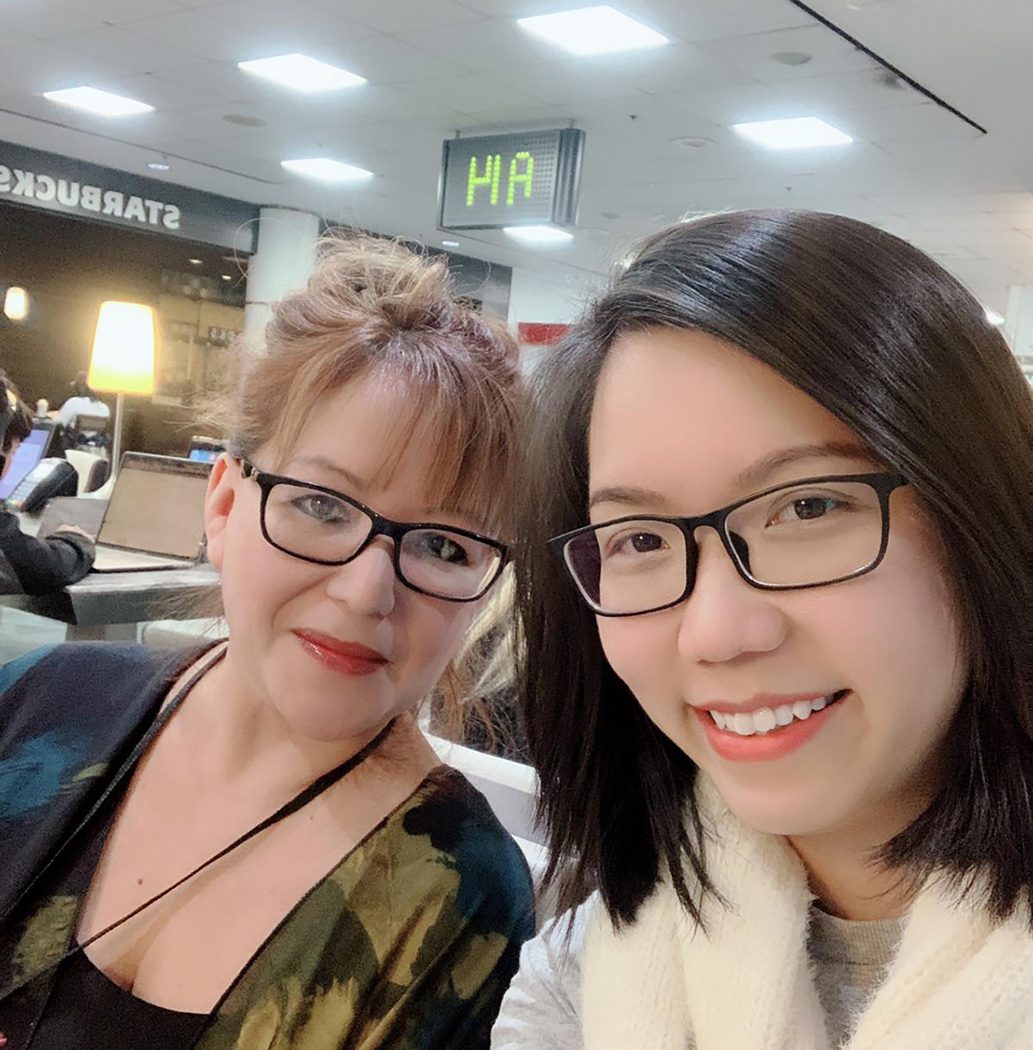
Assistant Professor of Women’s and Gender Studies and Sociology Lyn Trudeau (BA ’08, MEd ’13, PhD ’24), and Adjunct Professor of Education at Lakehead University Trâm-Anh Bùi are researching international students’ knowledge and perceptions of Indigenous Peoples in Canada.
“Trâm-Anh didn’t know about Indigenous peoples in Canada,” says Trudeau, an Assistant Professor of Women’s and Gender Studies and Sociology at Brock. “She was taught the original peoples here were white and the history of Canada started with the settlement of the English and French.”
As the two formed a deeper bond, they initially joked about one day doing research on international students’ knowledge and perceptions of Indigenous Peoples living in Canada.
Almost a decade later, their vision has came to pass. Trudeau and Bùi, an Adjunct Professor in Lakehead University’s Faculty of Education, have teamed up with Indigenous Elder Peter Beaucage to study the topic.
Working with Brock International and Lakehead International, they are recruiting international students to be research participants.
Using a mix of Indigenous methodologies of storytelling and art-based approaches, the research team aims to explore international students’ prior knowledge of Indigenous Peoples in Canada before arriving in the country as well as how their perceptions of Indigenous cultures have changed both before and after participating in the research project.
Trudeau says their findings could be used to help create a variety of policies and programs – such as university orientations and social gatherings – that engage international students in the past, present and future of Indigenous Peoples in Canada.
The project, “Relational International Stories in an Educative Global Context (RISE),” was inspired by the Truth and Reconciliation Commission of Canada’s Calls to Action, which includes a call in Action 63 (iii) to build students’ capacity for “intercultural understanding, empathy and mutual respect.”
Since many international students end up settling in Canada, it’s vital they know about Indigenous histories, reconciliation and other factors affecting the place of Indigenous Peoples in Canadian society, Trudeau says.
International students themselves will also benefit from the research and any resulting policies and programs, says Trudeau, adding that most international students come from countries where Indigenous populations were colonized and continue to be marginalized by the wider society.
“As soon as they see it happening here, international students ask me, ‘Why did I not know this?’” she says. “They say things like, ‘This is resonating with me, I’m actually hearing my story.’”
Trudeau says programs implemented at universities could also be extended to foster intercultural communications in a wider context, benefiting society as a whole.