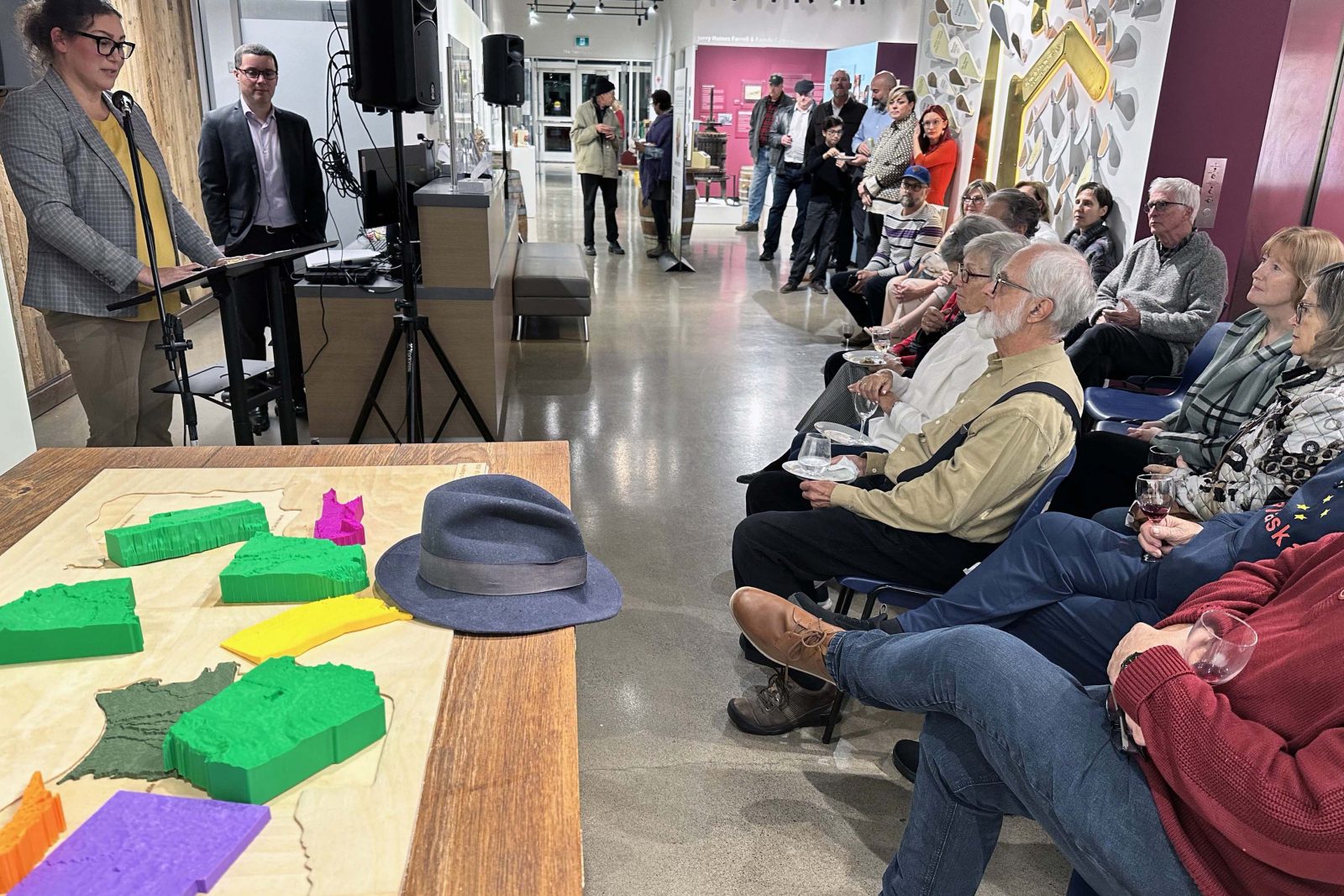
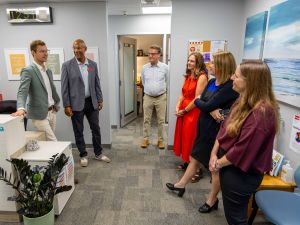
 The Cool Climate Oenology and Viticulture Institute and Brock University library have loaned several artifacts and educational resources to the Lincoln Museum and Cultural Centre for its new year-long year-long exhibit, Through The Grapevine: Winemaking in Niagara.
 A new Lincoln Museum and Cultural Centre exhibit is bringing Niagara’s winemaking heritage to life with support from several Brock University departments.
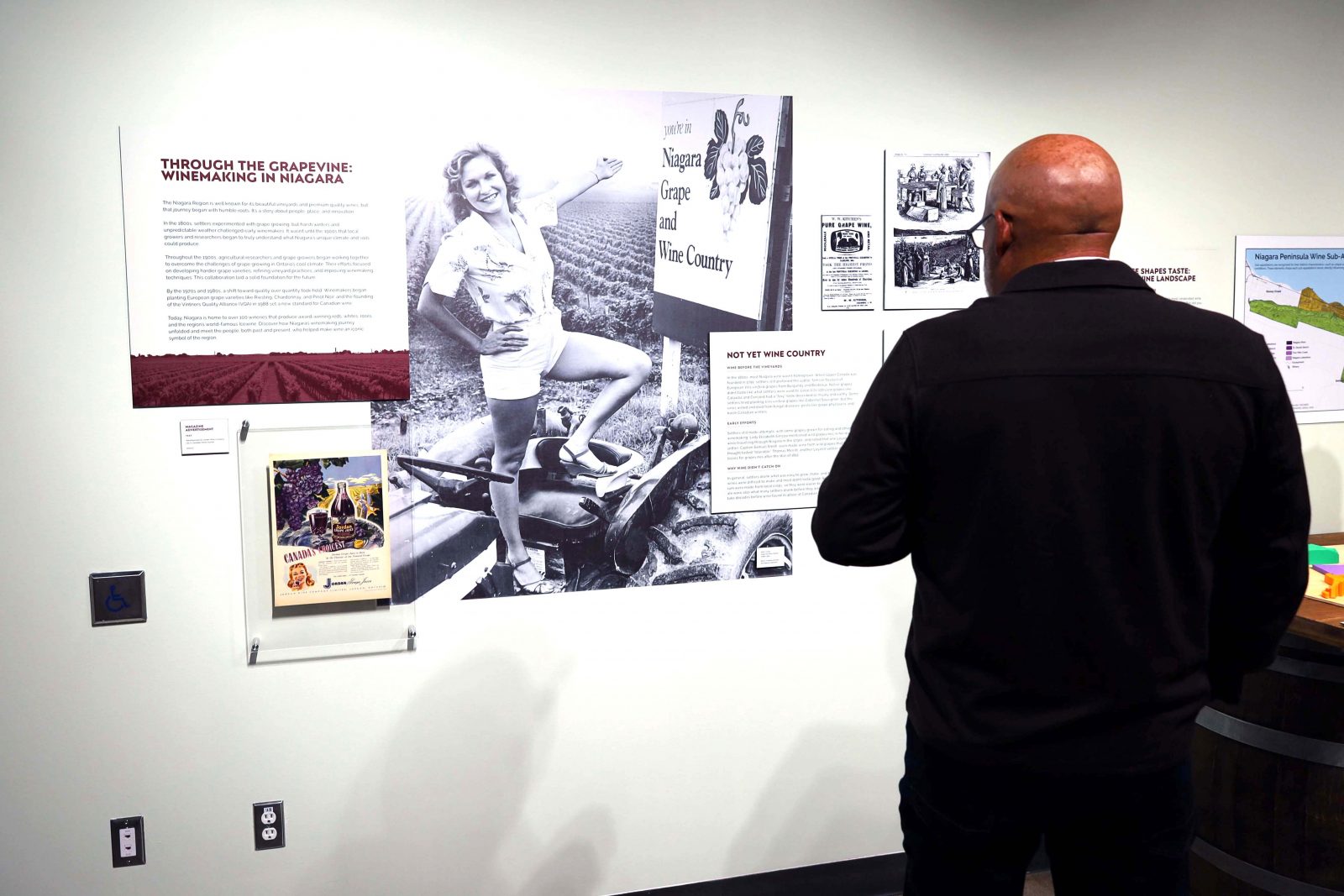
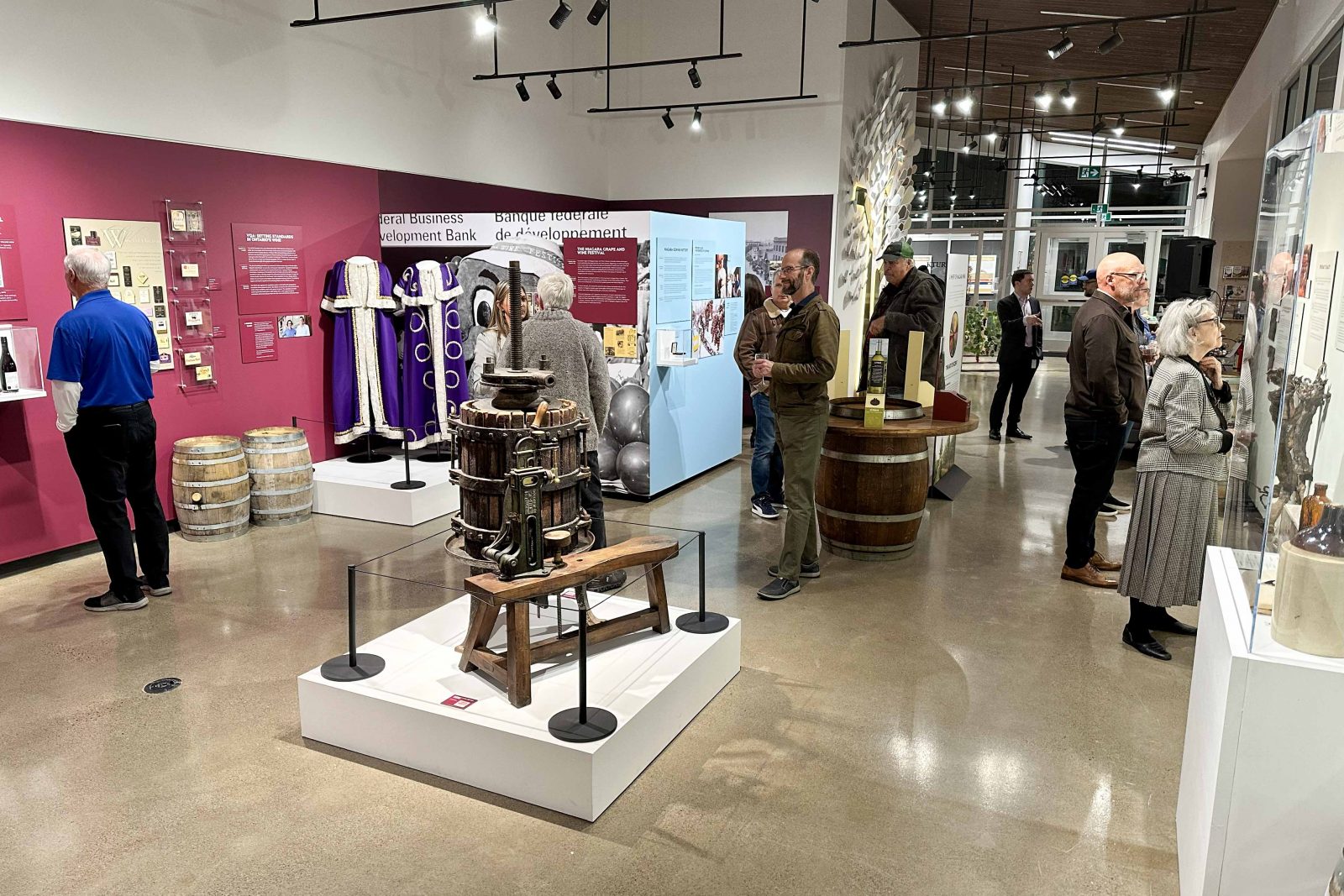
Modeled after similar exhibits in museums in significant global winemaking regions, Through the Grapevine: Winemaking in Niagara features artifacts and learning displays donated by Brock’s Cool Climate Oenology and Viticulture Institute (CCOVI).
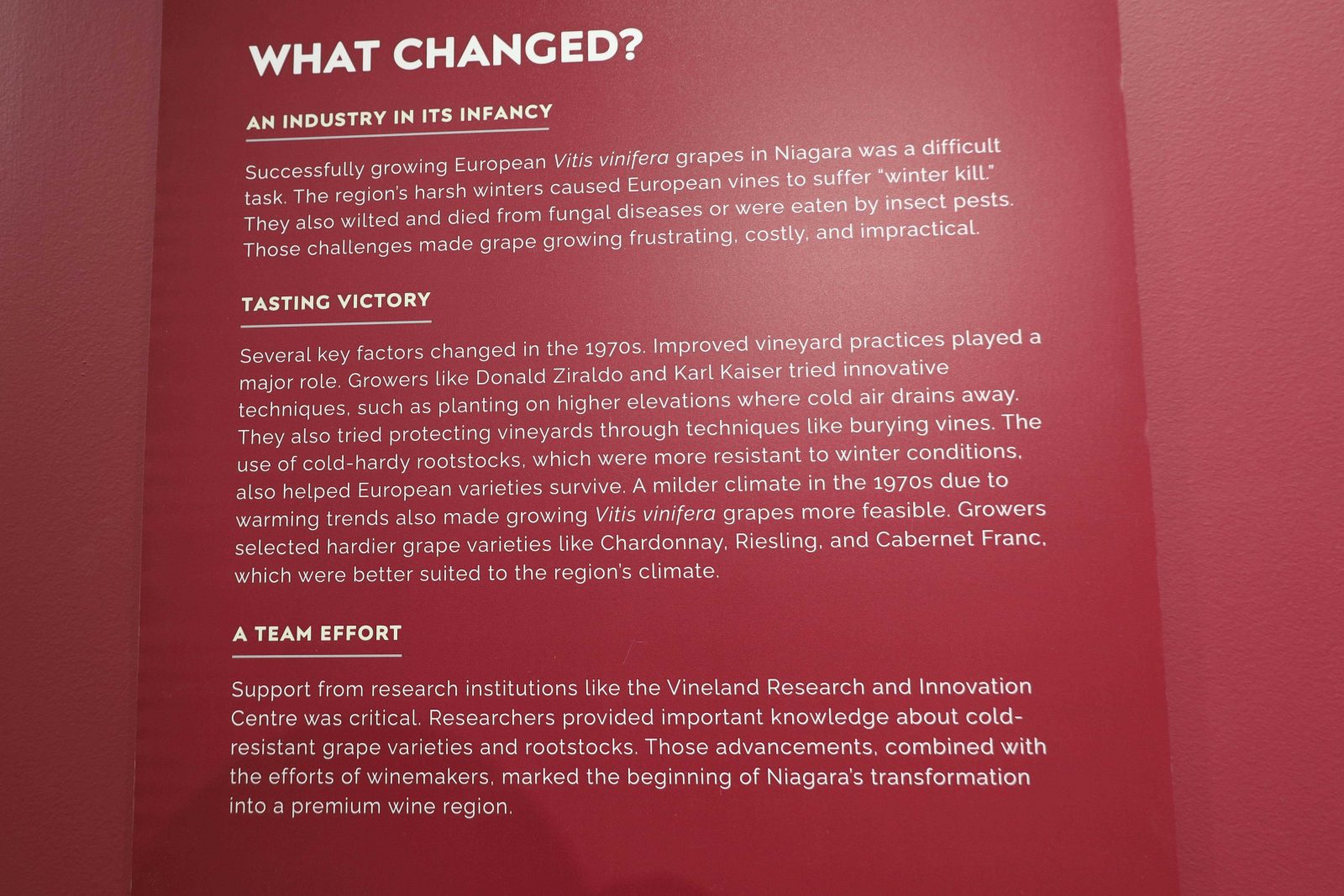
Adam Montgomery, Curator of Collections and Exhibitions at the museum, says the exhibit connects Niagara’s modern wine industry with its roots, going all the back to the 1800s, and showcases how science and education helped grow a world class wine region.
“What stifled the early industry is it didn’t have the backing of today’s science,” he said. “It’s exciting to show how research institutions like CCOVI have been able to push that research forward.”
CCOVI scientists conduct research projects on a variety of topics aiming to improve wine quality and sustainability across Canada, including developing virus-free grapevine material, exploring the role insects play in grapevines and wine quality, and studying yeast and fermentation that enhance regional wine character.
“These efforts have an estimated $91-million annual economic impact for Ontario — evidence that science, collaboration and innovation are the foundation of a thriving wine region,” said CCOVI Senior Scientist in Oenology Jennifer Kelly, who spoke at the opening of the exhibit on Oct. 30.
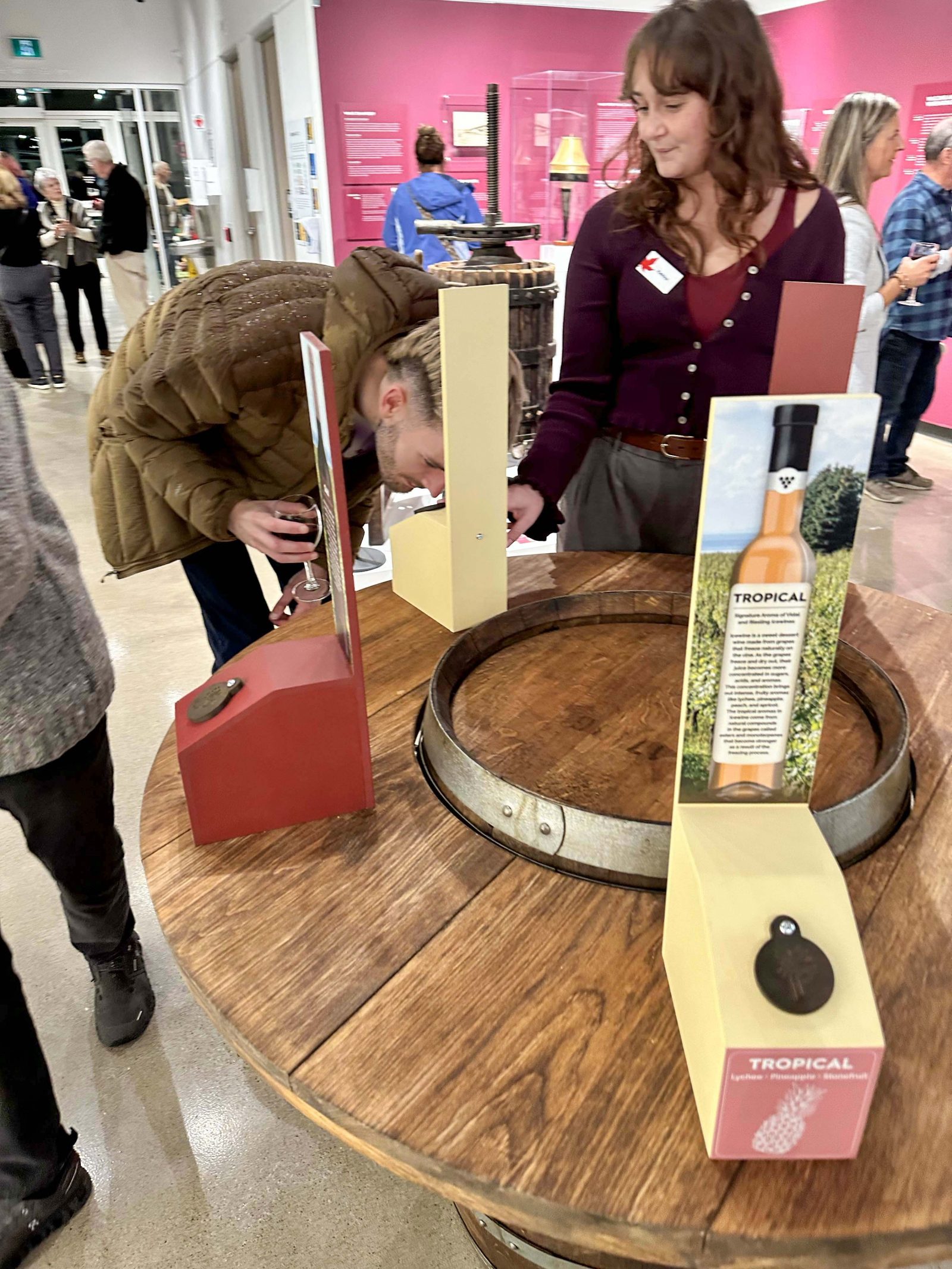
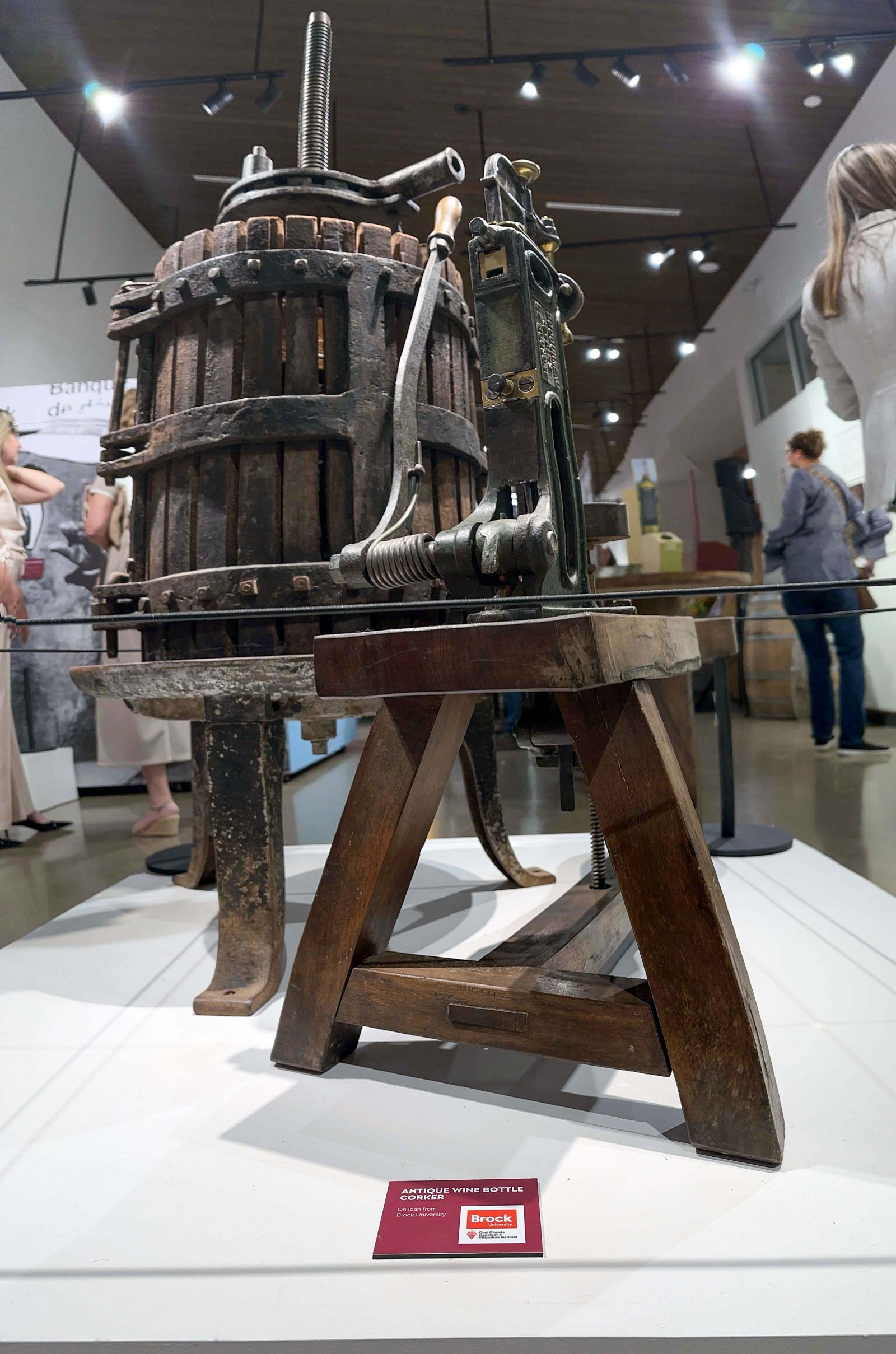
CCOVI has loaned the exhibit an interactive wine aroma station developed by Kelly and Hannah Charnock (PhD ’24) along with a vintage grape press and corking machine.
“In wine, aroma tells the story before we even take a sip,” she said. “Through this station, we wanted to invite visitors to explore those sensory threads and discover how science helps us understand and celebrate what makes our cool climate Niagara wines so distinctive.”
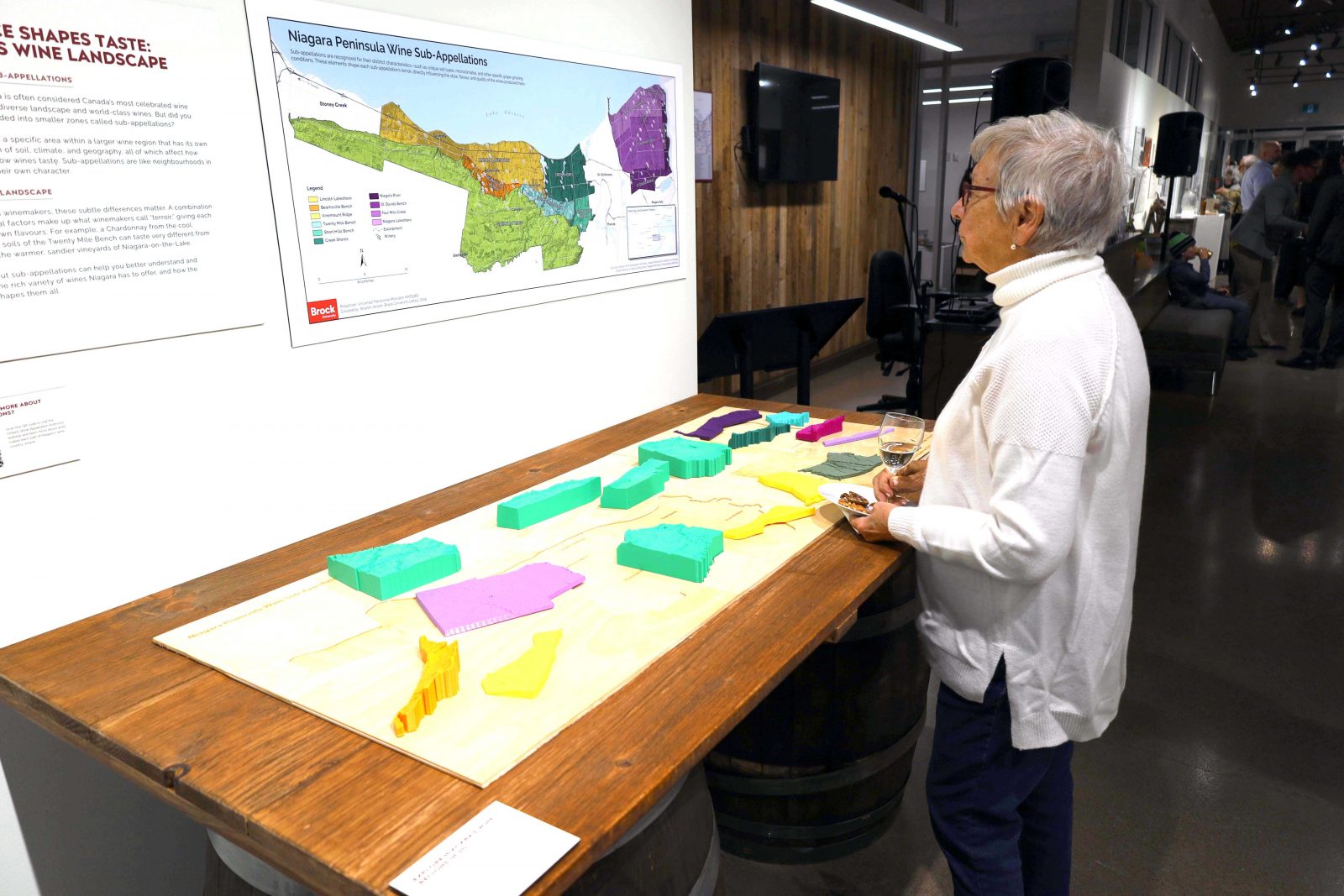
Helping to illustrate the local wine industry is a 3D map of Niagara’s sub-appellations developed by Brock University Library experts.
Maps, GIS and Geospatial Data Specialist Sharon Janzen combined geographic information systems (GIS) data with cartographic design to create a map of Niagara’s unique growing regions.
Using that map, Makerspace Supervisor Derek Schneider produced a complementary 3D model puzzle.
“GIS offers a unique toolset for exploring geospatial phenomena,” Janzen said. “Coupled with the 3D model puzzle, the exhibit invites audiences of all ages to explore the region’s viticultural diversity through an engaging and hands-on experience.”
Brock Library Head of Research Lifecycle Denise Smith said projects like the exhibit help build connections between the University and the Niagara community.
“Collaborations with community partners like the Lincoln Museum and Cultural Centre allow us to engage in novel ways of sharing the unique expertise and resources at Brock, meeting our community members where they are,” she said.
Through the Grapevine: Winemaking in Niagara runs until October 2026.
Several notable Niagara wineries have also contributed artifacts to the museum – including Malivoire Wine Company, where Brock graduate Shiraz Mottiar (BSc 00’) is the general manager, and Cave Spring Vineyard, where Brock grad Gabriel Demarco (BSc 13’) is winemaker – and CCOVI Director Debbie Inglis provided Canadian Wine Institute pamphlets from 1966 for the exhibit.