 Professor and Chair of Classics and Archaeology Michael Carter is sharing his expertise in Roman sport and spectacles through a new National Geographic documentary series titled “Gladiators – Warriors of the Ancient World.”
 From Hollywood movies to headlines on archeological discoveries, fascination with gladiators has long outlived its Roman roots – a phenomenon Professor of Classics and Archaeology Michael Carter says is fueled by a desire for “epic stories for the ages.”
Carter, whose research focuses on Roman sport and spectacles, is sharing his expertise in a new documentary series now streaming on National Geographic.
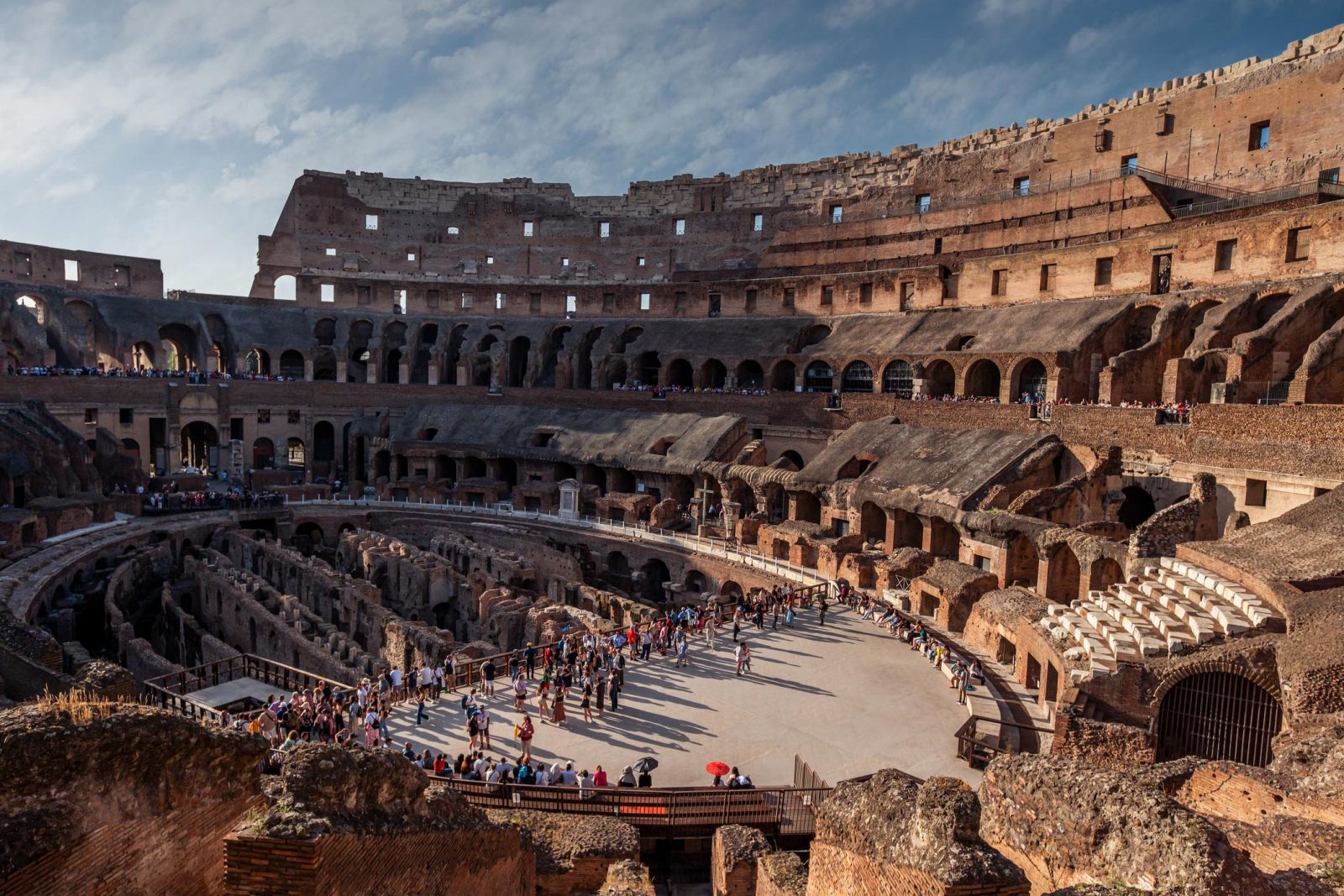
The six-episode series, Gladiators – Warriors of the Ancient World, tells the origin stories of iconic gladiators, following the ancient combatants on their life-or-death journeys to the Colosseum.

Professor Michael Carter, seen above visiting the site of the ancient Flavian Amphitheatre in Pozzuoli, conducts research related to the social and cultural significance of gladiatorial contests and similar Roman spectacles.
“Thanks to historical and literary sources like ancient inscriptions, epitaphs and even poetry, we have brought these stories to life, imagining alongside audiences what it would have been like to be a gladiator experiencing combat in front of thousands of cheering — and jeering — spectators,” Carter says.
One episode, for example, tells the tale of Spartacus, a key player in the famous slave revolt of the Roman Republic in first century CE.
“We have pieced together where Spartacus might have come from and who he might have been; based on historical facts, the Nat Geo documentary outlines what it might have been like for Spartacus training in gladiatorial school and what lead to his breakout during the slave revolt,” he says.
Other historical figures featured in the series include Spiculus, a famous gladiator and favourite of infamous Roman emperor Nero, and Marcus Attilius, a Roman gladiator known only from three distinct “graffito” — texts or drawings scratched into a wall — on a tomb at Pompeii depicting three of his fights.
Another episode features the “beast fighter” Carpophorus, who in 80 CE had poems written about his torrid battles against a lion, bear and leopard at the opening games of the Colosseum.
According to Carter, the gladiator battles of ancient Rome remain culturally relevant because modern-day society is still just as enamoured with the spectacle of sport as it was in antiquity.
“Our collective enjoyment of large-scale organized sport has never dulled, evidenced in the millions of dollars spent on athletes worldwide, and occurrence of the Olympics every two years where the ‘best of humanity’ is idealized in a global context,” he says.
Gladiator warriors in particular have always carried elevated mystique stemming from the perceived honour and glory of fighting for their lives, Carter says, a defining component of ancient era sport.
“You can imagine what it would have been like to experience thousands of people chanting in an arena, potentially fighting for their lives — it’s a familiar theme that we see across many movies and books across multiple storytelling genres,” he says.
Foundational to Carter’s research is a continued exploration of the impact and social importance of ancient sport, both as a cultural practice and form of entertainment, and its influence on identity and culture both in antiquity and today.
“I am thrilled to have been invited to be part of this Nat Geo project, it’s one more way this compelling history is being shared with the world,” he says.