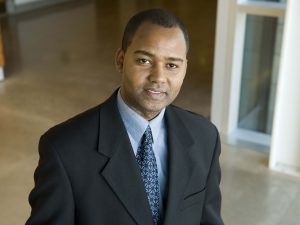
Professor of Mathematics and Statistics Ejaz Ahmed is one of five Brock faculty members recently recognized with the Distinguished Professor designation by the Office of the President.
Brock University’s Distinguished Professor designation is a lifetime appointment recognizing outstanding achievement in each recipient’s academic discipline. This series of articles highlights this year’s recipients. Read more about the award and its recipients on The Brock News.
Big data, artificial intelligence (AI) and predictive modelling may seem like abstract concepts for many, but for Ejaz Ahmed, they’re powerful tools for tackling real-world challenges.
The Professor of Mathematics and Statistics was recently named one of Brock’s newest Distinguished Professors, a recognition that underscores both his impactful research and commitment to student success.
For nearly four decades, he has helped to advance the field of statistical science and shaped generations of scholars as a supervisor and educator.
“I’ve always done this work out of passion, not for awards. Recognition is meaningful, but the real reward is seeing students succeed and ideas making a difference,” he says.
Mentorship has been the cornerstone of his career and one of his proudest contributions, he says, and he credits his own mentors like the late Kjell Doksum of Berkeley for shaping his philosophy of persistence and humility.
As a supervisor, he has worked with numerous students at Brock and other universities, including being invited to co-supervise students at Canadian and international universities. Students he’s mentored now lead research around the world.
“Working with students reminds me that research is not just about data, but about people, collaboration and trust,” he says. “Every student has potential. It’s our job to bring out their potential. Once you open the door, they flourish.”
Ensuring that every student has a chance to succeed — and perhaps one day do their own groundbreaking research — has always been a priority for Ahmed.
Early in his career, for example, he noticed that women were hesitant to pursue doctoral studies in statistical science. After research talks in Malaysia and Thailand where he met more women in the field, he was motivated to diversify his research group.
Sometimes, it’s simply perception, he says, and after recruiting his first female PhD candidate, more women joined his team.
Ahmed says he firmly believes “diversification is the spice of life.”
“When you diversify, you don’t just plant seeds for today, you build a stronger foundation for tomorrow,” he says.
As Dean of Brock’s Faculty of Mathematics and Science, a role he has held twice, Ahmed championed international student diversification.
Before joining Brock in 2012, Ahmed held leadership roles at the University of Windsor and the University of Regina, as well as a faculty position at Western University.
Throughout his career, he has built a global reputation for his data science and statistical machine learning research. His current work focuses on bridging statistical methods with machine learning and AI, with a particular emphasis on reducing bias in predictive models.
Ahmed says that ignoring “weak signals” in data can create bias, which he describes as “the biggest threat to prediction.”
“With AI, we can now integrate both strong and weak predictors in our models,” he says. “By combining them, we improve accuracy and create more reliable predictions, leading to better decisions for health, finance and communities.”
In recognition of his contributions, Ahmed has received prestigious the Bualuang Association of Southeast Asian Nations Chair Professorship at Thammasat University in Thailand, been elected a member of the International Statistical Institute and been named a Fellow of both the American Statistical Association and the Royal Statistical Society. He has also received the unique honour of having an auditorium named after him at the University of Punjab in Pakistan, his country of origin.
Since 1987, his work has consistently been supported by the Natural Sciences and Engineering Research Council of Canada (NSERC), the Canadian Institutes of Health Research and Ontario Centre of Excellence. In 2017, his NSERC grant was renewed with the highest possible “Outstanding” rating in all three categories — a distinction achieved by only two similarly-sized universities nationwide that year. Recently, he was reappointed as a member of NSERC’s Mathematics and Statistics Evaluation Group.
Ahmed has nearly 230 published research articles and multiple edited volumes, with his award-winning paper on nonparametric regression receiving global recognition from an international awards panel representing 11 countries. His passion for sharing impactful ideas has also taken him around the world to deliver more than 225 research talks, including at Ivy League universities.